Metropolitan Police Service Headquarters; Courtesy of RIBA Competitions
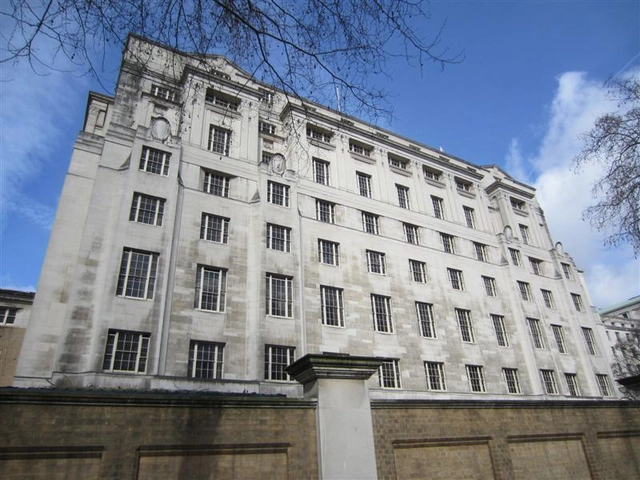
Five London-based firms - AHMM, Allies & Morrison, Foster & Partners, Keith Williams Architects and Lifschutz Davidson Sandilands - have been selected to compete for the “Scotland Yard” redevelopment of the abandoned Curtis Green MPS building on the Victoria Embankment. As reported by BDOnline, the shortlisted firms will each propose a “landmark building for London” that will provide a “modern and efficient working environment” for the new Metropolitan Police Service Headquarters. The judging panel, spearheaded by architect Bill Taylor and RIBA Adviser Taylor Snell, will review the proposals in September.
Norman Foster’s Swiss Re Headquarters, a.k.a. “The Gherkin,” has been selected as the Council on Tall Buildings and Urban Habitat’s (CTBUH) first 10 Year Award recipient. The uniquely-shaped skyscraper, as described by CTBUH, “cleared the way for a new generation of tall buildings in London and beyond. Ten years on, its tapering form and diagonal bracing structure afford numerous benefits: programmatic flexibility, naturally ventilated internal social spaces that provide user comfort while reducing energy demand, and ample, protected public space at the ground level.”
Foster + Partners have released new images of the luxurious, 18-story Faena House currently being constructed in Miami. The project, which is commissioned by Argentinean developer Alan Faena who is best known for transforming Buenos Aires’ abandoned Puerto Madero neighborhood into the city’s most vital culture center, will mark the first phase of the anticipated Faena District Miami Beach. Once complete, the district will include a five-star hotel, a large and versatile Arts Center, an OMA-designed parking complex, a luxury retail complex, and a marina.
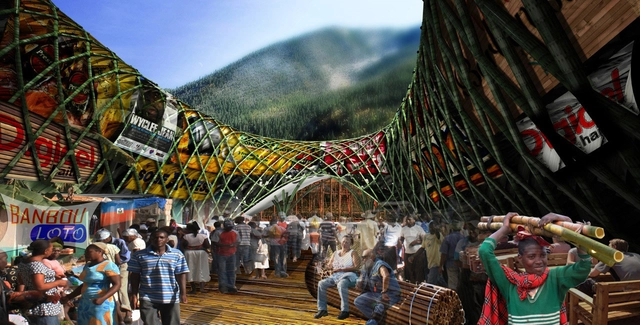
The Architectural Association and Foster + Partners have announced John Naylor of Diploma Unit 16 as the 2013 Foster + Partners Prize recipient for his project ‘Bamboo Lakou’. Presented annually, the award is presented to an AA Diploma student whose portfolio best addresses the themes of sustainability and infrastructure.
Brett Steele, Director of the Architectural Association School of Architecture, said: “John Naylor’s project demonstrates the ways in which infrastructural ideas – and architectural imagination – might today expand beyond the clichés of Modernism to become life itself, literally breathing life into communities, cities and entire countries – today and long into the future.”
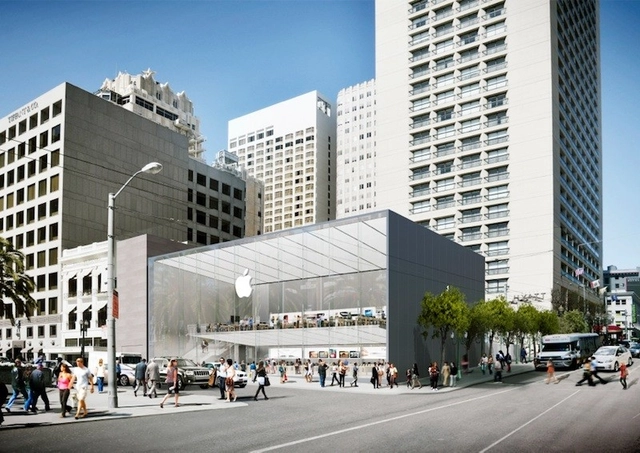
Rendering of the proposed Apple Store in Union Square
This past May, Apple filed plans to close its existing flagship retail store at 1 Stockton Street in San Francisco and move it three blocks north to one of the city's most popular spots: Union Square. This plan was met with enthusiasm from city officials until they realized that Apple and the store's architects at Foster + Partners were disregarding a beloved bronze folk art fountain by San Francisco sculptor Ruth Asawa that currently occupies the site. Many have also criticized the store's design for being a characterless box of metal and glass that contributes nothing unique to the local landscape, raising awareness of a commercial architecture defined more and more by trademark and less and less by its surroundings.
More on Apple's proposal in San Francisco and the problems of trademarked design after the break.
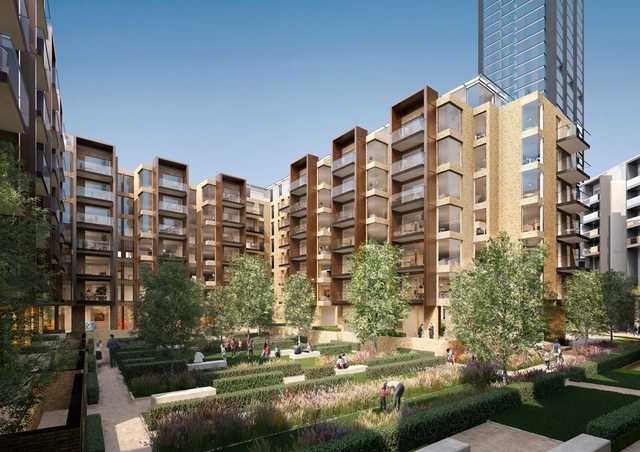
Foster + Partners has been selected to developed a proposal for a low energy, high-density residential community in Islington, London. The site is a 1980s business park that is to be regenerated into a residential zone of two towers and a landscaped park. The project will incorporate the arera's planned high-rise buildings and is ultimately set to provide a new landmark for the city.
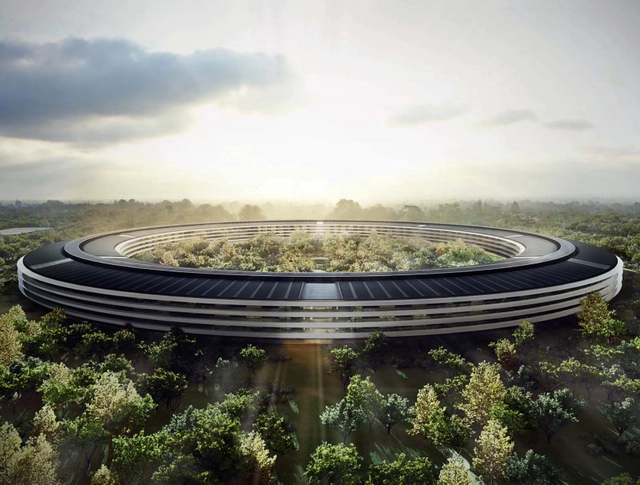
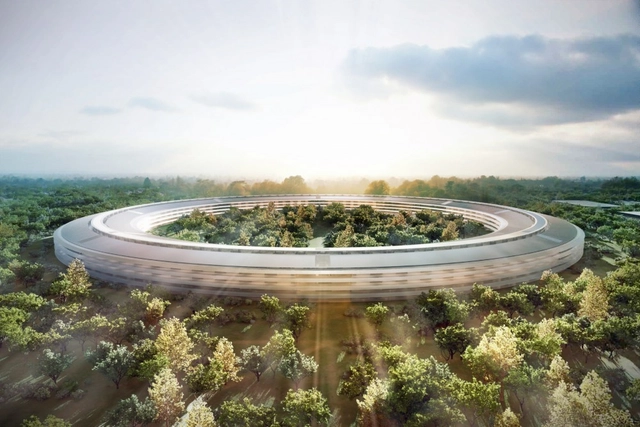
Abandoning Apple’s classic “white” detailing, architects Foster + Partners have opted to clad the 2.8 million square foot, circular monolith in black - a stylistic remedy that seems to be in line with the overarching campus goal to “provide a serene environment reflecting Apple’s brand values of innovation, ease of use and beauty.”
The estimated cost of Apple’s Cupertino City headquarters has escalated from an already hefty price of $3 billion to $5 billion (more than $1,500 per square foot), reportedly pushing back the original completion date to 2016. According to Bloomberg, Apple is working with lead architect Foster & Partners to shave $1 billion from the “ballooning budget”. Most of the cost is seemly due to Steve Job’s “sky-high requirements for fit and finish”, as the tech legend called for the 2.8 million square foot, circular monolith to be clad 40-foot panes of German concave glass, along with its four-story office spaces be lined with museum-quality terrazzo floors and capped with polished concrete ceilings.
Although lambasted for his ambitious plans and “doughnut-shaped” design, Steve Jobs wanted to create a masterpiece that looked as good as it functioned, just like his products. During a 2011 presentation to the Cupertino City Council, Jobs stated, “This is not the cheapest way to build something... there is not a straight piece of glass in this building.” He continued, “We have a shot... at building the best office building in the world. I really do think that architecture students will come here to see it.”
Foster + Partners have received the green light from the Lambeth Council for three mixed use towers on the 20-21 Albert Embankment in London. Ranging from 15 to 27 stories, the curved steel and glass structures will provide the area with 253 apartments, including affordable homes for senior living, along with offices, restaurants and a residents’ bar, gym, pool and spa.
Grant Brooker, Senior Partner at Foster + Partners: “We are absolutely delighted that 20-21 Albert Embankment has received planning permission – working alongside our clients at St. James and with great support from Lambeth and the GLA, we hope to transform this important and highly visible site into a vibrant riverside community that sets a benchmark for the regeneration of this part of the river.”
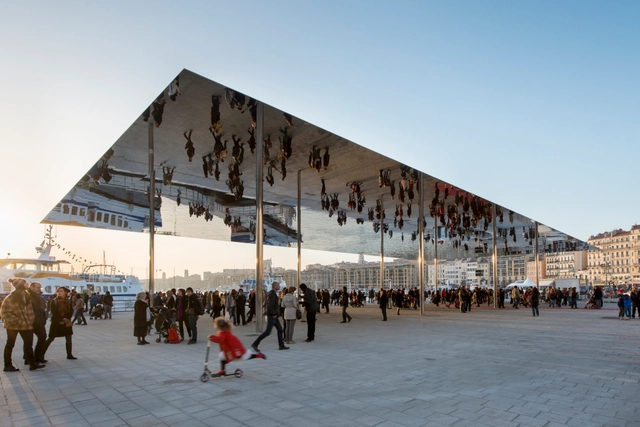
Saturday in Marseille, France, pedestrians and city officials joined Foster + Partners to celebrate the completion of the Vieux Port Pavilion at the mouth of Marseille’s World Heritage-listed harbor. Minimal, yet effective, this “discreet” intervention provides a new sheltered events space on the eastern edge of the port. With six slender pillars supporting its razor-thin profile, the polished 46 by 22 meter stainless steel canopy amplifies and reflects the surrounding movement, creating a spectacle that encourages pedestrians to linger.
More on Foster’s Vieux Port Pavilion after the break...
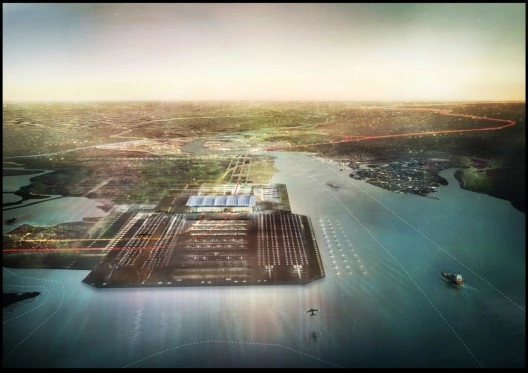
Foster + Partners have confirmed that they will submit their proposal for a new hub airport in the Thames Estuary to the Airports Commission, an organisation investigating airport capacity in the UK, by mid-July. The submission will be an important step towards getting government approval of the plan.
Foster + Partners, in conjunction with the European Space Agency (ESA), has undertaken a study to explore the possibilities of using 3D printing to construct lunar habitations on the moon's southern pole (where there is near perpetual sunlight). The firm has already designed a lunar base that could house four people, and has begun to test the structure in a vacuum chamber that echoes lunar conditions.
The shell of the base, which has a hollow closed cellular structure inspired by natural biological systems, should be able to protect potential inhabitants from "meteorites, gamma radiation and high temperature fluctuations." According to Xavier De Kestelier, Partner at Foster + Partners, the firm is "used to designing for extreme climates on earth and exploiting the environmental benefits of using local, sustainable materials – our lunar habitation follows a similar logic."
The study will also address the challenges of transporting materials to the moon, and is investigating the use of lunar soil, known as regolith, as the potential building matter.
More details from Foster + Partners' Press Release, after the break:
The 2013 RIBA Norman Foster Travelling Scholarship has recently been launched and is inviting applications from schools of architecture around the world. Proposals for research might include: learning from the past to inform the future; the future of society; the density of settlements; sustainability; the use of resources; the quality of urban life; and transport. A £6,000 grant will be awarded to one student by a panel of judges which includes Lord Foster and the President of the RIBA. The deadline for submissions is Friday, April 26. For more information, please visit here.
On the advice of English Heritage, architecture minister Ed Vaizey has listed Norman Foster’s first major public building: the 1977 Sainsbury Centre at the University of East Anglia, Norwich, in the United Kingdom. According to BDOnline, the popular public art museum, which houses the collection of Lord and Lady Sainsbury, was granted grade II* protection for its innovative engineering, fine design, historic association, flexibility and group value. Its revolutionary design features an innovative, prefabricated modular structure that is cleverly designed to allow for subsequent extension.
Vaizey described: “Norman Foster’s design for the Sainsbury Centre is recognized around the world as a high point of the British ‘high-tech’ movement and, by any standards, a modern classic.”
After Lincoln Center and the New York Philharmonic failed to raise the $300 million they needed to cover construction costs, and due to concerns that displacing the orchestra would jeopardize potential revenue, Foster+Partners' plans languished. However, the Philharmonic is now under new leadership, and its young directors are anxious to transform the conventional music hall, hence why they've decided to solicit new proposals for the building.
As the Orchestra's new executive eirector, Matthew VanBesien, told theNew York Times: “If you’re not thinking about the way in which our art form and music and audiences are evolving, you’re not serving the art form long term. You really want to build this next great hall in a new way, to do the kinds of things you maybe are doing but want to do in a more compelling way or maybe can’t even imagine yet.”
More info about the proposal for the new Avery Fisher Hall, after the break...
50 UN Plaza, Foster+Partners' first residential building in the U.S., broke ground this morning. With the Hearst Tower long finished, Tower 2 at Ground Zero near complete, and a new iconic building planned for 425 Park Avenue, 50 UN Plaza will only further solidify Lord Foster's mark on New York City.
The 44-story luxury tower's privileged spot at the United Nations Plaza will give it remarkable views of the UN Building, the East River, and the Manhattan skyline. According to Foster, the building's deep bay windows (which line each of the tower's 3 volumes) will maximize that view and, along with its steel and glass facade, give the tower a distinctive, "jewel-like quality": “The slender proportion of 50 United Nations Plaza is attenuated by the vertical stacks of bay windows, which give it a distinctive identity[...] The polished stainless steel detailing of the facade is in the sprit of earlier historic towers in the city and it reflects the sharp quality of light which is special to New York."
The building, whose construction will incorporate recycled materials, also has a strong environmental agenda, combining active and passive energy strategies.
According to theNew York Observer, the tower's 87 units will range in size from 1,100 square feet one-bedrooms; three bedrooms as big as 3,000 square feet; full-floor residences; and a penthouse duplex, measuring about 10,000 square feet. One of the marquee features will also be a private driveway. The tower is expected to cost $500 million and be completed in 2014.
More images and Foster+Partner's description of 50 UN Plaza, after the break...
Indeed, entering the Main Concourse of Grand Central Terminal is a pleasure that rivals few others. For me, it took me by surprise: walking, as New Yorkers do, in a determined beeline through an undistinguished tunnel, I was suddenly struck by light. I stopped, as New Yorkers never do, to observe a vaulted, starry ceiling, the changing light, and multitudes of people whipping by.
Grand Central is one of New York’s most beloved icons, one of the few which tourists and natives share alike. Which is not to say, of course, that it isn’t in need of a face-lift.
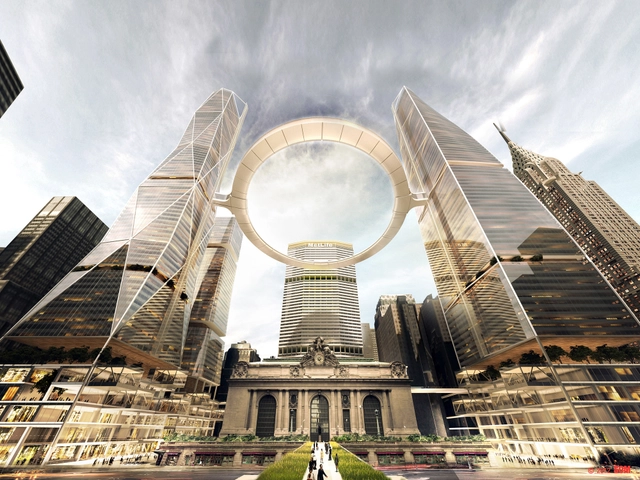
The Terminal’s upcoming centennial, which corresponds with proposed re-zoning laws that would completely change the face of Midtown, makes now the perfect moment to consider how Grand Central’s grandeur can be preserved and its neighborhood reinvigorated. Last week, the Metropolitan Art Society (MAS) invited three firms to share their visions - and while SOM’s gravity-defying “halo” may have stolen the show, only one truly captured the spirit of Grand Central, and explored the full potential of what it could - and should - one day be.
Norman Foster is undoubtedly one of the most influential architects of our time. Since establishing his award-winning practice in 1967 – originally titled Foster Associates – the Pritzker Prize laureate has grown Foster + Partners into an international powerhouse, with project offices in more than twenty countries.


nigel_young.jpg?1374697284&format=webp&width=640&height=580)
nigelyoung.jpg?1374696725 "© Nigel Young")
nigelyoung.jpg?1374696751 "© Nigel Young")
foster_partners.jpg?1374697174 "© Foster + Partners")
nigel_young.jpg?1374697622 "© Nigel Young")
nigel_young.jpg?1374697284)