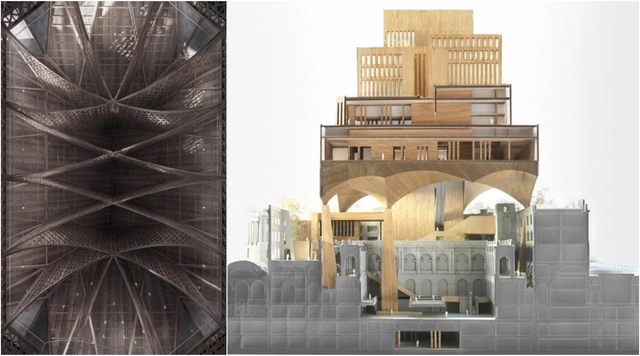
The Fundació Mies van der Rohe has announced a list of 40 projects that will compete for the Young Talent Architecture Award 2018 (YTAA 2018). The award was established in 2016 to “support the talent of recently graduated Architects, Urban Planners and Landscape Architects who will be responsible for transforming our environment in the future,” and joins the Foundation's European Union Prize for Contemporary Architecture – Mies van der Rohe Award “in promoting high-quality work amongst emerging and established architects through the acknowledgment of the value of good buildings.”
More than 330 projects were submitted from over 118 European, Chinese, and Korean architecture schools, which were narrowed down to a shortlist of 40 projects by an esteemed jury of architects and curators. The YTAA 2018 exhibition is a collateral event at the Venice Biennale, opening on May 24th at the Palazzo Mora, where 12 finalists will be announced. The names of the four winning schemes will become known on June 28th.
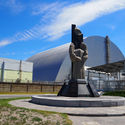
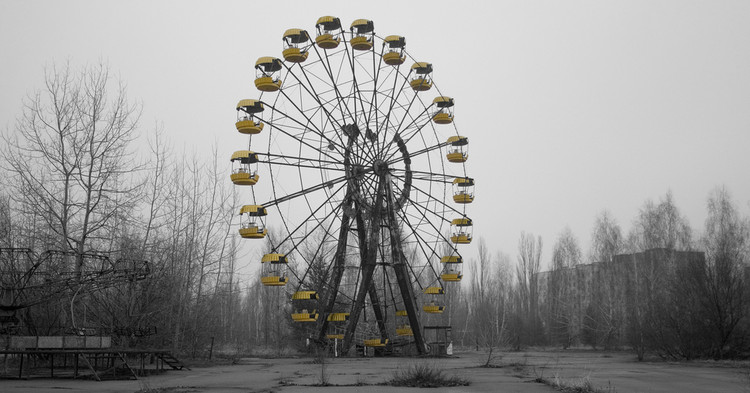
As the anniversary of the disaster and its fallout passes, we have explored the past, present, and future of the architecture of Chernobyl, charting the journey of a landscape which has burned and smoldered, but may yet rise from the ashes.
Mercer released their annual list of the Most Livable Cities in the World last month. The list ranks 231 cities based on factors such as crime rates, sanitation, education and health standards, with Vienna at #1 and Baghdad at #231. There’s always some furor over the results, as there ought to be when a city we love does not make the top 20, or when we see a city rank highly but remember that one time we visited and couldn’t wait to leave.
To be clear, Mercer is a global HR consultancy, and their rankings are meant to serve the multinational corporations that are their clients. The list helps with relocation packages and remuneration for their employees. But a company’s first choice on where to send their workers is not always the same place you’d choose to send yourself to.
And these rankings, calculated as they are, also vary depending on who’s calculating. Monocle publishes their own list, as does The Economist, so the editors at ArchDaily decided to throw our hat in as well. Here we discuss what we think makes cities livable, and what we’d hope to see more of in the future.
In his latest photo series, "Viennametry," Hungarian photographer and printmaker Zsolt Hlinka captures the unexplored voids in Vienna’s patchwork of historical and contemporary architecture. After previously studying the symmetrical corner buildings of grandiose Budapest, Hlinka has moved north to Austria on his quest to find geometry and symmetry within the urban landscape.
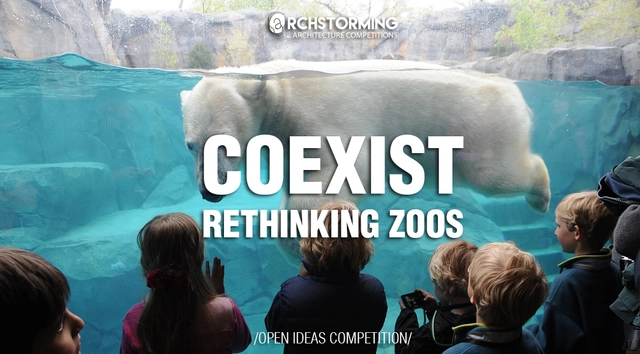
Future of zoos will be decided in the next few years. We are facing radical changes in the concept. Over the decades we have been proved that animal captivity, in most cases in terrible conditions, has affected badly their quality of life and their expected lifetime. The raison d’être and the welfare of the more than 3.5 million animals that they contain around the world are increasingly questioned. These places, emerged between the eighteenth and nineteenth century, deeply linked to colonialism and the discovery of new worlds, must evolve adapting to the new needs. The question is how to do so.
With a growing global trend of rural to urban migration, a focus on an understanding of parks, gardens and general green space in city centers is more important than ever. While a move to an urban center can offer improved access to employment, schooling, healthcare and cultural opportunities, it can come at a cost of increased stress and noise and decreased access to open space, fresh air and nature. For urban and forestry researcher Phillipp Gärtner, this raised the question of which European capital cities have the greenest space.
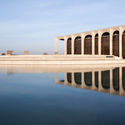
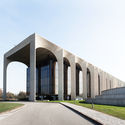
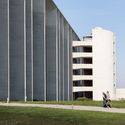
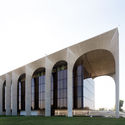
As a trailblazer of Brazilian Modernism, Oscar Niemeyer is celebrated for his bold, sinuous forms, and his use of the “the liberated, sensual curve.” Paul Goldberger described it best when he wrote that “Niemeyer didn’t compromise modernism’s utopian ideals, but when filtered through his sensibility, the stern, unforgiving rigor of so much European modernism became as smooth as Brazilian jazz.”
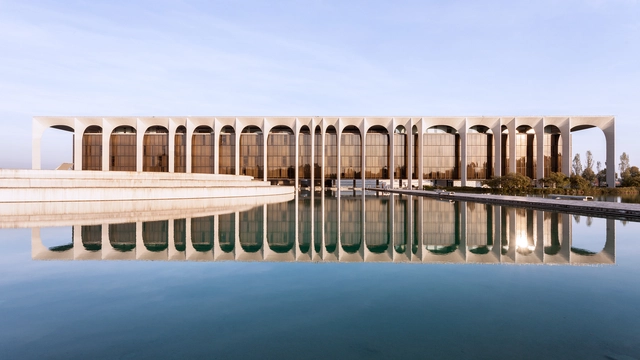
When Georgio Mondadori, chairman of the Italian publishing house Mondadori, commissioned Niemeyer to design the company’s new headquarters in 1968, he wanted the building to look like the Itamaraty Palace (also known as Palace of the Arches) in Brasília. Niemeyer agreed, but given his playful spirit, he deliberately deviated from the earlier design and proceeded to build what he would later identify as his favorite of the projects he completed in Europe. Read on to see a striking set of sixteen photographs of the Mondadori building by Milan-based photographer and visual artist Karina Castro, who was commissioned by Mondadori to capture their headquarters over 40 years after the building's completion.
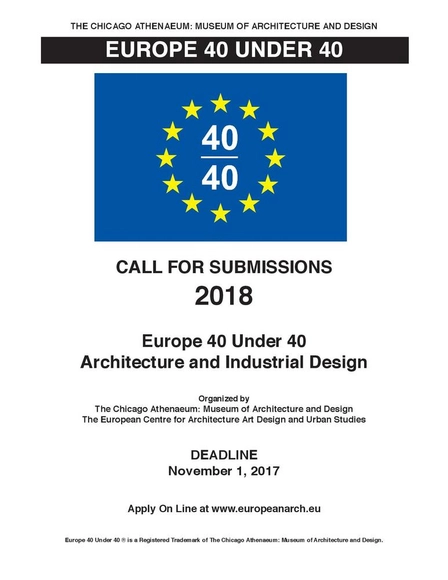
In a bold attempt to identify the next, upcoming generation of European architecture practitioners, The European Centre for Architecture, Art, Design and Urban Studies announces the 2018 submission dates for the European-wide Awards Program that identifies, promotes, and exhibits the next generation of European architects under the age of 40.
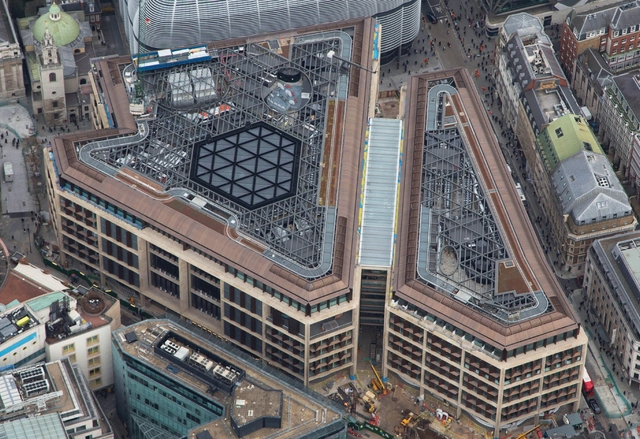
Bloomberg’s new European HQ, which is located in the heart of the City of London, has been rated the world’s most sustainable office building. Designed by Foster + Partners, the office complex has been awarded an Outstanding BREEAM rating, attaining a 98.5% score – the highest design-stage score ever achieved by any major office development.
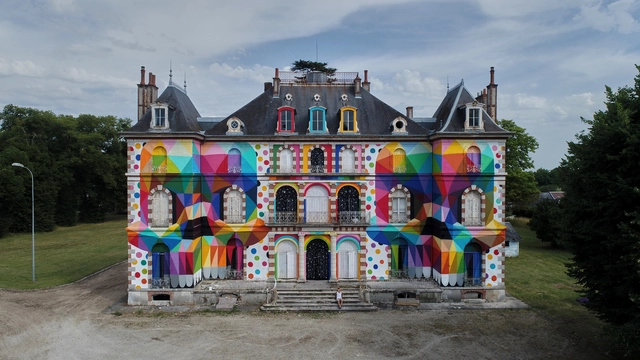
Okuda, the Spanish artist who has been converted into one of the biggest figures in pop surrealism, is continuing his artistic journey in France. After paying homage to the Mona Lisa in the façade of a 19 story building and designing a trampoline above the Seine River, the artist has now taken on the façade of the Valette Castle (1864) in Loiret, which has been abandoned since the 80’s.
The work is titled “Skull in Mirror” and reactivates the Valette Castle whose history links France and Spain. In 1936, during the time of the Spanish Civil War, Republicans purchased the castle, where initially it housed children evacuated from conflict and then later, political exiles. In the 50’s, Spain, under Franco’s rule reclaimed it and used it for holiday camps. Two decades later, the castle was converted into a Spanish school and by 1986 was left abandoned. In 2002, it was acquired by the Pressigny-les-Pins council and a private company.
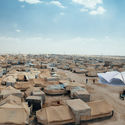
Over the past two years alone, more than a million people have fled the Syrian conflict to take refuge in Europe, strenuously testing the continent’s ability to respond to a large-scale humanitarian crisis. With the Syrian Refugee Crisis still unresolved, and temporary refugee camps now firmly established on the frontiers of Europe, architects and designers are devoting energy to improving the living conditions of those in camps fleeing war and persecution.
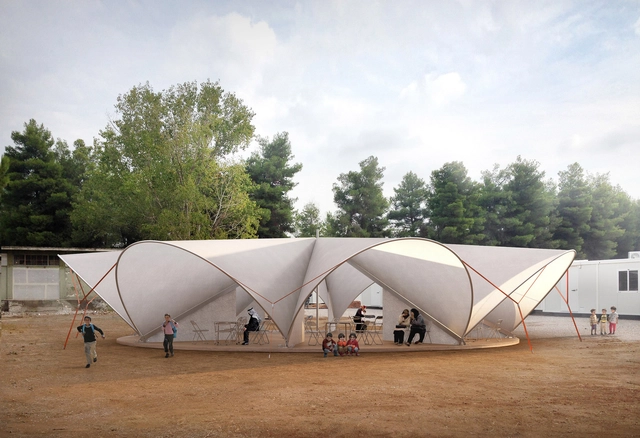
One emerging example of humanitarian architecture is Maidan Tent, a proposed social hub to be erected at a refugee camp in Ritsona, Greece. Led by two young architects, Bonaventura Visconti di Modrone and Leo Bettini Oberkalmsteiner, and with the support of the UN International Organization for Migration, Maidan Tent will allow refugees to benefit from indoor public space – a communal area to counteract the psychological trauma induced by war, persecution, and forced migration.
MArch Valencia originates as a cultural meeting point for professional architects and designers, students and companies with a same set of values; with the aim of bringing together and sharing all different experiences that arise during creative processes.
A nexus between the academical, professional and enterprise worlds, which is vital nowadays.
This different master and postgraduate MArch programs, are directed by Fran Silvestre and feature influential speakers and studios from the current architecture as Alvaro Siza Studio, Souto de Moura Studio, Manuel Aires Mateus Architects, OAB • Ferrater, Juan Domingo Santos and Fran Silvestre Architects.
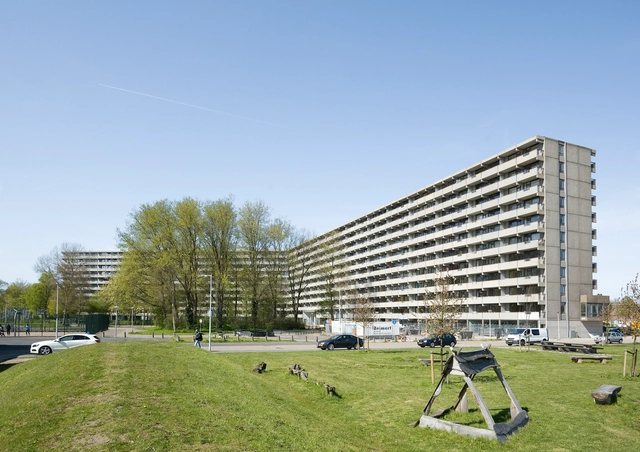
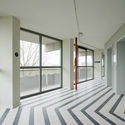
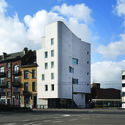
One of the largest residential buildings in the Netherlands, the complex was saved from the wrecking ball through its transformation into a rejuvenated framework called a “Klusflat," within which inhabitants could renovate their apartments by themselves. This is the first time the award has been given to a renovation of an existing building.
The "After Schengen" photo series shows old border crossing points between different states in the European Union. After the Schengen agreement, most of these old checkpoints remain abandoned and out of service, allowing us to gaze into the past from the present. It causes many reflections, especially at a moment when European Union project is heavily discussed.
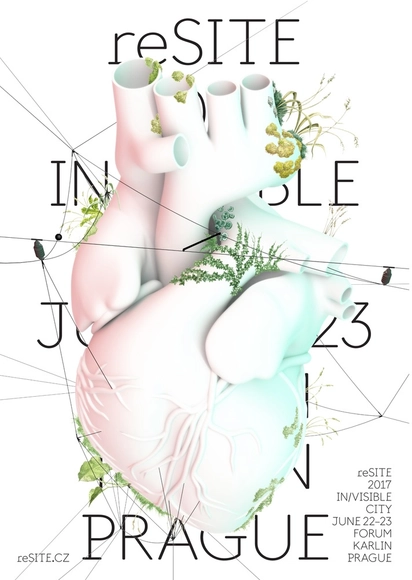
reSITE brings the 6th annual architecture and urbanism event, reSITE 2017: In/visible City, back to Prague at the Ricardo Bofill-designed Forum Karlin.
How does invisible infrastructure shape the visible aspects of a city?
40 international thought leaders will discuss the intersections of design and infrastructure and the presence of these vital systems in the architecture and landscape of cities.
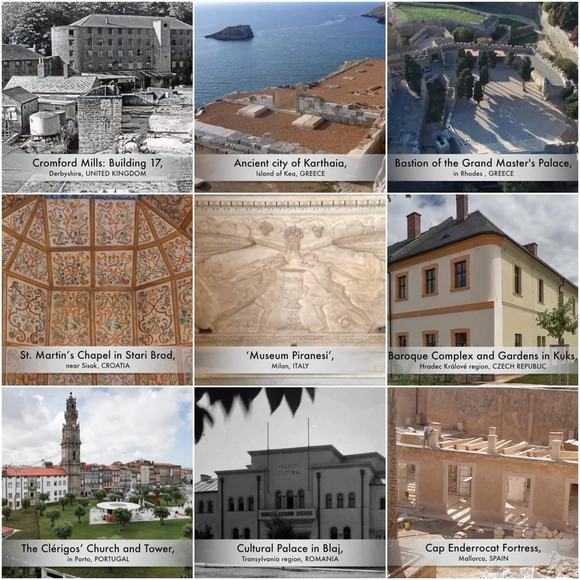
The European Commission and Europa Nostra have unveiled the winners of the 2017 European Union Prize for Cultural Heritage / Europa Nostra Awards, which honor achievements in conservation, research, dedicated service, and education, training and awareness. Out of 202 applications from 39 countries, 29 winners have been selected.
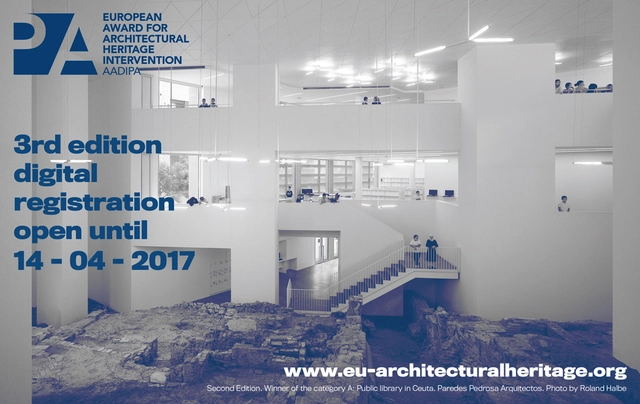
Second Edition. Winner of the category A: Public library in Ceuta. Paredes Pedrosa Arquitectos. Photo by Roland Halbe
The Award for Architectural Heritage Intervention AADIPA, arises from the belief that heritage, as a vehicle for social integration and an economic vitalizing resource for the community, deserves to be appreciated and encouraged. In the current context, in which architectural heritage is considered not only to be a fundamental instrument of knowledge but also a first rate socio-economic resource for the sustainable development of the territory, the disclosure, distinction and recognition of works and quality projects contributing to the preservation of the collective memory is imperative.
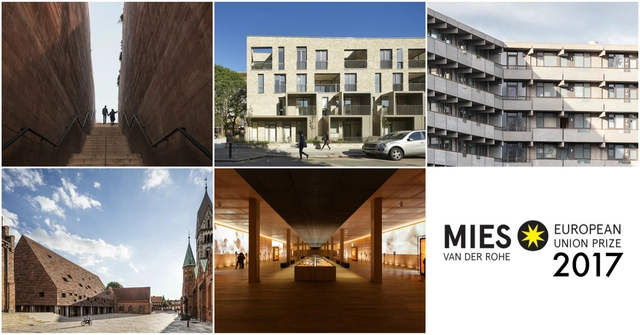
“Our instincts could be summed up by the words of Peter Smithson: ‘things need to be ordinary and heroic at the same time,’” said Jury Chairman Stephen Bates. “We were looking for an ordinariness whose understated lyricism is full of potential’.”
Through April, the jury members will visit each finalist project to evaluate the buildings firsthand and to see how they are used by the public. The Prize Winner will be announced in Brussels on May 16.