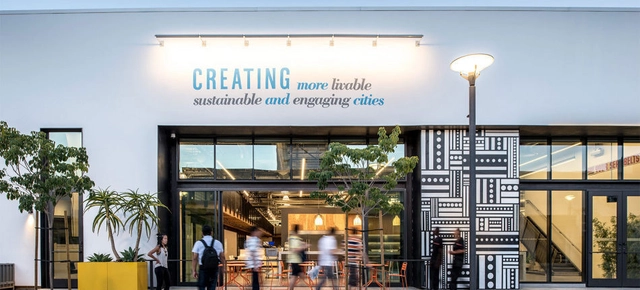
Studio One Eleven converted underutilized retail into their creative work space, for 135 employees; adjacent local and crafted retail can now better flourish. The project spurred the city of Long Beach to rejuvenate Harvey Milk Park, allow for multiple street decks for outdoor dining, and encouraged several high-quality public art installations by POW! WOW!.. Image Courtesy of Los Angeles County Public Library
My first encounter with saving a building landed me in handcuffs and a trip to the Long Beach Police Department. A friend and I were frustrated that our hometown was demolishing good buildings—because they did not conform with the current style of architecture—only to replace them with parking lots! All in the name of “progress.” In 1988, when we learned that the Jergins Trust Building, a Beaux-Arts beauty, was slated to be torn down with no plans for the site, we jumped into action and chained ourselves to the building to stop the wrecking crew. Our efforts kept it up for another four hours. And then it was gone forever.
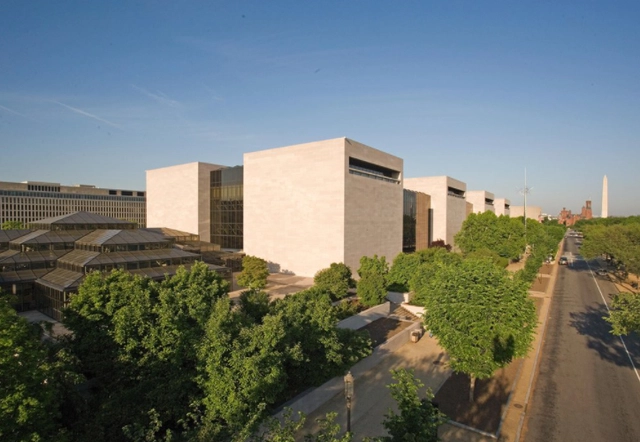
The Smithsonian Institution has announced that the glass-clad pyramid restaurant of Washington D.C's National Air and Space Museum, designed by Gyo Obata, FAIA, co-founder of renowned architecture firm HOK, will be demolished this spring and replaced with a new educational facility titled the Bezos Learning Center. The restaurant is one of two buildings designed by the late architect for the National Mall, originally constructed in 1988 as an additional structure to the National Air and Space Museum, that served as a dining area for the museum's visitors.
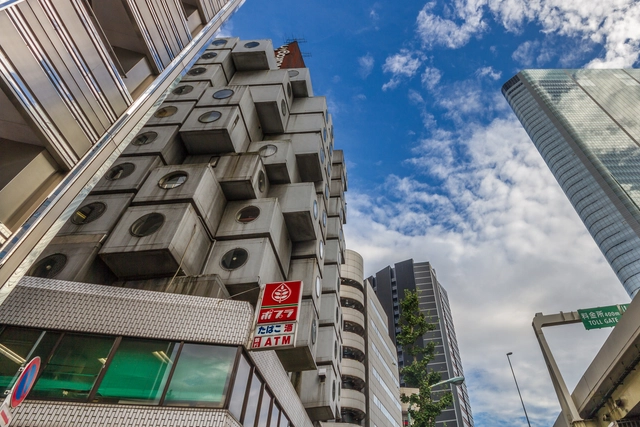
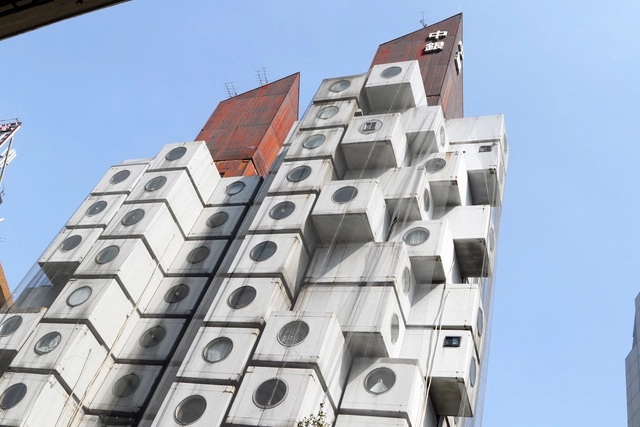
Following months of uncertainties and preservation attempts, Kisho Kurokawa's iconic Nakagin Capsule Tower will be demolished on April 12th of this year. Tatsuyuki Maeda, one of the current owners of the tower, explained that a team will try to preserve some of the capsules, and regenerate them as accommodation units and museum installations across the world.
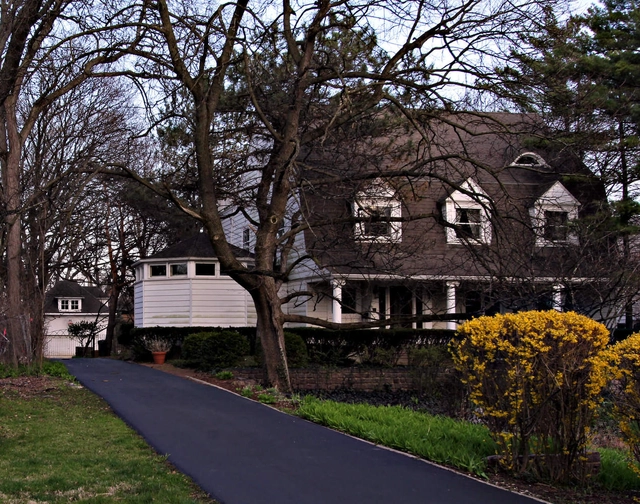
Contemporary view of the Bagley House. Image Courtesy of Patrick Mahoney, AIA
Less than two months ago, the future of an 1894 Dutch Colonial-style home designed by Frank Lloyd Wright wasn’t looking all that bright after it hit the market for $1.3 million in the Chicago suburb of Hinsdale, Illinois. As of this week, however, the historic Frederick Bagley House, described by the nonprofit Frank Lloyd Wright Building Conservancy as a “unique and irreplaceable” early work of Wright, has found a very happy ending—or, more aptly, a new beginning.
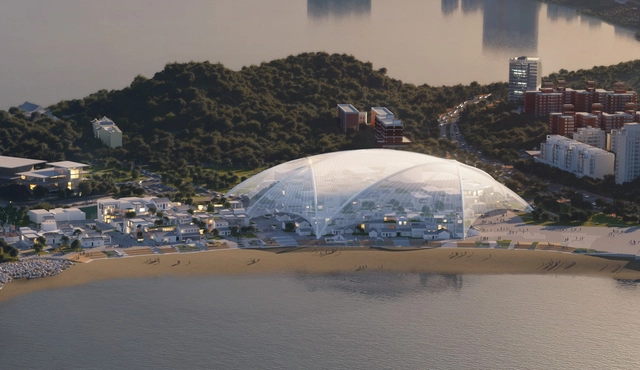
Following China's rapid urbanization and emergence of new districts and public buildings, MAD Architects, led by Ma Yansong, has won an international competition to design the new Zhuhai Cultural Arts Center. Their proposal, titled "Village Under the Dome", will be situated within China’s Pearl River Delta in the Yinkeng Village, a historic town that has recently been demolished and relocated by the municipality to make room for new projects. Instead of rebuilding over the demolition, their design offered a conservation and renewal of the village, creating a new function of the original site.
One of the most iconic examples of Metabolist architecture, Kisho Kurokawa'sNakagin Capsule Tower, might be headed for demolition, as the building was sold by the management association to the landowner earlier this year, as reported by Japan Forward. The tower's demise has been intensely speculated in recent years due to the structure's precarious state and incompatibility with current seismic standards.
Videos
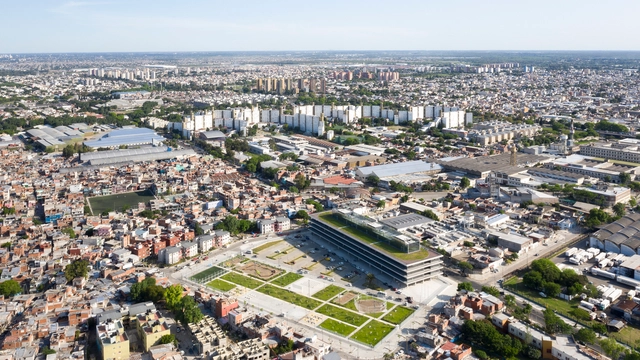
Nuevo Ministerio de Desarrollo Humano y Hábitat - El después del Elefante Blanco. Image Cortesía de Secretaría de Desarrollo Urbano / Gobierno de la Ciudad Autónoma de Buenos Aires
Not all works of architecture are a success. In fact, there is a term reserved especially for architectural creations that have proven simultaneously extravagant and wasteful: "White Elephants."
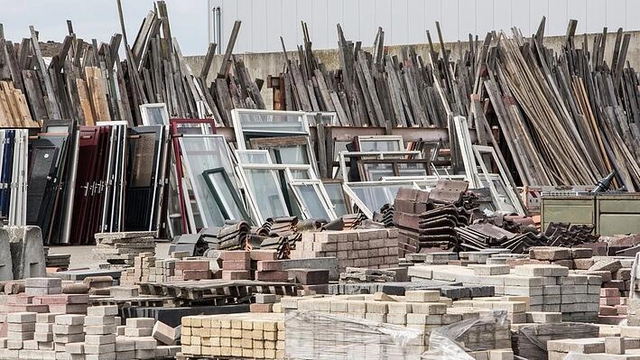
Stockyard of recycled building materials waiting for reuse . Image Courtesy of NY Engineers
“Out with the old and in with the new,”....or so they say. In the United States, a cloud of dust and debris paired with a wrecking ball and bulldozer tends to represent signs of forward progress, innovation, economic activity, and the hope for a better future through architectural design.
I recently viewed a public art commission at Dubai's foremost cultural district - Alserkal Avenue: it was an installation by an artist collective - METASITU, who had transformed a warehouse on the Avenue previously known as Nadi Al Quoz, into a 21st-century ruin. The work titled: 'we were building sand castles_but the wind blew them away', was inspired by the perennial demolitions that have become an integral part of contemporary placemaking around the world. Through this piece of work, METASITU reflects on the extractive city-building processes, while contextualising them within different human and ecological timelines. The long-term vision of the artists was to deconstruct the building and return its constituent materials to their ‘original state’. Later this year, they plan to further deconstruct the installation into a public landscaped environment.
New York City has gained a reputation for its soaring towers thanks to unprecedented engineering technologies and New York’s air-rights policy, which permits developers to acquire neighboring unused airspace and construct large structures without any type of previous public review. But how are these super tall skyscrapers being accommodated? By replacing older existing structures. This out-with-the-old-in-with-the-new pattern comes as no surprise, as the “concrete jungle” is gradually being axed to make room for an even larger jungle.
The Council on Tall Buildings and Urban Habitat (CTBUH) has recently released a new research study titled "Tallest Demolished Buildings" that examines 100 of the tallest buildings ever to have been dismantled by their owners. The report confirms that, if JPMorgan Chase continues with their plans, SOM's 270 Park Avenue in New York City would become the tallest building ever conventionally demolished, as well as the first over 200 meters in height.
The study showed that in most cases, the buildings were torn down to make way for newer high-rises, as was the case for the current tallest building ever to be demolished, the Singer Building in New York City. The Singer Building stood 187 meters and 41 stories tall until it was torn down in 1968 to make way for One Liberty Plaza.
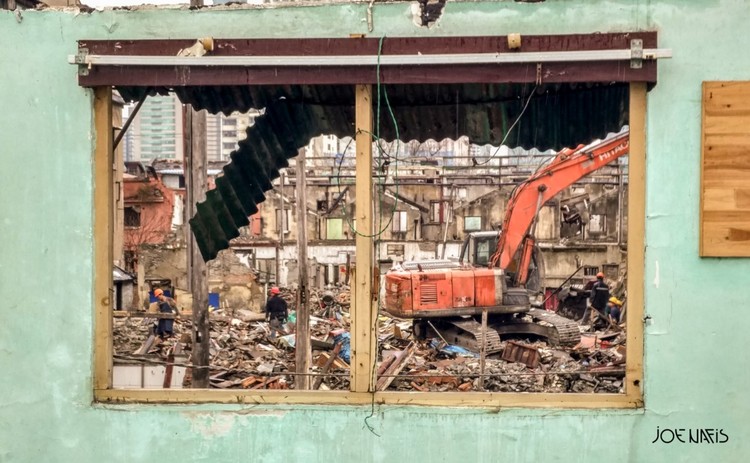
As Shanghai works hard to become an international economic, financial, trade and shipping center of the world, the city powers behind to keep up with the ever-growing needs. Joe Natis’ video follows the demolition of the buildings that didn’t quite make the cut for the fast-paced 21st century living as soaring skyscrapers and developments take their place.
In the latest in their Daily360 series, the New York Times takes a look at this past weekend's demolition of the old Kosciusko Bridge on Newton Creek between the boroughs of Brooklyn and Queens. Built in 1939, the steel truss bridge had become a major bottleneck for traffic over the past 8 decades, prompting the state government to invest in a new cable-stayed design. The first span of that bridge opened in April, with a second span to be built over the path of the former bridge.
“This is an area that was polluted from the industrial manufacturing economy,” said New York State Governor Cuomo. “We’re cleaning it up, but I think the crown jewel is going to be that new Kosciuszko bridge.”
On the morning of April 24th, Delhi’s architecture community reacted in shock and disgust to the news that the city's Hall of Nations and the four Halls of Industries had been demolished. Bulldozers had worked through the previous night at the Pragati Maidan exhibition grounds in central Delhi, where the Indian Trade Promotion Organisation (ITPO) razed the iconic structures to the ground, ignoring pleas from several Indian and international institutions.
The Hall of Nations, the world’s first and largest-span space-frame structure built in reinforced concrete, holds special significance in India’s post-colonial history—it was inaugurated in 1972 to commemorate twenty-five years of the young country’s independence. The demolition was met with widespread condemnation by architects and historians alike, not just because of the loss of an important piece of Delhi's heritage, but also for the clandestine manner in which the demolition was conducted.
Videos
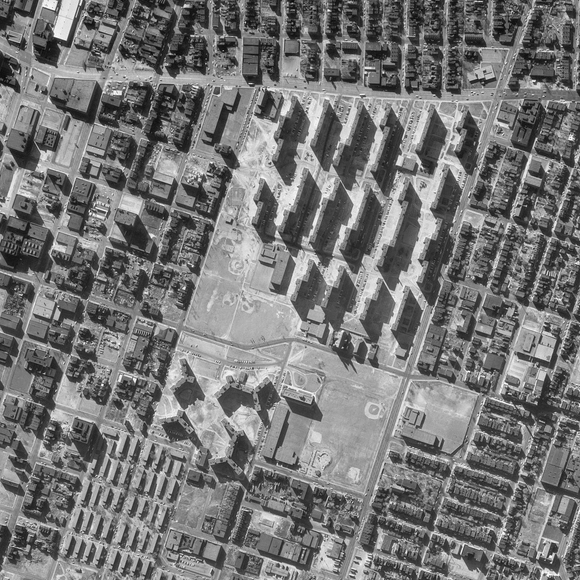
An aerial photo by the US Geological Survey compares the narrow, monolithic blocks of Pruitt-Igoe with the neighboring pre-Modernist buildings of St. Louis. ImageCourtesy of Wikimedia user Junkyardsparkle (Public Domain)
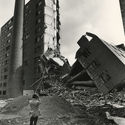
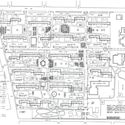
Few buildings in history can claim as infamous a legacy as that of the Pruitt-Igoe Housing Project of St. Louis, Missouri. Built during the height of Modernism this nominally innovative collection of residential towers was meant to stand as a triumph of rational architectural design over the ills of poverty and urban blight; instead, two decades of turmoil preceded the final, unceremonious destruction of the entire complex in 1973. The fall of Pruitt-Igoe ultimately came to signify not only the failure of one public housing project, but arguably the death knell of the entire Modernist era of design.
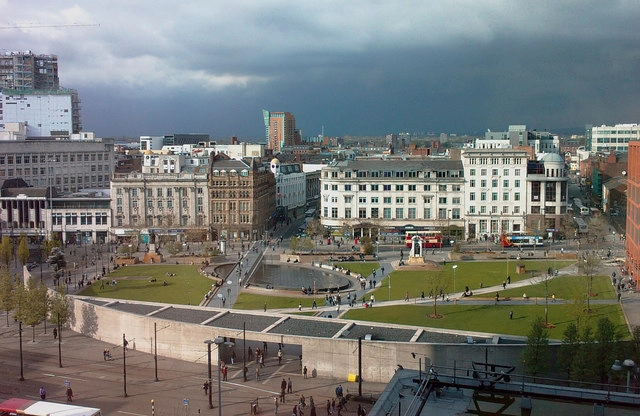
Tadao Ando’s only project in the United Kingdom, the ‘Japanese Pavilion’ at Piccadilly Gardens in Manchester, is slated for demolition as part of a £10m redesign of the park and plaza.
Built in 2002 as part of a makeover for the square, the pavilion takes the form of a long, gray concrete wall along the park’s southwestern edge, which critics have argued divide the public space, describing the design as “bleak and depressing” and comparing it to the Berlin Wall.
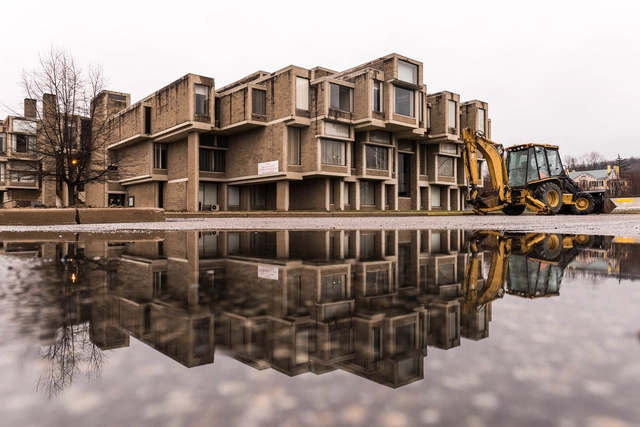
Visiting on four separate occasions throughout 2015 and 2016, Erskine captured the dismantling of this iconic Brutalist work with stunning severity. See the building's final seasons below.













10.jpg?1587641554&format=webp&width=640&height=580)
7.jpg?1587641448 "© Ismail Noor")
4.jpg?1587641493 "© Ismail Noor")
2.jpg?1587641529 "© Ismail Noor")
11.jpg?1587641544 "© Ismail Noor")
10.jpg?1587641554)