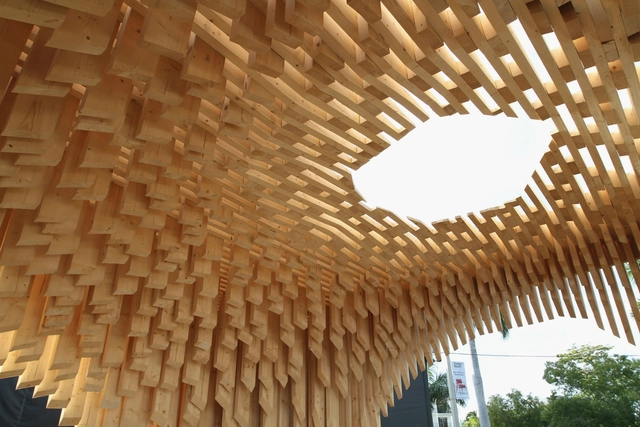
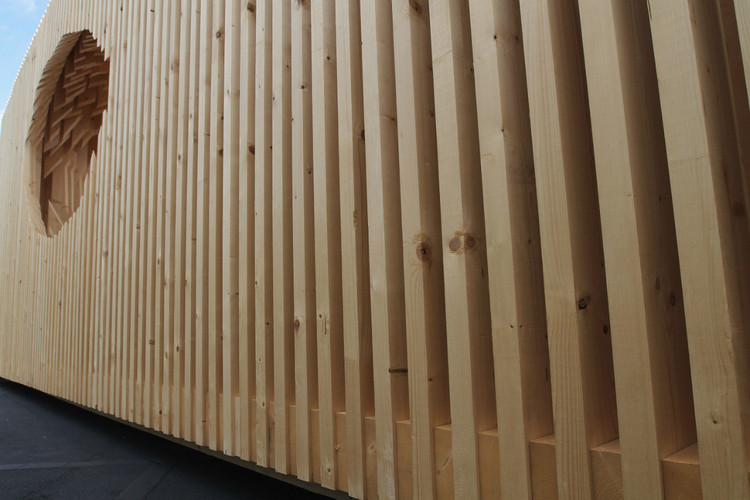
The 54th edition of Milan Design Week (also known as Salone del Mobile) recently came to a close. In celebration of its success, we have compiled a list of the most talked about architect-designed products showcased this year. Take a look after the break to see new products from Rem Koolhaas, Zaha Hadid, David Chipperfield, and more.
As the legacy of the Cold War fades and Western preeminence gradually becomes a thing of the past, population booms in Asia followed by the growth of a vast non-western middle class have seriously challenged the Western perception of the world. The East has become the focal point of the world’s development.
If East Asia is the present focal point of this development, the future indisputably lies in Africa. Long featuring in the Western consciousness only as a land of unending suffering, it is now a place of rapidly falling poverty, increasing investment, and young populations. It seems only fair that Africa’s rich cultures and growing population (predicted to reach 1.4 billion by 2025) finally take the stage, but it’s crucially important that Africa’s future development is done right. Subject to colonialism for centuries, development in the past was characterized by systems that were designed for the benefit of the colonists. Even recently, resource and energy heavy concrete buildings, clothes donations that damage native textile industries, and reforestation programs that plant water hungry and overly flammable trees have all been seen, leaving NGOs open to accusations of well-meaning ignorance.
Fortunately, a growth in native practices and a more sensible, sensitive approach from foreign organizations has led to the rise of architectural groups creating buildings which learn from and improve Africa. Combining local solutions with the most appropriate Western ideas, for the first time these new developments break down the perception of monolithic Africa and have begun engaging with individual cultures; using elements of non-local architecture when they improve a development rather than creating a pastiche of an imagined pan-African culture. The visions these groups articulate are by no means the same - sustainable rural development, high end luxury residences and dignified civic constructions all feature - but they have in common their argument for a bright future across Africa. We’ve collected seven pioneers of Africa’s architectural awakening - read on after the break for the full article and infographic.
Starting January 29th, Munich's Haus der Kunst will host "Form, Heft, Material," a major retrospective of the work of British architect David Adjaye. Co-curated by Okwui Enwezor and Zoe Ryan, the exhibition's broad catalogue reflects Adjaye's diverse career and portfolio, including architectural projects alongside material experiments, research, and furniture design. Through sketches, models, prints, drawings, 1:1 building fragments, film, and text, "Form, Heft, Material" foregrounds Adjaye's work against the rich geographical and social context that frames his design approach.
Given the country's rich architectural history spanning almost the entirety of the 20th century, you'd be forgiven for thinking that the fall of Russian Communism in the early 1990s might have sparked an exciting new era in design. That promise hasn't exactly been fulfilled, but as The Calvert Journal reports, a few promising recent projects are hinting at a Russian Renaissance.
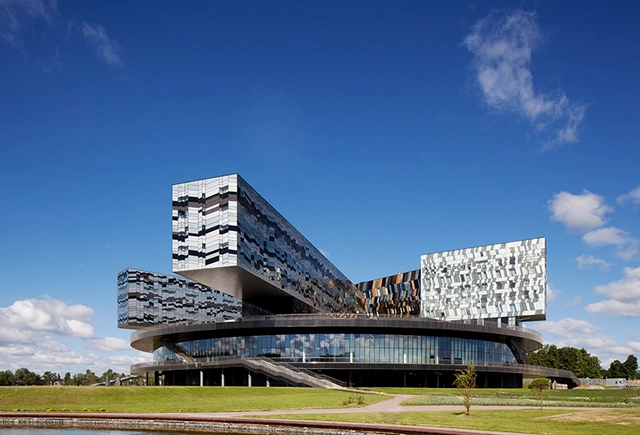
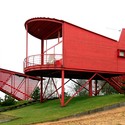
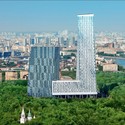
The last twenty years of architecture has added little but bog-standard steel-and-glass office blocks to the limited palate of the Russian cityscape — the usual glinting onion domes, pompous Stalinist neoclassicism and crumbling tower blocks. But lately some architects have dared to differ and turned bold blueprints into bricks and mortar. Read on after the break for our pick of the best Russian buildings of the last decade.
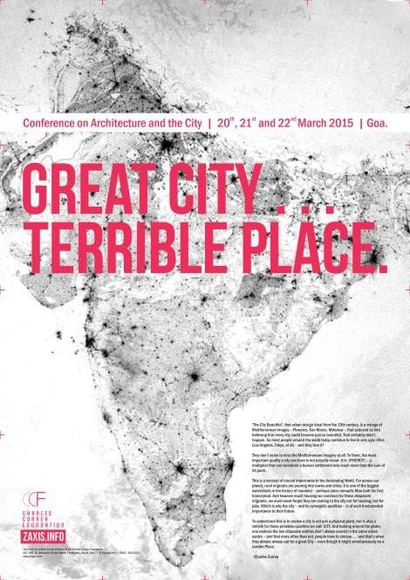
Curated by the Charles Correa Foundation, the Z Axis is an annual conference bringing together pioneers, thought leaders, influencers, professionals, and students in the fields of architecture and urban design to create an intellectual community focused on issues related to the context of India and the developing world. Fifteen speakers will gather from across the globe to explore the theme of Great City…Terrible Place, including Charles Correa, David Adjaye, Alfredo Brillembourg of Urban Think Tank, Spain's "guerrilla architect"Santiago Cirugeda, Simone Sfriso of Studio TAM Associati and more.
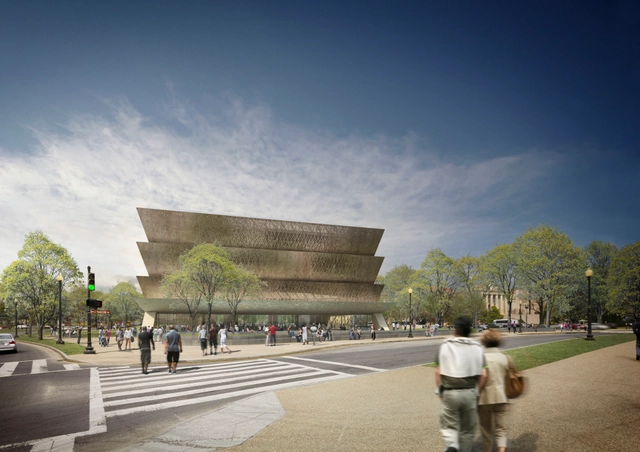
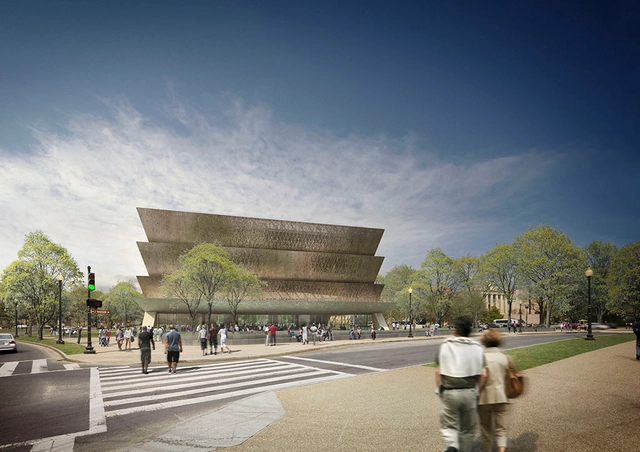
Smithsonian Institution’s National Museum of African American History and Culture, Washington, D.C.. Image Courtesy of Adjaye Associates
On September 30, Mohsen Mostafavi will present David Adjaye with the W.E.B. Du Bois Medal, Harvard University’s highest honor in the field of African and African American studies, at the Hutchins Center Honors. Since 2000, the Du Bois Medal has been awarded to individuals from across the globe in recognition of their contributions to African and African-American history and culture. Adjaye is one of nine luminaries receiving this year’s award, including Oprah Winfrey and the late Maya Angelou. More information about the ceremony can be found here.
Smithsonian National Museum of African American History and Culture. Image Courtesy of Adjaye Associates
In an interview with Rowan Moore for The Observer, British born architect David Adjaye discusses his work, personality and ambitions as head of the one of the fastest growing internationally operating practices. With Moore's immersive descriptions and expertly written narrative, the "breadth of Adjaye's vision" becomes apparent. Featuring precise descriptions of some his upcoming projects, including the designs for the Smithsonian's National Museum of African American History and Culture and a number of smaller buildings in London, Moore's discussion ultimately explores Adjaye's early (and successful) steps into the African architectural market. You can read the interview in full here.
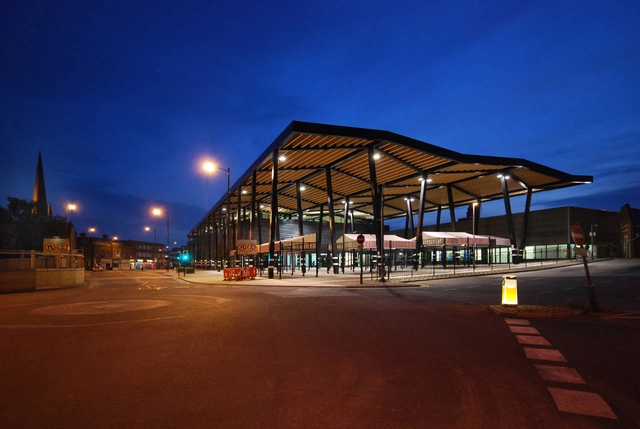
Yorkshire councilors have indicated the demise of David Adjaye’s first public project, the Wakefield Market Hall. Faced with harsh budget cuts, the local council is considering an offer by Sovereign Land, owner of the neighboring shopping complex, after the heavily subsidized 6-year-old market has consistently failed to attract enough business. If next week’s council vote sways in the developers favor, the £3 million structure will be bulldozed and replaced by a cinema.
Smithsonian Institution’s National Museum of African American History and Culture, Washington, D.C. | Image Courtesy of Adjaye Associates
Each year The Architectural League in its Current Work program presents the work of significant international figures who powerfully influence contemporary architectural practice and shape the future of the built environment. David Adjaye will present his work in a public lecture to be followed by a conversation with moderator Gregg Pasquarelli, founding principal at SHoP Architects.
The Wall Street Journal has announced David Adjaye as "Architecture Innovator" for 2013. The 47-year old Tanzanian-born and British-educated architect, whose current projects span from affordable housing apartments in Harlem to the African American History and Culture Museum in Washington D.C., "has the unique ability to speak to experiences and to people outside the norms of his profession," delivering his message across cultural boundaries.
https://www.archdaily.com/447149/wsj-announces-david-adjaye-as-architecture-innovator-of-2013Jose Luis Gabriel Cruz
The list of architects that have collaborated with Zhang Xin’s development company, SOHO China, reads like the roster of an architectural dream team (which includes Zaha Hadid, Yung Ho Chang, Bjarke Ingels, Kengo Kuma, Kazuyo Sejima, Herzog & de Meuron, Thom Mayne, David Adjaye, Toyo Ito and others). So it’s no surprise that the self-made billionaire lectured to a packed house at Harvard University’s Graduate School of Design last Thursday. Xin spoke about her commitment to and love of design, explaining that her company’s mission is to bring a variety of architectural languages to China. And though SOHO’s projects are certainly experimental, Xin contends that her developer mindset actually helps meliorate the architect’s propensity to take the experiment too far—all without sacrificing the impressive and iconic forms of SOHO’s building portfolio.
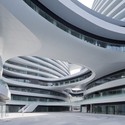
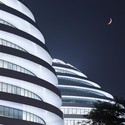
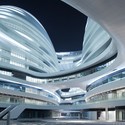
WatchZhang Xin link her practice in real estate to larger global issues and catch a glimpse of two Zaha Hadid-designs currently under construction: Wangjing SOHO and Sky SOHO.
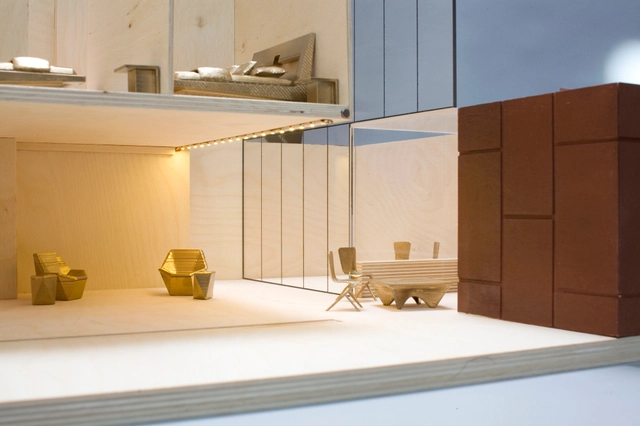
Adjaye Associates. Image Courtesy of A Dolls' House
Inspired by the dolls’ house that Edwin Lutyens designed for The British Empire Exhibition in 1922, twenty British practices are each designing a contemporary dolls’ house in aid of the disabled childrens’ charity KIDS. Each version will sit on a 750mm square plinth to be auctioned at Bonham's on the 11th November and contains one feature which would make life easier for a disabled child. Among the participating practices is Zaha Hadid Architects and Rogers Stirk Harbour + Partners. FAT will also be working with Turner Prize recipient Grayson Perry CBE, and Studio Egret West with artist Andrew Logan.
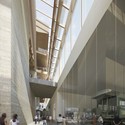
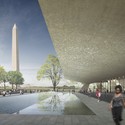
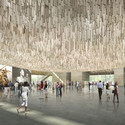
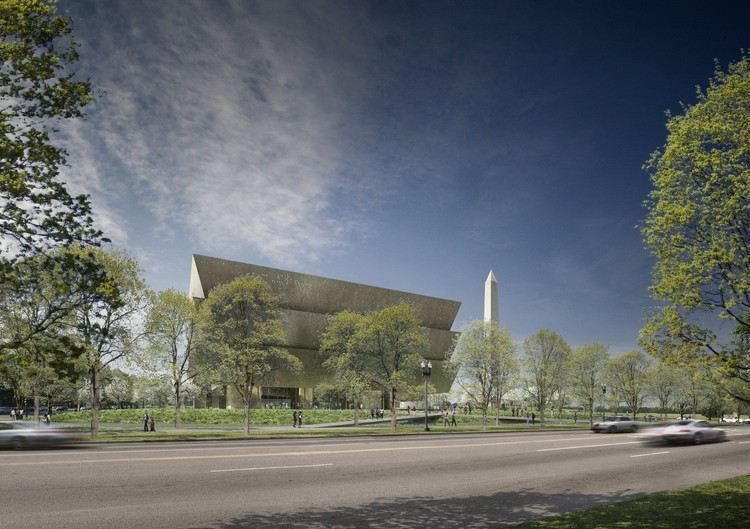
We have been covering the progress of the Smithsonian National Museum of African American History and Culture over the last several months, our most recent being President Obama’s speech at the ceremony for the official ground breaking. Adjaye Associates recently shared with us some insight into the inspiration for the design and its grounding principles. We also have several new perspective renders illustrating the internal experience. More details after the break.
President Obama attended the official ground breaking ceremony of the National Museum for African American History and Culture (NMAAHC) on February 22, commemorating this milestone for the Smithsonian Institution’s new museum on Washington’s National Mall. The Tanzanian-born, London-based architect David Adjaye serves as Lead Designer for the Freelon Adjaye Bond/SmithGroup (FAB) team that was selected by the Smithsonian Institute back in 2009 in the international competition for the design of the nation’s new prestigious building.
The President began his brief remarks by stating, “As others have mentioned, this day has been a long time coming. The idea for a museum dedicated to African Americans was first put forward by black veterans of the Civil War. And years later, the call was picked up by members of the civil rights generation -– by men and women who knew how to fight for what was right and strive for what is just. This is their day. This is your day. It’s an honor to be here to see the fruit of your labor.”
Continue reading for more information on the project and a video of President Obama’s speech.
London-based architect David Adjaye was selected for the 2011 Designer of the Year Award by Design Miami – a global forum for design that highlights influential collectors, gallerists, designers, curators and critics from around the world, presenting annual fairs in Miami, USA and Basel, Switzerland. Design Miami praised Adjaye for his “ingenious use of materials and unique ability to showcase light coupled with his democratized approach to the architectural process.”
This week our Architecture City Guide heads to the “Mile-High City”. In the shadows of the Rocky Mountains, Denver’s architecture can be as dramatic and serene as its surrounding landscape. From the moment your plane touches down at the Denver International Airport you are immersed in state-of-the-art architecture. We have included a dozen places to go once you arrive. Where else would you visit? Please leave suggestions of buildings a Denver visitor shouldn’t miss.