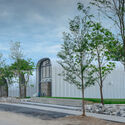
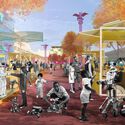
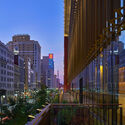
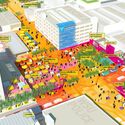
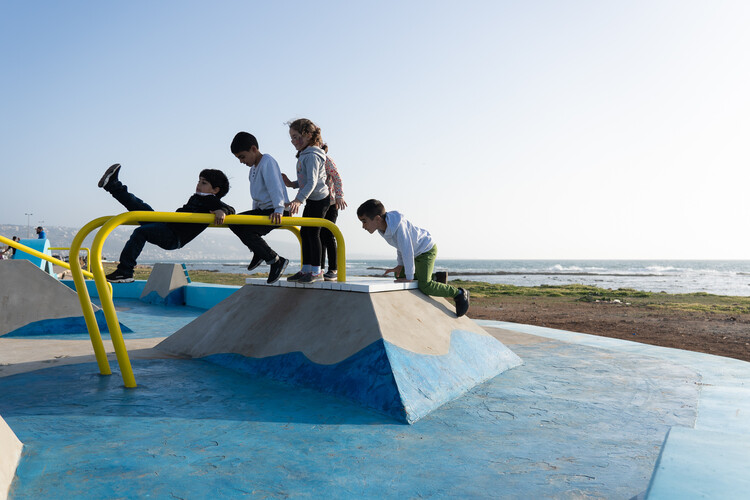
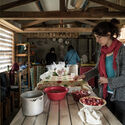
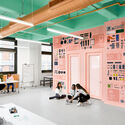
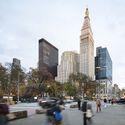
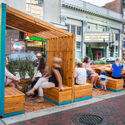
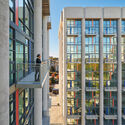
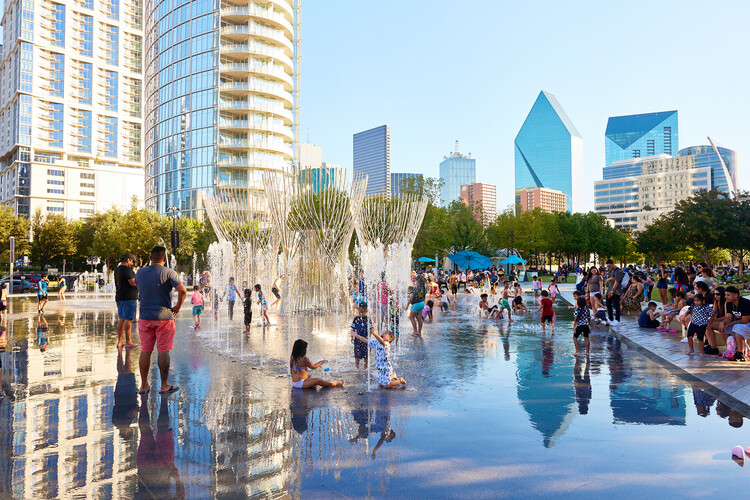
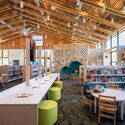
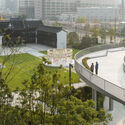
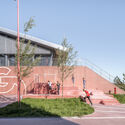
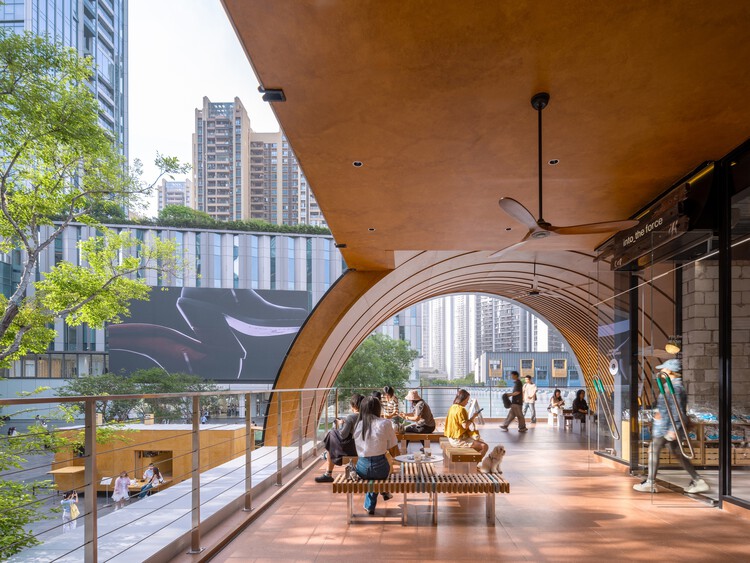
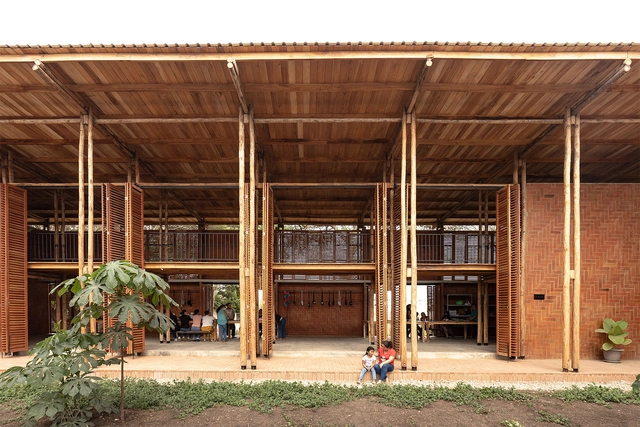
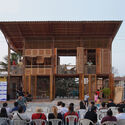
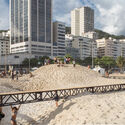
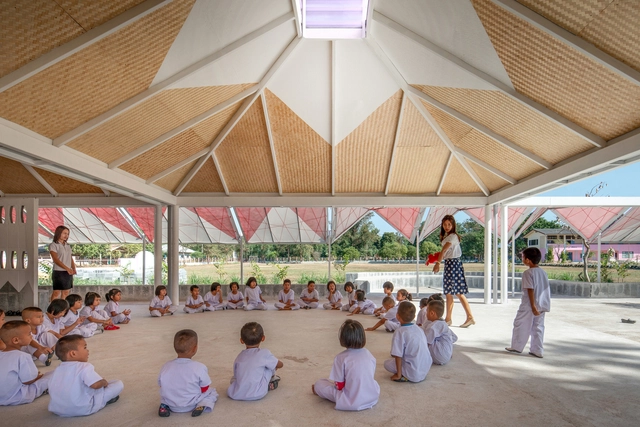
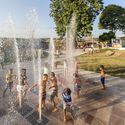
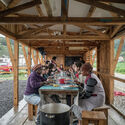
Can architecture be built from food? Between the fire that warms, the smells that spread, and the bodies that gather around the table, the apparent banality of cooking and eating reveals itself as a choreographed dance of spatial appropriation and belonging. These gestures organize routines, produce bonds, and transform the built environment into lived place. The kitchen—domestic, communal, or urban—thus ceases to be merely a functional space and affirms itself as a territory of encounter.
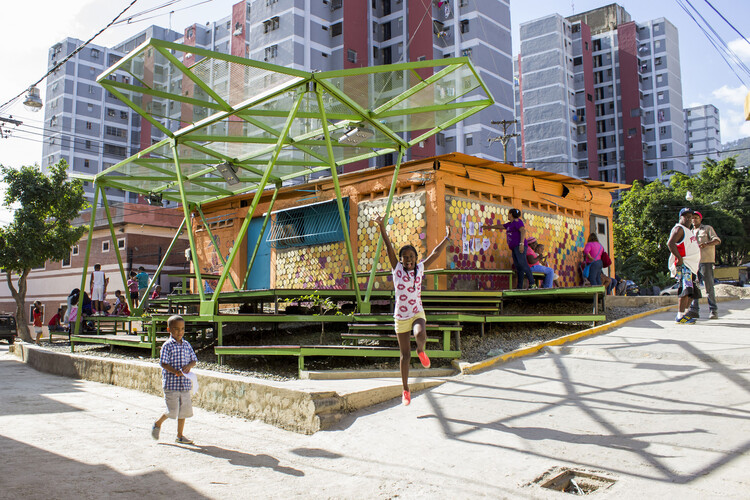
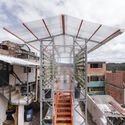
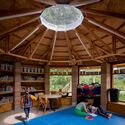
How the "Espacios de Paz" project is transforming community spaces in Venezuela. Pinto Salinas -- Oficina Lúdica + PKMN. Image Courtesy of PICO Estudio.
In Latin America, encounters do not necessarily arise from grand architectural gestures or monumental urban plans. They emerge from the in-between, from intermediate spaces: the courtyard, the veranda, the sidewalk, the shared corridor. These areas, often considered residual or informal by the traditional architectural discipline, are precisely where everyday life builds bonds.
From this Latin American culture comes a spatial logic in which daily life is organized in a relational and expansive way. Practices such as sitting at the front door, occupying the sidewalk, and playing in the street produce a lived city that extends beyond the formal limits of design.
Public space is often understood as belonging to no one in particular, collectively accessible yet institutionally maintained, yet a growing number of initiatives are challenging this assumption by testing shared management and distributed ownership models. In Paris, Adoptez un banc introduces a sponsorship-based approach, allowing individuals and groups to support temporarily and symbolically claim responsibility for historic public furniture without compromising its collective use. Elsewhere in the city, community gardens operating under the Main Verte framework demonstrate a self-managed model, in which public and private landowners retain ownership while delegating day-to-day control to citizen associations for food production and shared use. In New York, Common Corner represents a third pathway, based on institutional collaboration and participatory design, where public agencies, nonprofits, designers, and residents co-produce public space within a public housing context. Taken together, these three cases suggest that care, authorship, and responsibility can be distributed across citizens and institutions, producing more resilient, locally grounded urban environments.
The exhibition Coming Together: Reimagining America's Downtowns, held at Washington, D.C.'s National Building Museum, explores the transformations underway in the United States' downtowns and the ways communities have organized to shape alternative urban scenarios. Curated by Uwe S. Brandes, Professor at Georgetown University, and designed by Reddymade and MGMT., it is the first of three major exhibitions within the Museum's Future Cities initiative, an interdisciplinary project examining the city as a hub, catalyst, essential building block, and reflection of society. Coming Together features examples from more than 60 U.S. cities, both large and small, highlighting lessons learned and opportunities embraced in the wake of the COVID-19 pandemic as communities adapt to lasting changes in work, housing, mobility, entertainment, and recreation. The exhibition is currently open to the public and will remain on view through Fall 2026.
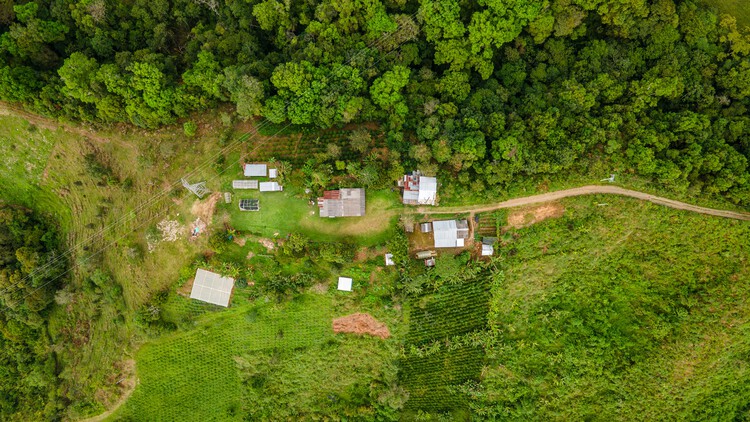
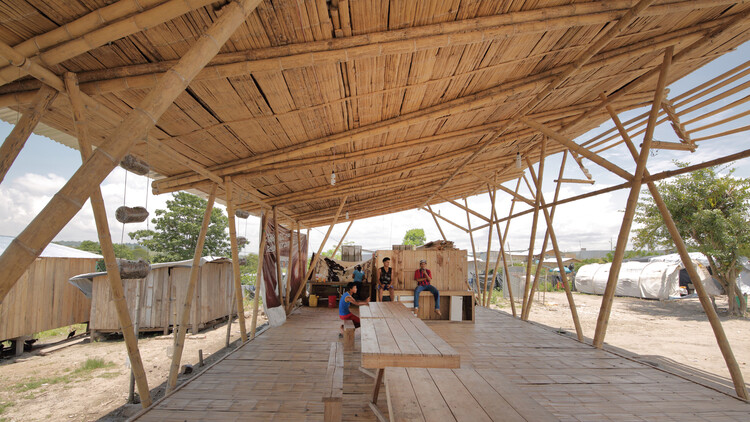
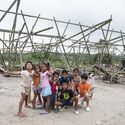
Across South America, architecture is increasingly being understood as a collective act. Rather than imposing external views, many studios and designers are building with and for communities, learning from their local practices, materials, and ways of inhabiting. These projects are repositioning the architect's role from an author to a facilitator, transforming design into a participatory process that centers collaboration, care, and mutual respect.
What unites these efforts is not style or scale, but a shared belief: architecture emerges from collective dialogue, not imposition. From rural Ecuador to the urban peripheries of Brazil, Colombia, and Paraguay, these projects reveal how social engagement and local making produce spaces that are sustainable not only environmentally but also socially. They respond to inequality not through top-down solutions, but through co-authorship, offering spaces that reflect the needs, knowledge, and agency of the people who use them.
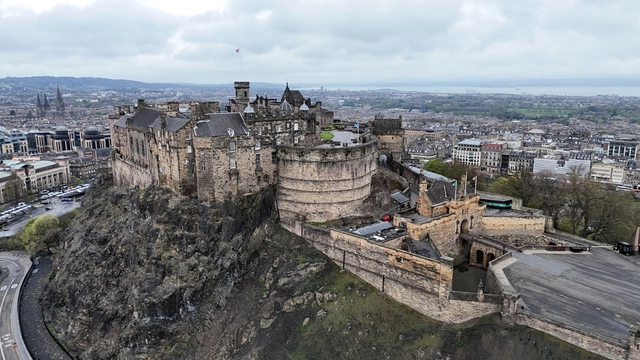
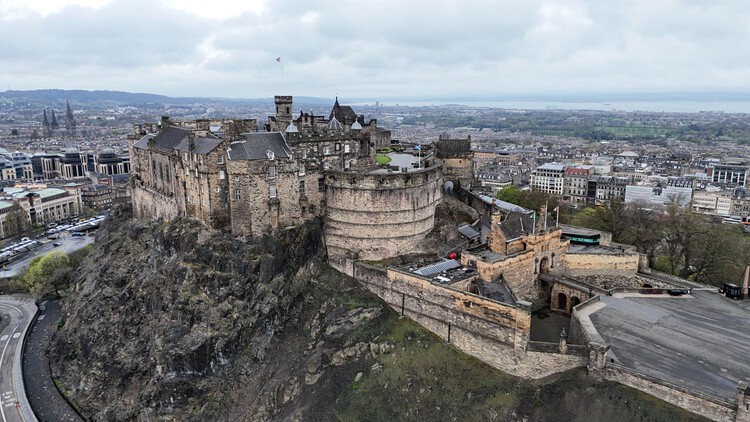
Edinburgh Castle in Scotland’s Capital. Image by 瑞丽江的河水, via Wikimedia Commons (CC BY-SA 4.0)
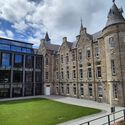
Edinburgh, Scotland's capital, has long been recognized for its rich cultural history and intricate urban fabric. The city thrives within its museums, tenement housing, and shops nestled in Georgian buildings. In 2022, Time Out ranked Edinburgh as the world's best city, citing its efficiency across community building and urban systems such as public transport. However, as climate change makes its effects progressively visible at an urban level, the city inevitably runs into a pressing dilemma: how to sustain this quality of life in increasingly difficult conditions.
The journey toward this balance unfolds through several interconnected strategies, such as retrofitting, adaptive reuse, circular design, and community collaboration, each contributing to Edinburgh's evolving vision of a sustainable urban future.
The noise of overlapping conversations, the flashing lights of a billboard, hurried footsteps on the sidewalk, and the constant hammering of a nearby construction site: public spaces are sometimes experienced as environments where stimuli accumulate and often overwhelm us. Each person perceives and responds to these sensory inputs differently, and recognizing neurodiversity means understanding that some individuals require more time to adapt, slower-paced journeys, or more gradual interactions with their surroundings. These encounters raise fundamental questions about contemporary public space: how can it accommodate the diversity of ways people perceive and inhabit it? How can we envision it as a space that embraces all ways of experiencing it?
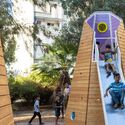
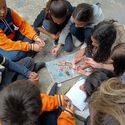
A good design should be adapted to the user's needs, and participatory design aims to reduce the distance between architects and those for whom the project is made. In this sense, projects for children that welcome them as central actors in the design process demonstrate how the potential of active listening and co-designing is reflected in spaces adapted to a smaller scale and to an audience in a phase of intense learning.
Whether they are kindergartens, schools, community centers, or public spaces, participatory projects with children show how the design process can be an enriching exchange for both sides. On the one hand, children can learn about materials, scales, decision-making, and develop spatial awareness. On the other hand, the architects responsible for making the desires and needs of the young users concrete can learn to exercise sensitivity and imagination and recognize a different worldview focused on discovery. All of this is possible through listening and open dialogue between different age groups.
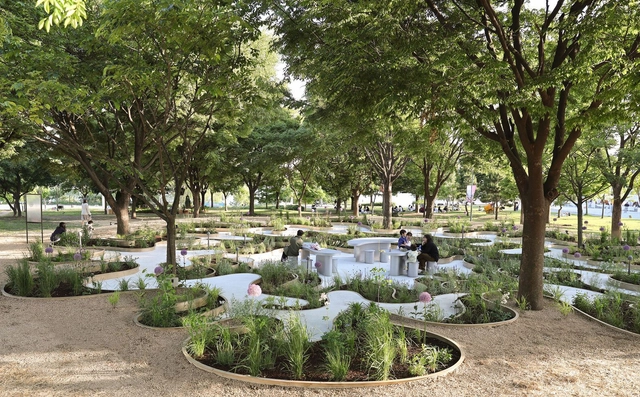
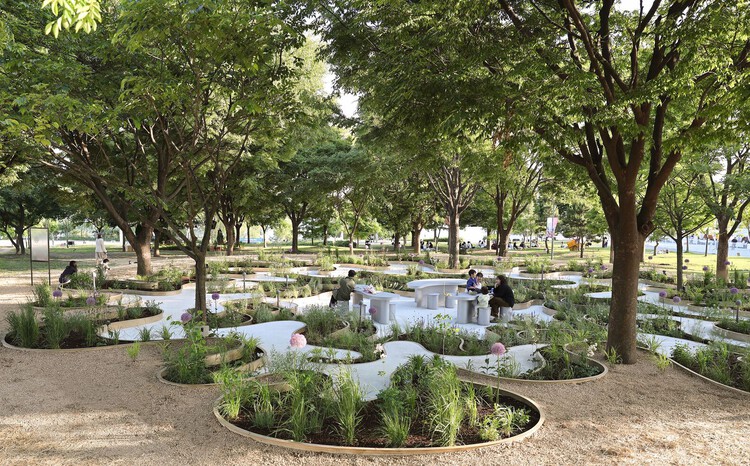
Immersive Resilience Garden / Changyeob Lee + Studio ReBuild. Image Courtesy of Studio ReBuild
The concrete canyon of Melbourne's Degraves Street was once a stark service corridor in functional obscurity. Today, the narrow laneway now pulses with life beyond its famous café. Native grasses cascade from carefully positioned planters while small shrubs create cooling microclimates. Challenging traditional ecological design models, community-led approaches to biodiversity invite a reimagining of how architects, planners, and communities collaborate to develop biodiverse urban futures.
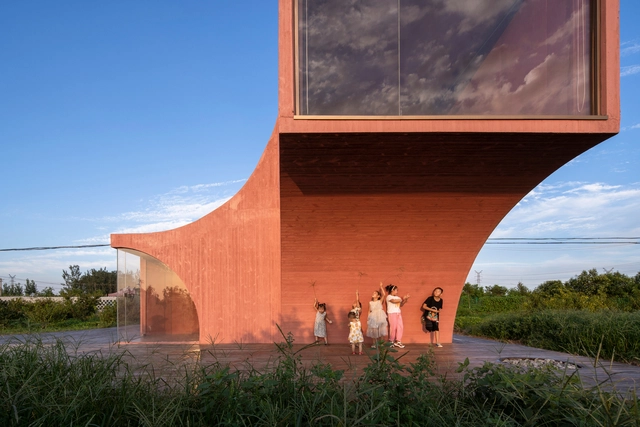
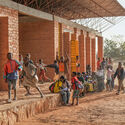
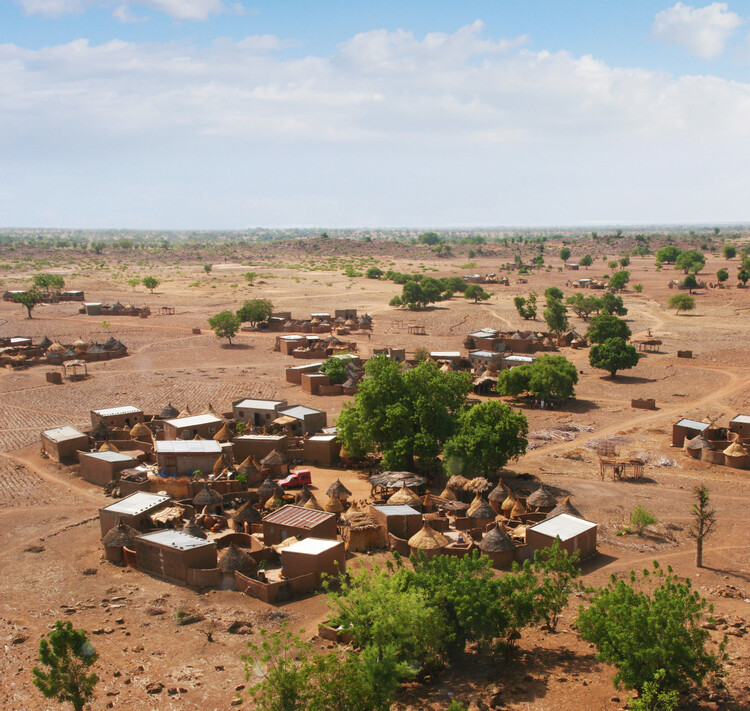
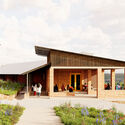
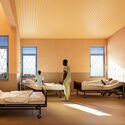
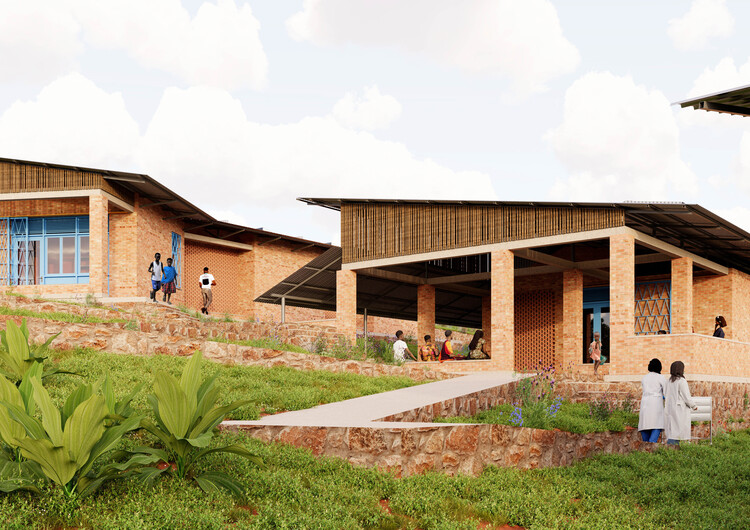
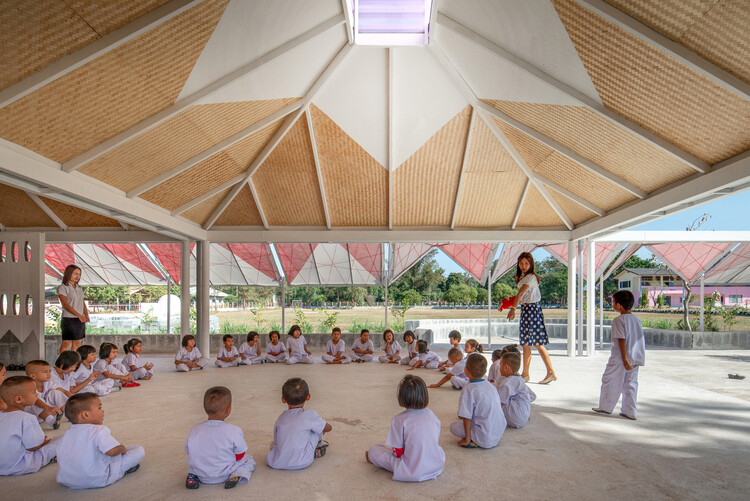
The architecture of cultural and community centers in rural areas around the world has become a rich field for experimentation, where tradition and innovation intersect. Rather than replicating standardized urban models, these projects embrace contemporary approaches tailored to local realities, blending bold design, sustainable technologies, and collaborative processes. Often developed in close partnership with local communities, they draw on regional materials and cultural symbols to create spaces that do more than host activities: they express a collective identity and a profound sense of belonging. By reimagining vernacular knowledge through a modern lens, these buildings support and inspire new ways of living in the countryside.
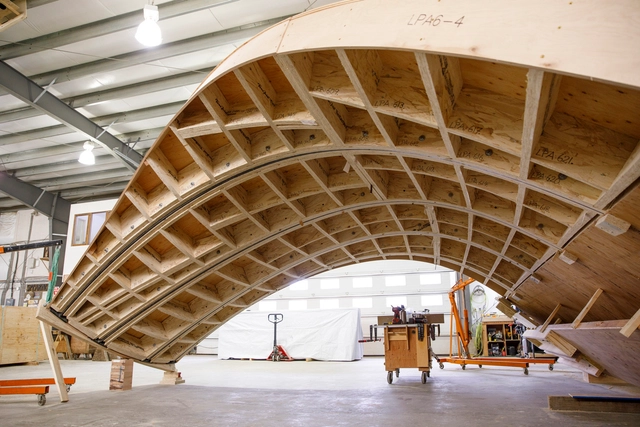
From new delivery methods for adaptive re-use and mass timber structures to digital fabrication, new research aims to provide guidance on emerging construction methods and technologies.. Image Courtesy of Perkins&Will
Innovation comes in many shapes and forms. 2025 is poised to witness continued advancements in the areas of artificial intelligence, sustainability, and biotechnology. These breakthroughs often arise from experimentation in industries like technology and healthcare, where companies have strong research and development teams and significant budgets. This enables them to produce new products and services that address society's evolving needs.
In a world confronting complex challenges, innovation in architecture plays a distinctive role. Unlike industries driven by rapid innovation cycles, architecture must balance creativity with practical solutions that are deeply rooted in human experience. What will it take for the architecture industry to fully harness its potential in shaping the future of our built environment?
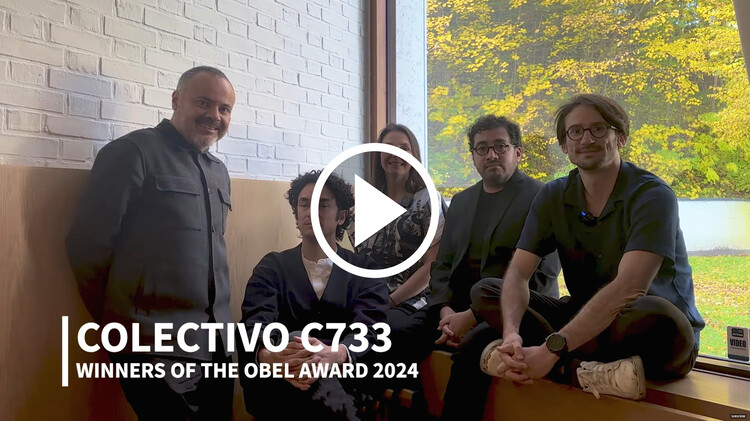
Recognized for completing 36 distinct yet cohesive public projects across Mexico in just 36 months, Colectivo C733 showcases the impact of collaborative design on public spaces and communities. The 36 projects were part of a national effort to revitalize vulnerable urban and rural areas in Mexico, earning them the 2024 Obel Award focused on the theme of "Architectures With". The team behind the designs, Colectivo C733, is a collaborative group formed by the joint offices of architects Gabriela Carrillo (Taller Gabriela Carrillo), Carlos Facio, and José Amozurrutia (TO), along with Eric Valdez (Labg), and Israel Espin. In a recent conversation with ArchDaily's Editor-in-Chief, Christele Harrouk, the collective discussed their approach to public architecture, the process of integrating diverse voices, and remaining flexible to the challenges of local conditions.
The Obel Award is an international prize for architectural achievement presented annually by the Henrik Frode Obel Foundation. Each year, the jury selects a specific theme and grants an award to a promising solution. For the 2024 edition, the prize that honors architectural contributions that positively impact both people and the planet will be focused on “Architecture With”.
Previous emphasis included Adaptations, Emissions, Cities, Mending, and Well-being. In 2023, the fifth cycle recognized ‘Living Breakwaters’ in New York, a green infrastructure project off the shore of Staten Island, by SCAPE Landscape Architecture and its founder Kate Orff. In 2022, the Obel was awarded to Seratech, a carbon-neutral concrete solution, in 2021, the concept of the 15-minute city received the prize for its value in creating sustainable and people-centric urban environments, and in 2020, Studio Anna Heringer was acknowledged for Anandaloy, in Bangladesh, an unconventional, multifunctional building that hosts a therapy center for people with disabilities on the ground floor and a textile studio on the top floor producing fair fashion and art. Finally, in its first edition, fixated on well-being, the Obel Award was granted to the Art Biotop Water Garden project in Tochigi, Japan, by Junya Ishigami & Associates.