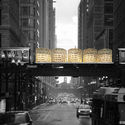
This video follows Hiba Bhatty, an architect at Valerio Dewalt Train in Chicago, through a day on the job. The daily activities of an architect can sometimes seem mysterious. This is likely due to the fact that no day is really “typical.” Designing buildings goes through multiple phases, each with very different responsibilities.
Thompson 2.0. Image Courtesy of Jahn Architecture Inc / HANDOUT
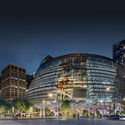
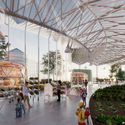
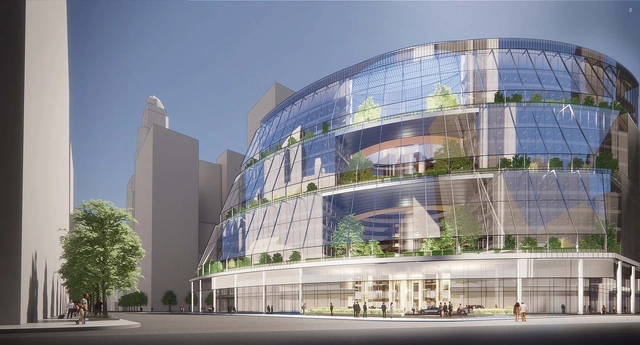
After years of ongoing demolition threats and renovation proposals, Illinois Governor JB Pritzker has announced that the state has finally reached a deal to sell Helmut Jahn's iconic Thompson Center to Real Estate company The Prime Group, who will carry out renovation works without any demolitions to the structure. The newly proposed design preserves the structure's original design, but implements new features that improve its thermal and acoustic conditions, and highlights its atrium as the "jewel of the building".
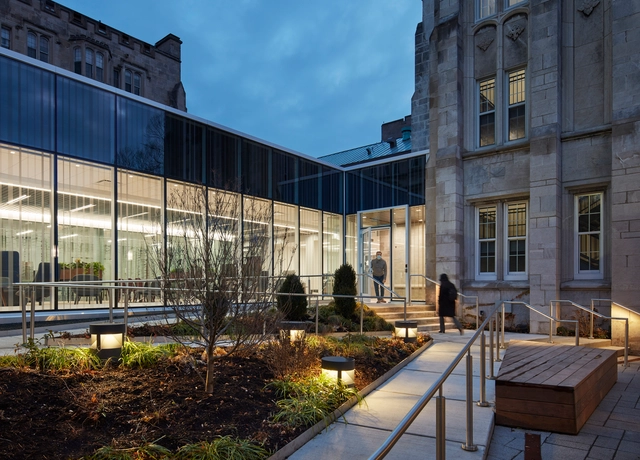
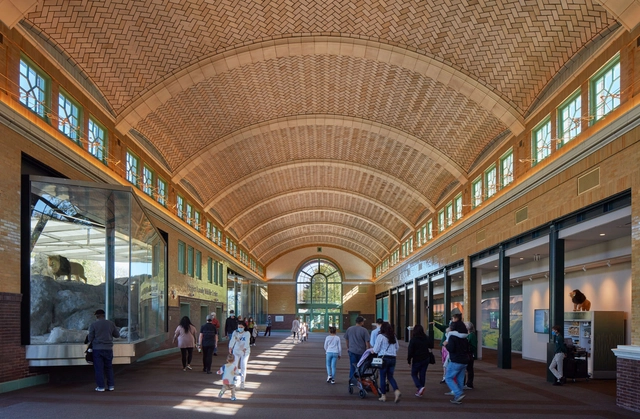
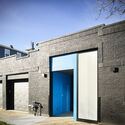
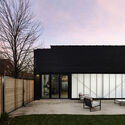
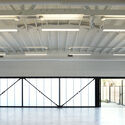
The historic lion house has long been a central element of Chicago’s Lincoln Park Zoo. When global architecture firm Goettsch Partners (GP) set out to renovate and expand the structure, the aim was to preserve the original building while increasing the usable area and creating a new spatial experience. The facility is home to a pride of four African lions, as well as Canada lynx, red pandas and snow leopards.
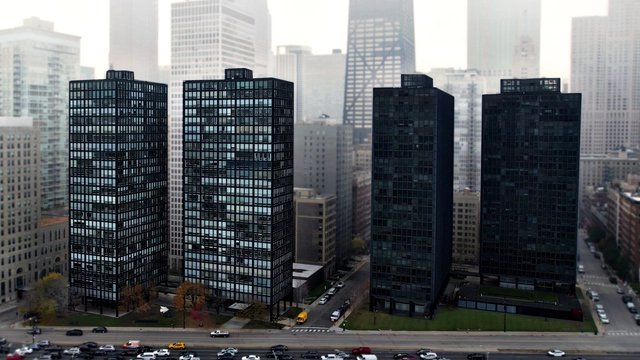
In Chicago, black or silver-colored towers designed by Mies van der Rohe are sprinkled across the city from the north to the south. They all sprang up within a relatively short period of time and constitute — in combination with some faithful homages — what’s called the Second Chicago School of Architecture. This timeline makes it seem like Mies' strategies sprang out of nowhere and like they were born already fully developed. This video takes a look at how these tower strategies evolved from smaller projects to larger ones by paying special attention to their section. Whereas open plans promise ultimate fluidity, in section, Mies' buildings present another idea entirely. In this direction, difference and discretion dominate and symmetry rules. All of this is in service of developing a close connection between the occupant and the distant horizon.
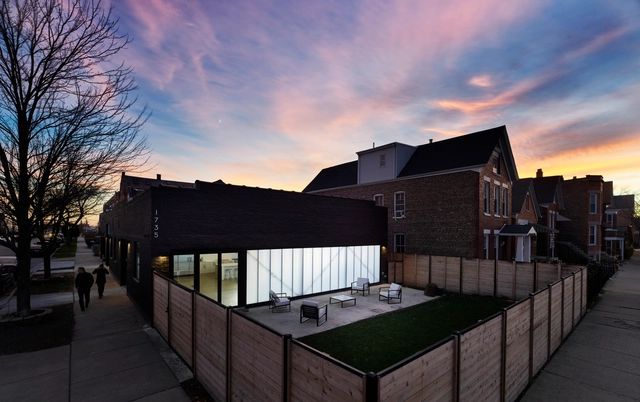
Studio Gang has revealed 63rd House, its design for Blue Tin Production's new manufacturing studio in the heart of Chicago’s southwest side. The new headquarters, which is an adaptive reuse project of Chicago's two-story brick post office that was built in 1920, will feature a mix of meeting and artist spaces around a central community room, "centralizing workers’ well-being, deepening connections with neighborhood residents and partners, and building long-term economic mobility and racial equity across the city".
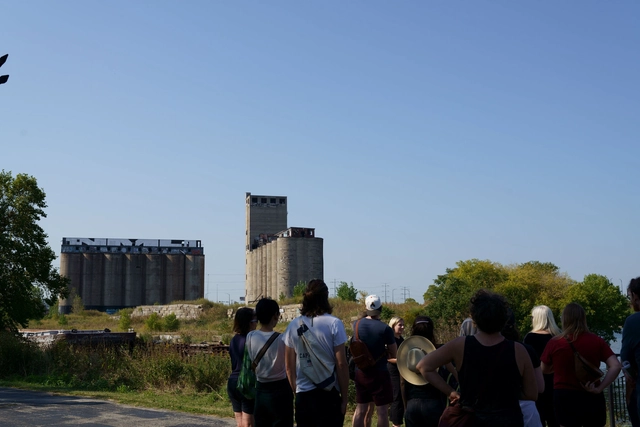
In Metropolisthis week, author Annie Howard explores Chicago's Architecture Biennial, which opened to the public on September 17th, showcasing a series of 15 site-specific interventions. Arguing that "a tour of the Damen Silos and a celebration of the Wall of Respect show a biennial struggling to achieve longer-term engagement with the city it calls home", the editor questions how much work is needed in order to make the city fully usable to its residents.
https://www.archdaily.com/971003/understanding-the-available-city-at-the-chicago-architectural-biennialAnnie Howard
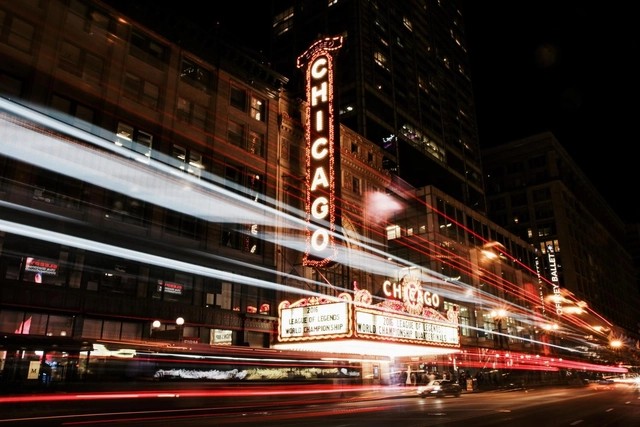
On August 12, 1833, the Town of Chicago had roughly 200 inhabitants. Four years later, in 1837, it was upgraded to The City of Chicago – an interesting fact given that there are still 19 incorporated towns in Illinois. The Great Chicago Fire of 1871 killed 300 people, destroyed about 3.3 square miles (9 km2), and left more than 100,000 residents homeless. However, by that time Chicago had become the world’s fastest-growing city and its population had risen over 300,000 inhabitants. The fire meant these ambitious citizens had to start again.
With admirable strength, the city was reborn from the ashes and some of Chicago’s best architecture was constructed immediately after. Structures like the Rookery Building (1888, Frank Lloyd Wright), the Auditorium Building (1889, Louis Sullivan) and the Monadnock Building (1893, Burnham & Root, Holabird & Roche) are a few examples of the high standards the city was aiming for.
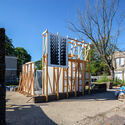
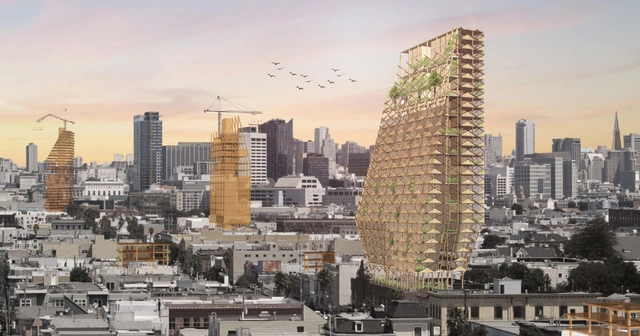
Skidmore, Owings & Merrill (SOM) has collaborated with University of Michigan Taubman College to create the SPLAM [SPatial LAMinated timber], a robotically-fabricated timber pavilion for the 2021 Chicago Architecture Biennial. The pavilion employs prefabricated framing panels manufactured using robotic technology, and will serve as an open-air education facility and gathering space for a school in Chicago. The pavilion was inaugurated on September 17, with the opening of the Chicago Biennial, and will remain on display until December 18th.
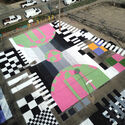
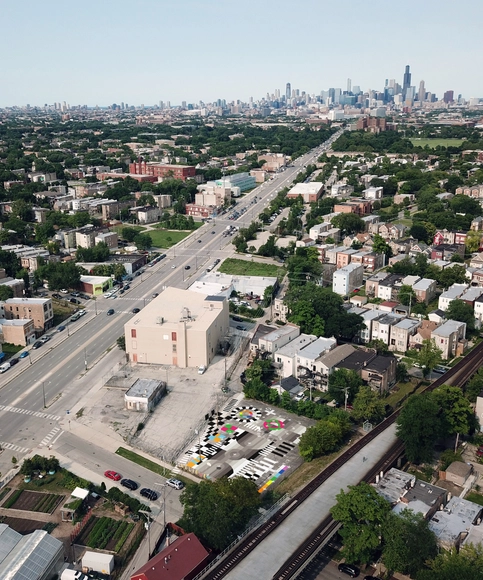
The fourth edition of the ChicagoArchitecture Biennial opened to the public on September 17th, showcasing a series of 15 site-specific interventions within the urban environment that tap into ideas of shared space and collective agency, exploring “who gets to participate in the design of the city”. Led by Artistic Director David Brown, this year’s edition operating under the theme The Available City, intends to highlight the potential of vacant urban areas as collective spaces through interventions developed in close collaboration with the local community. At the same time, the event underscores the potential for “immediate new possibilities” and illustrates the significant impact of small urban gestures.
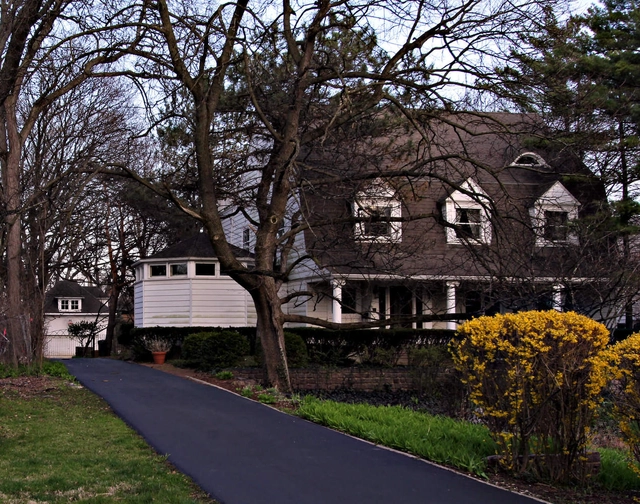
Contemporary view of the Bagley House. Image Courtesy of Patrick Mahoney, AIA
Less than two months ago, the future of an 1894 Dutch Colonial-style home designed by Frank Lloyd Wright wasn’t looking all that bright after it hit the market for $1.3 million in the Chicago suburb of Hinsdale, Illinois. As of this week, however, the historic Frederick Bagley House, described by the nonprofit Frank Lloyd Wright Building Conservancy as a “unique and irreplaceable” early work of Wright, has found a very happy ending—or, more aptly, a new beginning.
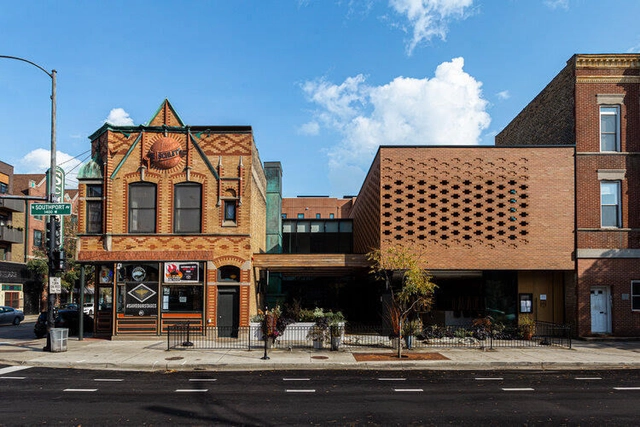
In this video, Will Quam of Brick of Chicago takes us around the American city to question Louis Kahn’s adage that all bricks are motivated to be arches. Here, in the Logan Square neighborhood, we find bricks of all sorts, that — in addition to arches — take on other configurations and metaphors to describe their qualities; textile bricks and diapering, brushstrokes of a painting, butter joints and glazes, soldiers and bullnoses.
The potential for mass timber to become the dominant material of future sustainable cities has also gained traction in the United States throughout 2018. Evolving codes and the increasing availability of mass timber is inspiring firms, universities, and state legislators to research and invest in ambitious projects across the country.
https://www.archdaily.com/905601/4-projects-that-show-mass-timber-is-the-future-of-american-citiesNiall Patrick Walsh
Titled "The Available City", the fourth edition of the Chicago Architecture Bienniale will be open to the public on September 17th, 2021. This year, the event presents an unprecedented biennale model that experiments with an array of site-specific projects and programs displayed across the Chicago, "reframing what a biennial can do, be, and explore for a city". Over 80 projects from 18 different countries will respond to an urban design framework and bring ideas for community-centered, collective spaces through architectural elements, engaging programming, and enhanced community experiences.
Thompson Scraper. Image Courtesy of Thompson Center Design Competition
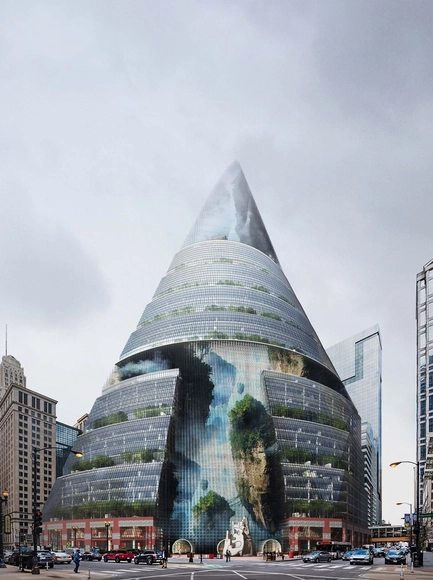
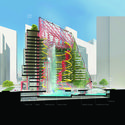
The Chicago Architecture Center and Chicago Architecture Club have announced the seven finalists of the Thompson Center Design Competition, which called for new and innovative visions for the Illinois Thompson Center designed by Helmut Jahn in 1984. The winning design proposal will be announced during the opening of the September 14 pop-up exhibition of finalists work at the Chicago Architecture Center, and will run through October.







StudioGang.jpg?1636447310&format=webp&width=640&height=580)
StudioGang.jpg?1636447390 "Courtesy of Studio Gang")
StudioGang.jpg?1636447331 "Courtesy of Studio Gang")
StudioGang.jpg?1636447289 "Courtesy of Studio Gang")
StudioGang.jpg?1636447383 "Courtesy of Studio Gang")
StudioGang.jpg?1636447310)






.jpg?1632206620&format=webp&width=640&height=580)
.jpg?1632206607 "© Kendall McCaugherty © Hall+Merrick Photographers")

.jpg?1632206604 "© Kendall McCaugherty © Hall+Merrick Photographers")
.jpg?1632206620 "© Kendall McCaugherty © Hall+Merrick Photographers")
.jpg?1632206620)