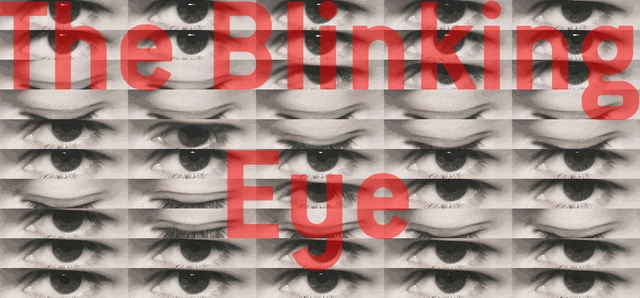
"The Blinkg Eye", Viktor Mayer-Schönberger, Karl-Heinz Machat, 2019
We are increasingly accustomed to relying on technologies to read and process data referring to the past, in order to interpret the present and predict the future. At the same time, a growing number of studies show that the number and types of variables governing our societies is in constant change. As the natural world reacts to change by experimenting with the evolution of new species that are not necessarily destined to survive, so we should take momentary distances from the deterministic application of data-driven predictions. Viktor Mayer-Schönberger and Karl-Heinz Machat propose a number of possible scenarios in which the Eyes of the City are made to blink from time to time, allowing for alternative modes of urbanity to be tried and tested. Half strategy, half tactic, these glitches offer the space in which to measure the agency of the unpredictable at various scales.
For the 2019 Shenzhen Biennale of Urbanism\Architecture (UABB), titled "Urban Interactions," (21 December 2019-8 March 2020) ArchDaily is working with the curators of the "Eyes of the City" section to stimulate a discussion on how new technologies might impact architecture and urban life. The contribution below is part of a series of scientific essays selected through the “Eyes of the City” call for papers, launched in preparation of the exhibitions: international scholars were asked to send their reflection in reaction to the statement by the curators Carlo Ratti Associati, Politecnico di Torino and SCUT, which you can read here.
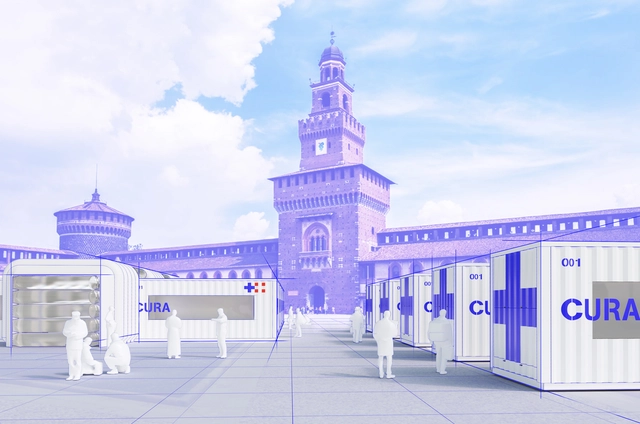
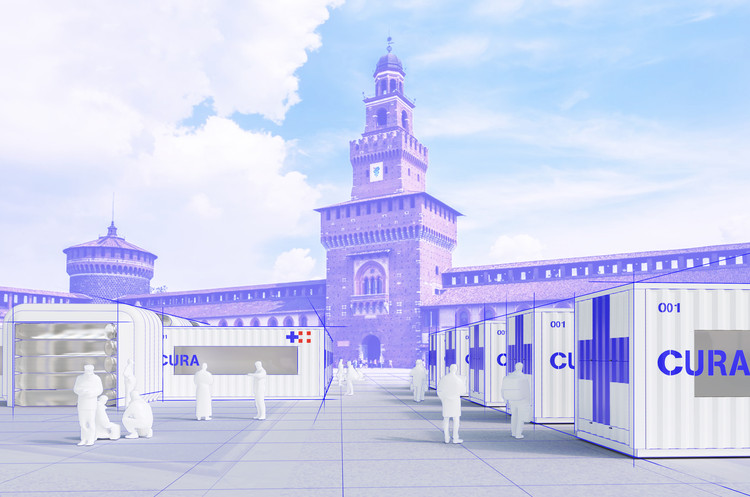
As the world's healthcare systems struggle to meet the exponential surge in demands from COVID-19, architects and designers are generating a variety of responses and proposals, from large field hospitals to 3D printed clinical masks. In Italy, where the coronavirus outbreak has been among the world's most damaging, a collaborative team led by architect and MIT professor Carlo Rattihas unveiled CURA, a modular intensive care unit made from repurposed shipping containers. CURA, whose name stands for Connected Units for Respiratory Ailments (and also “cure” in Latin), can be quickly deployed in cities around the world and replicated through an open-source design, promptly responding to the shortage of ICU space in hospitals and the spread of the disease.
https://www.archdaily.com/936911/interview-carlo-ratti-on-architecture-that-fights-covid-19Niall Patrick Walsh
How does computer programming impact the act of designing? Are digital protocols about to substitute human activity in the project of architecture, or does the human component remain an essential one - through changed paradigms? And if so, which paradigms should we refer to? Charles Driesler and Ahmad Tabbakh retrace these fundamental questions through some recent examples, and propose the application of a GAN protocol for the post-war reconstruction of Aleppo.
https://www.archdaily.com/936364/protocological-architectures-recursive-remembranceCharles Driesler, Ahmad Tabbakh
Courtesy of CURA/ CRA-Carlo Ratti Associati with Italo Rota
CRA-Carlo Ratti Associati with Italo Rota in collaboration with an international team of experts developed CURA (Connected Units for Respiratory Ailments), plug-in Intensive-Care Pods for the COVID-19 pandemic. An open-source design for emergency hospitals, the project’s first unit is currently under construction in Milan, Italy.
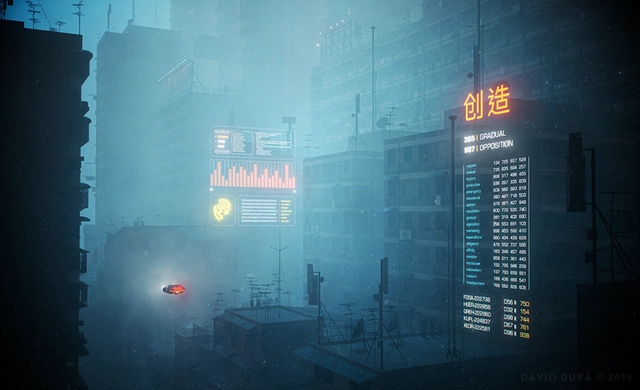
In a condition of growing superimposition between digital and physical, the threshold of the real is being pushed by a vast set of apps and platform that as a wired-wiring infrastructure manipulate cities and citizens in a constant exchange of data; in turn, this is progressively invading and exceeding the set of references we have to describe the urban condition. Users, now actors-producers of the human environment, will likely lose their physical agency and become producers of data, in what Federico Ruberto describes as the digital schizophrenia of the city of tomorrow. Through philosophical, artistic and cinematographic references the author paints varying scenarios, investigating what might be the limits for digital infrastructures and what tools we might employ in manipulating them.
For the 2019 Shenzhen Biennale of Urbanism\Architecture (UABB), titled "Urban Interactions," (21 December 2019-8 March 2020) ArchDaily is working with the curators of the "Eyes of the City" section to stimulate a discussion on how new technologies might impact architecture and urban life. The contribution below is part of a series of scientific essays selected through the “Eyes of the City” call for papers, launched in preparation of the exhibitions: international scholars were asked to send their reflection in reaction to the statement by the curators Carlo Ratti Associati, Politecnico di Torino and SCUT, which you can read here.
What happens when the sensor-imbued city acquires the ability to see – almost as if it had eyes? Ahead of the 2019 Shenzhen Biennale of Urbanism\Architecture (UABB), titled "Urban Interactions," ArchDaily is working with the curators of the "Eyes of the City" section at the Biennial to stimulate a discussion on how new technologies – and Artificial Intelligence in particular – might impact architecture and urban life. Hereyou can read the “Eyes of the City” curatorial statement by Carlo Ratti, the Politecnico di Torino and SCUT.
Technologies of the virtual realm present an opportunity to rethink the experience of space, society, and culture. They give us the possibility to engage with the city of the future, shaping the built environment of the 21st century.
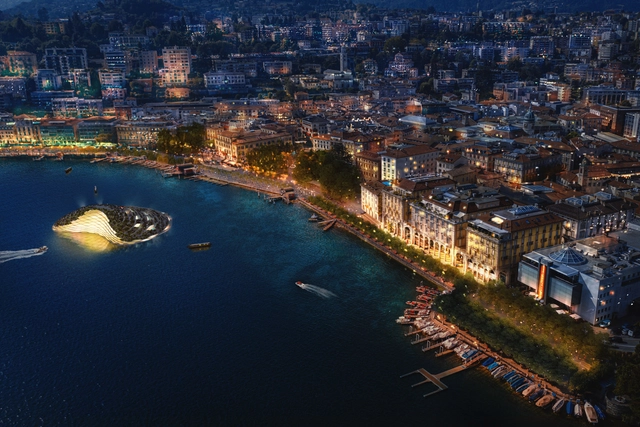
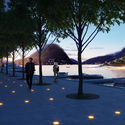
Designed by CRA- Carlo Ratti Associati and MIC-Mobility in Chain, the proposed plan for the Swiss city Lugano creates a network of public spaces, that connects the town to the lake. The project puts in place a floating garden and a reconfigurable waterfront.
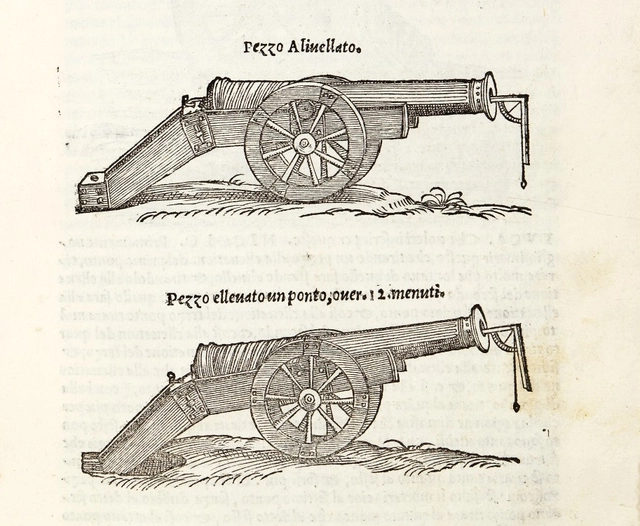
Images taken from Nicola Tartaglia, Nova scientia, second book, Distantia del transito, 1558
What happens when the sensor-imbued city acquires the ability to see – almost as if it had eyes? Ahead of the 2019 Shenzhen Biennale of Urbanism\Architecture (UABB), titled "Urban Interactions," ArchDaily is working with the curators of the "Eyes of the City" section at the Biennial to stimulate a discussion on how new technologies – and Artificial Intelligence in particular – might impact architecture and urban life. Hereyou can read the “Eyes of the City” curatorial statement by Carlo Ratti, the Politecnico di Torino and SCUT.
https://www.archdaily.com/931663/how-does-architectural-design-change-when-the-city-becomes-equipped-with-the-most-recent-advances-in-artificial-intelligence-alessandro-armando-giovanni-durbiano-for-the-shenzhen-biennale-uabb-2019Alessandro Armando and Giovanni Durbiano
December 22nd, 2019 saw the public opening of the 8th Bi-City Biennale of Urbanism\Architecture (UABB) in Shenzhen, China. As the world’s most visited architecture exhibition, the Biennale forms an influential moment for the dissemination of architectural knowledge, and the generation of dialogue and feedback loops between designers and citizens. Titled “Urban Interactions”, the Biennale's 2019 edition sets its sights on the multifaceted question of how technological advancements will impact the relationships cities share with people, technology, nature, and each other.
Dominique Perrault Architecture, DPA–X-Sub–Hubs A New Breed of Architectural Objects. Image via Bi-City Biennale of Urbanism\Architecture (Shenzhen)
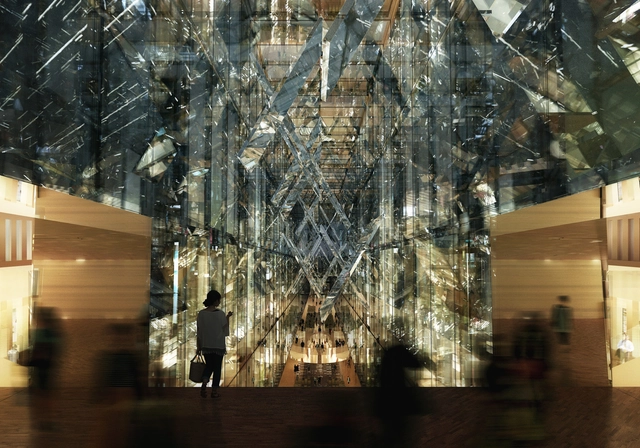
The 8th Bi-City Biennale of Urbanism\Architecture (Shenzhen) has officially opened in Shenzhen, China. Hosted at both the Shenzhen Museum of Contemporary Art and Planning (MOCAUP) and the Futian Railway Station, the event is the most visited architecture biennale in the world, and holds the distinction of being the first major architectural event where all materials for the exhibitions were sourced in the host city of Shenzhen.
What happens when the sensor-imbued city acquires the ability to see – almost as if it had eyes? Ahead of the 2019 Shenzhen Biennale of Urbanism\Architecture (UABB), titled "Urban Interactions," ArchDaily is working with the curators of the "Eyes of the City" section at the Biennial to stimulate a discussion on how new technologies – and Artificial Intelligence in particular – might impact architecture and urban life. Hereyou can read the “Eyes of the City” curatorial statement by Carlo Ratti, the Politecnico di Torino and SCUT.
Architectural practice naturally results in an extraordinary accumulation of visuals and archival media that demand sorting, cataloguing, and organizing at a certain moment in time in order to avoid their amorphous accumulation to invade the working order of a firm. Tagging, numbering and classifying the accumulated traces of architectural creativity and data, has become a way of organizing the log of creative options and scenarios developed in practice, a directory of successful examples and of failures, all arranged to be used as a self-referential working catalogue of options that may be mobilized at any moment in time.
Example of pedestrian pattern heatmaps, as produced by software-translated timelapse recordings in our project Co-Creating Responsive Urban Spaces, transmitting interaction installations in the practice of urban design to activate public spaces. See www.responsiveurbanspaces.amsterdam
What happens when the sensor-imbued city acquires the ability to see – almost as if it had eyes? Ahead of the 2019 Shenzhen Biennale of Urbanism\Architecture (UABB), titled "Urban Interactions," Archdaily is working with the curators of the "Eyes of the City" section at the Biennial to stimulate a discussion on how new technologies – and Artificial Intelligence in particular – might impact architecture and urban life. Hereyou can read the “Eyes of the City” curatorial statement by Carlo Ratti, the Politecnico di Torino and SCUT.
Cities, as Goethe had already pointed out, should be understood as continuously developing 'forms in motion' (see Batty 2018). In the past, technological developments and our hopeful, as well as our dystopian imaginations of them, have been one of the main sources of kinetic energy to kick-off the shapeshifting processes of urban transformations. Most of the time with unexpected side-effects, evolving center stage in retrospect.
https://www.archdaily.com/930040/from-the-city-as-a-service-to-the-city-as-a-license-martijn-de-waal-and-frank-suurenbroek-for-the-shenzhen-biennale-uabb-2019Martijn de Waal and Frank Suurenbroek
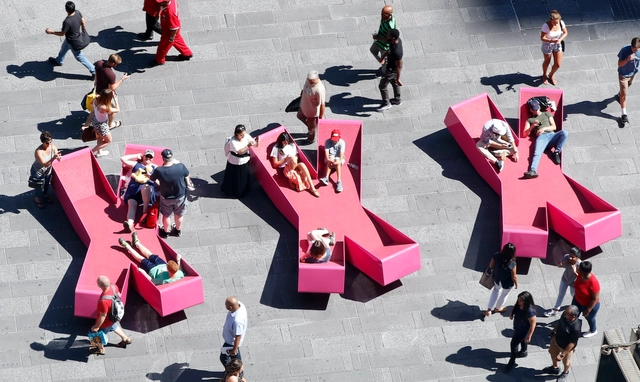
XXX TIMES SQUARE WITH LOVE, Photographs by Rob Kassabian @ RK Films
What happens when the sensor-imbued city acquires the ability to see – almost as if it had eyes? Ahead of the 2019 Shenzhen Biennale of Urbanism\Architecture (UABB), titled "Urban Interactions," ArchDaily is working with the curators of the "Eyes of the City" section at the Biennial to stimulate a discussion on how new technologies – and Artificial Intelligence in particular – might impact architecture and urban life. Hereyou can read the “Eyes of the City” curatorial statement by Carlo Ratti, the Politecnico di Torino and SCUT.
The history of Times Square and 42nd street is a history of the human gaze. Broadway theaters and X-rated shows used to enjoy a neighborly relationship of “looking at” and “being looked at” in musical theaters, peep shows and x-rated cinemas. Voyeurism was the business that is lost since for an urban context which by now transformed into an almost aseptic shopping and entertainment district.
https://www.archdaily.com/929807/xxx-times-square-with-love-jurgen-mayer-h-for-the-shenzhen-biennale-uabb-2019Jürgen Mayer H.
In December 2019, the Chinese city of Shenzhen will host the world’s only Biennale focused exclusively on the topics of urbanism and urbanization. The 2019 Bi-City Biennale of Urbanism\Architecture will explore new phenomena brought about by the digital revolution, and the ability of citizens to become involved in shaping cities. The Biennale curator, Carlo Ratti, exemplifies this intersection between natural and artificial, championing the power of new technologies to transform how we live and design through his work at Carlo Ratti Associati and the MIT Senseable City Lab. In the “Eyes of the City” section of the Biennale, he is joined by MVRDV, and its co-founder Winy Maas, in shaping an experience that invites visitors and observers to question how technologies such as facial recognition can be integrated into urban life.
https://www.archdaily.com/928595/carlo-ratti-and-winy-maas-discuss-facial-recognition-and-the-shenzhen-biennaleNiall Patrick Walsh
Opening in December in Shenzhen, China, the Bi-City Biennale of Urbanism and Architecture (UABB), organized by the cities of Shenzhen and Hong Kong, will discuss the theme of “Urban Interactions”. First to use Facial Recognition and Artificial Intelligence, the public exhibition will test new grounds to reflect on the impact of digital technologies on the urban environment.
What happens when the sensor-imbued city acquires the ability to see – almost as if it had eyes? Ahead of the 2019 Shenzhen Biennale of Urbanism\Architecture (UABB), titled "Urban Interactions," ArchDaily is working with the curators of the "Eyes of the City" section at the Biennial to stimulate a discussion on how new technologies – and Artificial Intelligence in particular – might impact architecture and urban life. Hereyou can read the “Eyes of the City” curatorial statement by Carlo Ratti, the Politecnico di Torino and SCUT.
Media Architecture is a merging of new technologies and the built form in order to explore narrative and to imbue character, to engage people and create new dialogues through a layer of meaningful experience.
It isn’t a new concept - telling a story about a building through its form, particularly the facade of a building, has been around throughout history;- just think of York Minster’s stained glass windows, St Mark’s Basilica in Venice, and the Meenakshi Temple in Tamil Nadu. What is exciting now is the opportunities brought about by technology to create new narratives and new forms of human interaction.
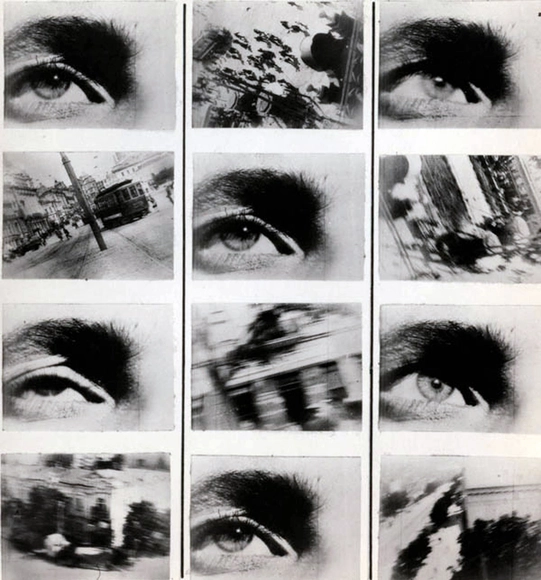
The Man with the Movie Camera (Dziga Vertov, USSR, 1929)
What happens when the sensor-imbued city acquires the ability to see – almost as if it had eyes? Ahead of the 2019 Shenzhen Biennale of Urbanism\Architecture (UABB), titled "Urban Interactions," ArchDaily is working with the curators of the "Eyes of the City" section at the Biennial to stimulate a discussion on how new technologies – and Artificial Intelligence in particular – might impact architecture and urban life. Hereyou can read the “Eyes of the City” curatorial statement by Carlo Ratti, the Politecnico di Torino and SCUT.
Ever since the Lumière brothers trained their camera on La Place des Cordeliers in Lyon in 1895, cinema has shaped our collective urban imagination. For 125 years, film has relentlessly recorded the deaths and lives of not just great American cities but of all great – and not so great – cities the world over. Film-makers have observed, expressed, characterized, interpreted and portrayed hundreds of thousands of city streets. By charting the cities’ evolution across the 20th century to present days, films are the quintessential Eyes on and of the City.
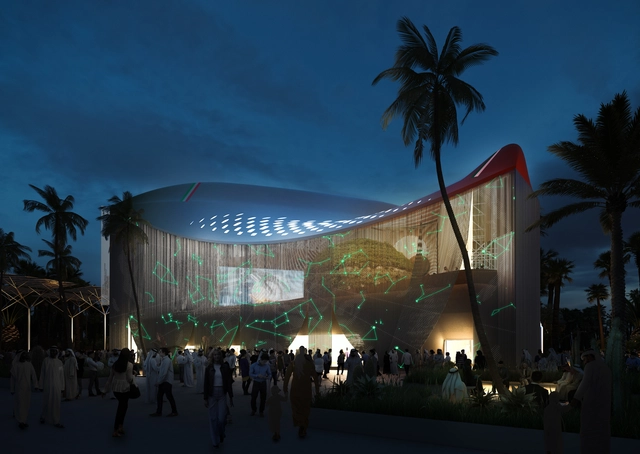
Courtesy of CRA-Carlo Ratti Associati and Italo Rota Building Office, with matteogatto&associati and F&M Ingegneria
Italy has just unveiled its national pavilion, conceived by CRA-Carlo Ratti Associati, Italo Rota Building Office, matteogatto&associati and F&M Ingegneria. In collaboration with the Italian Ministry of Foreign Affairs and the U.A.E, the project is a metaphor for the journey from Italy to Dubai.


.jpg?1585232852&format=webp&width=640&height=580)




%E2%80%9D_%E2%80%93_Philip_F._Yuan_%C2%A9_UABB.jpg?1577392546 "“Nomadic Wood (Looking)” – Philip F. Yuan. Image © UABB")




.jpg?1576062728&format=webp&width=640&height=580)