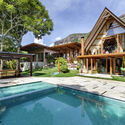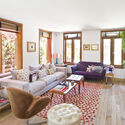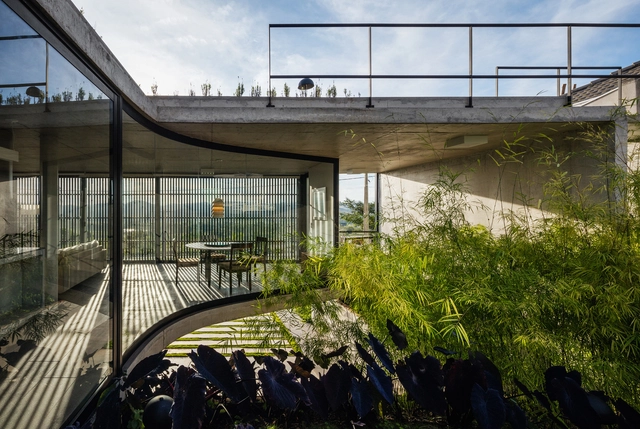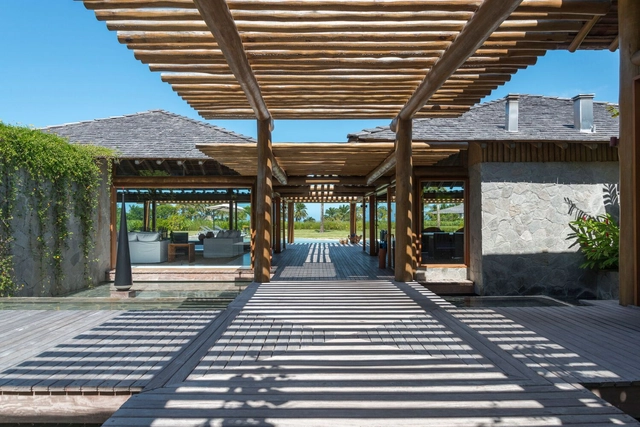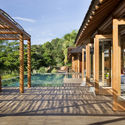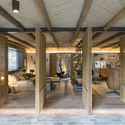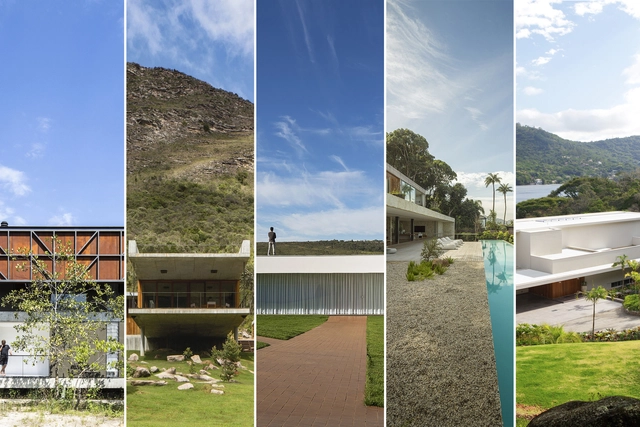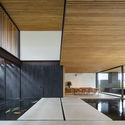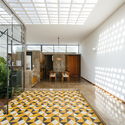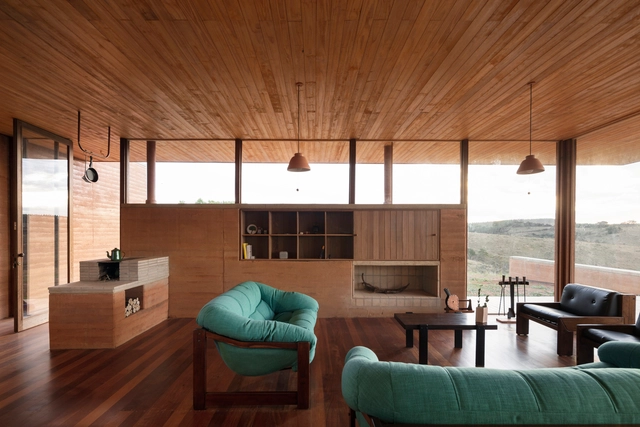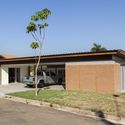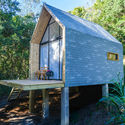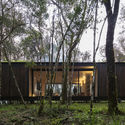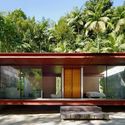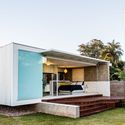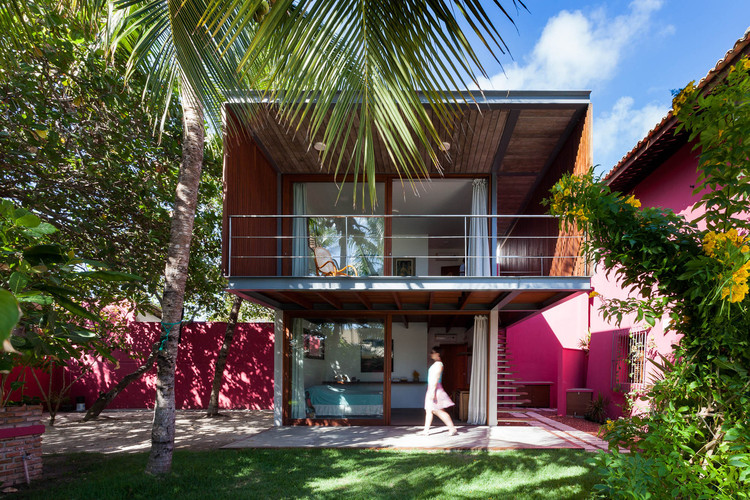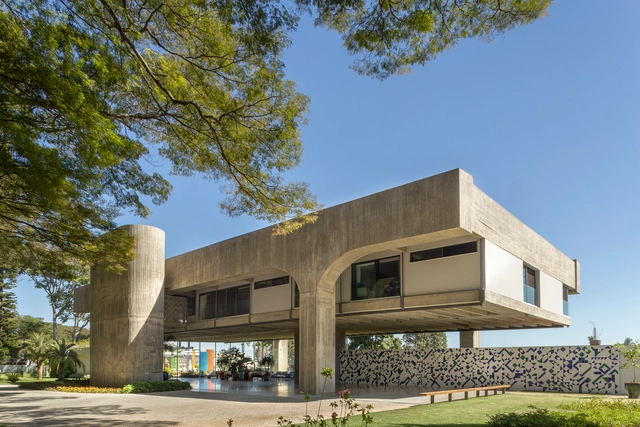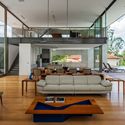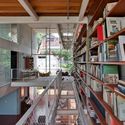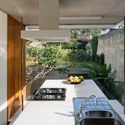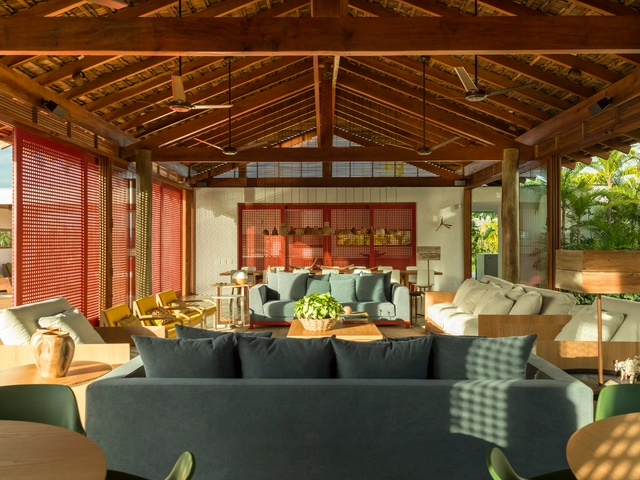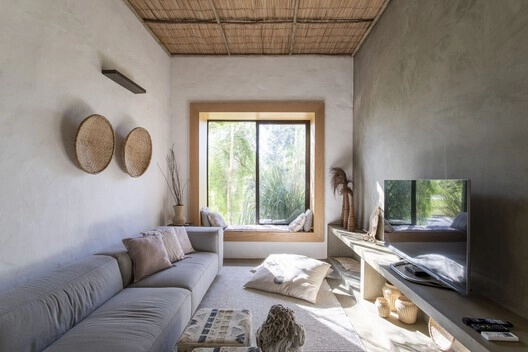
Being square sucks! At least, that's what the trends of 2022 tell us. The report carried out by Pinterest points out the curved design as the future of decoration, whether in objects or even from architecture. For that reason, we looked for Brazilian residential projects that trace curved walls in their designs. The reasons are the most varied and the results offer a unique composition: as an architectural party, to contrast with the orthogonality of other walls or to create unique spaces.
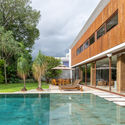
Designing houses in tropical climates, as is the case in Brazil, means paying special attention to openings, both in relation to the functioning and conviviality of the house, as well as in relation to issues of environmental comfort. In this article we bring you 16 Brazilian homes that take advantage of their strategic openings to create cozy, stunning, well-lit and ventilated environments.
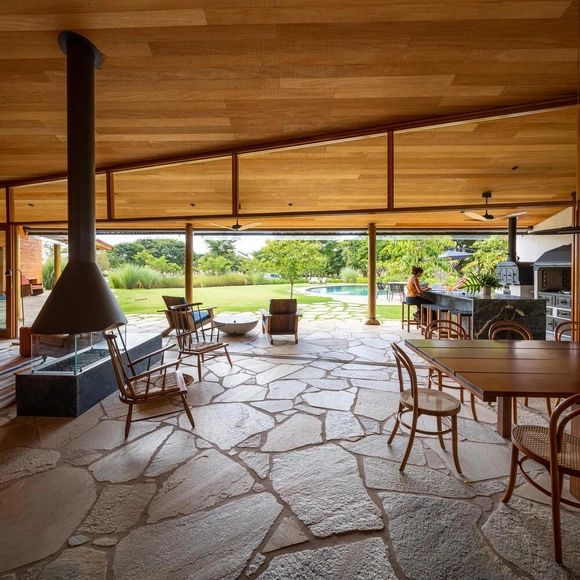
Nowadays, many architects have been looking for inspiration in traditional techniques, adapting them to more contemporary designs. In this sense, floors with rustic stone such as quartzite and sandstone are becoming more and more popular in residential architecture. Although this material was usually used for external areas, to build traditional stepping stone garden paths, for example, today it is also used in interiors, as an element that disrupts the hardness of rectilinear layouts and, in some cases, creates a connection between interior and exterior, which is something many professionals seek to achieve.
https://www.archdaily.com/972637/brazilian-houses-10-designs-with-rustic-stone-flooringEquipe ArchDaily Brasil
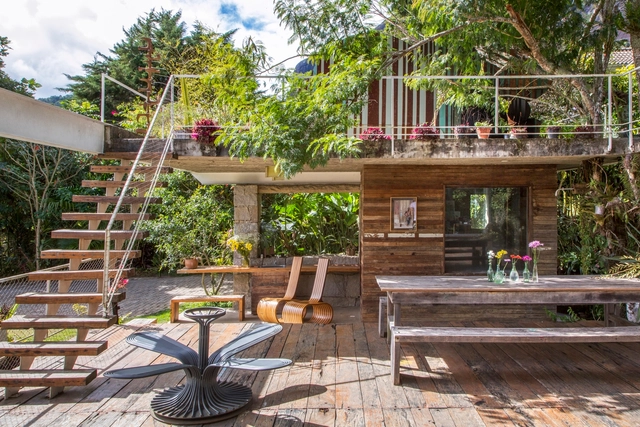
Reclaimed wood is wood that has been taken from its original application and repurposed. Old buildings such as houses, barns, and warehouses, often have to be torn down, resulting in demolition waste, which can be recycled and reused. Reclaimed wood can be used for many purposes, from cladding to building structures, and is very popular in contemporary architecture all over the world.
To get you inspired, here is a selection of 12 Brazilian houses that use this recycled material in flooring, walls, decks, bathrooms, outdoor areas, and stairs.
Modern architecture, in its early days, was based on innovative technologies of construction and a rejection of ornament, which established the use of straight lines in building design. However, thanks to the plasticity of concrete and other materials, new patterns began to emerge, resulting in more organic and curvy lines.
https://www.archdaily.com/960506/beyond-straight-lines-curves-in-brazilian-housesEquipe ArchDaily Brasil
Wood is, without a doubt, one of the most versatile building materials there is. Treated lumber, boards, composites, or rustic hardwood, have structural and visual qualities that attract architects and clients searching for a wide range of possible applications and designs. Logs are one of the oldest ways of using this material since they require very little treatment and processing after the tree is cut and are the most natural form of lumber.
Rustic lumber is often used in vacation homes, but not only for this purpose. Below, we have gathered Brazilian houses that use rustic wood elements either in their structure or walls and finishings.
Italian architect Vittorio Gregotti, author of The Territory of Architecture (1966), believed that architecture had its origin when mankind placed the first stone on the ground. Recognizing a place is the first step towards an architectural project, whether intentionally or not. Understanding the project's location and its context is the basis for many design choices and is, therefore, a key aspect in the field of architecture.
Solar radiation is one of the most important criteria in architectural projects, as it impacts several decisions ranging from the orientation of the building on the site to the choice of windows and doors. Therefore, to ensure the quality of lighting and visual comfort in building interiors, it is crucial to study the sun path and the quantity of sunlight in each given space.
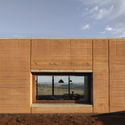
Ancestral, but overshadowed by other technologies that have emerged over time, the rammed-earth walls are again gaining prominence in Brazil for being a low-impact, sustainable and economical solution. Known in Portuguese as taipa, it is a rudimentary construction system that compresses the earth into wooden boxes until it reaches an ideal density that allows a resistant and long-lasting structure.
https://www.archdaily.com/957907/the-benefits-of-rammed-earth-in-brazilian-housesEquipe ArchDaily Brasil
Every architect has certainly already had the experience of designing a house throughout his or her career (or at least in university). Yet, developing a residential project with limited space, either due to physical restrictions of the land or a small budget, can be an interesting challenge while attempting to optimize the space, satisfy the architectural brief and provide maximum comfort to the future residents. With this in mind, we have gathered 21 Brazilian houses under 100 square meters along with their floor plans. Check out below:
Architectural projects may not always have empty plots - with their countless possibilities - to work with. Adapting pre-existing buildings to new demands is a challenge that requires a different approach.
Refurbishments, extensions, and renovations can be used to meet the constantly evolving needs of the inhabitants, either the original residents or the newcomers.
Wood is a material naturally associated with beauty, versatility, and comfort and is used in many different ways in architecture, from flooring to roofing. These qualities also stand out when used in window frames.
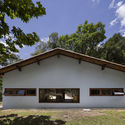
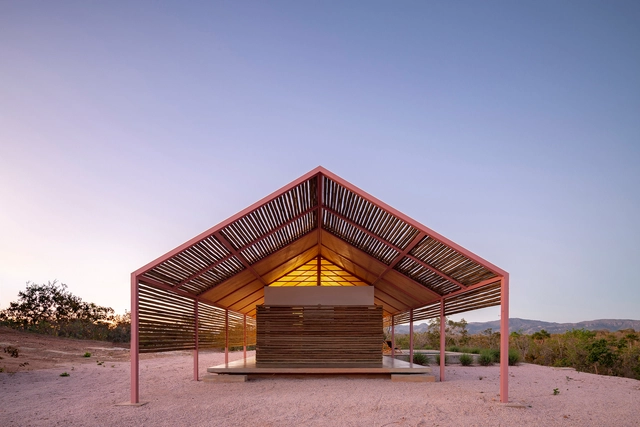
The gable roof house is not only a children's drawing of a home, it is also one of the most popular solutions in Brazilian residential architecture. Besides being very appealing and easy to build, this type of roof helps the rainwater flow along its two pitched surfaces that meet at a central line, hence the name duas águas (lit. two waters) in Portuguese.
https://www.archdaily.com/951776/brazilian-houses-15-projects-with-gable-roofsEquipe ArchDaily Brasil
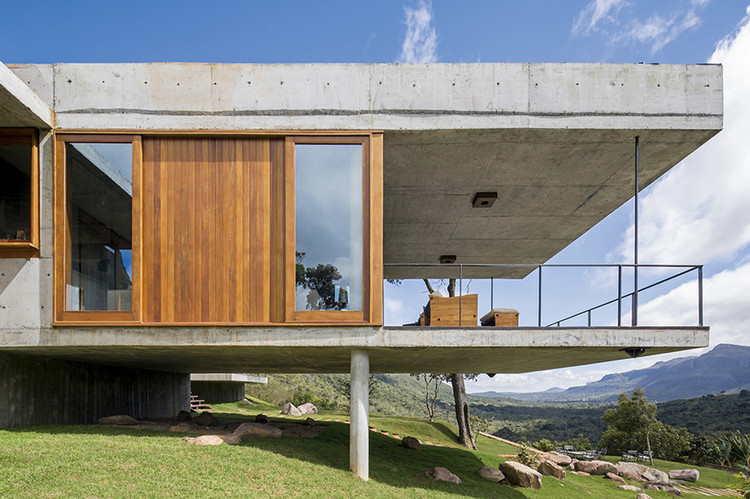
The polished concrete technique is not only suitable for many different environments, but also harmonizes well with various building materials, and has been the material of choice for many Brazilian architects in housing designs in recent years.
The mixture of sand, cement, and water is prepared on-site and the result is a cost-effective and long-lasting alternative when properly and regularly maintained. This finish has become so popular that you can find porcelain tiles and coatings with a similar texture.
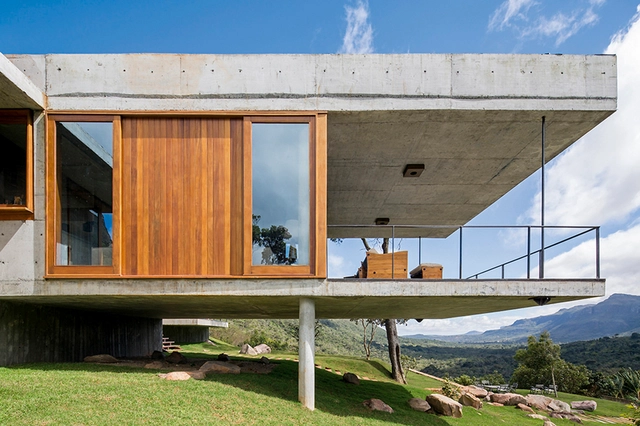
Structural components can be the main stars in architectural projects, contributing to the understanding of how the building's intrinsic forces are organized and distributed. Cables are constantly being used to steal the scene: they subvert the logic of supporting structures and build stable systems using tension, creating both a sense of strength and lightness in the building.
This kind of element is found in buildings of many different sizes, ranging from the steel cables of large and majestic suspension bridges to the cables on residential roofs. We have picked a series of Brazilian houses that benefit from this delicate and powerful structural component in different ways, showing the versatility of its potential applications.
Tile roofs are usually multi-pitched and covered in tiles, which make them different from flat and circular shaped roofs. The “pitch” of the roof is directly related to the wind and tile type, it must be able to drain rainwater and shelter the interior of the house.
The regional expressions of a country’s culture are vital in helping us understand the relation between context and specific conditions of social manifestations. These nuances and singularities inside the realm of construction are translated into what can be called vernacular architecture. Although it has always existed, this universe of local exemplars of architecture with their particular materials, techniques and regional constructive solutions came to be well studied in the second half of the twentieth century in Brazil, in a project that traced national architecture history, headed by Lucio Costa.