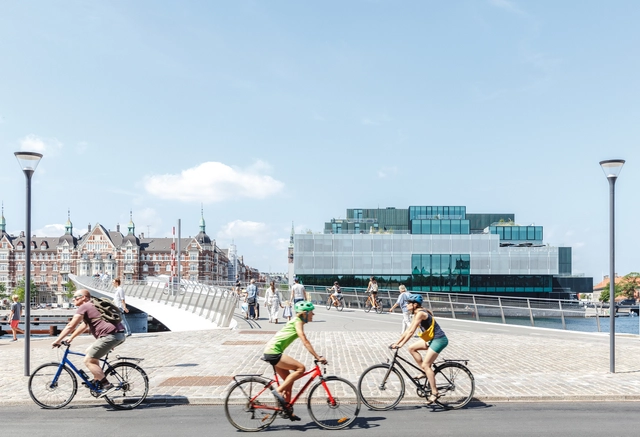
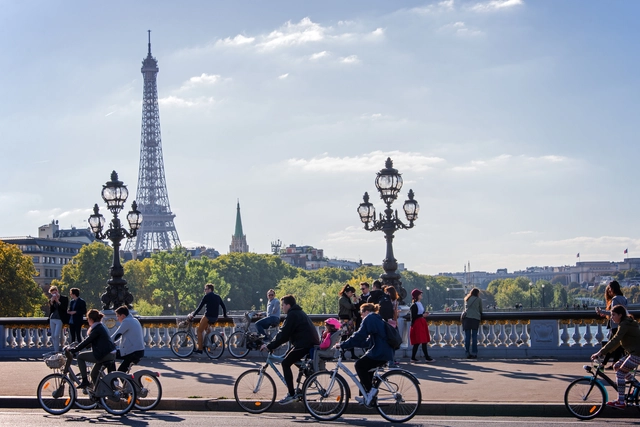
Nowadays bicycles are not only used for sports or as a recreational activity, as more and more people are choosing bicycles as their main means of transportation. Architecture plays a fundamental role in promoting the use of bicycles, as a properly equipped city with safe bicycle lanes, plentiful bicycle parking spots, and open areas to ride freely will encourage people to use their cars much less.
Cities are now positioning themselves as a key promoter of sustainable mobility, and Denmark and the Netherlands are currently the leading countries in the field of architecture for bikes. They are considered a cyclist's paradise because of their excellent infrastructure and architecture, making them a worldwide reference.
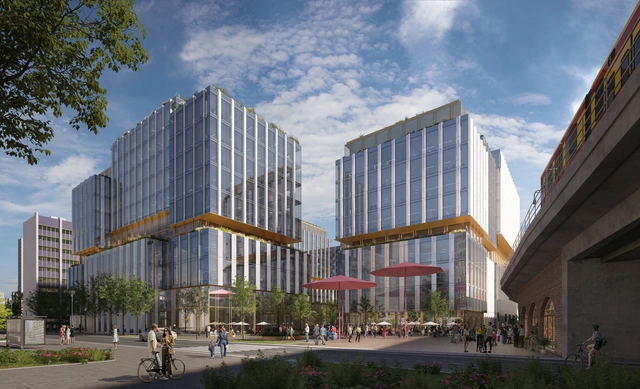
LXK Office and Residential Campus. Image Courtesy of MVRDV
MVRDV has just begun construction on the LXK Office and Residential Campus in Berlin. Situated in Friedrichshain, near Berlin Ostbahnhof, the development spans approximately 61,200 sqm and boasts city center views from its green rooftops and terraces. Designed as two buildings, a horizontal band encircles the middle of either structure, serving as a distinctive landmark in Berlin.
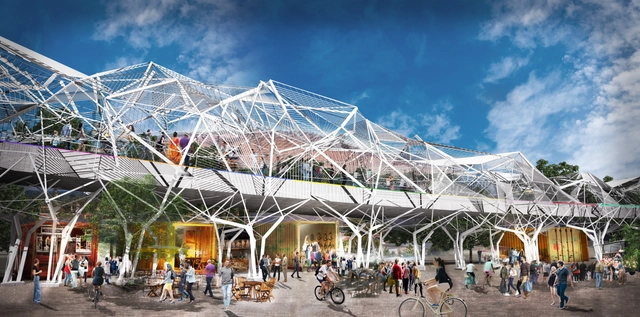
Architect Antoine Predock has unveiled his vision for the Albuquerque Rail Trail, a multi-use trail that will connect key destinations in the greater downtown area of New Mexico’s largest city. The project set out to combine the utility of pedestrian and bicycle pathways with the culture and history of the lands, encouraging healthy recreation, cultural expression and economic development. The Rail Trail project is of the Mayor’s Institute on City Design, Just City Mayoral Fellowship.
During the opening keynote at the UIA 2023 World Congress of Architects, Bjarke Ingels, the lead and founder of BIG, shared insights into pressing global challenges along with the office’s distinctive approach to addressing them. After the conference, ArchDaily had the chance to sit down with Bjarke Ingels to further expand on these topics. The discussion touched on a number of subjects, including BIG’s approach to design, based on their principle of “Hedonistic Sustainability,” the meaning and opportunities behind this change in mentality, the inter-applicability of technological innovations across different fields and even across planets, and the need to develop a New European Bauhaus as a response to the emerging environmental necessities.
What does the future of cities and transportation look like? It looks like the future will run on two wheels and a handle bar. Many explain the rise of cyclists as a shift towards a healthier and more economical lifestyle. But while that may be true, why would individuals feel inclined to ride bicycles if the roads don't support it, or if there weren't adequate spaces to park?
Architecture plays an important role in promoting the use of bicycles. Cities equipped with safe bicycle lanes, parking lots, and public bike facilities encourage citizens to refrain from using their cars, and opt for a much more sustainable means of transportation. Many have already began reshaping their urban infrastructure in a way that caters to bicycles, whether it is through bicycle bridges, widened cycling lanes, or permanent parking lots.
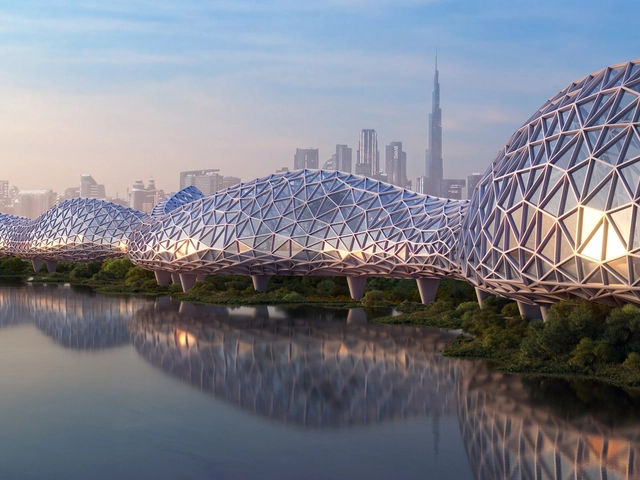
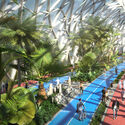
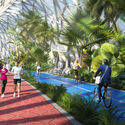
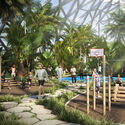
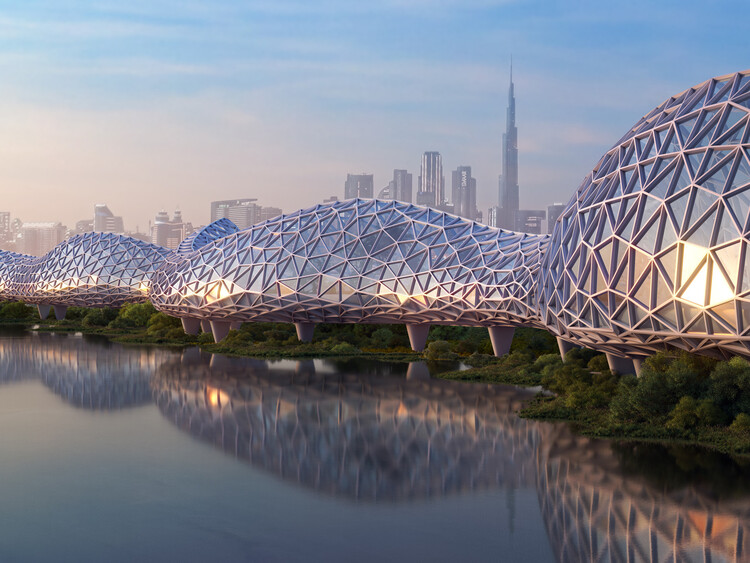
Designed by URB, The LOOP is a 93-kilometer-long sustainable highway that aims to encourage Dubai’s residents to opt for a healthy mode of transportation. The structure provides a climate-controlled all-year environment to make walking and cycling the preferred type of transportation in the city. The initiative aligns with Dubai’s 20-minute city initiative, which hopes to see 80% of Dubai’s residents commute to work by walking or cycling. The project is currently in the research and development phase.
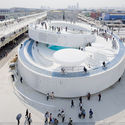
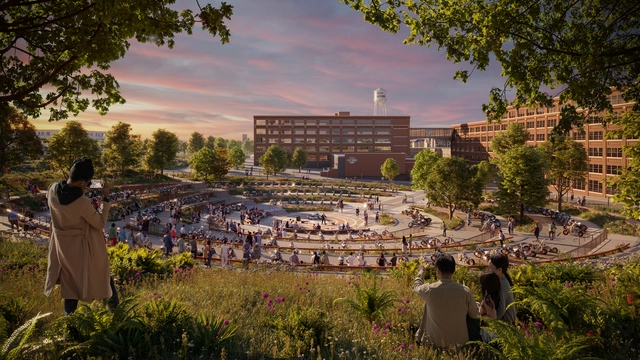
Heatherwick Studio has been commissioned to redesign and transform a central element of Harley-Davidson’s Headquarters in Milwaukee, US, the Juneau Avenue campus. The location is set to become a public park and green gathering space for the employees of the motorcycle company, as well as for the local community. In its center, the park features a large-scale amphitheater and sunken multi-use events space designed to be accessible to motorcycle riders. The project is set to break ground in 2023, with the park becoming available for use by the summer of 2024.
Ambitious technologists have claimed for decades that self-driving cars are the future. Yet, looking at recent years, the biggest revolution has come from vehicles on two wheels, not four. Fueled by the pandemic, increased oil prices, climate change and the desire for healthier lifestyles, we are now living in the midst of a bicycle renaissance. But to understand how we got here, it is crucial to look back. When the automobile became more widespread in the early 1900s, it quickly became a symbol of progress along with all it entailed: speed, privatisation and segregation. Adopting a car-centric approach, urban planners had to reorganise entire cities to separate traffic. Cars took over public spaces that used to host dynamic city life and parking lots, highways and gas stations became common landscapes. Pedestrians that once ruled the streets were herded into sidewalks and children relegated to fenced playgrounds. Ironically, cities were being designed for cars (not humans).
Over the last century, cars have been the dominant element when designing cities and towns. Driving lanes, lane expansions, parking garages, and surface lots have been utilized as we continue our heavy reliance on cars, leaving urban planners to devise creative ways to make city streets safe for pedestrians and cyclists alike. But many cities, especially a handful in Europe, have become blueprints for forward-thinking ideologies on how to design new spaces to become car-free and rethink streets to make them pedestrian-friendly. Are we experiencing the slow death of cars in urban cores around the world in favor of those who prefer to walk or ride bikes? And if so, how can it be done on a larger scale?
Jennifer Toole, ASLA, is the founder and President of Toole Design and has over 30 years of experience planning and designing multimodal transportation systems. A certified planner with a degree in landscape architecture, Toole has a strong background in urban design. She has been involved in numerous projects of national significance for the Federal Highway Administration, American Association of State Highway and Transportation Officials (AASHTO), and National Highway Traffic Safety Administration (NHTSA).
https://www.archdaily.com/960917/jennifer-toole-makes-the-case-for-better-bike-networksJared Green
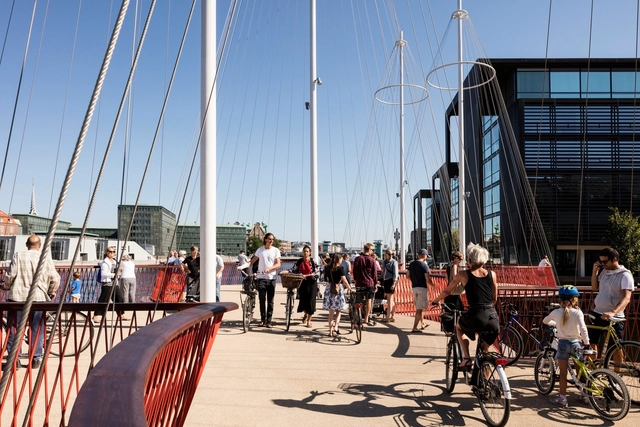
I spent four glorious days in Copenhagen in 2017 and left with an acute case of urban envy. (I kept thinking: It’s like..an American Portland—except better.) Why can’t we do cities like this in the United States? That’s the question an urban nerd like me asks while strolling the famously pedestrian-friendly streets, as hordes of impossibly blond and fit Danes bicycle briskly past.
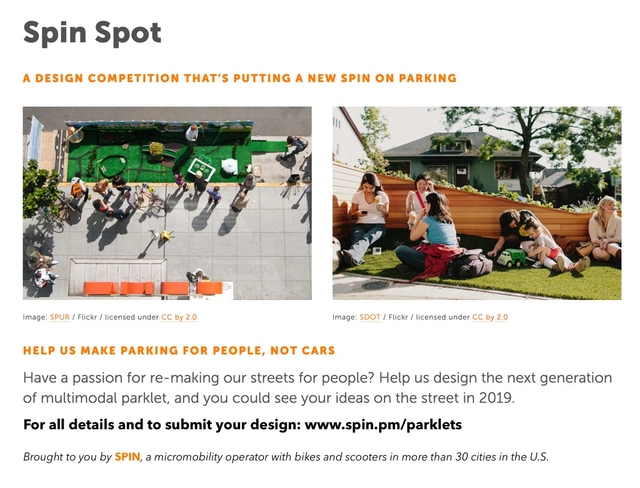
Visit www.spin.pm/parklets to learn more and apply. Image credit: Spin
In partnership with Better Block Foundation, Spin is launching an open call for designers, urbanists, architects, citizens and anyone who cares about safer and more livable streets, to design an on-street parklet prototype that blends the traditional parklet, bike corral, scooter parking, and bus shelter with placemaking.
Finalist teams in the design competition will receive $1,500 towards fabrication costs, plus mentorship and support from Better Block Foundation, and up to $1,500 in travel budget for domestic U.S. travel to Denver, Colorado.
All finalist designs will be built and installed in Denver, Colorado, and rolled out on National Parking Day, September 20,
When it comes to sustainability, the Netherlands has always been at the forefront. In recent news, Zwolle, one of the country's "greenest cities," implemented the world's first bicycle lane composed of post-consumer waste that would normally be discarded or incinerated.
To create the material, Zwolle used old, plastic bottles, festival beer cups, cosmetic packaging, and plastic furniture. Still, in the pilot phase, the bike path contains 70% recycled plastic in its 30-meter pathway. Although, the city hopes to create a bike path made entirely of recycled plastic in the future.
Designing public spaces without considering the circulation and parking of bicycles is no longer an option in today's world. Accessibility for the free traffic of cyclists must also be accompanied by adequate security conditions, incorporating these devices in the best possible way to parks, sidewalks, parking lots, and the streetscape as a whole.
Are you designing an urban space, or do the exteriors of your project require a correct link with the circulation of bicycles? Check these support elements that can help you to generate a better city for the urban commuter on wheels.
https://www.archdaily.com/887343/urban-equipment-for-public-spaces-helps-to-build-a-bike-friendly-cityAD Editorial Team
This year's Copenhagen Architecture Festival (CAFx) offered a wide range of activities, from film screenings to exhibitions on the future of social housing. The festival's fourth edition took place over 11 days and featured more than 150 architectural events in Copenhagen, Aarhus, and Aalborg.
Festival Director Josephine Michau explained that since its first edition, the intention behind CAFx was to bring many local agents together in order to build new dialogues around architecture. As a society, how do we identify with architecture? What values do we ascribe to it? These questions were part of this edition's overarching theme: "Architecture as identity."
This month, in the city of Xiamen, China's first elevated cycling path was inaugurated. At nearly 8 kilometers long, the structure is now the world's longest elevated cycling path.
The construction of this exclusive cycling path was promoted by the Xiamen City Government to provide inhabitants with a new sustainable transportation alternative that could significantly reduce vehicular traffic on the city's already congested highways.
A 50-meter stretch of Rio de Janeiro's Tim Maia bike path, which was built in preparation of the 2016 Olympic Games to connect neighborhoods Leblon and São Conrado, collapsed this morning. Adjacent to the Avenue Oscar Niemeyer, in the south of the city, the bike path was inaugurated on January 17 this year. According to the fire department, the deadly accident was caused by the surf of the sea.
According to passersby, the bike lane was hit by a strong wave that, in addition to collapsing the site, broke the windshield of a bus and dragged a woman on the boardwalk. The location is near the exit of the sewer pipe.
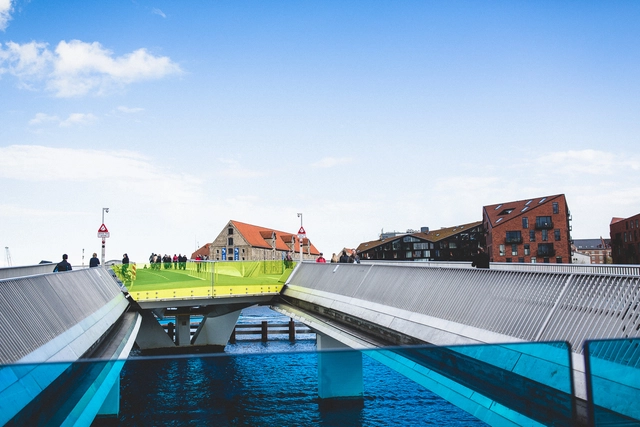
The Louisiana Channel recently paid a visit to one of the world's most bike-friendly cities to view what is dubbed "Copenhagen's new architectonic landmark," Dissing+Weitling Architecture's "The Bicycle Snake." "Strikingly slender" and boasting a simple orange track, the Bicycle Snake is a 230 meter bridge dedicated entirely to bikes. The steel bridge tries not to "be more that it actually is," unlike many other landmarks, connecting bicyclists to two main parts of the city by elevating them up to seven meters above the sea.