Videos
‘Carbon to Rock’ en la Biennale Architettura 2021. Fotografías: Raul Betti y Adolfo Guiard Torre-Marín. Image Cortesía de Igneous Tectonics
Climatic conditions throughout the world are changing and with extreme temperatures and scarce resources becoming the norm, architectural materials and techniques are having to innovate to prepare for the future.
'Carbon to Rock' is an installation by IGNEOUS TECTONICS (Cristina Parreño and Sergio Araya) being presented in the 2021 Venice Biennale that highlights volcanic rock as a promising material in the global push to mitigate climate change.
The Royal Institute of British Architects has announced the 13 regional winning projects of the 2021 South Awards. The projects ranged from complex civic buildings to refined residential extensions and context-integrated interventions, with an emphasis on landscaping and craftsmanship. The winning architects will now be considered for a highly-coveted RIBA National Award in recognition of their architectural excellence, which will be announced later this year.
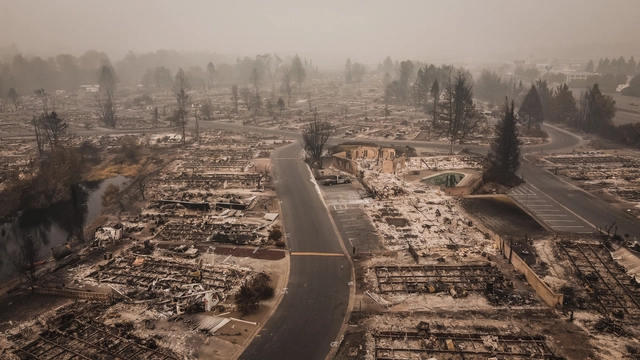
via Shutterstock by ArboursAbroad. ImageAerial View of the Almeda Wildfire in Southern Oregon
The Intergovernmental Panel on Climate Change, the UN's body for assessing the science related to climate change, has recently published a comprehensive report documenting the extent of global warming. The paper provides new time estimates for crossing the 1.5 degrees Celsius threshold, urging immediate and large-scale action to reduce greenhouse gas emissions. Following the publication of the report, UK Architects Declare has issued a statement inviting decision makers to a dialogue on how to collectively address the climate crisis while at the same time calling for the design professionals to re-evaluate their practice to support meaningful change.
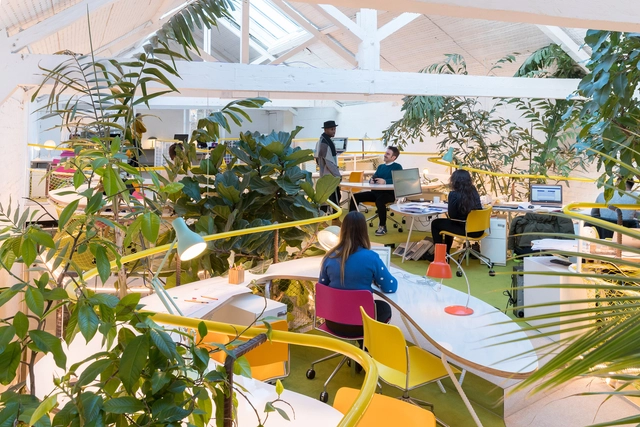
Burnout syndrome is an occupational phenomenon resulting from chronic workplace stress and emotional tension and has been affecting more and more professionals every day. It is directly associated with each person's daily work life, not only with the operational aspects of the job but also the physical environment.
We spend on average 1/3 of our day in workspaces, so it's no wonder they considerably affect our mental health. Following a period of intense home office activity during the year 2020, now people are returning to collaborative workplaces. These spaces offer a great alternative to escape the domestic environment and create separate places for each function of our lives, a much-needed change after a year of isolation.
In a recent interview with Louisiana Channel, graphic designer-turned-architect Bruce Mau explains how design is a mindset "of optimism and action". The designer talks about how architecture and design can influence and give form to the world we are sharing, and explains how we are the ones who design the outcomes of life, leaving no room for cynicism.
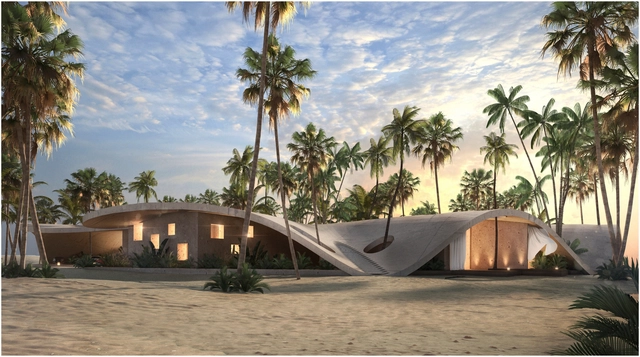
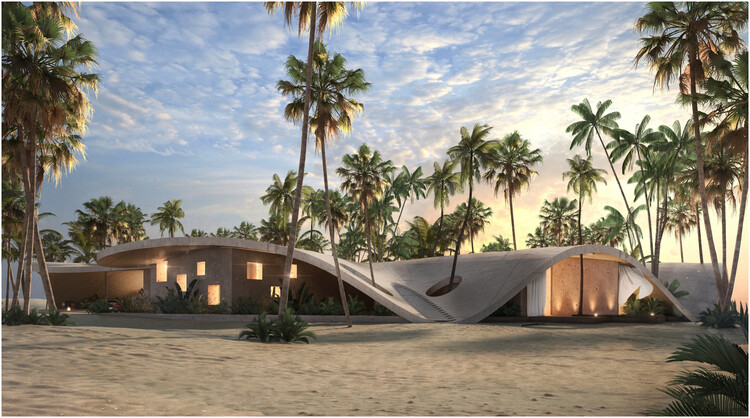
Jasper Architects has recently won a competition to design an immersive hotel experience within the desert landscape of Kuwait. Featuring a curved structure echoing the surrounding dunes, the project is intended to recreate an oasis where visitors can fully observe the natural environment. Through its colors, textures, use of wood, and rammed earth, the concept emulates the surrounding. Reiterating the local topography, a circular roof rises and touches the ground, creating an array of alternating interior and exterior spaces.
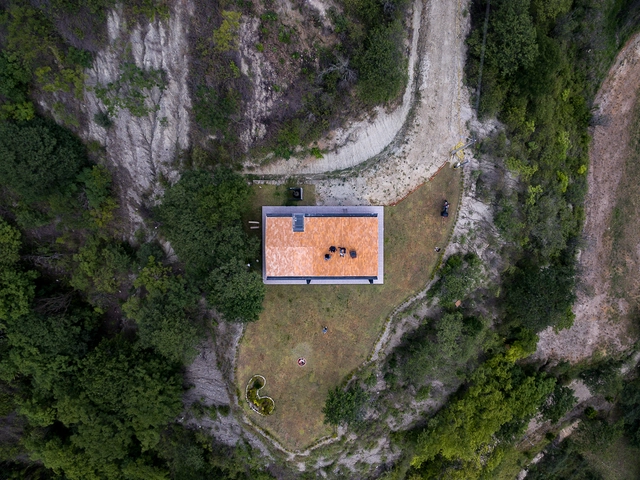
Capturing aerial photographs allows raising awareness of a project feature usually complex to capture using traditional methods. Based on the technological opportunities offered by small unmanned aerial vehicles (UAVs), commonly called drones, architecture photographers have begun to explore new ways of capturing a project in order to expose design decisions such as implantation, dialogue with the environment, or the relationship with nearby buildings.
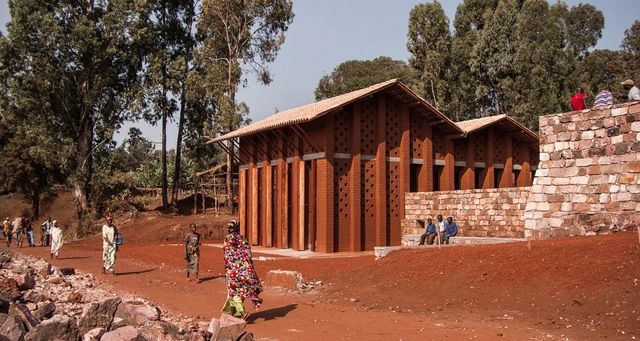
Library of Muyinga. Image Courtesy of BC Architects
In his 1983 now-classic essay Towards a Critical Regionalism, Six Points of an Architecture of Resistance, Kenneth Frampton discussed an alternative approach to architecture, one defined by climate, topography and tectonics, as a form of resistance to the placeness of Modern Architecture and the gratuitous ornamentation of Postmodernism. An architectural attitude, Critical Regionalism proposed an architecture that would embrace global influences while firmly rooted in its context. The following explores the value and contribution of Frampton’s ideas for contemporary architecture.
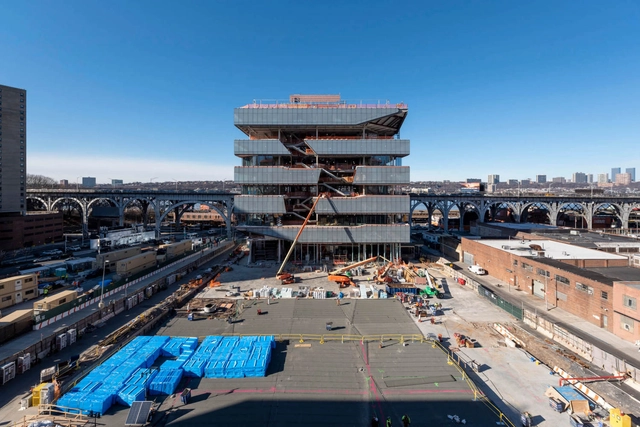
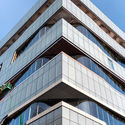
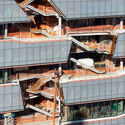
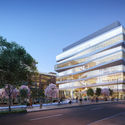
Columbia University’s Manhattanville Campus expansion has ushered in a crystalline district of glass-clad buildings amid the masonry vernacular architecture of Harlem. The latest additions to the 17-acre, $6.3 billion campus, which was master-planned by SOM, are two buildings designed by Diller Scofidio + Renfro (DS+R) in collaboration with FXCollaborative that provide a new home for the Columbia Business School. Set to open in early 2022, Henry R. Kravis Hall and the East Building rise 11 and 8 stories, respectively, and provide 492,000 square feet of classrooms, public space, and faculty offices.
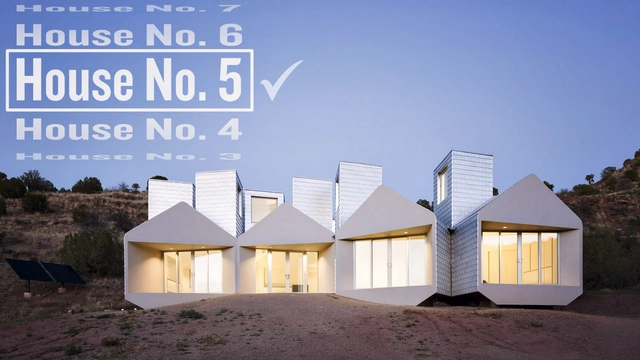
What’s in a name? Well, when it comes to building names, it can be a lot. While some monikers are fleeting and change with the most recent highest bidder, some names are indelible and leave a lasting mark on the public imagination. Client names, towns, corporations, and streets provide ample naming fodder, but some architects are more strategic. Architects like Peter Eisenman created a numbered series (House I, House II, etc.) , or MOS architects adopt a composer-like generic naming system (House with 10 trees, House with 2 Chimneys). For these architects, the name situates each building within a larger collection of projects. It ensures people will consider each act of building as part of a grand plan. Finally, sometimes, no matter how diligent a marketing team tries, a building will find a nickname it just can’t shake...Gherkin. This video considers all these as it explores how buildings get their names.
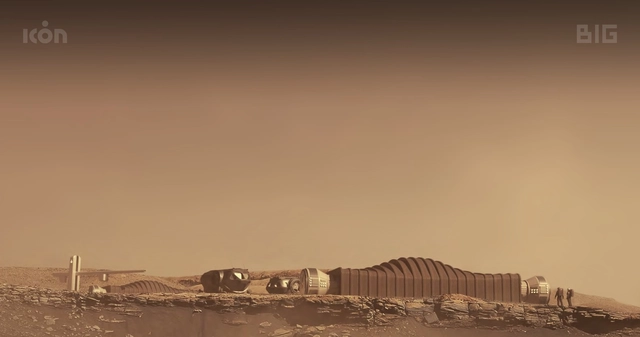
Bjarke Ingels Group has collaborated with NASA and ICON to create Mars Dune Alpha, a 3D-printed research habitat that will provide long duration habitation for astronauts on missions to Mars. The 1,700 sq.ft. structure, which is currently located at the Johnson Space Center in Houston, Texas, is designed by the award-winning architecture firm, 3D printed by construction developers ICON, and will soon be home to NASA's future crew.
With new advancements in software opportunities, Open BIM is tiding over the disconnects between different project sectors, making the workflow more efficient at both large and small scales. Open BIM extends the benefits of BIM (Building Information Modeling) by improving the accessibility, usability, management, and sustainability of digital data in the built asset industry. Open BIM processes can be defined as sharable project information that supports seamless collaboration for all project participants, removing the traditional problem of BIM data that is typically constrained by proprietary vendor data formats, by discipline, or by the phase of a project.
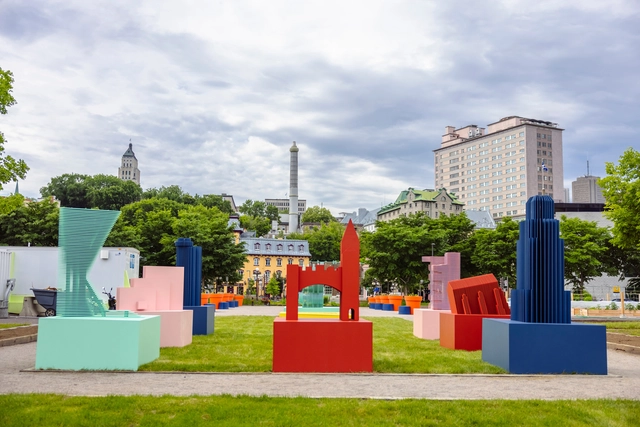
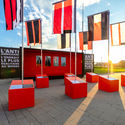
EXMURO arts publics and the Ville de Québec have inaugurated the the 8th annual PASSAGES INSOLITES art event, the annual Quebec City art walk that showcases over 20 unusual urban interventions by local and international artists. The event will run from June 26 to October 11, 2021, and will focus on reimagining the urban fabric and transforming how we see the city and its historic landmarks.
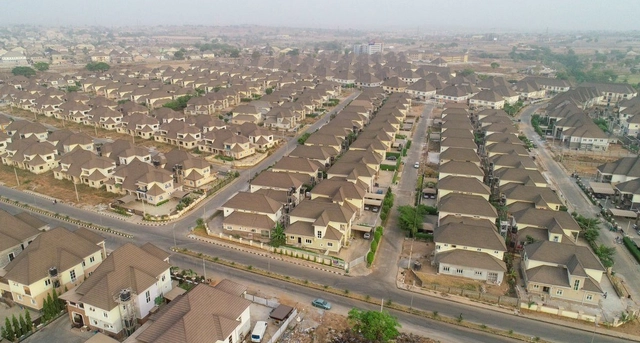
In spite of the lull in the global construction industry over the last couple of years, megacity projects in Africa have continued unabated, as new developments are springing up in major cities all over the continent. Though we’re inspired by the growth of modern African cities and the opportunities offered to city residents, we shouldn’t ignore their shortcomings, the glaring disconnect between the utopian visions of local city officials and the economic and cultural realities of the local populations who live here. Many questions whether these new cities could be built in other ways, or if Africans will ever have an alternative to the current model of placemaking, hodgepodge urbanism foisted on it, largely by colonialists.
Exactly a year ago, on August 4, 2020, the third-largest non-nuclear explosion ever-recorded destroyed almost half the city of Beirut, ripping through the port and the eastern part of the capital. One of the biggest urban tragedies of modern times, killed more than 200 people, wounded thousands, and left an estimated 300,000 people homeless, damaging over 80,000 commercial, residential and public spaces. Felt across neighboring countries, the blast stripped the city’s constructions of their cladding, framing, and glass elements, while completely tearing down other buildings, leaving around US$15 billion in property damage, in times of Covid, political and social unrest, and economic collapse.
One year later, so little has changed. One year later, it only became harder for the people of Beirut. One year later, everything in the city still reminds them of that day. Major questions remained unanswered, no rescue or action plans have been taken by governmental institutions, instead, civil society rose to take into their own hands, reconstruction efforts, in the total absence of the state.
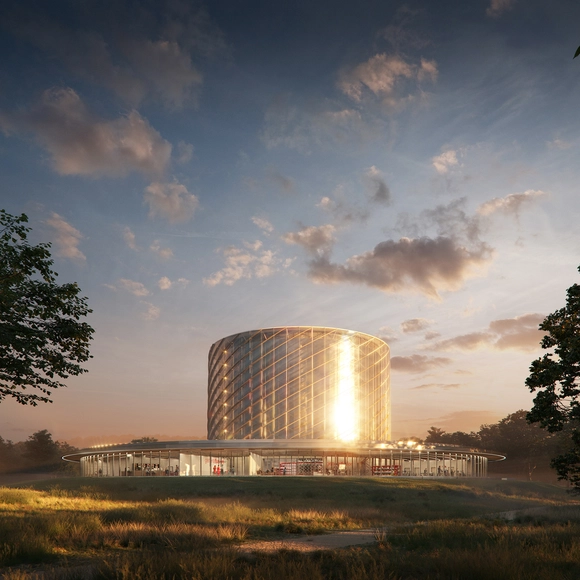
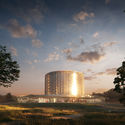
UK-based architecture firm AL_A has collaborated with Canadian energy firm General Fusion to develop the world's first magnetized target fusion facility on the UK Atomic Energy Authority (UKAEA) campus in Culham, United Kingdom. The energy firm wanted to "transform how the world is energized by replicating the process that powers the sun and stars". AL_A's design proposes a first-of-its-kind facility with open spaces and see-through partitions that provides innovative carbon-free energy solutions.
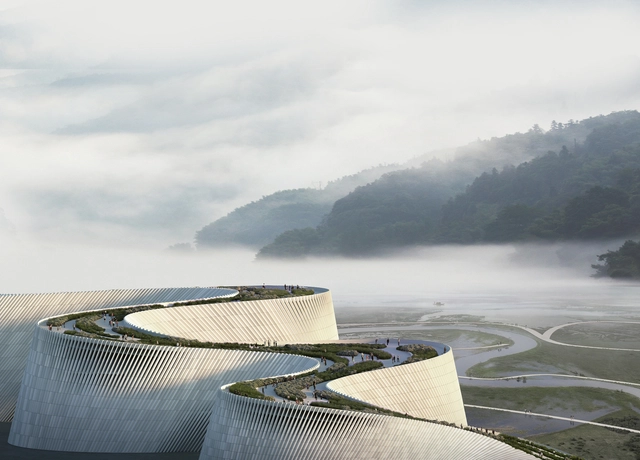
Shenzhen Natural History Museum. Image Courtesy of 3XN
The latest news and reports on China’s construction sector redefine the country’s future architectural landscape. A Cultural Infrastructure Index reflecting the data from 2020 places China and, more specifically, Shenzen as the world leader in investments regarding cultural facilities. Last year saw the announcement of 10 new cultural projects, all designed by world-renowned architects. At the same time, the Chinese authorities announced last month that buildings taller than 500 metres would no longer be approved, marking the end of an era that made the country home to 10 of the tallest 20 buildings in the world.
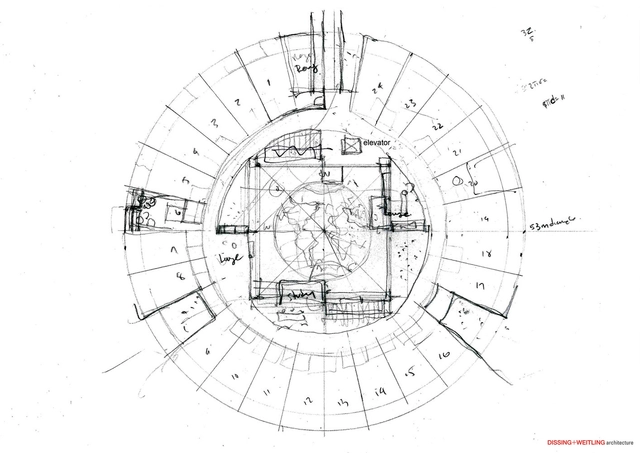
Often, when people think of buildings, they default to imagining rectangular structures—or at the very least, structures with orthogonal floor plans and hard angles, certainly not buildings with circular plans. The rarity of the circular plan comes in part from the fact that poor design choices can lead to wasted space and awkward interior arrangements, especially if furniture and appliances are rectangular in shape. However, strongly designed circular planes can have a dramatic effect, generating extraordinary spatial configurations that meet a variety of aesthetic and functional needs, while challenging the material specification process. Below, we list 18 buildings with circular plans, considering their varying strategies of design.
https://www.archdaily.com/966202/how-to-properly-design-circular-plansLilly Cao


.jpg?1623868861&format=webp&width=640&height=580)