Outside of China, media facades usually appear as proud individualists vying for attention at night. In China, however, you can find large groups of media facades with a common message in numerous metropolitan areas. These media facades visually merge multiple skyscrapers into a panoramic entity. But what are the reasons that this phenomenon is unique to China? And how did it start? The Media Architecture Biennale linked culture and politics to provide an answer to the emergence of media scapes in China.
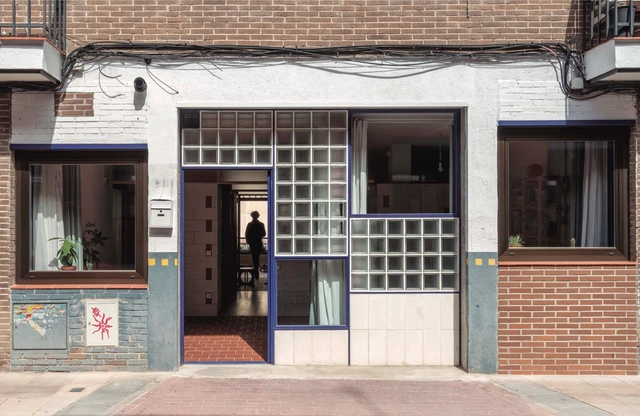
El Garaje by Nomos has been announced as the winner of the 2021 AR House Awards 2021. Selected from a shortlist of 15 global practices, the jury praised the project for how it "rethinks the housing typology as an element to reactivate underused spaces in cities and transform rigid and obsolete infrastructure into lively solutions". House Hamburgö by Manthey Kula and House in Kanazawa by Shota Nakanishi Architects also received highly commended recognition, along with honorable mentions to Beaconsfield house by Simon Pendal Architect, Weekend House by AREA (Architecture Research Athens), and Hlöðuberg artist studio by Studio Bua.
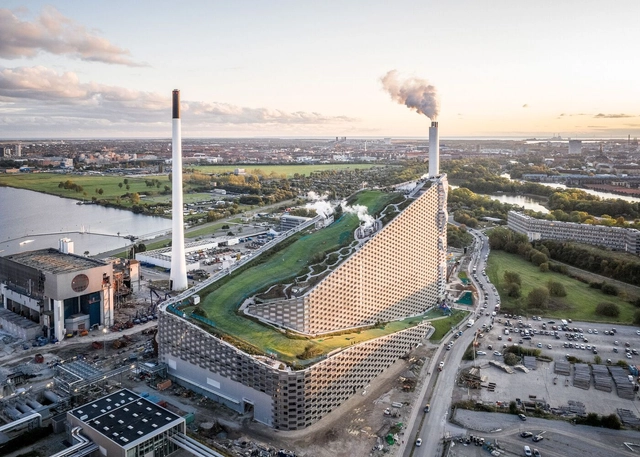
World Architecture Festival has revealed the winners for this year’s categories, highlighting buildings and landscapes completed across the world between 2019 and 2021. Chosen from almost 500 shortlisted projects from 62 countries, the winning projects showcase exemplary contributions to the built environment reflecting this edition’s theme: ‘Resetting the City: Greening, Health and Urbanism’. In addition to the completed buildings categories, the annual award also announced Copenhill, designed by Bjarke Ingels Group, as the 2021 World Building, while SLA was awarded Landscape of the Year for its design of Al Fay Park.
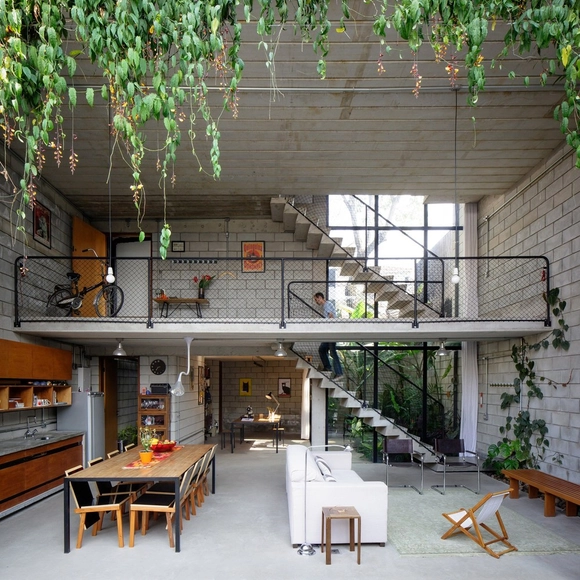
Ms. Dalva's house in Vila Matilde has certainly helped put the four architects of Terra e Tuma, Danilo Terra, Pedro Tuma, Fernanda Sakano, and Juliana Terra, on the architectural spotlight worldwide. With simple and smart solutions, this project has already received six awards, both national and international. The office based in São Paulo, Brazil, has since managed to share their experiences by presenting a new way of designing good and affordable architecture for the underprivileged social classes. However, despite the great impact of this project, the office is not limited to just one type of client and solution, as can be seen in their extensive body of work developed over almost 15 years of practice.
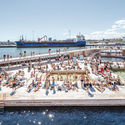
Between rising water levels and global migration to cities, architects and designers need to critically reimagine the relationship between coastal landscapes and public space. Cities are facing entirely new risks and environmental conditions. Resiliency, infrastructure, and ecology are increasingly common terms, reflecting the growing demand to address the spatial and formal challenges faced by cities worldwide. Rethinking boundaries and edges, designers have unique opportunities to help shape public understanding of these conditions through waterfront parks.
Courtesy of KARL LAGERFELD, Sierra Blanca Estates and One Atelier
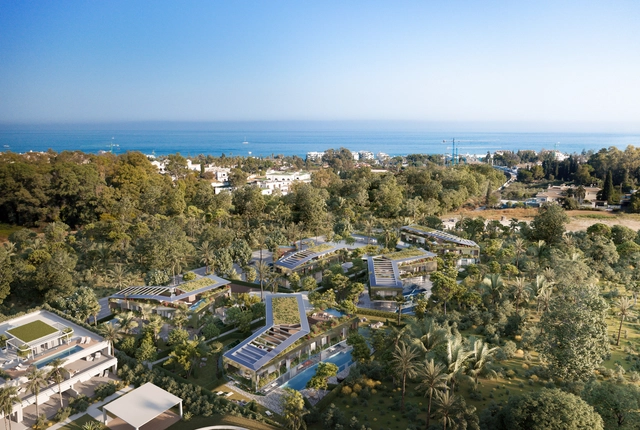
During the past couple of years, luxury and fashion brands began venturing into architecture. Some built museums, foundations, and cultural organizations while others shaped residential structures that translated their identity into space. Following this same concept, KARL LAGERFELD, along with Spanish Developer Sierra Blanca Estates and the Design and Branding Firm The One Atelier, have developed the fashion house’s first “luxury architectural project”, the Karl Lagerfeld Villas in Marbella, Spain. Designed by The One Atelier, of which Andrea Boschetti is Head of Design, the project has low carbon impact, aligned with the brand’s commitment to the Fashion Pact - a global sustainability initiative that seeks to transform the fashion industry through objectives in climate, biodiversity, and ocean protection.
Asking what is “luxury architecture” and questioning why fashion brands are expanding into architecture, ArchDaily met with Andrea Boschetti to further understand the architect and urban planner’s take on the subject.
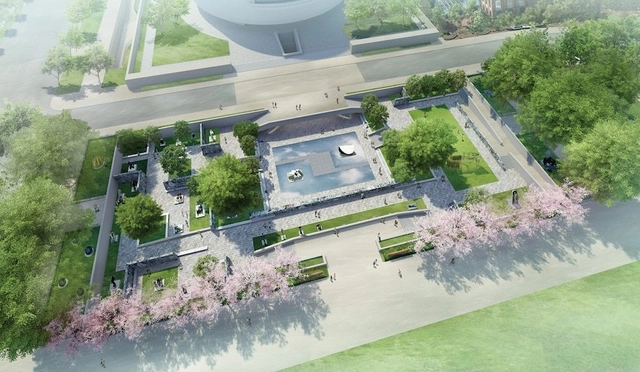
Following years of federal review, the National Capital Planning Commission has finally approved Hiroshi Sugimoto’s Sculpture Garden renovation proposal. Sugimoto’s redesign, which was proposed in Spring of 2019, transforms the Hirshhorn Museum into an accessible and inviting structure welcoming more than 30 million annual visitors. The design features flexible venues to welcome large-scale sculptures and time-based performances, and includes work on long-overdue repairs in the infrastructure.
David Adjaye was announced as the lead designer of the Barbados Heritage District, dedicated to documenting and recounting the impact of slavery on Barbados as well as cultures and nations in the Western hemisphere. The project will comprise a memorial, a museum and a research institute, the latter in charge of presenting Barbados’s pivotal role within the slave trade history as the place of departure for millions of enslaved Africans towards the Americas. The Heritage District, whose announcement closely follows Barbados’ transition to a parliamentary republic, marks a cornerstone in the development of the country’s identity more than five decades after declaring its independence from Britain.
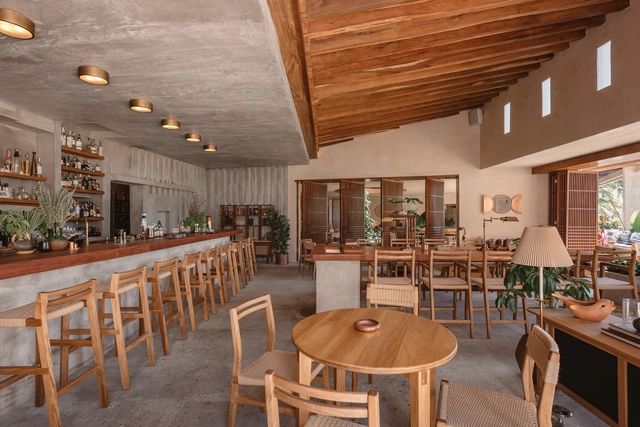
There are several reasons why Quintana Roo —a state located in the southeastern region of Mexico— has an important cultural wealth. One of them is because of world-class tourism which has led it to have one of the eight international airports in Mexico in addition to being praised by the World Tourism Organization.
By definition, architecture and urban planning operate within a certain degree of indeterminacy, using present context to find viable answers for an unknown future. As a result, design is a constant search for a balance between prescribing and taking a step back to make room for alternate yet unforeseeable scenarios. Uncertainty is an inherent condition in present-day society, and recent rapid social, economic, and even environmental changes prompt a closer look at how architecture can incorporate indeterminacy. The following reviews some precedents and contemporary examples that programmatically operate with indeterminacy, highlighting several strategies for designing for uncertainty and change.
Bjarke Ingels Group and A-Lab have unveiled their design of Oslo Science City, a new innovation district in Norway's capital that aims to create a physical framework for Norway’s innovation environment of estimated 150,000 scientists, students, entrepreneurs, and contribute to the country’s transition to renewable energy. The district aims to be a net zero emission area that operates on renewable energy and circular economic principles, as well as zero emission solutions during development and operation.
Shortly after the millennium, Vanity Fair, a magazine that purports to follow every kind of cultural milestone, asked a select group of 52 “experts” to pick the five best buildings since 1980. The selections were bizarre; almost every building was by one of the chosen architects, which made up the vast majority of those asked for their picks. Few choices received more than five votes.
https://www.archdaily.com/972957/where-are-the-architectural-masterpiecesMark Alan Hewitt
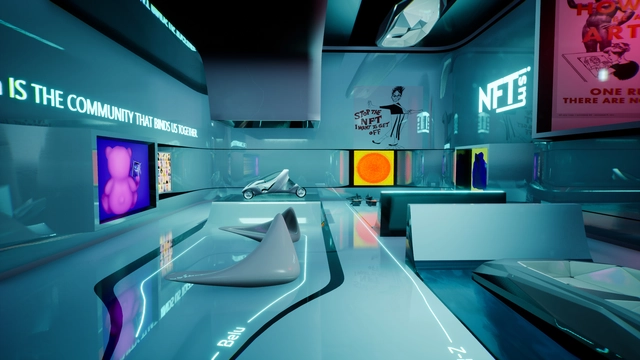
Zaha Hadid Architects have presented "NFTism", a virtual art gallery at Art Basel Miami that explores architecture and social interaction in the metaverse. The gallery features spatial designs created by ZHA that focus on user experience, social interaction, and "dramaturgical" compositions, combined with MMO (massively multiplayer online game) and interaction technological services.
In downtown Kuala Lumpur, Merdeka 118 topped out at 678.9 metres tall and 118 storeys, becoming the second-tallest building in the world. Five years after construction started, the tower’s final silhouette is revealed with the completion of the spire, redefining the city’s skyline currently dominated by the Petronas Towers and the Kuala Lumpur Tower. Designed by Australian firm Fender Katsalidis, the project features a triangular faceted glass façade inspired by patterns found in Malaysian art and, together with the surrounding park designed by Sasaki, creates a new layer of the city’s identity.
MAIO is currently building a five-story building with 40 social housing units in the Sant Feliu de Llobregat district, Barcelona. The project design urban connectivity, social equity, and sustainability. As the winner of a two-phase competition, the building will house hierarchyless, generic, flexible spaces to fit the inhabitants' needs.
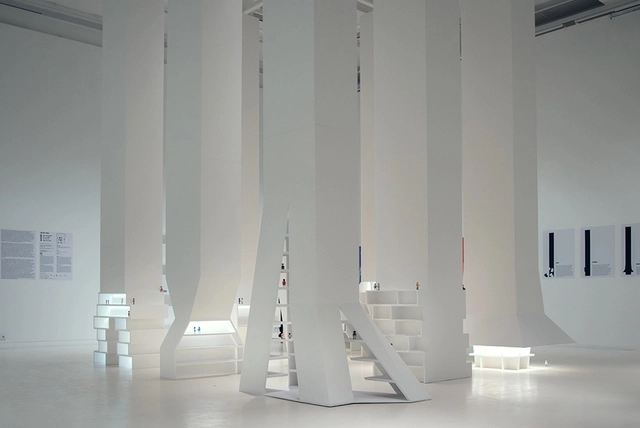
Shape Tomorrow, a new exhibition at AEDES Architecture Forum in Berlin, is a reaction to both staid, self-serious architecture shows and to the staid, self-serious architecture profession. Taking the form of a miniature city, it turns buildings into named characters, encourages visitors to populate structures with miniature people, and leaves space for them to fill the room with their ideas and criticism.
The exhibition, on view through January 13, is the brainchild of German architect Matthias Hollwich, founder of New York-based HWKN—a burgeoning firm known for both its research and its sense of whimsy. The show centers on nine, 16-foot-tall white plaster towers whose glowing bases take on the forms of some of the firm’s playful, kinetic projects from around the world. These include 25 Kent, a fractured office building in Williamsburg, and Die Macherei, a jutting and terraced mixed-use business district in Munich.
ArchDaily Professionals is an initiative that focuses on all of the collaborators involved in architecture and construction, who participated and are credited in the projects we have carefully curated and published. This project aims to recognize and highlight the best collaborators responsible for delivering the best architecture, by delivering valuable knowledge related to the different disciplines within our community. Today, we are launching a series of video interviews between architects and collaborating professionals, to learn more about their work and to understand the importance of these relationships to deliver high-quality architectural projects.
For this first interview, ArchDaily’s Managing Editor, Christele Harrouk, met with lighting design firm L’Observatoire International’s founder, Hervé Descottes, and American architect Steven Holl. In this moderated talk, we had the chance to speak to Hervé and Steven about their collaboration in three cultural projects in the United States: the Institute for Contemporary Art at VCU, the Winter Visual Arts Building, and Nancy and Rich Kinder Museum. In this conversation, we learned more about what lighting in architecture means to them, how space and light should be conceived and why a close collaboration between architects and lighting designers is crucial to architecture projects.
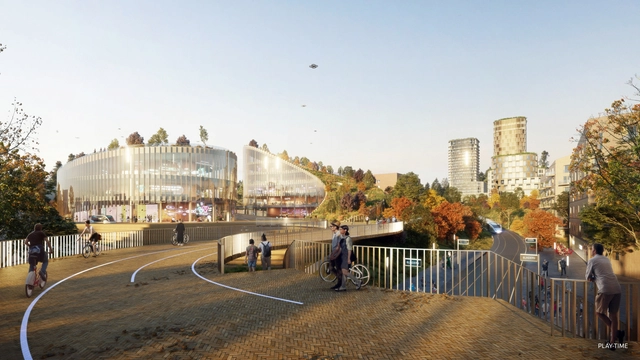
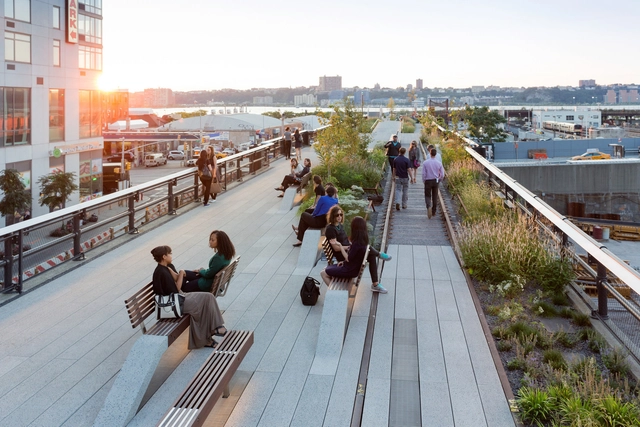
KCAP Architects and Planners have unveiled the ZIL-Southmasterplan, a new residential district in Moscow built on the basis of a 15-minute city. The masterplan will be built on the largest brownfield area of the former ZIL industrial zone, and will feature more than 100 hectares of commercial and residential landmarks, public spaces, parks, landscapes, and interconnect routes alongside the Moskva River, all inspired by the area's pre-industrial past.





















.jpg?1635893302 "House Between Trees / AS Arquitectura. Image © David Cervera")







_MODEL.jpg?1627415949&format=webp&width=640&height=580)


_KCAP_3_Park_Quarters.jpg?1638352982&format=webp&width=640&height=580)
_KCAP_4_Urban_Gardens.jpg?1638353099 "Courtesy of KCAP")
_KCAP_6_Business_Quarters.jpg?1638353124 "Courtesy of KCAP")
_KCAP_5_River_Quarters.jpg?1638353058 "Courtesy of KCAP")
_KCAP_9_Pedestrian_Boulevard.jpg?1638353251 "Courtesy of KCAP")
_KCAP_3_Park_Quarters.jpg?1638352982)


