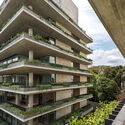
With over 20 years of experience, Studio Arthur Casas celebrates the entirety of architectural practice. The office works in different scales, from furniture to urban projects, passing through residences, apartments and buildings, maintaining stringency about the quality of details.
Buildings contribute nearly 40% of greenhouse gases to the atmosphere, so the push is on to “get to zero” on many fronts. What happens when ambitious goals like zero energy meet a conventional building industry that’s structured on repetition and cost, in a market that struggles to keep up with massive demand? This is often—too often—our challenge.
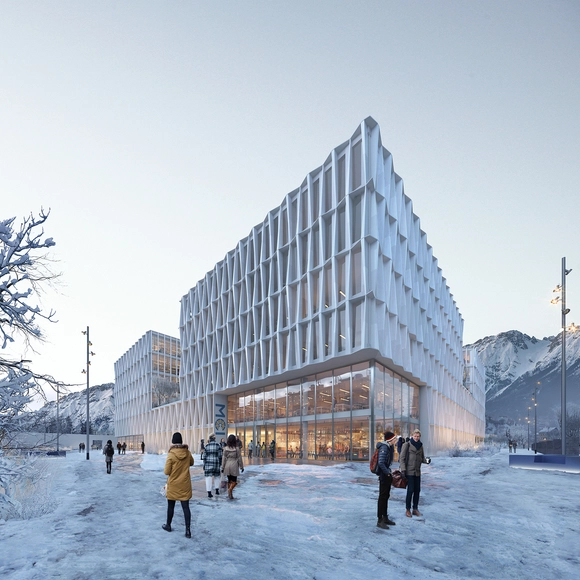
Henning Larsen won the competition to design a new university building for the Management Center Innsbruck (MCI), the studio’s first project in Austria. Founded in 1995, the MCI outgrew its facility in the city centre, and the competition was meant to establish a new unified campus, gathering together the many faculties now scattered on different locations throughout Innsbruck. The design consists of an isolated object with no back or front featuring multi-story voids carved into each façade, establishing distinct relationships with the surroundings and framing views of the Alps.
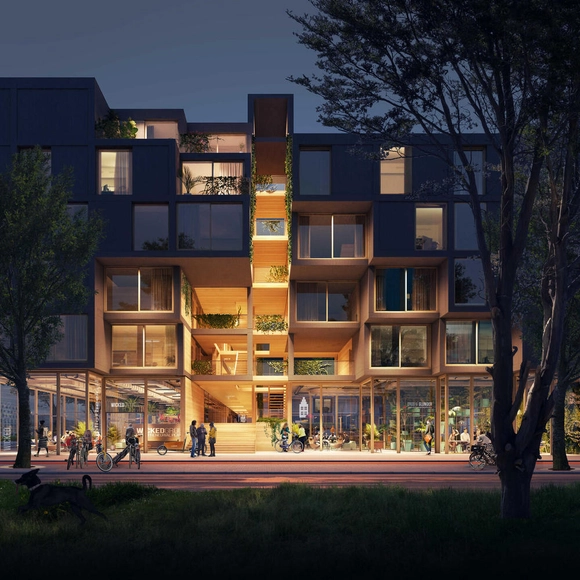
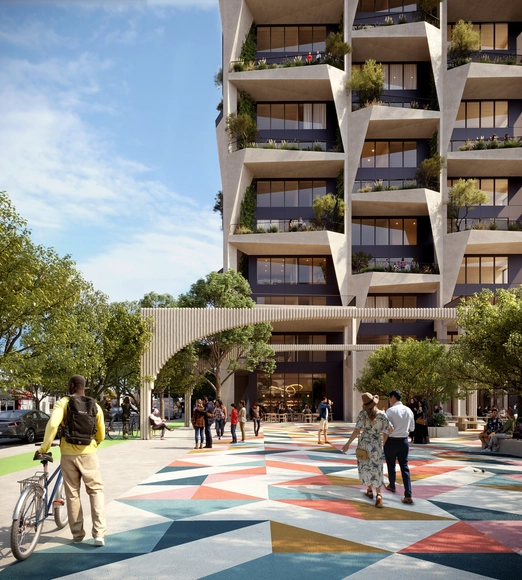
The first wooden housing modules of Juf Nienke, a new circular prefabricated timber housing project by SeARCH, RAU, and DS landscape architects, has been installed in Amsterdam. The project will feature 61 rental homes made entirely of wood, and will sit at the entrance of Centrumeiland, a newly raised piece of land on Lake IJmeer that features 1500 housing units. It is set to be one of the most sustainable apartment buildings in the Netherlands, incorporating an innovative cross-laminated timber construction and utilizing recycled materials.
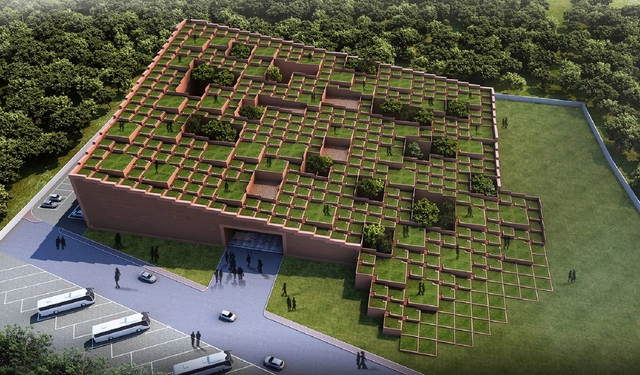
Sanjay Puri Architects has designed a new building for the Prestige University in Indore, a stepped massing with green terraces that blends with the landscape. Currently under construction within the 32-acre university campus, the project echoes traditional Indian architecture through its use of red brick and contextual adaptation to the local climate. The morphology creates an outdoor amphitheatre for students and faculty, while the interweaving of indoor and outdoor spaces is meant to foster engagement and social interaction.
Residential architecture is one of the most popular categories among our readers. In 2021 we published more than 3,800 projects, featuring houses from different regions of the world and offering a variety of solutions, materials, contexts, environments, scales, and typologies. Providing a broad source of inspiration for those seeking references for their own residential project.
https://www.archdaily.com/973682/best-houses-of-2021Clara Ott
In this week's reprint, Metropolis editors have selected a variety of new and forthcoming architecture and design books, rounding up a compelling reading list for the season. The following titles range from monographs and theoretical inquires to essential knowledge works, from authors like Michael Sorkin, Robert A.M. Stern or Paul Dobraszczyk.
In this second edition of the ArchDaily Professionals Video Interviews, ArchDaily's Managing Editor, Christele Harrouk, met with Mat Cash, Group Leader of Heatherwick Studio, Signe Nielsen, MNLA's Founding Principal, and David Farnsworth, Arup Principal, to discuss their collaborative work on one of New York City's latest green areas, Little Island Park at Pier 55.
During the last quarter of 2021, Herzog & de Meuron completed the construction of three museums: M+ in Hong Kong, 433 MKM Museum Küppersmühle Extension in Duisburg, and 473 SONGEUN Art Space in Seoul. To celebrate this milestone and highlight the projects' varied approaches to the presentation of art as culturally-enriching platforms, the firm has put together a video compilation of all three projects alongside each other, showcasing the different approaches to their contexts and geographical locations, spatial requirements and materiality, and how all three of them share a collective focus to foster the exchange between people and culture.
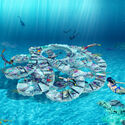
OMA / Shohei Shigematsu, together with artists Charlotte Taylor and Nicholas Préaud, created a series of NFTs inspired by an underwater sculpture designed for the ReefLine project. Commissioned by Aorist for its climate-forward NFT marketplace, the video NFT Coral Arena unfolds a virtual narrative of the monument, simulating the evolution of the future physical artwork from an abstract object to being the support of an underwater ecosystem. The NFTs were unveiled during Miami Art Week, and proceeds from their sale will be donated for the completion of the ReefLine project.
"I'm interested in creating shapes that surprise people, that are bold," Ruy Ohtake used to say. With a career of over six decades and around 420 works built – almost three hundred only in São Paulo – Ohtake leaves a prolific and inspiring legacy to Brazilian architecture.
Besides São Paulo, his projects are spread over places as far away as Brasília, Mato Grosso do Sul and Rio de Janeiro, states where he designed and built residences, transport equipment, headquarters of cultural institutions, hotels, banks, sports arenas and corporate towers. In many of these, it is possible to recognize the architect's resistance to leaning towards the straight line, one that offers no surprises, and the desire to thrill with its shapes and colors.
As 2021 comes to an end, we look back at how this year introduced new normals and raised questions about what the future of the built environment could look like. In retrospect, not much has changed in regards to where people are spending most of their time. Following constant changes in commuting restrictions and the continuation of the pandemic, people acknowledged that most of their time will be spent indoors, so they adapted their living and working spaces accordingly.
These sudden lifestyle changes forced people to become well aware of the fact that the space they inhabit has great influence on their physical and mental wellbeing, so they began opting for features that promote sensitivity, calmness, optimism, and playfulness, emotions that counter the inconsistent and troublesome events taking place in the outside world and offer an implied sense of escapism.
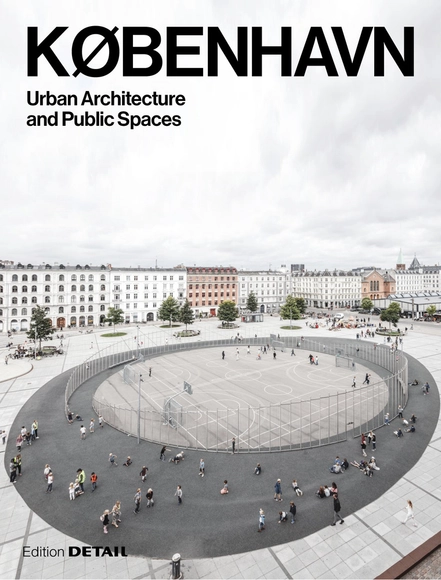
København (Copenhagen), the capital of Denmark, is at the forefront of many landscape architects and planners’ minds for both its groundbreaking moves towards sustainability and cutting-edge public spaces, bicycle culture, architecture, and food scenes. Having spent a significant amount of time in the city over the last decade, I’ve had the opportunity to begin to get to know the city and its people. One of the striking things about the city, perceptible in even my time there, is its continued trajectory of improvement. A chorus of people working diligently for decades to optimize the city for the everyday lives of its inhabitants have been laying the groundwork for what is possible today.
https://www.archdaily.com/973247/learning-from-copenhagen-a-focus-on-everyday-lifeJohn Bela
The Board of La Biennale di Venezia, has appointed Ghanaian-Scottish architect, academic, and novelist Lesley Lokko as Curator of the 18th International Architecture Exhibition - La Biennale di Venezia. The 18th International Architecture Exhibition will be held from Saturday 20 May to Sunday 26 November, 2023.
Danish architect Bjarke Ingels has joined forces with technology and real estate professionals Nick Chim and Roni Bahar to create Nabr, a new housing company that offers residents custom and sustainable apartments at scale with a path to ownership. The real estate tech startup has debuted its first development SoFA One in the heart of San Jose's South of First Area (SoFA) cultural district in Silicon Valley, and will allow residents to customize their space using Nabr's digital platform, and choose between different designs and financing packages.
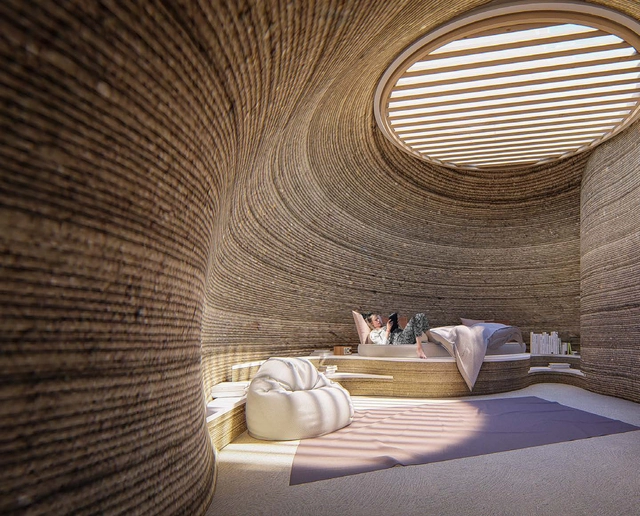
TECLA, 3D Printed Habitat by WASP and Mario Cucinella Architects. Image Courtesy of WASP
Jorge Drexler sings, in one of his songs, that “we always look at the river, contemplating the other riverbank”. Beyond understanding everything that was done, looking back at the past year can serve to get some clues about the future. This 2021, we published more than 160 articles in the Materials & Products section, covering a wide range of topics. From complex concepts such as 4D printing or very little processed materials such as hempcrete and bamboo, drawing a retrospective of the covered themes and understanding what interested our readers the most is an interesting exercise to foreshadow some trends in the future of the construction field. Looking at our most viewed articles, three large themes are evident: 3D printing, pre-fabrication, and interior renovation. Below, we present a compilation of each topic, reflecting on what we can dare to say about the trends in the construction industry that should consolidate in 2022.
Videos
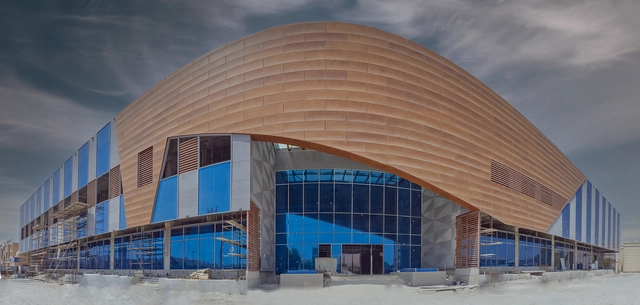
Hospital Mirdiff, Dubai, U.A.E. Image Courtesy of Equitone
Made of cement reinforced with cellulose fibers, fiber cement cladding is a building material used to cover the exterior of a wide range of buildings, including hotels, schools, office buildings, retail centers, hospitals, corporate centers, and residential buildings. Fibre cement panels are aesthetically pleasing, long-lasting, and highly resistant to fire and weathering.
Architect Diana Najib Hamad provides interesting case studies for the use of fiber cement in three recent Dubai-based commissions.
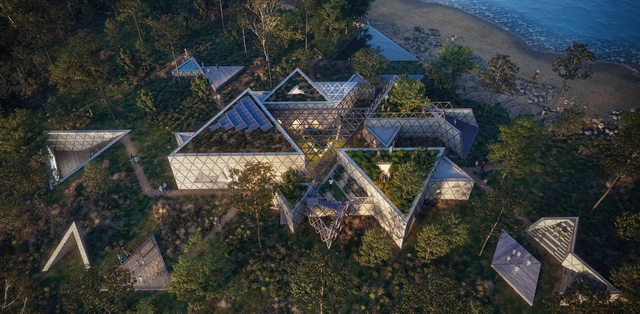
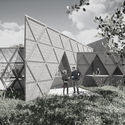
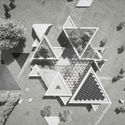
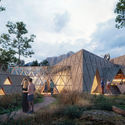
noa* network of architecture has unveiled a prototype of a Centre for Culture and Community (CeCuCo) questioning "what form flexibility takes, how nature can be embedded in the project and how far the role of the architect goes, in the belief that a project only works when people make it their own". The center is a research project that explores how to create flexible and multifunctional spaces without a fixed context, giving the community the chance to decide, act, and circulate within the architecture.