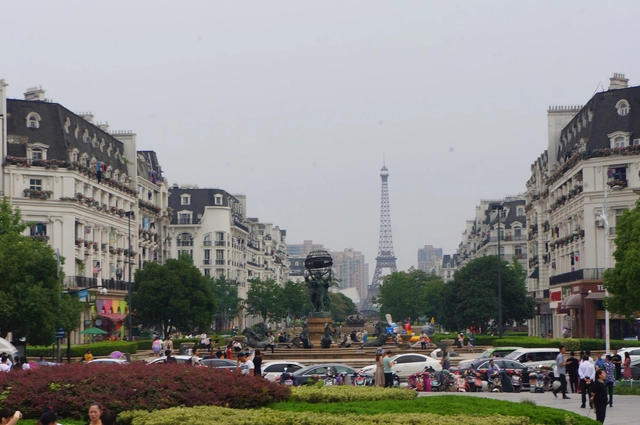
Chinese Champs-Élysées, named Xiangxie Road. Image by MNXANL, via Wikipedia. Licença CC BY-SA 4.0
CopyCat is the act of emulating something that's already been created and using it in a different context. Copycats can exist in music, arts and design; but they are not exactly a design inspiration or a style reference, but rather a literal copy with almost no modification of the original work.
In architecture, it is as if you were inspired by an emblematic work from another space-time and placed it somewhere unconnected with the original roots of the work-style.
Le Corbusier once stated that “Light creates ambiance and feel of a place, as well as the expression of a structure.” Despite other external technicalities and design choices made within public spaces, such as the way the space is constructed and the use of color and materiality, these elements would essentially be rendered useless without the proper use of lighting.
Many architects’ design choices and decisions cater toward the general illumination of a given environment, and the intended feeling and mood that architects want individuals of the public to experience whilst occupying the space. The lighting, therefore, must be integrated into the furnishings and architecture as lighting plays a decisive role in creating the right atmosphere. Low lighting creates an intimate, upscale atmosphere, especially within restaurants, bars, and lounge areas, where individuals are more apt to lean close together.
This week's curated selection of Best Unbuilt Architecture highlights different competition-winning designs and honorable mentions submitted by the ArchDaily Community. From large scale urban developments to small interventions and installations, this article highlights a selection of projects that have taken part of international and/or national competitions, and have received recognition from their juries.
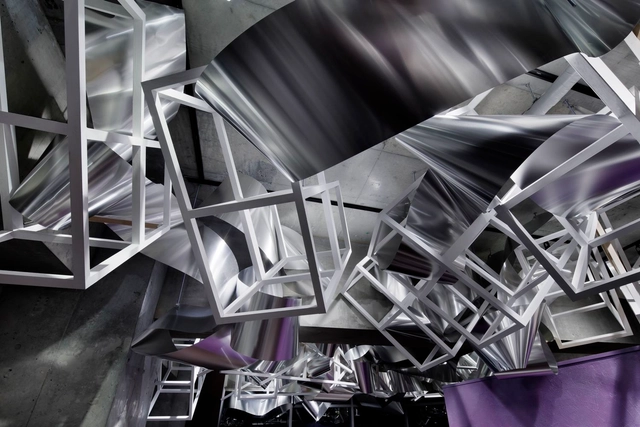
From a metro station refurbishment that highlights the colors of Belgrade, to a memorial park on the coast of Miami, the award-winning entries are designed by young architects who have reimagined cultural, commercial, and urban projects, and provided innovative solutions that cater to the city and community. This round up also includes projects in Pakistan, Czech Republic, Germany, Vietnam, and Turkey.
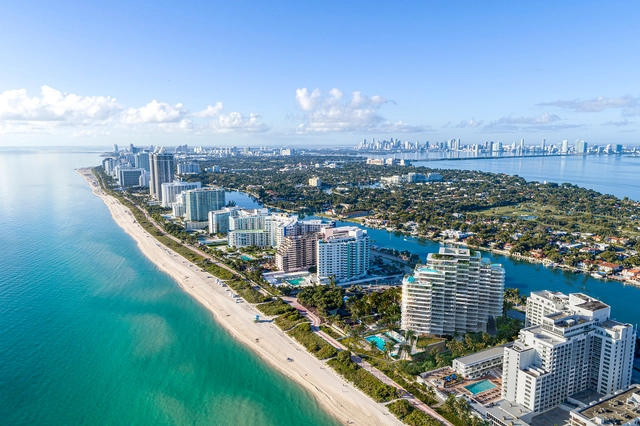
Led by Partner Jason Long, OMA have unveiled the design of a 17-storey residential tower in Miami’s Mid Beach neighborhood. Dubbed The Perigon, the project is designed as a series of towers rotated to orient views away from neighbors and towards the Atlantic Ocean and Biscayne Bay. The towers are merged and lifted 45-feet above the flood line to form a singular structure that offers panoramic views and liberates the ground-plane.
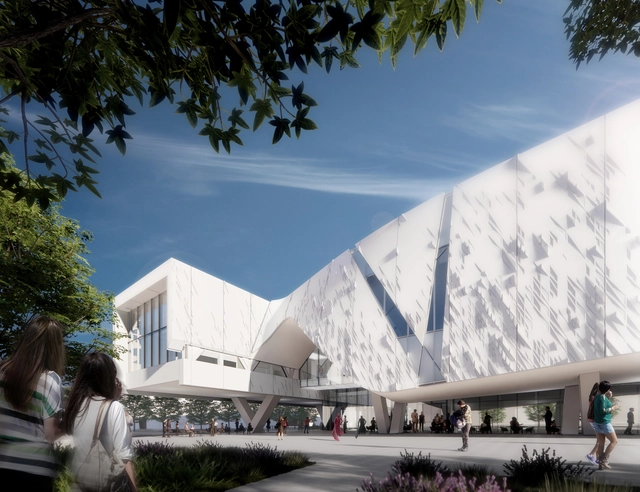
Rendering of Crow Museum of Asian Art at the O’Donnell Athenæum at UT Dallas, view of arrival and drop off from northwest. Image Courtesy of Morphosis Architects
The new arts campus, designed by global architecture and design firm Morphosis, has broken ground in Dallas, Texas. This marks the beginning of the first phase of construction for Edith and Peter O’Donnell Jr. Athenæum, a twelve-acre expansion of the University of Texas at Dallas (UT Dallas). The Athenæum complex will feature three main buildings: the Crow Museum of Asian Art (Phase I), a performance hall (Phase II), and a museum for the traditional arts of the Americas (Phase III). Phase I of the plan, the Crow Museum of Asian Art, is expected to be completed in 2024. The whole project is catalyzed by a $32 million donation from the O’Donnell Foundation.
This new cultural district, located at the southeastern edge of the UT Dallas campus, aims to become an arts destination for students, faculty, and the community. It also represents the latest milestone in a period of significant growth of the arts at UT Dallas, a school that had historically focused on science, engineering, technology, and business.
If today technologies are emerging for different forms of representation and interaction with drawing, understanding how architects communicate through hand-drawn strokes can be essential to delve into the topic of architectural visualization. Through the simplicity of gestures, small texts or a collage of references, it is possible to translate ideas in an innovative way, unlike the ways that a render can present. For this reason, we highlight here the work of great names such as Lina Bo Bardi, Renzo Piano, Pezo von Ellrichshausen and Mikkel Frost, who, using different techniques, reveal different ways of representing a project.
There’s something magical about seeing a city from the very top. To have a new vantage point, and look across a skyline instead of looking up at it is one of the most powerful and awe-inspiring feelings. Observation decks are not just architectural marvels, but also a sort of civic icon and sense of pride for a city. In the present day, it’s not just their height that draws people in, but the additional programming of sky-high bars, rides, and bungee jumping as well.
The architecture of governments has long been tied to shared ideals. Built to reflect regional aspirations and communal organizations, parliaments are a unique type of design for legislative bodies. Generally speaking, they include various kinds of deliberative, consultative, and judicial assemblies. Exploring new ideas on the design of government buildings, parliaments are being reimagined to reflect contemporary life.
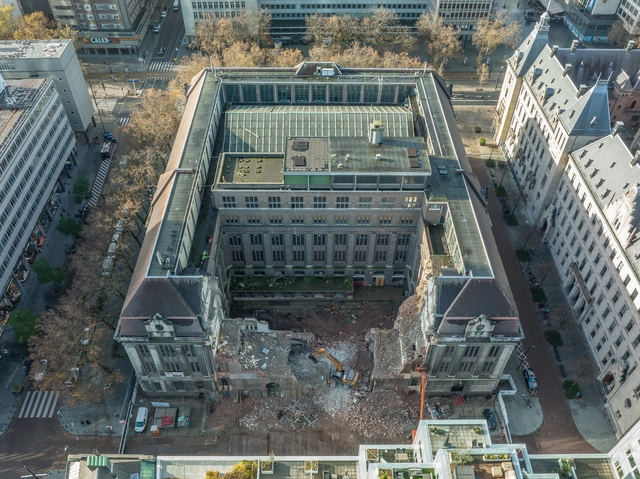
Omnam Group (OMNAM) and ODA have shared the progress of their restoration and reinvention project of the historic post office, POST Rotterdam. Demolition began on Postkantoor in October 2021, and since then, the east facade, which is known as the Rodezand wing, has been excavated, revealing the location of the project's future plaza, which will transform a loading dock into a new gateway for the people of Rotterdam.
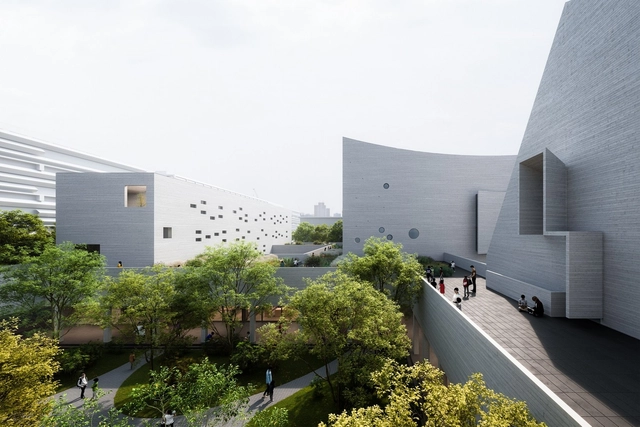
The architectural practice OPEN has revealed the design for the Shanfeng Academy, a project currently under construction that topped out at the end of April, marking the completion of its highest point. The new campus center, located in a new district of Suzhou city, will host a K-12 international school while also aiming to act as a cultural hub for the local community.
Surrounded by canals, the city of Suzhou is known for its historical gardens with temples, bridges, pavilions, and rock sculptures. These, along with traditional Chinese architecture sites, offer a counterpoint to the city’s active social life and fast-paced business sector. The challenge for OPEN architects was to create a large-scale urban project whilst being sympathetic to the heritage of the city.
Design Justice is a branch of architecture and design focused on redesigning cities, products, services and environments with historic reparations in mind.
The term emerged about 7 years ago when debates and dialogues about inclusion and diversity in spaces started to get stronger, creating movements that fought for the rights of people who had their roots and choices denied in society.
Now that the effects of climate change are visible and indisputable, consumers are more environmentally conscious than ever. In fact, as a United Nations 2021 study suggests, 85% of them reveal that sustainability plays a key role when making their purchase decisions, motivating businesses and manufacturers to respond accordingly. This explains the rising demand for electric vehicles and products made of renewable or recyclable materials. However, architecture – and especially traditional housing – seems to be several steps behind compared to other industries. Although there are numerous efforts to move towards a greener built environment, the way most buildings are made today continues to be outdated, creating tremendous amounts of waste and significantly contributing to the global carbon footprint.
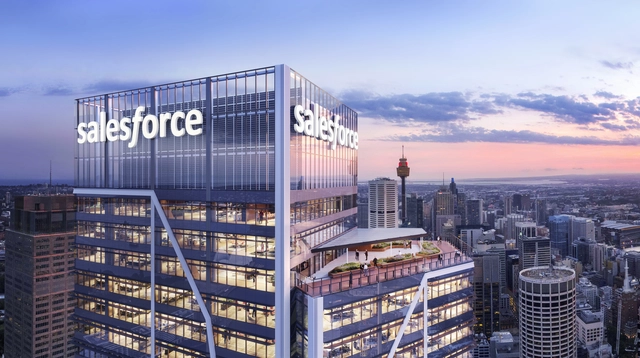
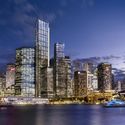
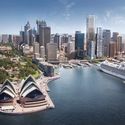
Foster + Partners' newest office tower in Sydney has topped out, marking the completion of the highest point for the 55-storey building. Salesforce Tower will serve as a centerpiece of the urban district’s reinvigorated masterplan, featuring an array of pedestrian pathways, retail shops, and cafes and bars, further promoting Sydney's identity as a unique cultural destination.
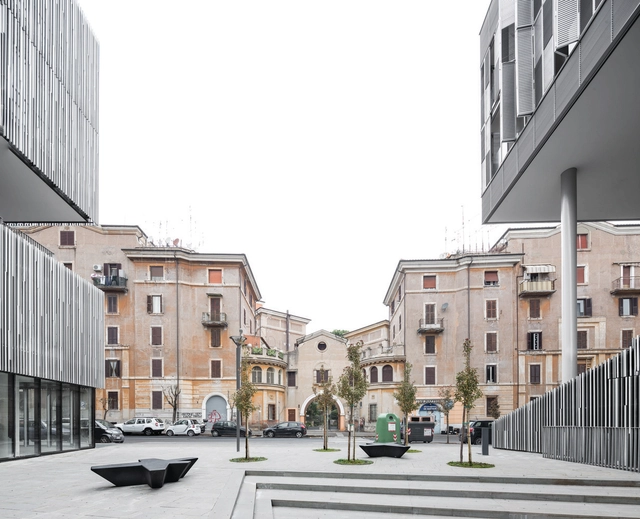
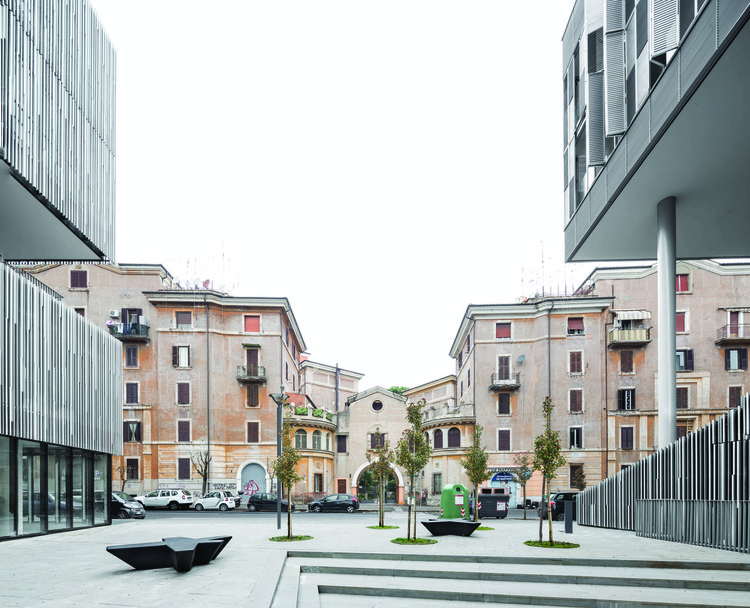
Spanning over 3 millennia with one of the highest concentrations of architecture in the world, Rome is a transcendental influence on the world's culture. A city rich in history, academia, and arts, the Italian capital is considered as one of the oldest continuously-occupied cities in Europe, and has maintained its countless layers of history to become a perfect depiction of old meets new, earning its nickname of "The Eternal City".
Rome's historic center, which stretches from Piazza del Popolo to Piazza Venezia and from the the east bank of the Tiber up to Piazza di Spagna, is listed as a UNESCO World Heritage Site. Along with its historical significance, the presence of renowned contemporary architects and designers in the city has made Rome an influential design destination. In 2019, it was the 14th most visited city in the world, welcoming over 8.6 million tourists to make it the third most visited in the European Union, and the most popular tourist destination in Italy.
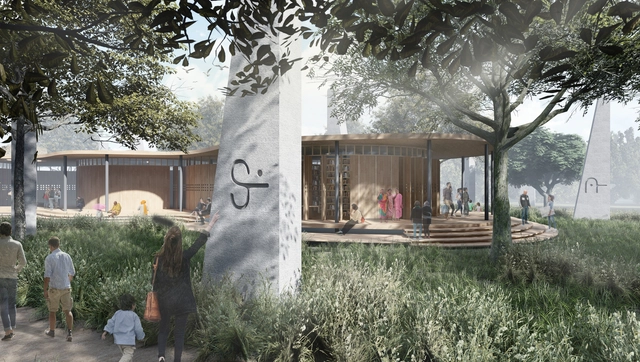
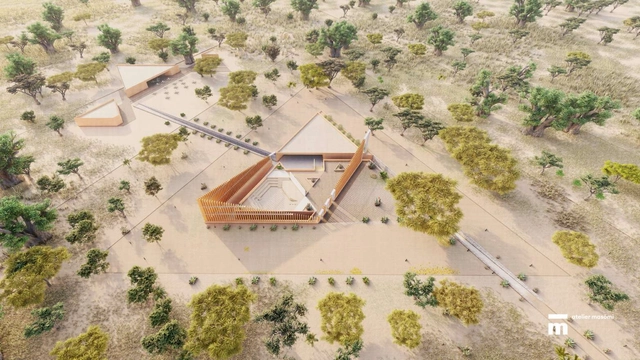
The Josef and Anni Albers Foundation/Le Korsa has announced that Niger-born architect Mariam Issoufou Kamara, founder of award-winning practice atelier masōmī, has been selected to design Bët-bi, a new museum and center for culture and community in southwestern Senegal. Located near a series of megaliths in the vicinity of the historic city of Kaolack, Bët-bi is set to be a state-of-the-art museum that sits at the forefront of West Africa’s flourishing arts scene and wider cultural renaissance.
Stefano Boeri Architetti and SON Architects are announced as winners of the tender organized by the Ministry of Culture and the Albanian-American Development Foundation (AADF) for the conservation, presentation, enhancement, and planning for the Archaeological Excavations of the Roman Amphitheatre, the Byzantine Forum, and Roman Baths in the historic center of Durrës. In support of the long-term vision for the city of Durrës, the winners will also be responsible for designing a series of urban pathways with the aim of reconnecting the main historical attractions with the waterfront and the city’s port.
Far beyond basic training, reading is a leisure activity that is part of modern society. Whether outdoors, in squares and parks, at home or even at work, this habit, which improves reasoning ability and mental health, already had large spaces dedicated to books in palaces and mansions. We selected 15 projects that demonstrate the different ways of integrating reading at different scales and architectural programs.




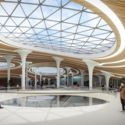
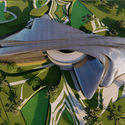
.jpg?1652355731 "Memorial Park by Tatiana Ivanova, Mikhail Skisov. Image Courtesy of Tatiana Ivanova, Mikhail Skisov")





_Credit_Santiago_Calatrava.jpg?1652412911&format=webp&width=640&height=580)










.jpg?1652219856&format=webp&width=640&height=580)

.jpg?1652219870 "Courtesy of Stefano Boeri Architetti")


.jpg?1652219856)


