1. ArchDaily
  2. Architecture

Architecture: The Latest Architecture and News

SPACE10 Launches a Global Artificial Intelligence (AI) Design Competition

On April 6, SPACE10 will introduce a global design competition to reimagine home — using AI. Over the past year, generative AI tools have enhanced imaginative and creative capabilities, allowing millions of people to visualise worlds beyond those we ever thought possible. In a first of its kind competition, SPACE10 challenges participants to apply new AI tools to future homes and cities. Regenerative Futures is part competition, part open-source research, and open to everyone. The competition encourages play and imagination to create visual concepts of future homes, communities, and cities that help address some of the biggest challenges facing everyday life.
Immersive Learning: From Novice to Designer at SCI-Arc's Architecture Program

 | Sponsored Content

Providing an overview of the profession and discipline of architecture can be a complex task given the diversity of people's backgrounds, personal interests, and experimentation techniques. Therefore, many processes related to architecture are based on speculation and innovation, taking the initiative to reimagine established limits. Architecture schools, such as École des Beaux-Arts, Vkhutemas, and Paulista School, were progressive schools of their time that developed their style led by experimental and curious minds. Thanks to these experimental processes, each developed its architectural style, characterized by factors such as philosophy, location, and the era in which the school was born.

Since its creation in Santa Monica in 1972, the Southern California Institute of Architecture (SCI-Arc) has been a world-renowned center of innovation and one of the few independent schools of architecture in the United States. It excels in challenging its students through various programs to stretch their imaginations by experimenting with non-traditional materials and approaches. Through the renowned Making+Meaning program, SCI-Arc provides an immersive introduction to students and creative professionals from diverse disciplines, who have the opportunity to explore the field of design and emphasize the fundamentals of experimentation and architecture. The return to face-to-face teaching this year infuses new energy into the program for both students and instructors, given the value of collaborating in a physical space for the development of studio-based projects.

UNStudio Unveils the Design of a Human-Centric Mixed-Use Development in Nanjing, China

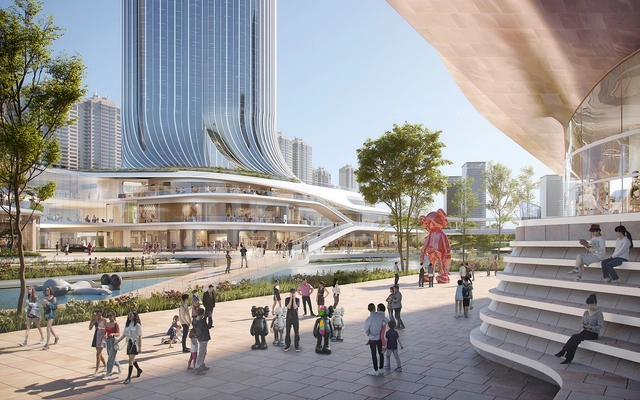
UNStudio has been commissioned to create a human-centric mixed-use destination on the waterfront of Nanjing, China. Developed by K.Wah Group, the new complex aims to enhance the working-living environment for the local community while contributing as a hub for culture and finance. The project, set along the central axis of the Hexi New District, introduces high-rise office towers, commercial and cultural functions, two serviced apartment buildings, a headquarters tower, a hotel, and various public amenities.

UNStudio Unveils the Design of a Human-Centric Mixed-Use Development in Nanjing, China - Image 1 of 4UNStudio Unveils the Design of a Human-Centric Mixed-Use Development in Nanjing, China - Image 2 of 4UNStudio Unveils the Design of a Human-Centric Mixed-Use Development in Nanjing, China - Image 3 of 4UNStudio Unveils the Design of a Human-Centric Mixed-Use Development in Nanjing, China - Image 4 of 4UNStudio Unveils the Design of a Human-Centric Mixed-Use Development in Nanjing, China - More Images+ 8

Kengo Kuma's Proposal for the Egyptian Museum Expansion in Torino Creates New Urban Axis

Kengo Kuma and Associates have just been awarded second place in an architecture competition to design the expansion and renovation of the Egyptian Museum in Torino, Italy. It served for many decades as the primary civic space in Turin, with its public areas closed off from the rest of the city. Kengo Kuma’s proposal aims to recreate the public plaza, a city center covered by a thin glass canopy. Founded in 1824 and is the oldest museum for Ancient Egyptian culture, the Egyptian Museum in Torino held a competition earlier this year and received entries by Pininfarina Architecture, Carlo Ratti Associati, and Snøhetta. The winning project by OMA / David Gianotten and Andreas Karavanas will transform the museum into a cultural space, creating one covered courtyard and a series of connected urban rooms within the existing settlement.

Kengo Kuma's Proposal for the Egyptian Museum Expansion in Torino Creates New Urban Axis - Image 1 of 4Kengo Kuma's Proposal for the Egyptian Museum Expansion in Torino Creates New Urban Axis - Image 2 of 4Kengo Kuma's Proposal for the Egyptian Museum Expansion in Torino Creates New Urban Axis - Image 3 of 4Kengo Kuma's Proposal for the Egyptian Museum Expansion in Torino Creates New Urban Axis - Image 4 of 4Kengo Kuma's Proposal for the Egyptian Museum Expansion in Torino Creates New Urban Axis - More Images+ 3

Between Architecture and Landscape: Contemporary Collective Housing in Latin America

What role does landscaping play in contemporary housing? In what ways can architecture and landscaping be integrated into a whole? Considering the incorporation of landscaping from the beginning of the architectural project has become a defining aspect and even a challenge for many architects, aiming to improve the quality of life of their inhabitants and contribute to the protection and care of the environment.

On numerous occasions and within the Latin American setting, nature appears as a protagonist or founding principle of the proposed architectural design, involving reasons related to promoting the relationship with the surrounding environment, incorporating native species of the site, and enhancing the connection between the interior and exterior, among others. Although there are different ways of planning, organizing, and arranging the layout of environments in contemporary housing, the dialogue between architecture and landscape can collaborate with the uses, activities, and circulations determined based on the needs to be met or the users to be accommodated.

5 Ways Architects and Designers Can Make Modern Homes More Inclusive

Throughout the past decade, human civilization has become so ‘woke’ we’ve administered a new word for it. And while this new-found wokeness derives from the quest to spotlight the inherent, yet previously ignored by many, racial social, and political injustices and behaviors in our lives during the early #blacklivesmatter movement, in more recent times it has come to stand for the calling out of all categories of injustice.

The purpose of architecture, as the ArchDaily Guide to Good Architecture states, is to ‘give form to the places we live.’ The book’s first chapter, ‘Good Architecture is Considerate’, suggests in order to improve the quality of life provided by human-designed spaces, we need to employ a human and empathetic approach.

5 Ways Architects and Designers Can Make Modern Homes More Inclusive - Image 1 of 45 Ways Architects and Designers Can Make Modern Homes More Inclusive - Image 2 of 45 Ways Architects and Designers Can Make Modern Homes More Inclusive - Image 3 of 45 Ways Architects and Designers Can Make Modern Homes More Inclusive - Image 4 of 45 Ways Architects and Designers Can Make Modern Homes More Inclusive - More Images+ 17

Twenty Years of Transforming Transportation: Where Are We Now?

“Economic shocks, climate change, and COVID-19 have changed transportation systems in a fundamental way. We can’t waste a crisis. We can increase access to transportation while reducing greenhouse gas emissions. We can achieve more mobility with fewer impacts,” argued Ani Dasgupta, president of the World Resources Institute (WRI), at the 20th annual Transforming Transportation conference. For two days, global leaders reflected on the state of transportation systems worldwide at the hybrid event in Washington, D.C., which was also watched by tens of thousands online. The event was co-organized by WRI and the World Bank.

Transportation still accounts for 25 percent of greenhouse gas emissions worldwide and up to 30 percent of emissions in developed countries. Transportation is a diverse sector that includes sidewalks, bikes, cars, buses, trains, subways, ships, and planes.

SOM Reveals Design for a Net-Zero Campus on Governors Island, New York City

Skidmore, Owings & Merrill have been selected to design the New York Climate Exchange in partnership with Stony Brook University, a public research institute in New York. The new net-zero campus, located on Governors Island, New York, is planned to serve as an anchor institution for the development of new climate solutions. As a first-of-its-kind international center, “The Exchange” will also act as a regional hub for the green economy.

Architecture of Shops: 10 Innovative Projects in Brazilian Retail

Subscriber Access | 

Several factors influence the architecture of contemporary stores, including the evolution of retail, changes in consumer expectations, and the rise of e-commerce. Creating the physical space of a brand is an opportunity to offer an experience that conveys the values and image that the brand wishes to be associated with.

Architecture of Shops: 10 Innovative Projects in Brazilian Retail - Image 1 of 4Architecture of Shops: 10 Innovative Projects in Brazilian Retail - Image 2 of 4Architecture of Shops: 10 Innovative Projects in Brazilian Retail - Image 3 of 4Architecture of Shops: 10 Innovative Projects in Brazilian Retail - Image 4 of 4Architecture of Shops: 10 Innovative Projects in Brazilian Retail - More Images+ 16

Exploring the Cultural and Political Implications of Brutalist Buildings in Modern Paris

Subscriber Access | 

Brutalist Paris by Nigel Green and Robin Wilson is a book that expands upon their previous collaborative effort, the Brutalist Paris Map (2017). The text's insightful critique and sharp photography provide a detailed examination of Brutalism's historical, political, and cultural significance, with a particular emphasis on its innovative communal design. Through a meticulous analysis of the public spaces of the selected buildings, including their orientation, materials, and facades, Green and Wilson revisit the movement's legacy and its contribution to the field of architecture.

The Bioclimatic Skyscraper: Kenneth Yeang's Eco-Design Strategies

Subscriber Access | 

Rising over global cities, the modern skyscraper has long been a symbol of economic growth and environmental decline. For years, they have been reviled by environmentalists for being uncontrolled energy consumers. Malaysian architect Kenneth Yeang acknowledged the skyscraper as a necessity in modern cities and adopted a pragmatic approach to greening the otherwise unsustainable building typology. Yeang’s bioclimatic skyscrapers blend the economics of space with sustainability and improved living standards.

The Bioclimatic Skyscraper: Kenneth Yeang's Eco-Design Strategies  - Image 1 of 4The Bioclimatic Skyscraper: Kenneth Yeang's Eco-Design Strategies  - Image 2 of 4The Bioclimatic Skyscraper: Kenneth Yeang's Eco-Design Strategies  - Image 3 of 4The Bioclimatic Skyscraper: Kenneth Yeang's Eco-Design Strategies  - Image 4 of 4The Bioclimatic Skyscraper: Kenneth Yeang's Eco-Design Strategies  - More Images+ 2

The Houses of Alejo Martínez in Concordia: Building Argentine Modernity

Subscriber Access | 

Alejo Martínez, one of the main builders of Argentine modernity, turned the city of Concordia into a reference of the South American modernist movement. His extensive work on houses, such as Casa Péndola Díaz from 1925, Casa Marcone from 1928, or Casa Camaño from 1930, "changed the typology of the 'chorizo' house to compact housing, where straight volumes stand out, staggered from each other, and with terraces".

9th Bi-City Biennale of Urbanism\Architecture (Shenzhen) Explores Urban Cosmologies

Subscriber Access | 

Curated by architecture and urban planning scholar Andong Lu, young architect Zigeng Wang and design curator Aric Chen, the 9th Bi-City Biennale of Urbanism\Architecture (Shenzhen) continues the principle of "the city is the exhibition site, the exhibition is the practice" as the primary exhibition of UABB came to Luohu district for the first time. It was located in GDH City · Jinpi Fang (Kingway Brewery Industrial Heritage) and the exhibition opened in December 2022 and ran until March 2023, with over two hundred events held during the three-month exhibition period.

9th Bi-City Biennale of Urbanism\Architecture (Shenzhen) Explores Urban Cosmologies - Image 1 of 49th Bi-City Biennale of Urbanism\Architecture (Shenzhen) Explores Urban Cosmologies - Image 2 of 49th Bi-City Biennale of Urbanism\Architecture (Shenzhen) Explores Urban Cosmologies - Image 3 of 49th Bi-City Biennale of Urbanism\Architecture (Shenzhen) Explores Urban Cosmologies - Image 4 of 49th Bi-City Biennale of Urbanism\Architecture (Shenzhen) Explores Urban Cosmologies - More Images+ 15

Helical Stairways in Contemporary Mexican Architecture

Subscriber Access | 

One of the most important elements in architecture are the vertical circulations that are translated into elevators or stairs, and although some offices decide to approach it in a discreet way, some others choose to pay specific attention to it and turn it into a sculptural piece. Helicoidal staircases are some of the favorites when it comes to focusing attention and in our collective conscience we keep some iconic examples, as is the case of the staircase in the O'Gorman House, this piece gave a certain character to the work and it is almost impossible to imagine it without it.

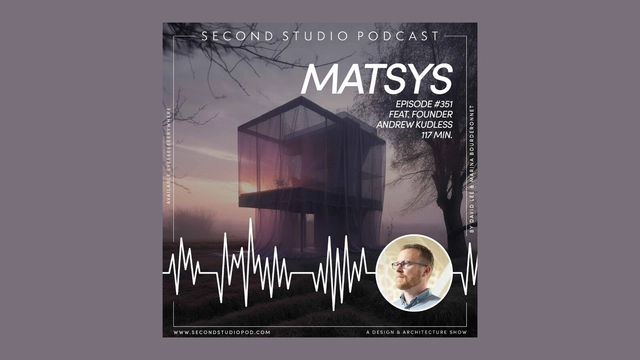
The Second Studio Podcast: Interview with Cavin Costello

The Second Studio (formerly The Midnight Charette) is an explicit podcast about design, architecture, and the everyday. Hosted by Architects David Lee and Marina Bourderonnet, it features different creative professionals in unscripted conversations that allow for thoughtful takes and personal discussions.

A variety of subjects are covered with honesty and humor: some episodes are interviews, while others are tips for fellow designers, reviews of buildings and other projects, or casual explorations of everyday life and design. The Second Studio is also available on iTunes, Spotify, and YouTube.

This week Cavin Costello, Principal Architect of The Ranch Mine, joins David and Marina of FAME Architecture and Design to discuss his background; architecture school; starting an architecture practice with his wife, Claire Costello, and their working relationship; their approach to finding clients; and more!

The Second Studio Podcast: Interview with Cavin Costello - Image 1 of 4The Second Studio Podcast: Interview with Cavin Costello - Image 2 of 4The Second Studio Podcast: Interview with Cavin Costello - Image 3 of 4The Second Studio Podcast: Interview with Cavin Costello - Image 4 of 4The Second Studio Podcast: Interview with Cavin Costello - More Images+ 7

MAST Transforms a Former Quarry in Milan, Italy, into a Central Park and Floating Forest

Danish Maritime Architecture Studio MAST, working together with the Municipality of Segrate, plans to transform a former sand quarry into a central park to reconnect the surrounding neighbourhoods and create a new destination for the residents of Milan, Italy. The abandoned quarry has left behind a unique landscape. The off]ice’s proposal includes a series of buildings along the lake’s perimeter linked by a public walkway and a cluster of islands in the centre of the lake. MAST is currently working with the Municipality of Segrate toward realising the project.

MAST Transforms a Former Quarry in Milan, Italy, into a Central Park and Floating Forest - Image 1 of 4MAST Transforms a Former Quarry in Milan, Italy, into a Central Park and Floating Forest - Image 2 of 4MAST Transforms a Former Quarry in Milan, Italy, into a Central Park and Floating Forest - Image 3 of 4MAST Transforms a Former Quarry in Milan, Italy, into a Central Park and Floating Forest - Image 4 of 4MAST Transforms a Former Quarry in Milan, Italy, into a Central Park and Floating Forest - More Images+ 4

In alliance with Architonic
Check the latest In ArchitectureCheck the latest In ArchitectureCheck the latest In Architecture

Check the latest In Architecture