From city master plans to pocket-sized products, Zaha Hadid Architects (ZHA) have explored architectural formalism through innovative digital design methods. In 2006, the collaboration with furniture-makers and fashion houses led to the creation of Zaha Hadid Design that served both as an iterative process for and a resultant of ongoing architectural design.
A pop-up exhibition, located suitably on the ground floor of ZHA's renowned condominium along the High Line in New York City, features a scale model of the building itself on display. To honor and present the work produced by the firm in the last four decades, the Zaha Hadid Gallery showcases a series of projects in a wide range of mediums including the six 'Silver Models' that represent eight of the firm's key works.
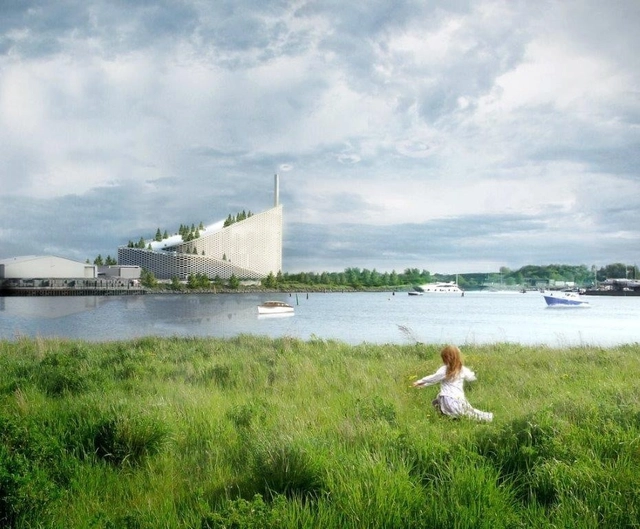
Rendering of BIG’s Waste-to-Energy Plant. Image Courtesy of BIG.
JP Morgan Chase announced this week that they had hired Foster + Partners to design their new global headquarters in New York. The project, located in midtown Manhattan, will replace the existing 1960s SOM design for the US investment bank.
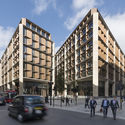
This is not the first time Foster + Partners have been called in to handle a corporate headquarters project: the office is also responsible for the designs of the nearby Hearst Tower, Apple's Campus in Silicon Valley, and the Stirling Prize-winning Bloomberg HQ in London.
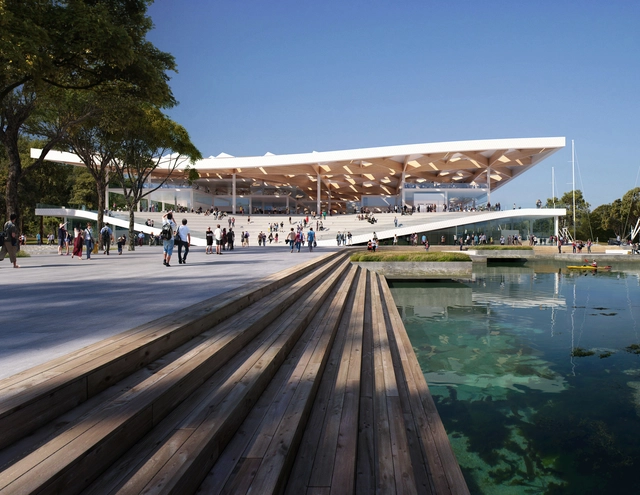
Danish office 3XN has unveiled finalized designs for their Sydney Fish Market project after announcing their attachment to the project last June. The scheme, which is expected to begin construction in 2019, combines the traditional working market program with contemporary features and is intended to establish a strong public connection to the waterfront at Blackwattle Bay.
https://www.archdaily.com/905316/3xn-unveils-sloping-design-for-sydney-fish-marketKatherine Allen
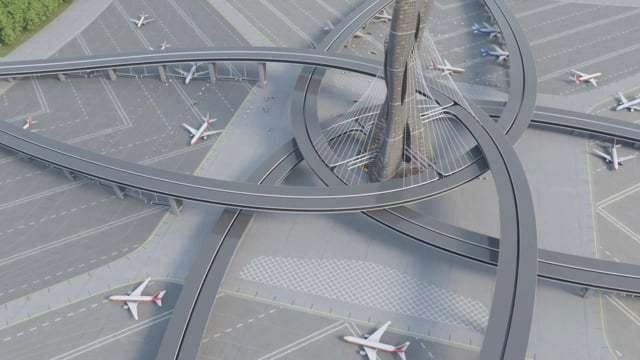
In the European Cultural Center’s biennial exhibition, students from North Carolina State University’s College of Design worked alongside Curtis Fentress, Ana-Maria Drughi, and Joshua Stephens of Fentress Architects to propose innovative concepts for reshaping air travel. PLANE—SITE’s latest film from their series of short videos of the Time-Space-Existence exhibition showcases this design collaboration.
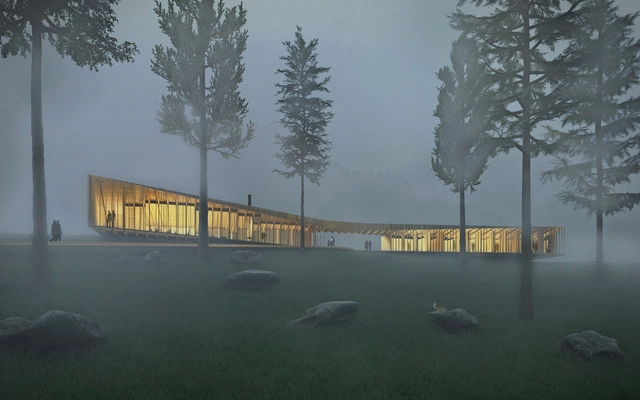
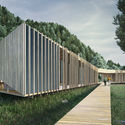
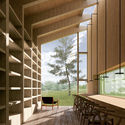
The 'Long Lodge' proposal for residential cabins along the Appalachian Trail, recently named the Honor Award Winner of the 2018 Maine Mass Timber Design Competition, highlights simple yet creative ways to spotlight the possibilities and natural beauty of timber as a construction material. The winning four-person design team created a lodge that not only serves as a temporary living space but rather becomes a memorable spatial experience through the effects of the structural design choices.
Plastic Island. Image Courtesy of Emily-Claire Goksøyr
Kanye West is, according to Kanye West, a reformed man. After months of making headlines over his bizarre political views, he stated on Wednesday that, “my eyes are now wide open and now realize I’ve been used to spread messages I don’t believe in. I am distancing myself from politics and completely focusing on being creative !!!”
While this most likely means a return to his music career, this statement could also indicate a renewed interest in his design projects. The rapper’s interest in architecture is more than just a passing one; he’s collaborated with noted architects such as Jacques Herzog and Rem Koolhaas and has declared on multiple occasions his desire for everything to be “architected.”
https://www.archdaily.com/905122/this-week-in-architecture-a-little-less-conversationKatherine Allen
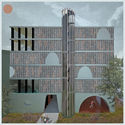
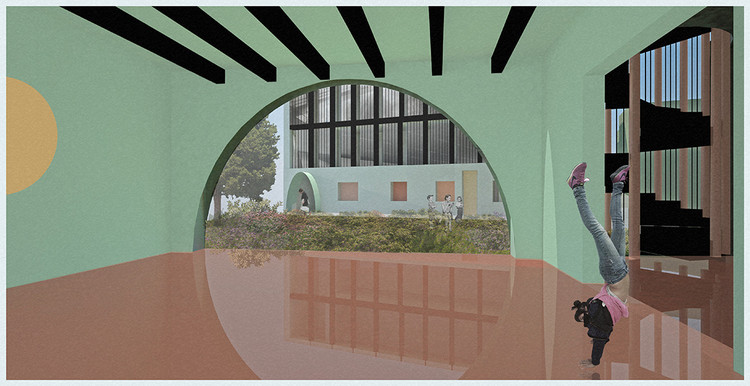
Prague's architecture is known for a patchwork of buildings ranging in styles and eras. A recent proposal for the redesign of the Trojska Skola aims to supplement a similar cohesive attitude to the space. Titled, Dissonant Unity, the project designed by Stefano Corbo Studio explores the ways to incorporate new programs and increased public space to an existing grammar and primary school with an attached sports center, auditorium, and cafeteria.
With rising sea levels and incessant consumption of plastic, the state of the earth's oceans is rapidly deteriorating. Instead of discarding or burning this plastic, architects Erik Goksøyr and Emily-Claire Goksøyr questioned whether any architectural potential exists in this neglected material. By conducting an extensive material study, the duo designed three prototypes to postulate this theory.
Though starting out as a humble thesis, this project is being actualized under the organization, Out of Ocean. From the shores of the Koster Islands in Sweden, plastic samples were collected and studied for their various material performance in areas such as color, texture, light, and translucency.
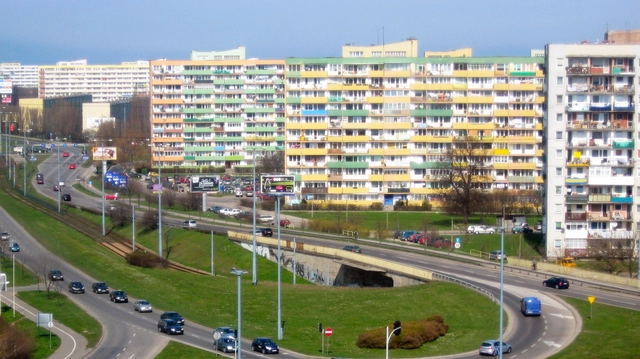
To strip a city of its architecture is to erase its history altogether. Despite a widespread public distaste for Brutalism, the brutalist era in architecture often went hand in hand with political movements promising an egalitarian vision in post-Stalinist Poland. What may now be considered austere and overbearing was originally intended to be anything but; the buildings today carry both an appreciation for their legacy and the burden of unwanted memories.
In a recent article in the New York Times, writer Akash Kapur documents his visit to Poland, bringing readers into his experiences and observations of this complex response to Polish architecture. From sharing its history to short anecdotes from interviews, the piece postulates whether these relics can become alive again.
For young creatives, curious explorers, or simply multitaskers, The Midnight Charette's weekly podcasts provide a provocative and entertaining take on design and architectural discourse. Hosted by David Lee and Marina Bourderonnet, the segments aim to explore ideas beyond everyday conversation and engage with a multitude of individuals in the design field.
In their recent discussion featuring Marc Neveu, the Executive Editor of the Journal of Architectural Education(JAE)and head of the Architecture Program at Arizona State University (ASU), the duo covers a broad range of topics related to professional practice and architectural pedagogies.
It’s easy to feel jaded about modernism. What started as a radically rational and analytical approach to design - one not beholden to the architectural traditions of place or history - has become a smokescreen behind which designers and developers alike can hide. The language of logic (genuine or not) is a shield against criticism and satisfies questions about the bottom line. The border between minimalism and a value-engineered bare minimum has been blurred to the point of invisibility.
https://www.archdaily.com/904726/this-week-in-architecture-what-does-modernism-mean-todayKatherine Allen
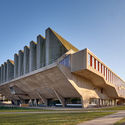
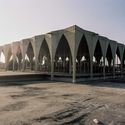
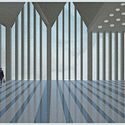
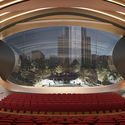
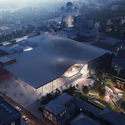
To activate the historical and cultural significance of music in the city of Yekaterinburg, a design competition to create a new concert hall was announced earlier in April. From the 47 proposals that were submitted, the top three architectural concepts were recently selected by the jury committee, awarding first place to Zaha Hadid Architects, and the two runner-up positions to Alvisi Kirimoto + Partners and Robert Gutowski Architects respectively.
Despite selecting ZHA's proposal as the project laureate, all three projects are still in contention as the feasibility studies are ongoing. For the snowy climate of this Russian city, the buildability of the design continues to be under debate.
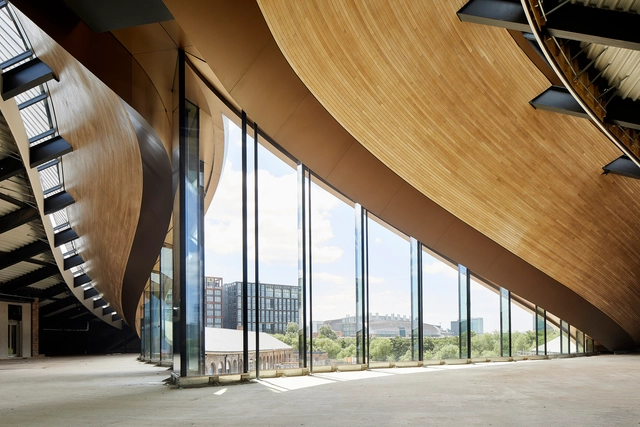
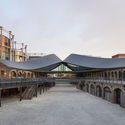
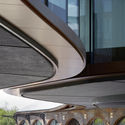
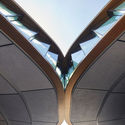
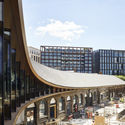
Heatherwick Studio’s Coal Drops Yard in London’s King's Cross was unveiled today ahead of the new shopping districts public opening on Friday, October 26. The studio reinvented two heritage rail buildings from the 1850s as a new shopping district while opening up the site to the public for the first time. The design extends the inner gabled roofs of Victorian coal drops to link the two viaducts together around shopping and public space.
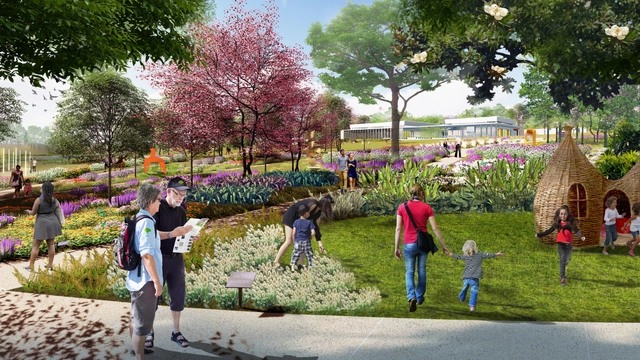
With the aim to create the self-proclaimed "Central Park of Lakeland," global design firm Sasaki is converting Bonnet Springs Park in Central Florida from a former CSX railyards property to an ecological hub. Initially, a vacant brownfield, the site is currently undergoing environmental remediation to tackle the years of industrial damage, with plans to be open to the public by 2020.
What comes to mind when you encounter the term “sensory design”? Chances are it is an image: a rain room, a funky eating utensil, a conspicuously textured chair. But the way things actually feel, smell, even taste, is much harder to capture. This difficulty points to how deeply ingrained the tyranny of vision is. Might the other senses be the keys to unlocking broader empirical truths? Does the ocular-centric bias of art, architecture, and design actually preclude a deeper collective experience?
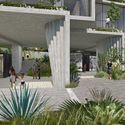
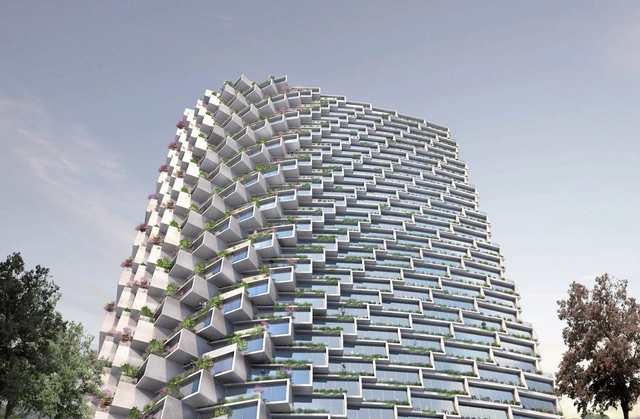
Soon to become the tallest building in Quito, IQON is Bjarke Ingels Group's first project to be built in South America. Currently undergoing construction, the largely residential building is a curved tower with gradually protruding balconies. Encased between the dense city and the park, the self-dubbed "urban tree farm" aims not only to encompass the surrounding views of the volcanoes and nature beyond but also to integrate the landscape within the building itself.
They say one cannot separate art from the artist, or perhaps in this case, the artist from the architect. Arguably one of the most criticized architects, Le Corbusier is often portrayed as cold and controlling. Depicting his more dreamy and humorous nature, the Nasjonalmuseet's exhibition titled, “Le Corbusier by the Sea,” draws upon his memories from his summer travels along the coast of southwest France.
Hosted in Villa Stenersen, one of the National Museum's venues, the exhibition showcases Le Corbusier's work as an artist during the period 1926-36. Not only does the exhibition include fifteen of his reproduced paintings alongside a collection of sketches, but also screens two films from Le Corbusier's own footage of his surrounding views.







.jpg?1541841939 "ZHA's Design © Flying Architecture")
























.jpg?1539451458 "Courtesy of Bjarke Ingels Group")