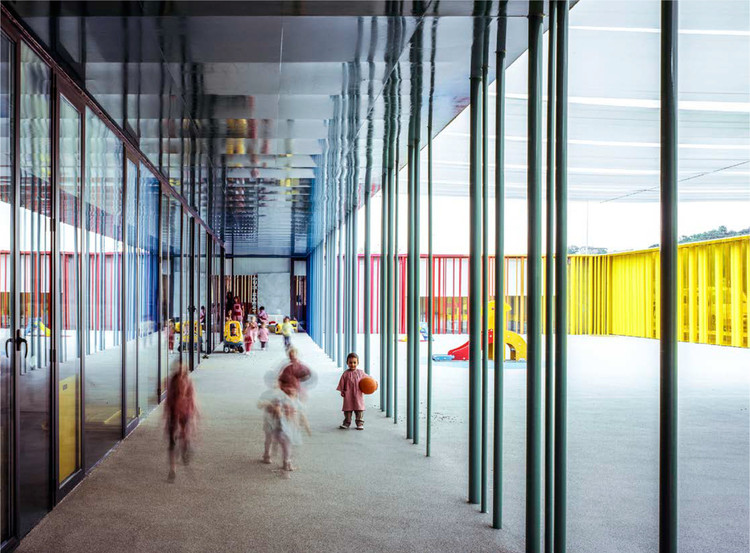
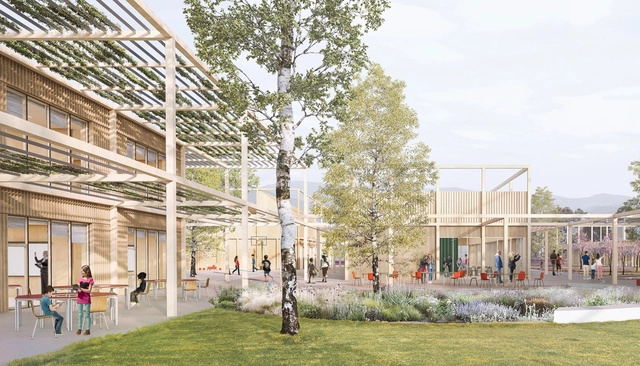
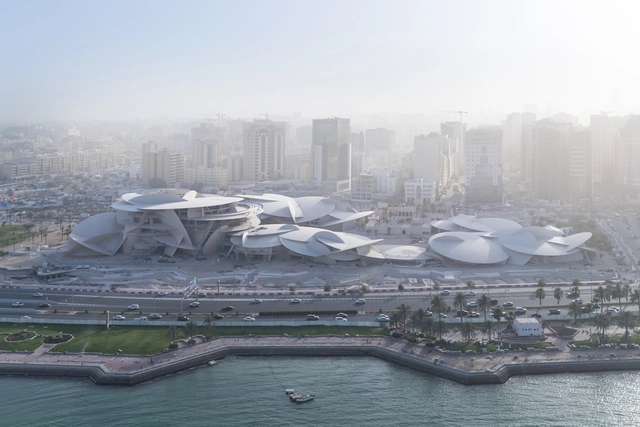
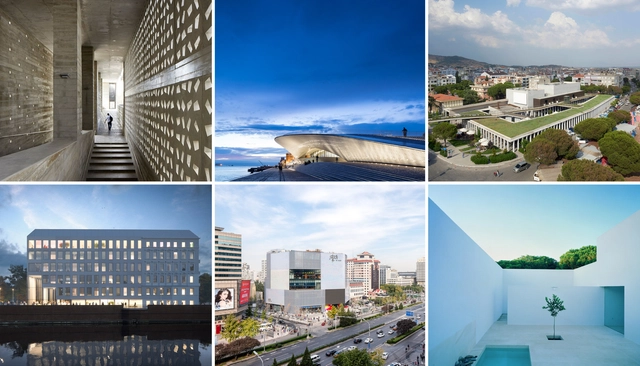
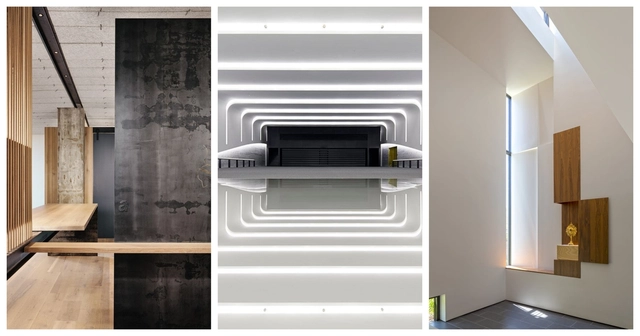
Selected works from six of the nine new honorary AIA Fellows.
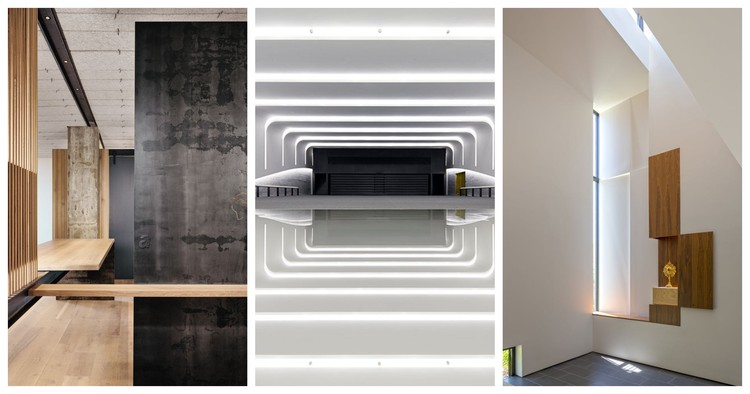
More than 100 American architects and nine international practitioners have been elevated to the American Institute of ArchitectsCollege of Fellows. Fellowship in the AIA is a prestigious honor conferred upon those who have lasting contributions to the profession. While primarily a national award, the AIA also awards fellowship to a number of international designers each year.
https://www.archdaily.com/912052/aia-elevates-new-members-and-nine-international-honorary-members-to-the-college-of-fellowsKatherine Allen
Nestled in a valley north of Beijing, a building will soon be completed that may appear to have always been there, or to have emerged from and grown out of the surrounding stony landscape. OPEN Architecture’s Chapel of Sound in Chengde, China was recently recognized in the 66th annual Progressive Architecture (P/A) Awards, chosen as one of ten projects to receive the commendation. The P/A Awards focus on innovative, ongoing work that promotes new ways of thinking about architecture. The Chapel of Sound was noted for its creation of a new, progressive type of environment and its reimagining of an established typology.
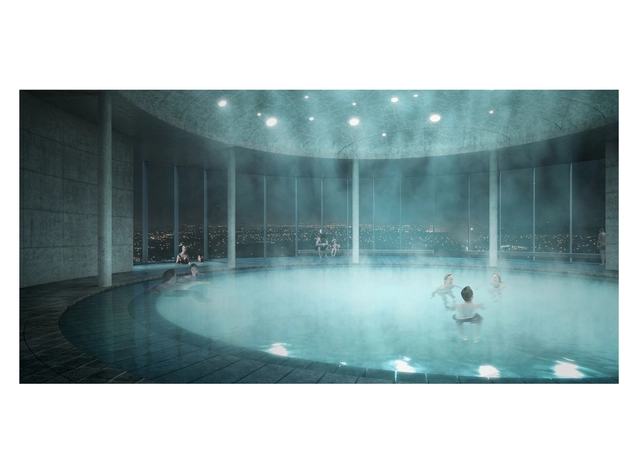
Raise your hand if you’ve ever wanted to go swimming inside a water tower. In reality, it would probably be dark and creepy and not as cool as it sounds, but that’s not the case with Danish firm SquareOne’s design, where the top of an abandoned water tower becomes a public swimming pool and spa. Utilizing the existing structural system of the tower, SquareOne is also proposing adding 40+ student housing units suspended around the tower. This dual-purpose scheme addresses Copenhagen’s desperate housing shortage while also giving new life to an old building.
Sir Nicholas Grimshaw has been named the 2019 laureate of the RIBA Royal Gold Medal for Architecture, an award personally approved by Her Majesty The Queen recognizing a lifetime's work in architecture. Grimshaw is known particularly for his modernist public buildings and large-scale infrastructural projects, both in the UK and internationally.
This past Monday brought with it not just a new week, but the start of the lunar new year. The start of the lunar new year brings with it another chance to review what's past and start afresh - a welcome opportunity for those of us already suffering a bit of new year blues.
Looking back to move forward seemed to be a bit of a theme this week, with the announcement of a number of memorials and renovations on historic sites. While the spate of new projects this week is certainly a coincidence, the recent proliferation of reuse and memorial projects, in general, shouldn't come as a surprise. As the age of the icon-producing starchitect stutters to a close, the long-gestating movements in reuse and preservation will likely come to the fore as a major movement in contemporary architecture. While major works such as the LocHal Library and the Battersea Arts Centre are banner examples, this is a movement that will celebrate the small-scale and local.
https://www.archdaily.com/911128/the-week-in-architecture-the-long-awaited-rise-of-reuse-and-the-next-generation-of-architectsKatherine Allen
As retail moves evermore online, vacant storefronts have become ubiquitous sights in American cities and towns. Often located in formerly prime downtown real estate, the darkened windows have a knock-on effect, sapping urban vibrancy and sometimes falling into disrepair. Discourse surrounding the predicament of dead malls and traditional retail space is ongoing, but a one-size fits-all solution clearly isn't the answer here.
The public will soon have the opportunity to experience the vulnerability and awe of briefly inhabiting an animal domain at the “Reverse Zoo,” LABIOMISTA. Translating to “mixture of life,” the 60-acre project is spearheaded by Belgian artist Koen Vanmechelen and is set to open in 2019.
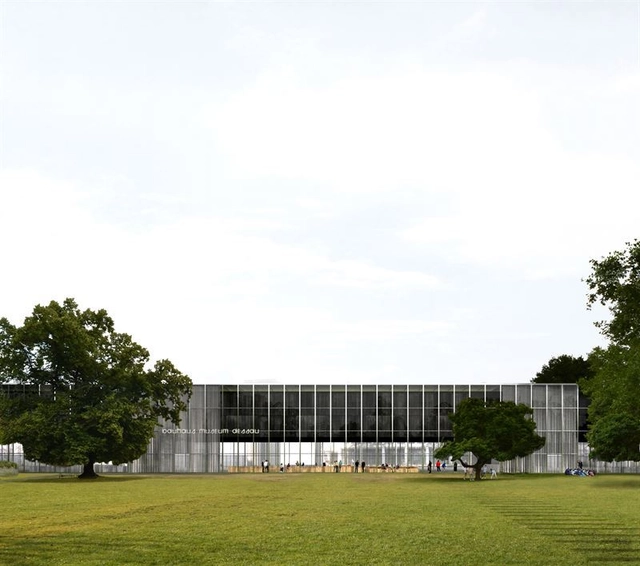
Bauhaus Museum Dessau. Image Courtesy of goBauhaus
If you’re looking for a way to celebrate the Bauhaus centennial and you’re also in need of a vacation, you can accomplish both this year by visiting BauhausLand. goBauhaus is ready to help you plan your next trip to the Saxony-Anhalt and Thuringia regions of Germany, otherwise known as BauhausLand. The region that witnessed the beginnings of the Bauhaus movement is home to many buildings influenced by its revolutionary style. In celebration of the school’s centennial, goBauhaus has compiled a list of notable Bauhaus-y places where visitors can stay overnight to immerse themselves in the experience. So if you’ve always wanted to make an architectural pilgrimage to pay homage to Gropius and his pals, 2019 is the time!
See the list below and start planning your excursion!
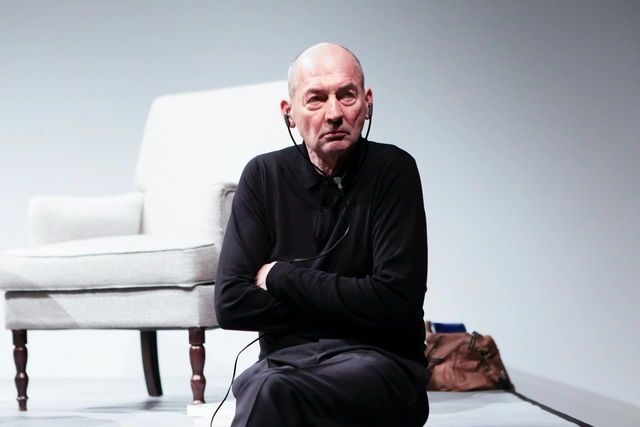
They say diversity is key for a strong portfolio. Now OMA's Rem Koolhaas can add “featured artist on a musical album” to his resume. New York-based duo Tempers, in collaboration with German artist Katja Eichinger, feature Koolhaas in a mall-themed concept album.
Over 40 years of practice, Herzog + de Meuron have established themselves as one of the most celebrated practices in architecture. Their works span scale and site but are united by a sensitivity to material and detail that, today, often seems to fall by the wayside. The inner workings of the practice are notoriously private, but those interested in the process behind the project may soon have reason to celebrate.
The Royal Institute of British Architects has announced the foundation of a new award focused on recognizing work in housing in the UK. The award is named in memory of Neave Brown, the British architect, and designer famed for his many housing estates in London.
https://www.archdaily.com/910576/riba-announces-a-new-award-recognizing-housing-design-in-the-uk-in-memory-of-neave-brownKatherine Allen
For those in the northern hemisphere, the last full week in January last week kicks off with Blue Monday - the day claimed to be the most depressing of the year. Weather is bleak, sunsets are early, resolutions are broken, and there’s only the vaguest glimpse of a holiday on the horizon. It’s perhaps this miserable context that is making the field seem extra productive, with a spate of new projects, toppings out and, completions announced this week.
The week of 21 January 2019 in review, after the break:
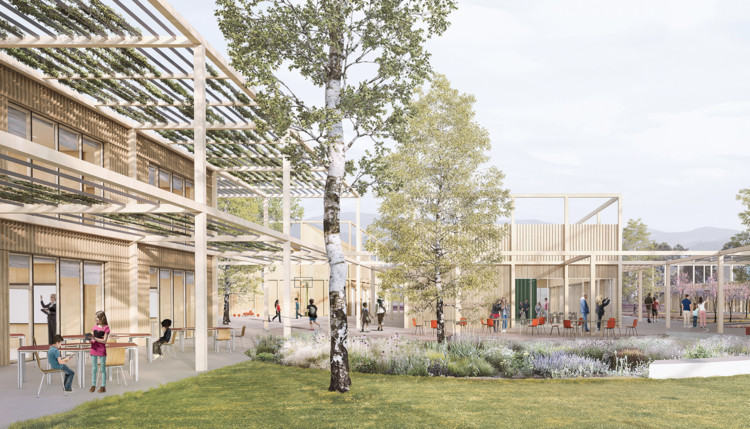
Ten years after a destructive earthquake rocked Italy's central Abruzzo region, many students still attend class in temporary modules similar to containers. Named winners of an international competition, SET Architects’ design for the new “Sassa School Complex” proposes reconstructing a place for students and the community to learn, gather, and grow. Inspired by the modularity and essential nature of climbing frame play structures, the architects describe the design as a metaphor for “freedom and social aggregation as a fundamental value for dynamic and innovative teaching.”
The American Institute of Architects (AIA) has selected Venturi Scott Brown's Sainsbury Wing at the National Gallery of London as the recipient of the 2019 AIA Twenty-five Year Award. Designed by Robert Venturi and Denise Scott Brown in an international competition, AIA commended the project for its ability to “...make its context better than it found it” - a citation borrowed from Venturi himself.
The award is presented annually to a project that has "stood the test of time by embodying architectural excellence for 25 to 35 years."
https://www.archdaily.com/909184/venturi-scott-browns-sainsbury-wing-national-gallery-london-receives-aia-25-year-awardKatherine Allen
Clément Blanchet Architecture in collaboration with Etienne Tricaud (AREP) have been shortlisted for the French pavilion at Expo 2020 Dubai. The winner will be announced in February. The proposal is intended to enhance both the virtual world and the real to support human communication, cultures and interactions. The pavilion will be built around the themes of Light and Mobility to create a hidden oasis with two vertical gardens facing one another.
As 2018 winds to a close, we've started to look ahead to the projects we're most looking forward to in 2019. Many of the projects listed here have been in the works for years, having experienced the frustrating false starts and lulls that come in a profession dependent on long-term and significant capital investment, not to mention changing politics.
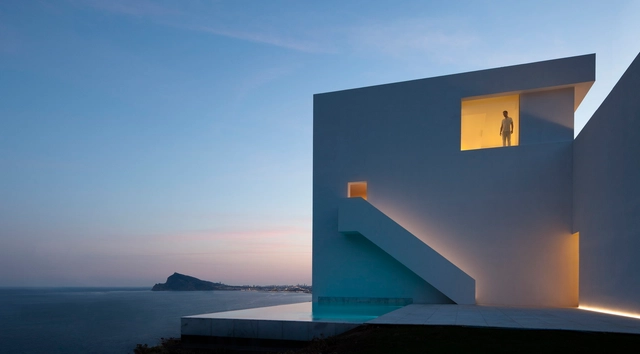
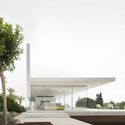
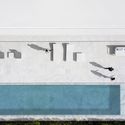
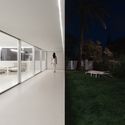
Spanish architect Fran Silvestre is well known for his portfolio of nuanced, clean, and decidedly modern works. Each project is as stunning as the next, the type of home that shows up in Bond films and populates the Pinterest boards of aspiring homeowners.






_Morley_von_Sternberg.jpg?1550178787)


















.jpg?1548937464 "Dunboyne Road Estate. via Wikimedia")