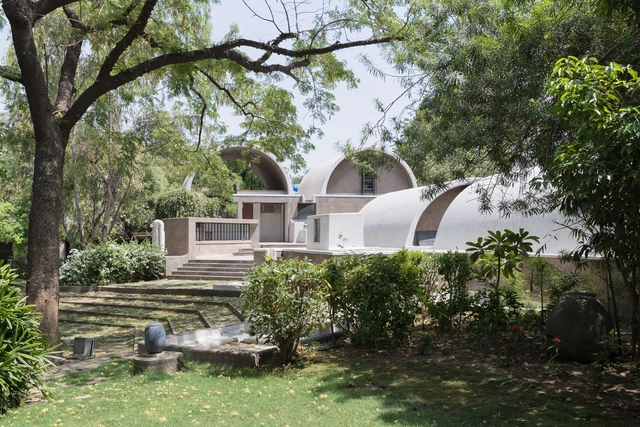
Exterior view of Doshi’s Sangath Architect’s Studio, Ahmedabad, Image by Iwan Baan. . Image Courtesy of Vitra Design Museum
As we step into the new year, we take a moment to reflect on the lasting impact of celebrated architects, designers, and curators who passed away in 2023. This past year witnessed the departure of influential figures who, through their talent and dedication, left an indelible mark on the built environment. Some embarked on their careers with bold gestures that reshaped architectural paradigms, while others worked quietly, placing a profound focus on the human experience or the invisible figures of out profession.
As we reflect on the tumultuous events of 2023, it becomes evident that the challenges posed by changing environmental conditions have left an indelible mark on communities worldwide. In response, architects and urban planners have set out, searching for the ways in which their actions can help create safer environments for communities worldwide, responding with both fast-to-deploy emergency architectures and long-term strategies to build resilience and mitigate risks.
Beyond merely responding to events like the devastating earthquakes in Turkey, Syria, and Morocco, or the widespread flooding in Libya or Pakistan, professionals are attempting to take proactive approaches, developing strategies that extend from predictive modeling to the application of re-naturalizing techniques or the ongoing research into the physics of safer and resilient structures.
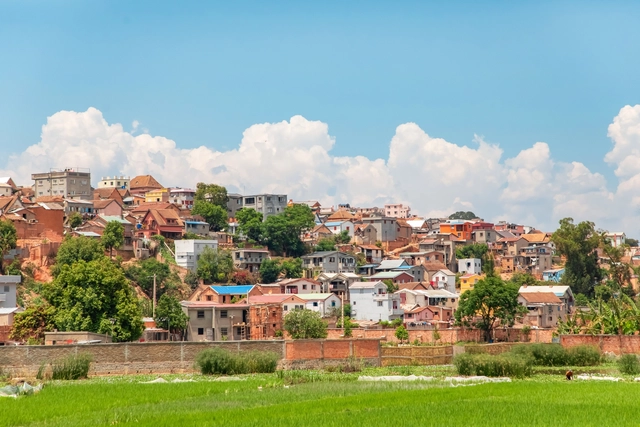
Madagascar is an island nation off the southeast coast of Africa that, despite its lush vegetation and unique flora and fauna, grapples with formidable environmental challenges, from rising sea levels to the excessive exploitation of natural resources. Joan Razafimaharo is an architect deeply involved in sustainability, climate change, and adaptation efforts in Madagascar and the broader Indian Ocean region. Razafimaharo is also one of only about sixty architects in the country, serving a population of 28 million.
Recently I spoke to her about environmental activism in the face of climate change, curbing the exploitation of natural resources, the role of architects in resource-scarce societies, and empowering women in isolated areas. The interview, originally conducted in French, has been translated and edited for length and clarity.
https://www.archdaily.com/1011140/how-madagascar-is-confronting-climate-changeMathias Agbo, Jr.
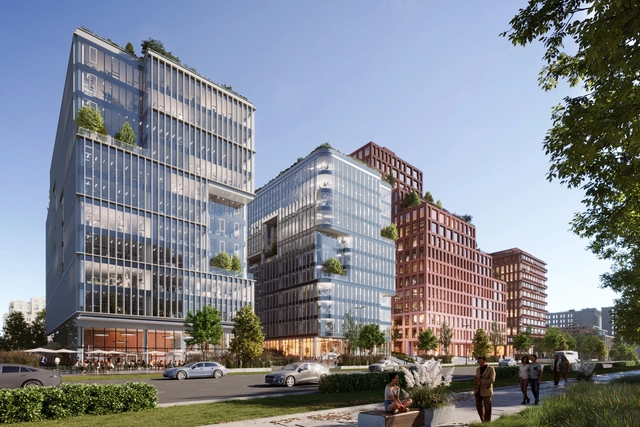
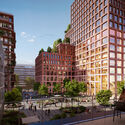
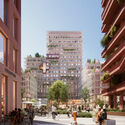
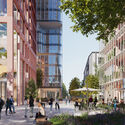
MVRDV and Orange Architects collaborate on the NUVO project, a new mixed-use complex to be built in Ukraine’s capital, the team of architects has revealed their design for three of the buildings that will become part of NOVO. Commissioned by Kovalska, the project is now restarting after work was put on hold due to the active conflict in Ukraine. The two firms are collaborating to refine the master plan initiated by APA Wojcehowski Architects.
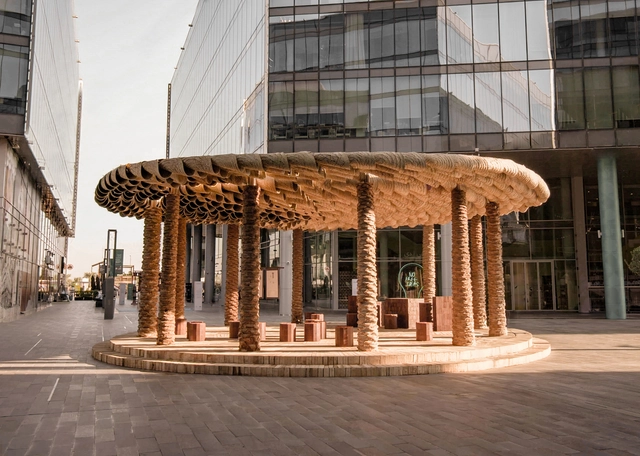
Of Palm / Abdalla Almula. Image Courtesy of Abdalla Almula
Happening between November 7 and 12, Dubai Design Week 2023 brought together over 500 designers, architects, and creative practitioners to explore the relationship between traditional practices and emerging technologies in an effort to create more environmental sustainability and design-led social impact solutions. As one of the most important cultural events in the Middle East, the festival brings forward a wide offering of installations, artworks, and immersive experiences, all exploring important topics of eco-friendly design.
This year’s interventions and installations drew inspiration from the region’s natural ecosystems as well as local traditions and craftsmanship while merging these practices with innovative technologies, biomaterial explorations, and reimagined ways of practicing. Across the interventions, a recurring motif emerges, that of celebrating Middle Eastern heritage and engaging productively with vernacular practices.
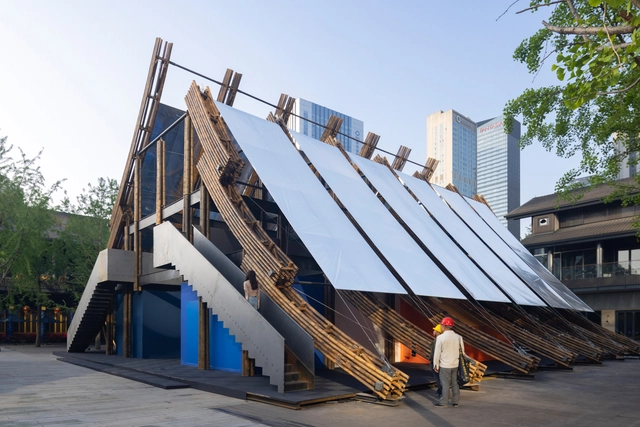
RoarcRenew Architects has been selected for ArchDaily's 2023 New Practices. In two of Shanghai's busiest commercial districts, Anfu Road and Columbia Circle, stores designed by RoarcRenew Architects attract large crowds. Within spaces covering just a hundred square meters, they meticulously design every architectural element, continuously exploring and innovating. Their recent bamboo installation, done in collaboration with Taikoo Li, is a remarkable showcase of sustainable design in commercial spaces.
Roarc Renew consistently conveys a clear architectural concept in its projects. The construction logic mirrors the fundamental principles governing our world, involving substances and joints: joints can both represent the substances in the physical world and connect them all. In their projects, Roarc Renew has introduced the JointsPavilion (JP) series for the construction system and the SoftJoints (SJ) series for home furniture systems. This allows them to utilize their expertise in creating elegant connections that simplify and enhance the beauty of various elements.
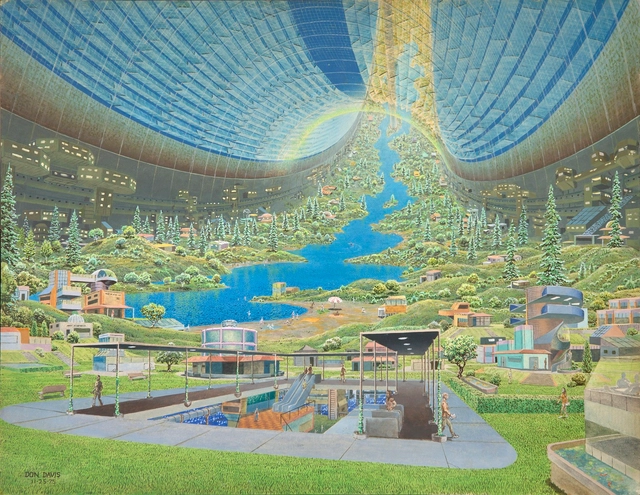
Don Davis (American, born 1952). Stanford torus interior view. 1975. Acrylic on board, 17 × 22″ (43.1 × 55.9 cm). Commissioned by NASA for Richard D. Johnson and Charles Holbrow, eds., Space Settlements: A Design Study (Washington, DC: NASA Scientific and Technical Information Office, 1977). Illustration never used. Collection Don Davis. Image Courtesy of The Museum of Modern Art
The Museum of Modern Art New York has announced the opening of an exhibition focused on the first realized and unrealized projects that address ecological and environmental concerns. Featuring works by architects who practiced mainly in the United States from the 1930s through the 1990s, the exhibition titled “Emerging Ecologies: Architecture and the Rise of Environmentalism” is on view from September 17, 2023, through January 20, 2024. The over 150 works showcased reveal the rise of the environmental movement through the lens of architectural practice and thought.
What we build can be metaphoric—often intentionally, sometimes subliminally. But architecture is seldom the intentional commentary of architects, crafting symbolism; more often it is a direct reflection of its time and the culture that made it.
Although architecture itself is universal, the day-to-day practice still varies across the world, influenced by a wide range of factors, from the professional requirements and responsibilities of an architect, the local environment, history and building customs, to local priorities and challenges. In a hyper-connected world, where architecture seems to become more uniform, how do local contexts and characteristics shape the built environment? This article taps into the commonalities and the variations within the architecture profession.
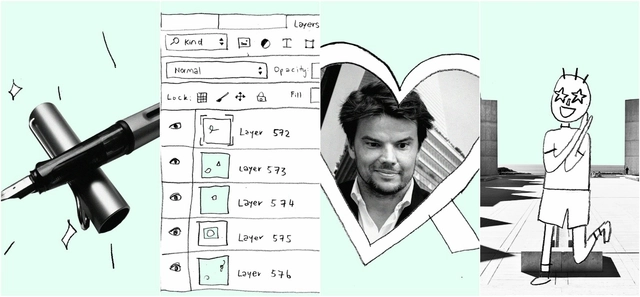
Everyone is blameworthy for at least one bad habit / behavior at his/her workplace: talking on the phone too loudly, stealing someone else's mug, walking around the office with a very odorous lunch...
After a little reunion with her friends who work in the architecture field, illustrator Chanel Dehond couldn't help but notice a few "crimes" that almost all architects are guilty of.
Take a look at Dehond's illustrations of the petty crimes done by architects and designers.
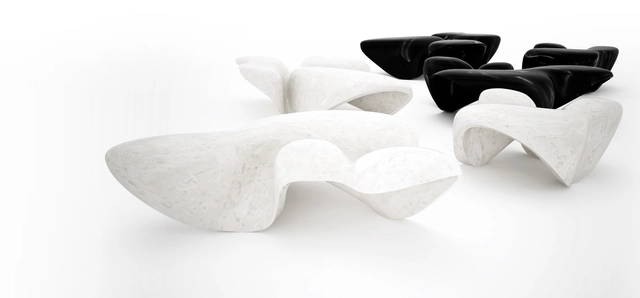
Mercuric Table - Zaha Hadid x CITCO. Image Courtesy of CITCO
As the week comes to an end, Milan Design Week wraps up yet another successful year of creativity and innovation. Thousands of design companies displayed their creations to more than 200,000 visitors hailing from different countries, demographics, and career backgrounds. Although the design fair gravitated towards the world of interior design, many renowned architects participated in the week-long exhibition and joined their forces with interior and furniture design experts.
Along with the impressive collaborations that these architects created with lighting companies, take a look at how they used their expertise in forms and structures to develop unique furniture pieces.
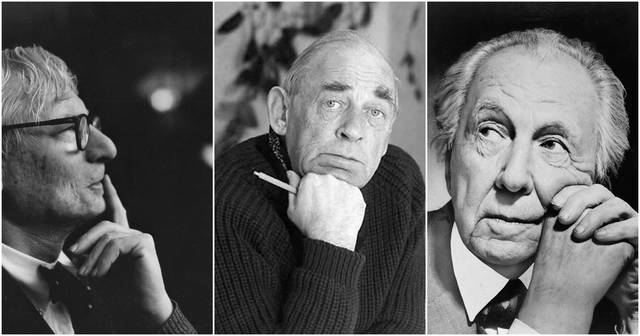
Famous architects are often seen as more enigma than person, but behind even the biggest names hide the scandals and tragedies of everyday life. As celebrities of a sort, many of the world's most famed architects have faced rumors and to this day there are questions about the truth of their private affairs. Clients and others in their studios would get a glimpse into an architect’s personal life, but sometimes the sheer force of personality that often comes with creative genius would prevent much insight. The fact remains, however, that these architects’ lives were more than the sum of their buildings.
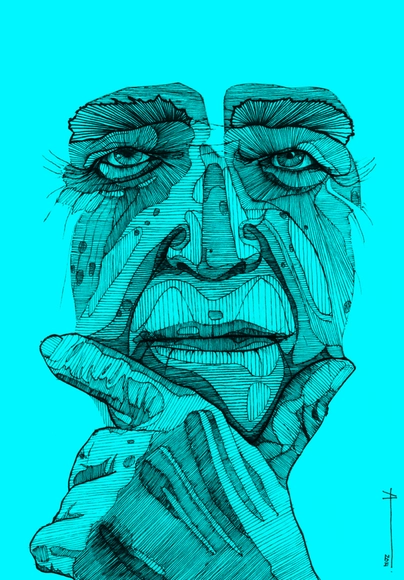
Chilean architect and illustrator Francisca Álvarez Ainzúa created "Architecture of the Portrait": a series of illustrations of renowned architects drawn with the precision and accuracy of a fineliner. In order to choose the protagonists of her geometrical analyses, the architect states a preference for strong character and the presence of imperfections, which imparts a certain richness to the representation.
The architectural construction of the face is done using lines to create a hatch effect. Next, she adds color that pays tribute to the traditional default CAD shades: yellow, cyan and magenta.
Architecture, as a profession and discipline, has come a long way since Vitruvius. It continues to evolve alongside culture and technology, reflecting new developments and shifting values in society. Some changes are conscious and originate within the field of architecture itself, made as acts of disciplinary or professional progress; others changes are uncontrollable, arising from architecture's role in the wider world that is also changing. Below are just some of the changes that have taken place in recent decades:
New year, new me! Or perhaps for architects, new Moleskine, new me? While a lot has happened in the world of architecture this year, it’s just as important to reflect on your own personal architectural practices. Whether 2017 ushers in the start or end of a degree, a new job, a new project, or just more architectural life as usual, there’s no better time to make a resolution or two. As we approach the calendar change, here are 22 ideas for how you could improve yourself in the new year.
Have absolutely no idea what to get your architecturally-predisposed friend or family member? Or perhaps you think you’ve managed to decipher their Moleskine-toting, coffee-drinking veneer and know just the perfect gift? Perhaps, even, you are the architecturally-predisposed family member, looking for a convenient way to show others what to get you. Either way, architects have rapidly evolving and often incredibly niche tastes that can be hard to shop for. But worry no longer, the secret guide to what and what not to give architects this holiday season is here:
Previously we had a look at some of the strange habits of top architects. From drinking on the job to polyphasic sleeping, it turns out famous architects are a bunch of weirdos. But what about the rest of us? It’s not just the famous architects who are weirdos—it’s simply impossible to spend such long periods of time on the job without picking up a few strange habits along the way. Whether it’s the way we work, the way we interact with buildings, or things that don’t even seem odd until a non-architect points them out, those in architecture have some pretty strange habits.
The usefulness (and, at times, unintended hilarity or abhorrence) of Google's autocomplete function is nothing new. The screenshots, listicles and articles dedicated to exposing humanity's curiosity, bias and, alas, stupidity have circulated the interwebs since the "Search Suggestion" feature was launched in 2008. As you type a query, topic or name into the the search bar, you are served search predictions, which the company describes as "related to the terms you’re typing and what other people are searching for."






















.jpg?1555159259 "KOR Armchair and Sofa - William Sawaya x Sawaya & Moroni. Image Courtesy of Sawaya & Moroni")

.jpg?1555158250 "ALESSANDRO I-II-III - William Sawaya x Sawaya & Moroni. Image Courtesy of Sawaya & Moroni")