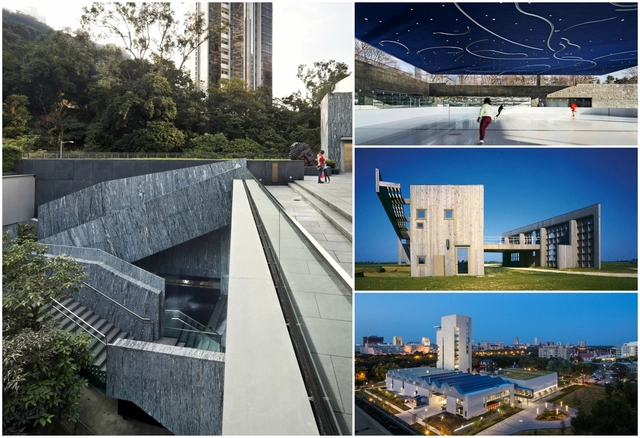
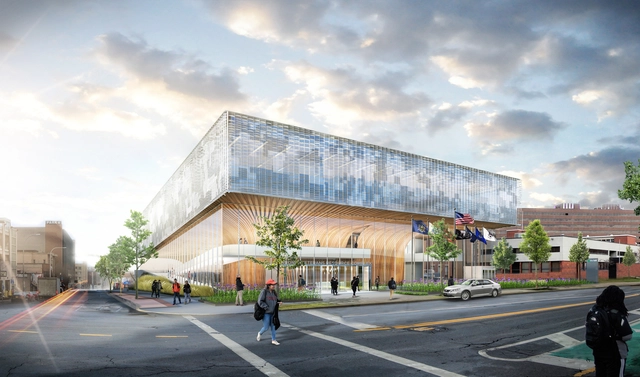
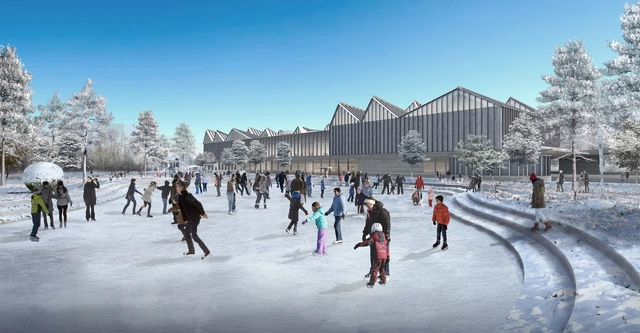
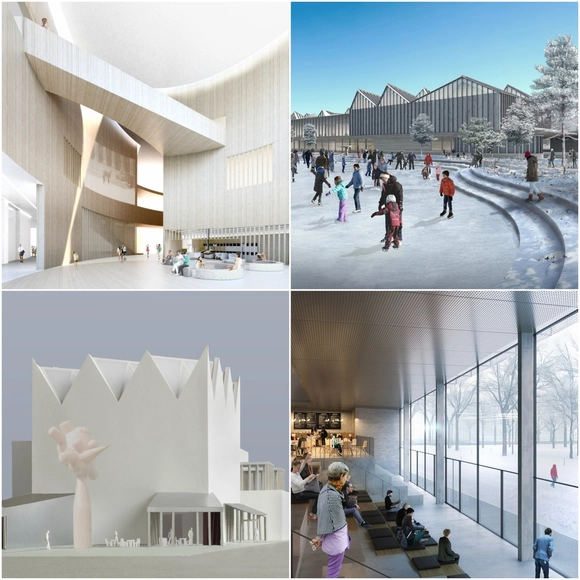
Adjaye Associates, working with local firm AB3D, envisioned the museum as a social incubator, a welcoming and porous space where people could be brought together through a variety of formal and spontaneous interactions. The jury found that the proposal’s distinctive silhouette would give the museum a strong presence within its context of planned commercial and residential developments, and that is orientation and materiality showed a keen awareness of the vernacular and cultural contexts.
The design proposals of seven shortlisted finalists for the Latvian Museum of Contemporary Art Design Competition have been released by the competition’s organizer, Malcolm Reading Consultants. Located in the capital city of Riga, the funding for the €30 million project is a public private partnership with support from from the ABLV Charitable Foundation and the Boris and Ināra Teterev Foundation, which co-founded the Latvian Museum of Contemporary Art Foundation. The Ministry of Culture of the Republic of Latvia and the Museum’s Foundation signed a memorandum of intent regarding the museum and building on 30 October 2014. The competition, organized in 2015 with 25 first-stage participants, will announce a jury-selected winner in mid-June.
“The three finalist firms and their teams are outstanding,” says Thorne. “I have no doubt they will propose ideas that go beyond traditional academic buildings and make the NVRC a pioneering facility that will contribute to the University, as well as the broader community.”
“These finalists offer a variety of backgrounds and styles, and any one of them would be an excellent choice,” Obama Foundation chairman Martin Nesbitt, according to CBS Chicago. “We are excited to see this process moving forward because the Obama Presidential Center will be so much more than a library – this facility will seek to inspire citizens across the globe to better their communities, their countries, and their world.”
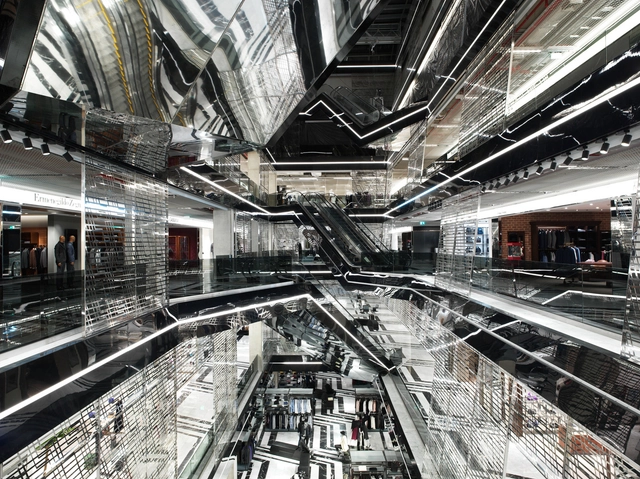
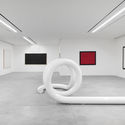
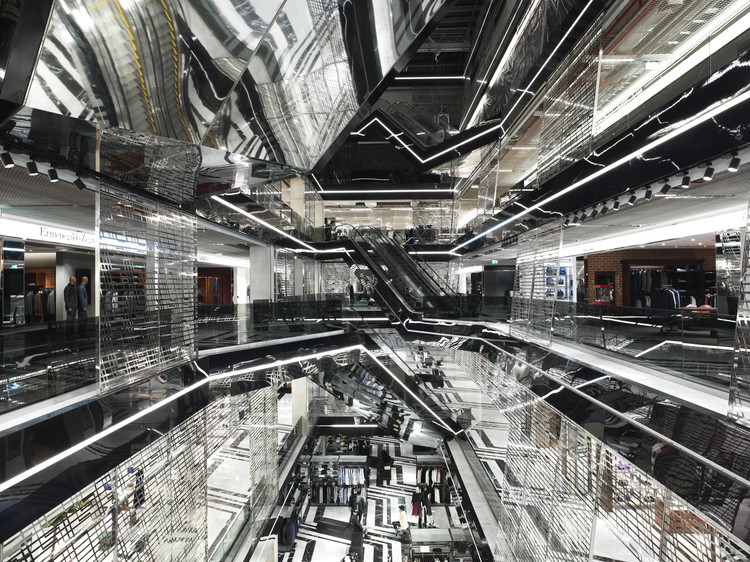
The David Adjaye-designed Aishti Foundation in Beirut, Lebanon is nearing completion. Located in central Beirut, the building replaces former warehouses, housing both an art gallery and retail space. This unique “juxtaposition of art and shopping” inspired Adjaye and Associates “to create a design for an entirely new typology that would integrate two, often conflicting, worlds,” write the architects in a press release.
In the mid-1980s, after literature had long been held hostage by postmodernist irony and cynicism, a new wave of authors called for an end to negativity, promoting a "new sincerity" for fiction. Gaining momentum into the 1990s, the movement reached a pinnacle in 1993 when, in his essay E Unibus Pluram: Television and U.S. Fiction, pop-culture seer David Foster Wallace, a proponent of this "new sincerity," made the following call to action: “The next real literary ‘rebels’ in this country might well emerge as some weird bunch of anti-rebels, born oglers who dare somehow to back away from ironic watching, who have the childish gall actually to endorse and instantiate single-entendre principles... These anti-rebels would be outdated, of course, before they even started. Dead on the page. Too sincere. Clearly repressed. Backward, quaint, naive, anachronistic. Maybe that’ll be the point. Maybe that’s why they’ll be the next real rebels. Real rebels, as far as I can see, risk disapproval. The old postmodern insurgents risked the gasp and squeal: shock, disgust, outrage, censorship, accusations of socialism, anarchism, nihilism. Today’s risks are different. The new rebels might be artists willing to risk the yawn, the rolled eyes, the cool smile, the nudged ribs, the parody of gifted ironists, the ‘Oh how banal.'"
Architecture, ever in debt to the styles and ideas of other art forms, could learn a thing or two now from the resuscitation of American fiction at the turn of the millennium. It too is enduring an identity crisis, mired by pessimism and uncertainty - a reality made painfully clear this past January when a New York Times Op-Ed by Steven Bingler and Martin C. Pedersen, How to Rebuild Architecture, divided camps and made the design world fume. In the editorial, the authors spoke vehemently of an architectural profession that has become mired by egos and been disconnected from public needs. Things quickly got ugly, critics wrestled with critics and subsequently the public got involved. What no one seemed to take into account is that this type of hounding is at the core of the problem. In its current landscape the discipline has struggled with its past, been deferential to its present, and wrestled with the uncertainty of its future. In a moment when we have become addicted to despondency, can anyone win?
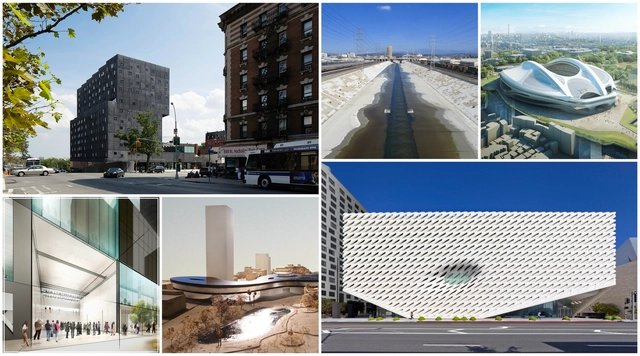
In discussion with Calvin Tomkins for a 2013 profile in The New Yorker, David Adjaye spoke intensely on the significance of his Sugar Hill Development. “Context,” said Adjaye, “is so important, not to mimic but to become part of the place. I wanted a building that acknowledges its surroundings.” The recently-completed project is the brainchild of Ellen Baxter, leader of Broadway Housing Communities (BHC), a non-profit that has made strides to create innovative housing schemes in Upper Manhattan’s Washington Heights neighborhood. In an era where mixed-used developments are routine, Sugar Hill adds new dimensions to the typology by uniting affordable apartments, an early childhood education center, offices for the BHC, and the Sugar Hill Children’s Museum of Art & Storytelling.
In conjunction with their full building review written by Rob Bevan, The Architectural Review has produced this video which introduces the broader public to the tenants, allowing us to better understand the building’s use, intentions, and the design philosophy.
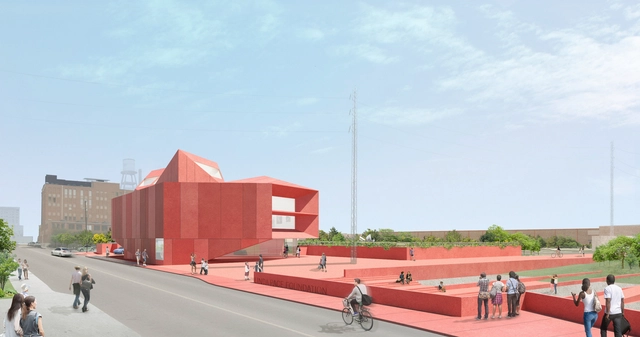
The Linda Pace Foundation has unveiled plans for a new building designed by Adjaye Associates. Planned to open in San Antonio, Texas in 2018, "Ruby City" will house the Foundation's growing collection of contemporary art. The two-story structure, clad in "crimson-hued panels of precast concrete with glass aggregate," will be distinct with its "dramatic rooftop of sloping angles and skylights that rise to varying heights and echo cut-away spaces at the building’s base."
With over 50 built projects across the world, David Adjaye is rapidly emerging as a major international figure in architecture and design. Rather than advancing a signature architectural style, Adjaye’s structures address local concerns and conditions through both a historical understanding of context and a global understanding of modernism. The first comprehensive museum survey devoted to Adjaye, this exhibition offers an in-depth overview of the architect’s distinct approach and visual language with a dynamic installation design conceived by Adjaye Associates.
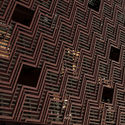
Adjaye Associates have unveiled their design for the Eugene Gasana Jr. Foundation Paediatric Cancer Centre in Kigali, Rwanda. Located on a four-hectare site, the centre will include a 100-bed hospital, lodging for outpatients and residential housing for hospital staff. The design is inspired by the region’s vernacular architecture, and by the local Imigongo art form, which often includes black, white and red geometric patterns.
Read on to learn more about the project.
https://www.archdaily.com/770598/david-adjaye-unveils-design-for-cancer-centre-in-rwandaAD Editorial Team
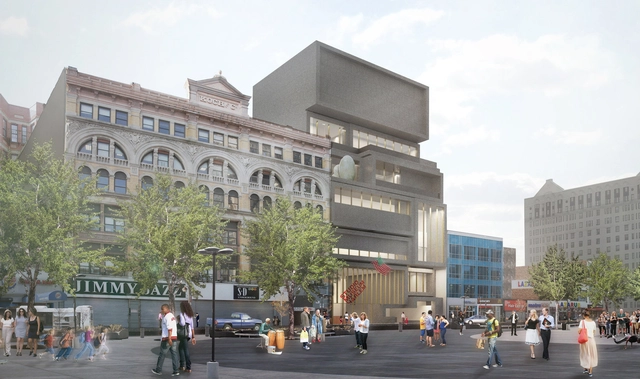
British architect David Adjaye is set to submit plans for new Studio Museum in Harlem. Designed to replace the 47-year-old museum's existing facility on Manhattan's West 125th Street, the new $122 million proposal will more than double the museum's space, allowing it to become a premier center for contemporary artists of African descent.
According to the New York Times, Adjaye was chosen to design the museum due to his sensitivity regarding the artists and surrounding neighborhood, which in turn inspired the project; the project's main space will feature a four-story, multi-use core marked by an "inverted stoop" that will act as an inviting "living room" and host for public programs.
“I wanted to honor this idea of public rooms, which are soaring, celebratory and edifying — uplifting,” he told the New York Times. “Between the residential and the civic, we learned the lessons of public realms and tried to bring those two together.”
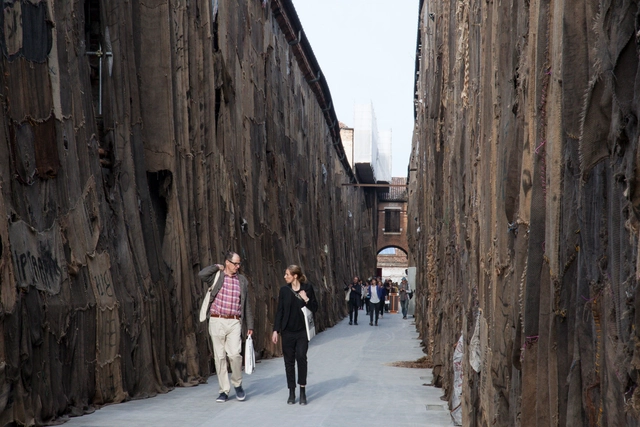
A temporary pavilion designed by London-based firm Adjaye Associates is housing a selection of works for the 56th International Art Exhibition, "All the World's Futures," in Venice. Curated by Okwui Enwezor, the exhibition explores the numerous ways in which art can be experienced in "an unfolding of typologies." Adjaye Associate's temporary museum seeks to parallel Enwezor's curatorial vision, and is nestled within a 316-meter-long, 16th-century ship-building warehouse in the Arsenale district.
Adjaye Associates has announced plans to transform a 17-floor post-modernist structure in Johannesburg’s central business district into a luxury mixed-use building that will be known as the “Hallmark House.” Scheduled for completion mid-2016, the project aims to “combine an African aesthetic with a contemporary vision” and form a new typology for urban living.
“The transformation of Hallmark House is an opportunity to apply fresh thinking to urban community and to address changing lifestyles with a more fluid approach to the way we inhabit cities,” says David Adjaye.
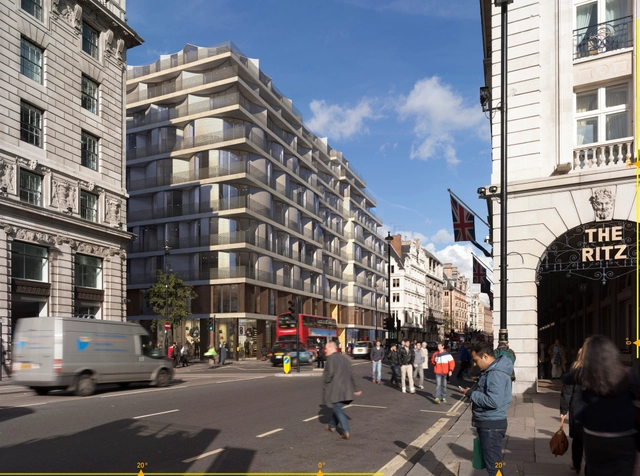
Images have been released of what will be one of Adjaye Associates’ largest UK commissions - London’s £600 million Piccadilly Redevelopment. The competition-winning scheme, selected over proposals by Rem Koolhaas, Jean Nouvel and Frank Gehry, will replace a post-war office building on 70-73 Piccadilly with a mixed-use project designed for Crosstree Real Estate Partners.
As the legacy of the Cold War fades and Western preeminence gradually becomes a thing of the past, population booms in Asia followed by the growth of a vast non-western middle class have seriously challenged the Western perception of the world. The East has become the focal point of the world’s development.
If East Asia is the present focal point of this development, the future indisputably lies in Africa. Long featuring in the Western consciousness only as a land of unending suffering, it is now a place of rapidly falling poverty, increasing investment, and young populations. It seems only fair that Africa’s rich cultures and growing population (predicted to reach 1.4 billion by 2025) finally take the stage, but it’s crucially important that Africa’s future development is done right. Subject to colonialism for centuries, development in the past was characterized by systems that were designed for the benefit of the colonists. Even recently, resource and energy heavy concrete buildings, clothes donations that damage native textile industries, and reforestation programs that plant water hungry and overly flammable trees have all been seen, leaving NGOs open to accusations of well-meaning ignorance.
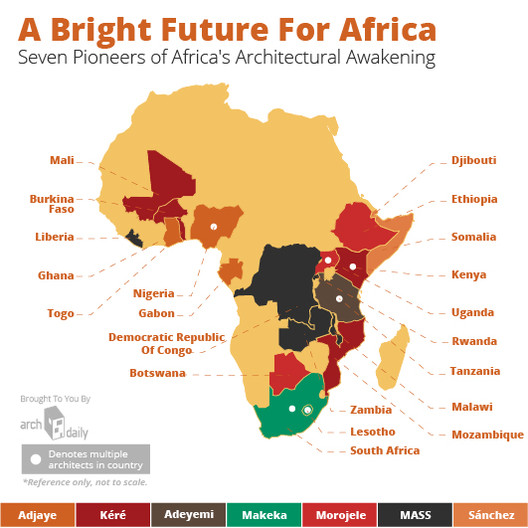
Fortunately, a growth in native practices and a more sensible, sensitive approach from foreign organizations has led to the rise of architectural groups creating buildings which learn from and improve Africa. Combining local solutions with the most appropriate Western ideas, for the first time these new developments break down the perception of monolithic Africa and have begun engaging with individual cultures; using elements of non-local architecture when they improve a development rather than creating a pastiche of an imagined pan-African culture. The visions these groups articulate are by no means the same - sustainable rural development, high end luxury residences and dignified civic constructions all feature - but they have in common their argument for a bright future across Africa. We’ve collected seven pioneers of Africa’s architectural awakening - read on after the break for the full article and infographic.