

-
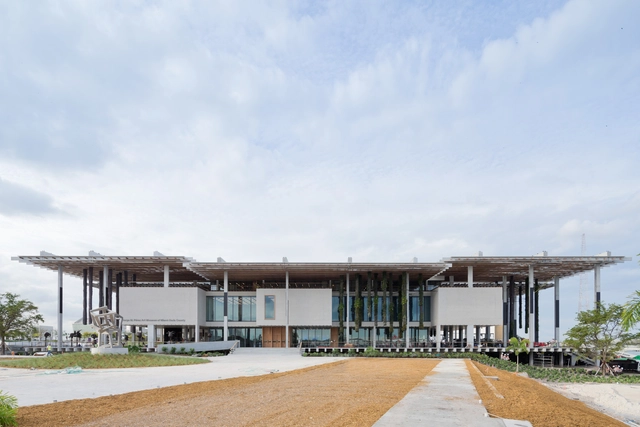
Architects: Herzog & de Meuron
- Area: 11125 m²
- Year: 2013
-
Professionals: JALRW, Doral, Herzog & de Meuron, ADA Engineering, Arup, +11


First off, I would like to thank Patrik Schumacher for taking to Facebook on March 17 at 9:45pm to let off steam -- thus starting a meaningful discussion on the role of the architect in society and culture. We could deconstruct it line by line, but I don’t think that will yield much in the way of enlightenment. What I take from it is that architecture creates form and should be free to do so without being restricted by ethical or moral imperatives to be social or political. But, as Benjamin Bratton remarked in reply to Schumacher, “To set the political to one side and at the same time make grandiose claims for how architectural form can in fact ‘remake civilization’, is a self-defeating program.”
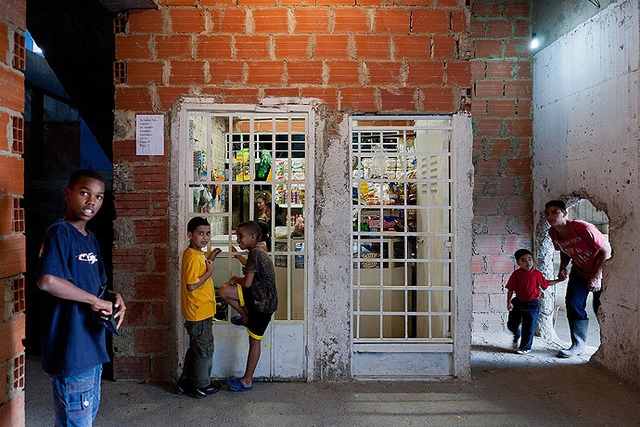
Perceptions on the role of architecture in society can easily fall along class, race, and national lines. Coming from a place of privilege, it is easy to assume an apolitical, form-making agenda for the profession. The argument that architecture has nothing to do with the social domain, or the “content” as Schumacher calls it, is an argument for political conservatism, a hands-off, sink or swim argument for social Darwinism, that limits the range and impact of high architecture. Why can’t the best and most challenging forms of architecture penetrate through all social strata? Why shouldn’t it serve the poor? And why shouldn’t this be one criteria among others for judging the value of architecture?
As you may have seen, ArchDaily has been publishing UNIFIED ARCHITECTURAL THEORY, by the urbanist and controversial theorist Nikos A. Salingaros, in serial form. However, in order to explain certain concepts in greater detail, we have decided to pause this serialization and publish three excerpts from another of Salingaros’ books: A THEORY OF ARCHITECTURE. The previous excerpt explained the difference between “Pattern Language” and “Form Language.” The following excerpt will establish how these languages can combine to form the “Adaptive Design Method.”
Proposition: An adaptive design method arises out of a complementary pair consisting of a pattern language and a form language.
I have indicated very briefly what a pattern language and a form language are; we still need to understand what an adaptive design method refers to. Out of many contemporary approaches to design, there are very few that result in structures and environments that are adapted both to physical human use, as well as to human sensibilities. In the past, the opposite was true. Human use is straightforward to understand: the physical dimensions and geometry have to accommodate the human body and its movement.
By accommodating human sensibilities, I mean that environments should make human beings feel at ease; make them feel psychologically comfortable so that persons can carry out whatever functions they have to unselfconsciously, without being disturbed by the built environment in any way. This imposes a strong constraint on the design process to adapt to the many factors (both known and unknown) that will influence the user on many levels, including emotion. An adaptive design method should accommodate all these criteria, and this Chapter shows how this may be accomplished.
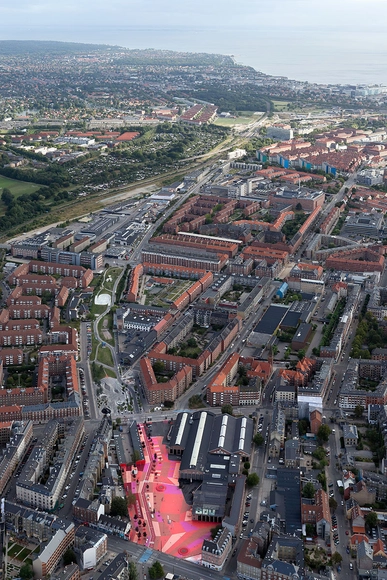
In an enlightening interview on Future Cape Town, the Lord Mayor of Copenhagen Frank Jensen discusses what it is that makes Copenhagen, and Denmark as a whole, such a green-focused society. The key it seems goes beyond simple politics, stemming from a combination of early adoption, a robust and widely appreciated welfare system and a culture of collaborative innovation. You can read the full interview here.
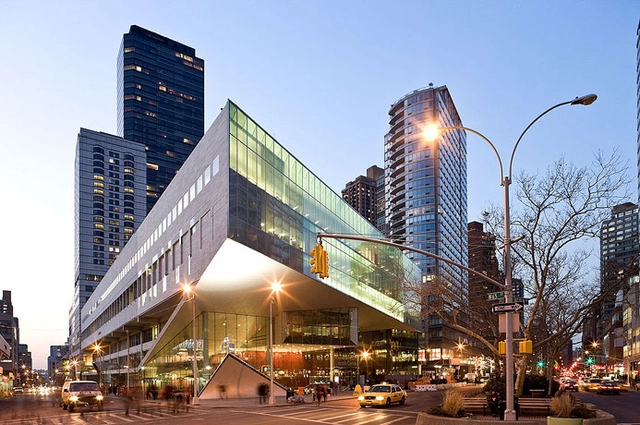
Rice University has commissioned Diller Scofidio & Renfro to transform an existing parking lot between Alice Pratt Brown Hall, the home of Rice's Shepherd School of Music, and Rice Stadium into a 600-seat opera theater. Charles Renfro, a 1989 Rice graduate and the project’s lead architect, stated: "It feels really natural in a lot of ways to be returning to campus, a place I've spent so much time and love so much." Completion is scheduled for 2018.
In case you missed it, we’re re-publishing this popular post for your material pleasure. Enjoy!
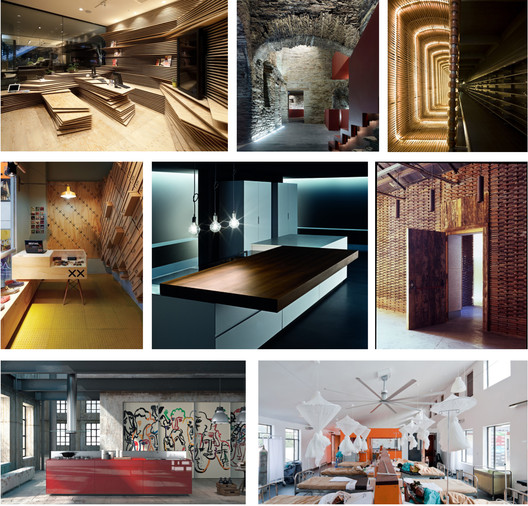
Continuing with our materials-themed posts celebrating the launch of AD Materials (our US product catalog), we decided to round-up eight materials/products (from a light fixture made from woven irrigation hoses - really - to a wall made from shoeboxes) that make their interiors truly ingenious. Enjoy!
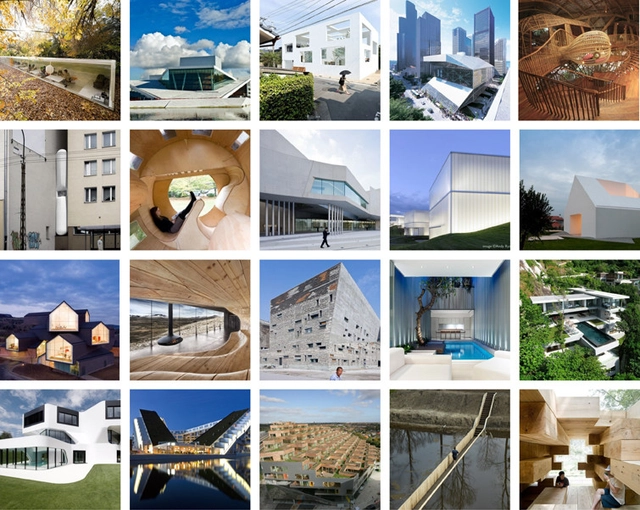
To celebrate our birthday today, we decided to take a look back at the most popular projects of the last six years. Who takes the top spot? Zaha Hadid? Frank Gehry? Well, you may be surprised...
See our 20 most popular projects of all time, after the break...
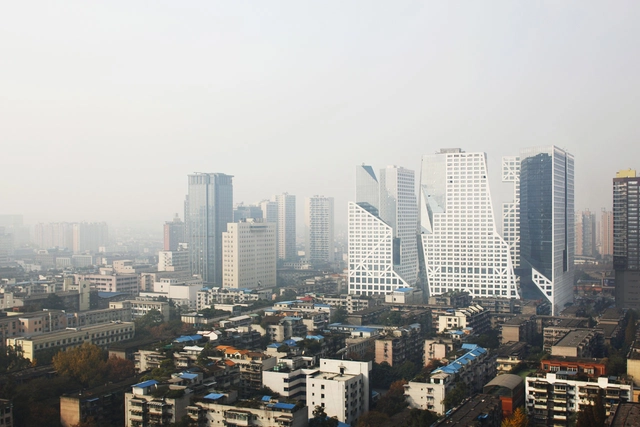
In this article originally published by Metropolis Magazine as "Urban Hopes, Urban Dreams", Samuel Medina reviews a new book on the work of Steven Holl in China. Focusing on five major projects, the book places Holl's work in the wider context of his urbanistic influences - including ideas from his own early paper architecture that are just now resurfacing.
Steven Holl is the rare architect whose concepts are equally known as his buildings. Chalk that up to Holl’s prolific output, in both buildings and monographs, and his knack for branding his ideas. Urban Hopes: Made in China (Lars Müller, 2014), a condensed reader on Holl's latest work in China, is the latest in a stream of small books that have continually repackaged the architect's growing body of work.
Anchoring and Intertwining appeared in 1996 and expounded on architectural themes and spatial notions only partially evinced by his work up until that time. In both, the buildings were few and far between, scattered between pages imprinted with “paper architecture,” the primary outlet for Holl’s creative energies in the prior decades since his move to New York in 1976. These and more titles were followed up by Parallax in 2000, a blend of philosophical, scientific, and poetic references that invest the architecture with the aura of the Gesamtkunstwerk. Holl’s idea of “porosity” made its debut here, if prematurely, where it was applied rather literally to Simmons Hall at MIT and its sponge-like facade. It wasn’t until a few years later, when the architect first got his feet wet in China, that the concept would be baptised as a core tenet of 21st-century urban design. 2009’s Urbanisms advances as much, while further recapitulating the big ideas of the previous book installments.
Read on after the break for the review of Urban Hopes
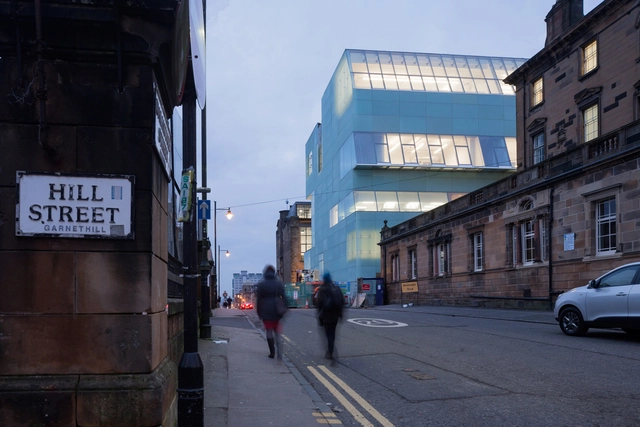
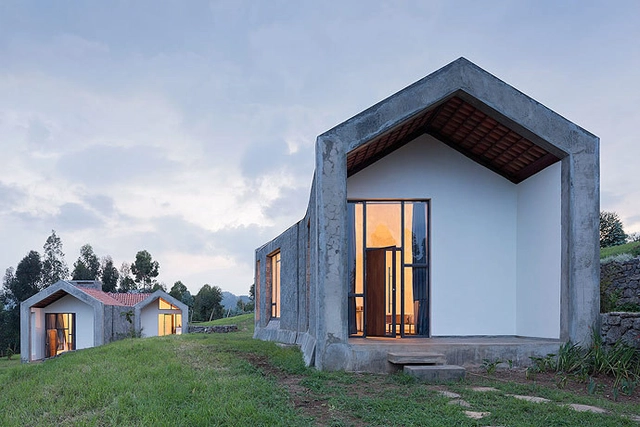
Autodesk has launched the Autodesk Foundation, an organization which will "invest in and support the most impactful nonprofit organizations using the power of design to help solve epic challenges." In an effort to aid those tackling global issues such as "climate change, access to water, and healthcare," the foundation will provide select design-oriented grantees with software, training and financial support.
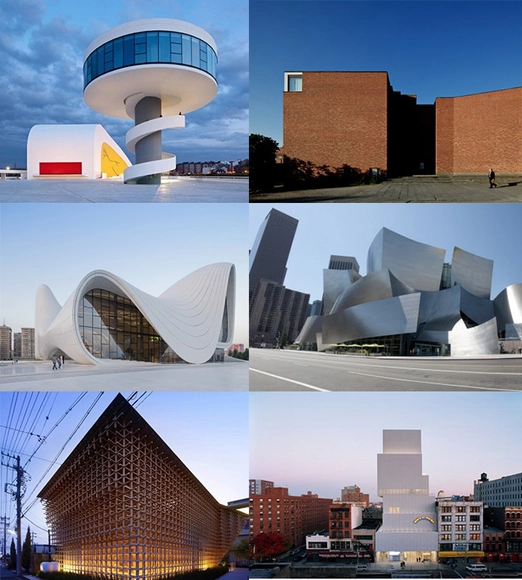
In case you missed it, we’re re-publishing this popular post for your material pleasure. Enjoy!
To celebrate the recent launch of our US product catalog, ArchDaily Materials, we've coupled six iconic architects with what we deem to be their favourite or most frequently used material. From Oscar Neimeyer's sinuous use of concrete to Kengo Kuma's innovative use of wood, which materials define some of the world's best known architects?
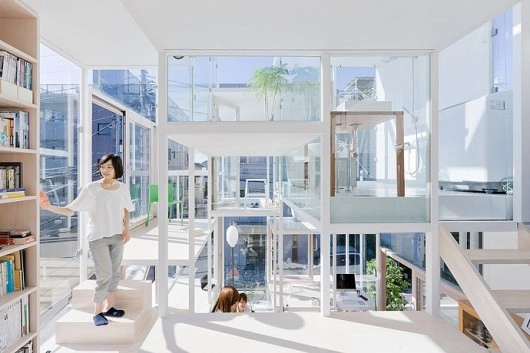
Freakonomics has just posted a fascinating new podcast that takes on the question posed by Alastair Townsend in our AD original article: “Why Japan is Crazy About Housing.” The podcast consults with Townsend and economic experts to present a thought-provoking answer to the puzzling question of why Japan builds architecture that is avant-garde and yet, ultimately, disposable. The answer may just surprise you. Listen to the whole podcast here:
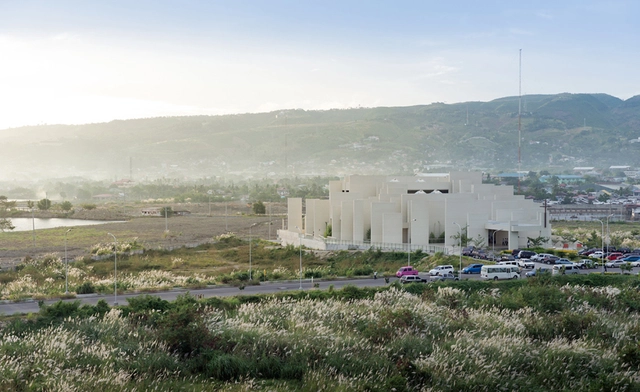
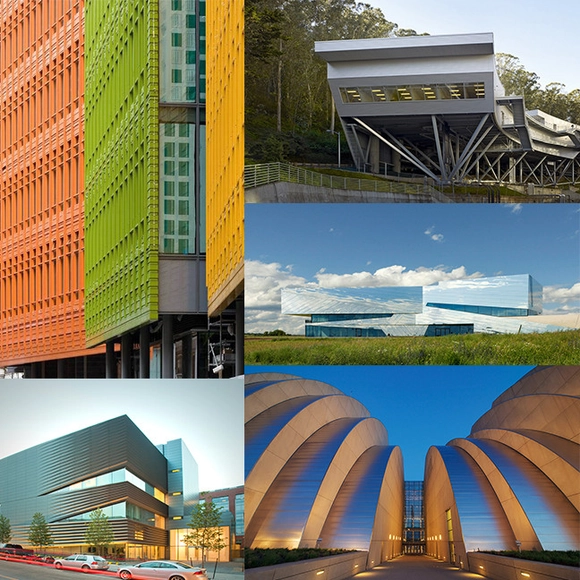
In case you missed it, we're re-publishing this popular post for your material pleasure. Enjoy!
To celebrate the recent launch of ArchDaily Materials we've brought together five projects with fantastic façades, from Viñoly's Dolby Regeneration Medicine Building in San Francisco to Holzer Kobler's PALÄON in Schöningen, Germany. A building's envelope is often people's first impression and, in recent years, have been one of the focuses of innovation in the design and construction industry. The projects we've collated show a glimpse at what's possible with façades and wall finishings.

The RIBA's recent report "City Health Check: How Design Can Save Lives and Money" looks at the relationship between city planning and public health, surveying the UK's 9 largest cities in a bid to improve public health and thereby save money for the National Health Service. The report includes useful information for city planners, such as the idea that in general, it is quality and not quantity of public space that is the biggest factor when it comes to encouraging people to walk instead of taking transport.
Read on for more of the results of the report - and analysis of these results - after the break


