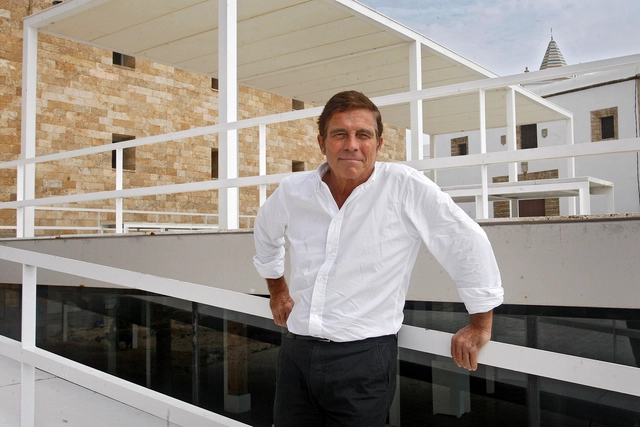
The National University of Rosario, one of the most prestigious universities in Argentina, will award an honorary doctorate (Doctor Honoris Causa) to Spanish architect Alberto Campo Baeza on June 24, 2021, during a public online ceremony.
The National University of Rosario, one of the most prestigious universities in Argentina, will award an honorary doctorate (Doctor Honoris Causa) to Spanish architect Alberto Campo Baeza on June 24, 2021, during a public online ceremony.
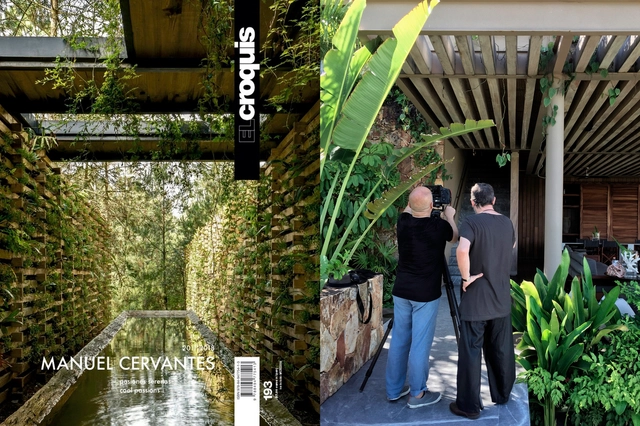
'El Croquis' is one of the most prestigious international architecture magazines, edited by architects Fernando Márquez Cecilia and Richard Levene. Published as carefully curated monographs, the magazine analyzes the work of architects whose careers feature some of the most influential and prestigious projects globally, such as OMA Rem Koolhaas, Kazuyo Sejima, Herzog & de Meuron, Álvaro Siza or Rafael Moneo. Every two months, a new issue is published with a print run of 35,000 copies, distributed to specialized bookstores in Europe, the Americas, and Asia.
The magazine is published in English and Spanish from El Escorial in Madrid, Spain, and is currently a member of ARCE (Asociación de Revistas Culturales de España) and the Asociación de Editores de Madrid. To date, only 193 issues have been published, the latest of which is dedicated to the career of architect Manuel Cervantes—the first Mexican architect to be featured in 'El Croquis' and the second from Latin America, following Smiljan Radic.

The Catalan archipelago is shaped, across almost its entire length, by a small mountain range running along it, rising from the coastline tangent to the sea to form cliffs, and extending barely a dozen kilometers at its greatest extent.
The architecture native to this coastal strip of land is repeatedly categorized as Catalan architecture, thereby overlooking and overshadowing the architecture of the inland—dark, somber, heavy, and intensely material. An architecture—that of the interior—of slow digestion, backlights, and still air, carrying a different scent.
To the northeast, we find a region where beech trees stand still, growing at a lower altitude than anywhere else in the country. Where the light is softer, more diffused; where shadows are both fainter and deeper. Where it rains differently. Where people speak differently. Where the masias are different. There they live. There they work. We are speaking of Olot. We are speaking of RCR.

Chilean architect Smiljan Radić Clarke has developed a body of work that resists easy categorization. His buildings often seem both ancient and provisional, carrying a monumental presence while retaining an unexpected sense of fragility. Stone, concrete, timber, fabric, and fiberglass are combined in unexpected ways, producing architectures that hover between permanence and ephemerality. Rather than pursuing a stable formal language, the 2026 Pritzker laureate approaches architecture as an open field of experimentation, where material behavior and structural perception are constantly tested.

The 2026 Pritzker Price Award has been awarded this year to the Chilean architect of Croatian descent, Smiljan Radić Clarke. Born in Santiago, Chile, in 1965, his practice evokes a geography of extremes, shaped by the tectonic tension between the staggering weight of the Andes and the seismic instability of the territory. After graduating from the Pontifical Catholic University of Chile and pursuing further studies in aesthetics in Venice, Smiljan Radić Clarke established his base in Santiago. From there, he has developed one of the most singular visions in contemporary architecture. His work privileges the intensity of the moment through a fragile architecture. Within it, the building operates as a temporary and tactile refuge that places the spectator in a state of aesthetic uncertainty, oscillating between ancestral ruin and avant-garde artefact.

NPO Aoyama Design Forum (ADF), a non-profit organization, has announced the ADF Design Award 2026, celebrating architecture that does more than please the eye—it aims to make a meaningful impact on society, culture, and the environment. The award aims to recognize outstanding works that challenge existing conventions, demonstrate innovative thinking, and enrich people's lives through visionary, responsible design. Architects and designers around the world are invited to submit their proposals on a unique platform that fosters connections, promotes the exchange of ideas, and encourages meaningful cross-cultural collaboration.
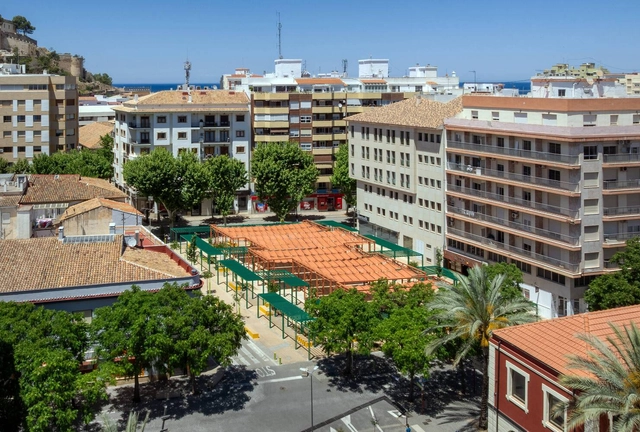
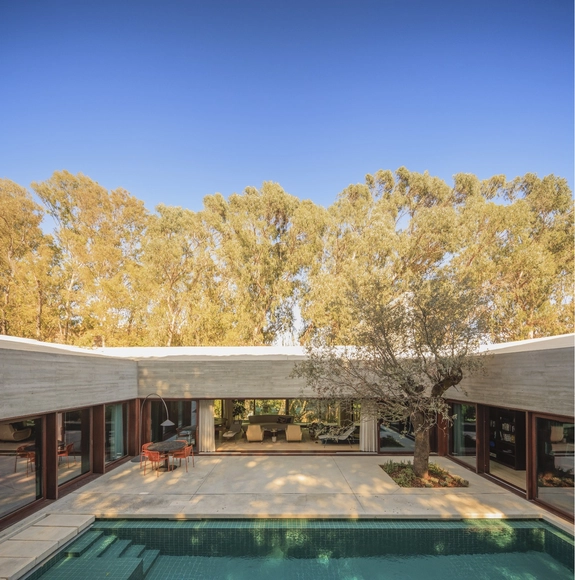
Patio houses embody one of the most enduring architectural typologies, encapsulating the duality of openness and seclusion while nurturing a profound connection with nature. While the term is also used in contemporary American real estate to describe low-maintenance, single-story dwellings on small lots, its classic architectural meaning refers to an introverted design organized around a private, central courtyard. It is this traditional form, the subject of this article, that traces its origins back thousands of years. Patio houses emerged independently in various regions, responding universally to fundamental human needs: privacy, climatic adaptability, and spatial coherence. Despite diverse geographic and cultural expressions, the core principles of introversion, controlled openness, and environmental sensitivity remain remarkably consistent throughout the evolution of this typology.
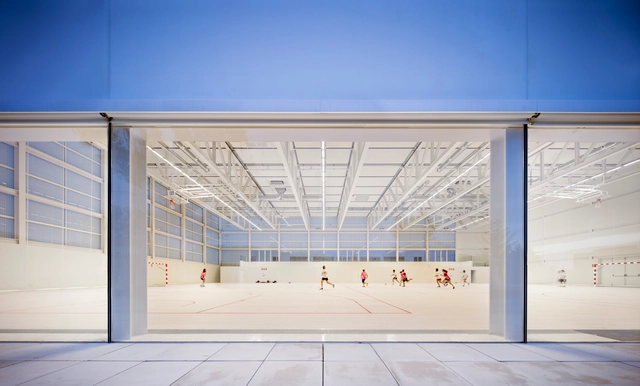
In Copenhagen, during the 2024 UNESCO International Day of Light, The Daylight Award has announced Spanish architect and professor Alberto Campo Baeza as the laureate for the architecture category and German professor of chronobiology Till Roenneberg for his scientific research regarding the impact of daylight. The two categories create an interdisciplinary bridge between fields, grounding architectural thinking with high-level research. The two winners have been commended for scientific investigations into issues like circadian rhythms and dependencies in the case of Professor Roenneberg, and the poetic qualities obtained through the use of daylight in Alberto Campo Baeza’s architectural works.
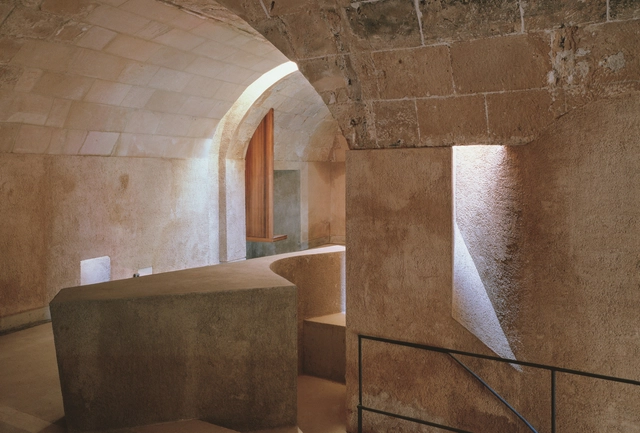
Eva Prats and Ricardo Flores started their Barcelona-based practice, Flores & Prats Arquitectes in 1998 after both worked at the office of Enric Miralles. They overlapped for about one year there, from 1993 to 1994. After her nine-year stint with Miralles, Eva won the EUROPAN III International Housing Competition with a friend. The success that led to a real commission and was going to be built, served as the springboard for starting their independent practice. Shortly thereafter they won another competition. Ricardo joined Eva after working for five years with Miralles. By then they were a couple for three years and decided to start working together. Today they practice out of the same sprawling apartment where Eva’s original studio rented a room along with several other young architects and designers. Even though the office now occupies the entire space—the architects told me they typically employ ten, no more than twelve people—they keep traces and memories of the former “dwellers” alive. Curiously, Eva and Ricardo implement the same strategy in their architectural projects as well.
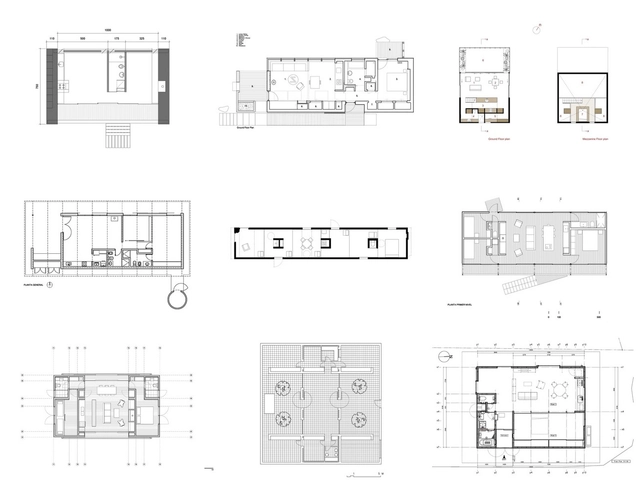
The challenge of designing a house with a tight budget and space constraints, together with the essential duty of responding correctly to the requirements of the user, is sometimes one of the most challenging and motivating tasks an architect can face. How can you take advantage of space most effectively? How can you avoid wasted material? How do you anticipate the possible future expansion of the house? And how do you develop a simple design that also delivers value to its inhabitants?
To help you in this process, we scoured our projects archives to select 30 houses that provide interesting architectural solutions despite measuring less than 100 square meters.
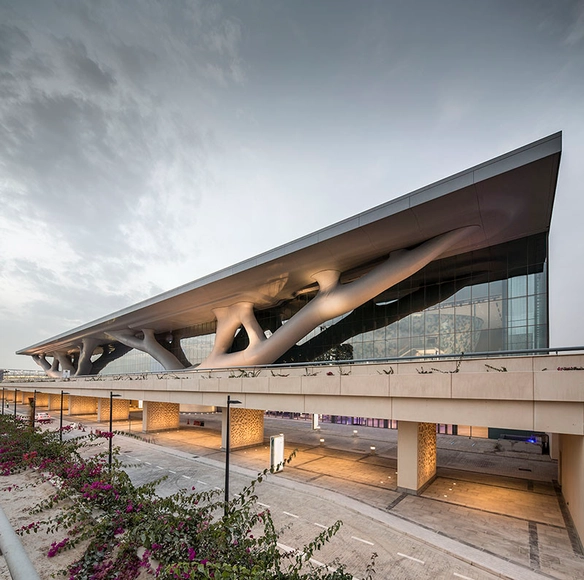
Japanese architect and theorist Arata Isozaki, winner of 2019's Pritzker Prize, passed away at the age of 91. Since the 60s, Isozaki has been showing outstanding innovative ideas in his works, influencing eastern professionals with a forward-thinking approach that takes its roots from Japan. In a special tribute to the architect's achievements, ArchDaily highlights the immense list of Arata Isozaki’s projects and recreates the architect's professional development path since his very first works.

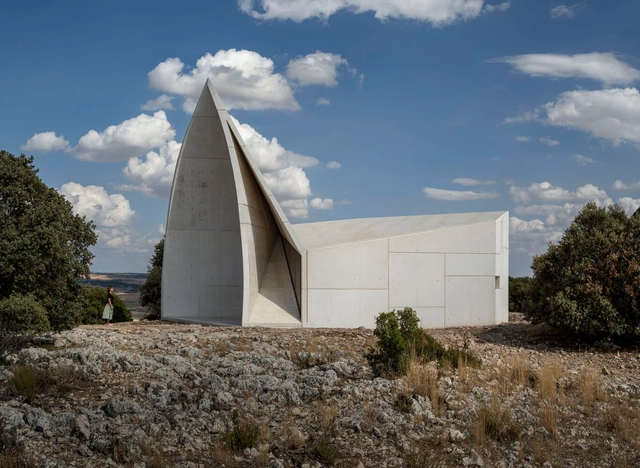
Canary Islands-born architect Fernando Menis has received the highest honor at the Faith & Form International Awards for Religious Art & Architecture in the United States, for his design of the Holy Redeemer Church of Las Chumberas in Tenerife. Co-sponsored by Faith & Form, Partners for Sacred Places, and Interfaith Design, the annual awards program has honored outstanding religious architecture since 1978.
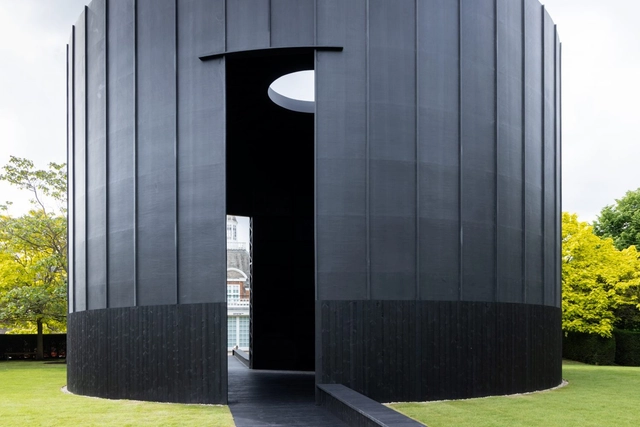
A few weeks ago, this year’s edition of the Serpentine Pavilion opened to the public. Designed by Chicago-based artist Theaster Gates, it’s an evocative project, its cylindrical form referencing American beehive kilns, English bottle kilns, and Musgum adobe homes found in Cameroon.
What the pavilion is named tells the viewer a lot more about its intentions as a spatial experience. Titled Black Chapel, it houses a spacious room with wraparound benches, and an oculus above that allows daylight to filter into the space. It’s a fairly minimal interior – designed as a site for contemplation and reflection. This minimal quality of Gates’ Serpentine Pavilion raises particularly interesting questions. How artists and architects opt for a “less is more” approach when designing meditative spaces, but also how these introspective spaces have been equally enhanced by ornamentation.
The European Centre for Architecture Art Design and Urban Studies and The Chicago Athenaeum: Museum of Architecture and Design have announced the winners of the "Europe 40 under 40" program for 2021-2022. The selection gathers emerging architectural and design talents spread across Europe from Albania, Austria, France, Greece, Ireland, Italy, Poland, Portugal, Russia, Spain, The Netherlands, and Turkey.
“During these challenging times, it is crucial to keep insightful visions alive. Presenting Europe’s most hopeful personalities in the fields of architecture and design is what gives us hope for a better tomorrow”, explains the official brief. Providing an insight into the architectural scene in Europe, the program initiated by The European Centre highlights the next generation of young architects, landscape architects, urban planners, and industrial designers currently under the age of 40, who will impact future living and working environments, cities, and rural areas.
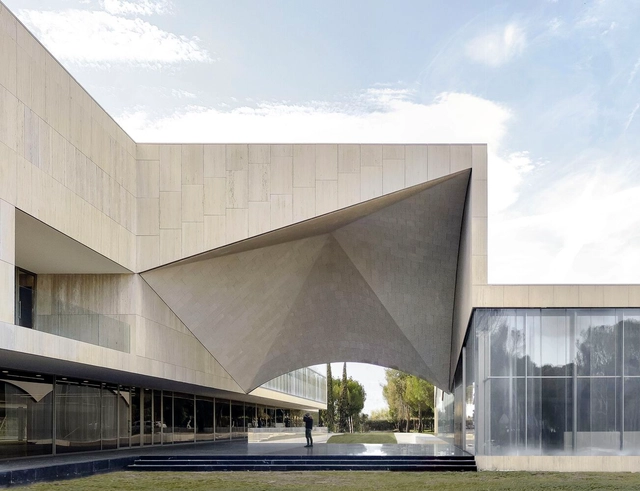
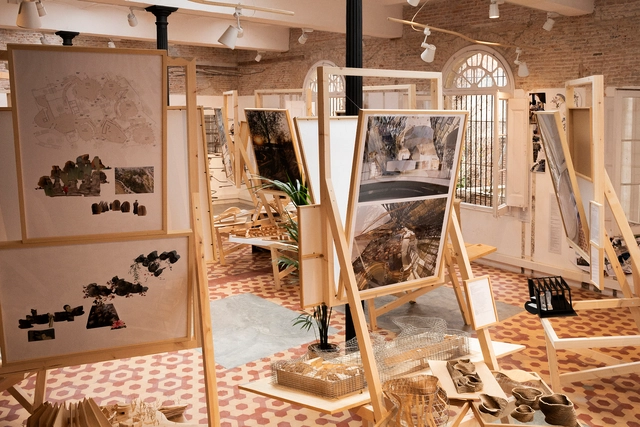
The Fundació Enric Miralles has launched MIRALLES, a series of exhibitions and events celebrating the work of the influential Catalan architect, whose passing marked twenty years in 2020. Curated by Benedetta Tagliabue and Joan Roig i Duran, the program will unfold over the course of this year in different emblematic venues in Barcelona. The first three exhibitions of the circuit inaugurated this month showcase the multiple facets of Enric Miralles through archival materials ranging from drawings and collages to photography and models, exploring his legacy in architecture and artistic creation.