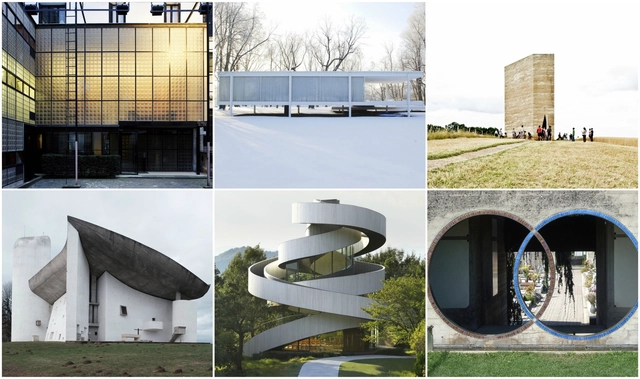
Le Corbusier was a pioneer of the Modernist Movement in architecture. Throughout his career, he undertook an array of projects all around the world. See below for 17 of his works that have been named World Heritage Sites by UNESCO, as well as many more of his other popular pieces. Hopefully, someday you get to go and see them yourself!
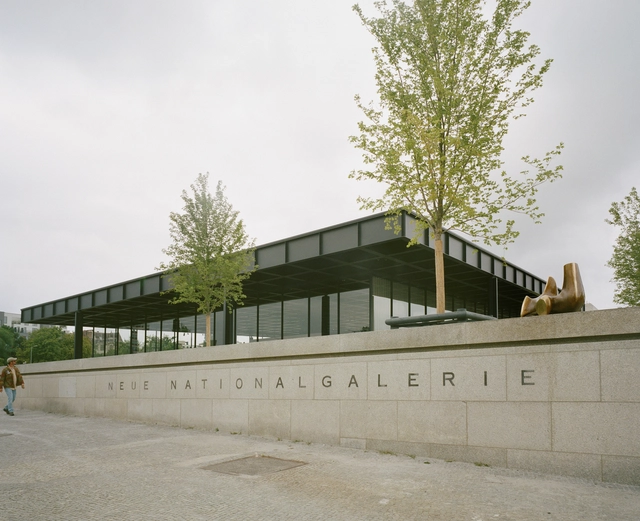
The Neue Nationalgalerie, designed by Mies van der Rohe, reopened to the public after an extensive renovation project carried out by the practice of David Chipperfield. In this video created by Mies van der Rohe House, Chipperfield shares his thoughts on the design language of Mies van der Rohe while also discussing the qualities of Neue Nationalgalerie and the future role of architectural monuments. The interview is part of the film and exhibition project Mies Goes Future, which invites artists, architects, and historians to explore the work of the renowned Modernist architect as a source of inspiration for contemporary practice.
When David Chipperfield was asked about what visitors should expect to see when he concludes the renovation of Mies van der Rohe’s Neue Nationalgalerie in Berlin, he said: “Imagine a 1965 Mercedes. It looks fine, but it’s falling apart on the inside. We want to put it in the shop, take it apart and put it back together again, so when someone turns on the switch - the engine will work.” Due to the ongoing pandemic health regulations, the 2021 re-opening saw a limited number of journalists and visitors to tour alongside Chipperfield and explore the newly-renovated architecture. Editor and photographer Gili Merin had the opportunity to photograph the project during the pre-opening event and interview the world-renowned architect.
Ludwig Mies van der Rohe (27 March 1886 – 17 August 1969) is one of the most influential architects of the 20th century, known for his role in the development of the most enduring architectural style of the era: modernism. Born in Aachen, Germany, Mies' career began in the influential studio of Peter Behrens, where Mies worked alongside two other titans of modernism, Walter Gropius and Le Corbusier. For almost a century, Mies' minimalist style has proved very popular; his famous aphorism "less is more" is still widely used, even by those who are unaware of its origins.
Architecture, and all aspects of the design world, has experienced numerous movements throughout time that have defined the way we express ourselves through buildings, art, and other mediums. Created out of a dissatisfaction with the status quo or the emergence of new technology, there have been particularly notable design shifts and emerging ideologies over the last 100 years. This leaves us to ask the question- what design moment are we in now, and what characterizes it? How will we retroactively reflect on this moment of time in design, and will the COVID-19 pandemic accelerate innovation to bring us to our next design era?
“Empty Spain, Full Spain. Conciliation Strategies” is the proposal by Anna Bach, Eugeni Bach, and Óscar Miguel Ares that secured the curatorship of the upcoming XV Spanish Biennial of Architecture and Urbanism (BEAU).
Ada Louise Huxtable once described him as “a poet who happens to be an architect.” Italian architect Aldo Rossi (3 May 1931 – 4 September 1997) was known for his drawings, urban theory, and for winning the Pritzker Prize in 1990. Rossi also directed the Venice Biennale in 1985 and 1986—one of only two people to have served as director twice.
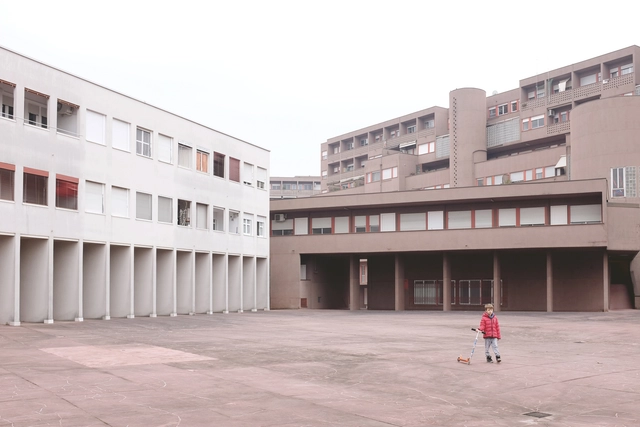
As the dust settled following the Second World War much of Europe was left with a crippling shortage of housing. In Milan, a series of plans were drafted in response to the crisis, laying out satellite communities for the northern Italian city which would each house between 50,000 to 130,000 people. Construction the first of these communities began in 1946, one year after the end of the conflict; ten years later in 1956, the adoption of Il Piano Regolatore Generale—a new master plan—set the stage for the development of the second, known as 'Gallaratese'. The site of the new community was split into parts 1 and 2, the latter of which was owned by the Monte Amiata Società Mineraria per Azioni. When the plan allowed for private development of Gallaratese 2 in late 1967, the commission for the project was given to Studio Ayde and, in particular, its partner Carlo Aymonino. Two months later Aymonino would invite Aldo Rossi to design a building for the complex and the two Italians set about realizing their respective visions for the ideal microcosmic community.[1]
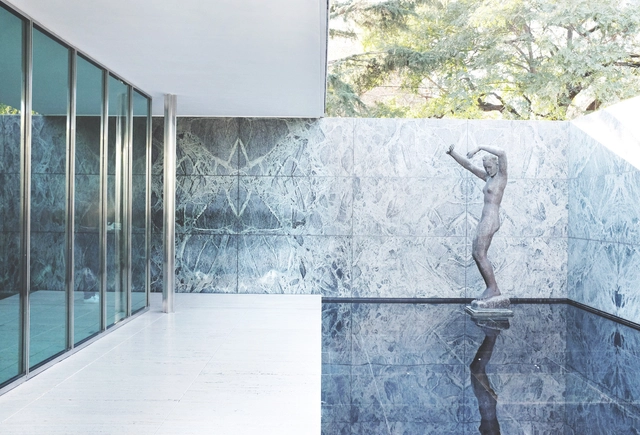
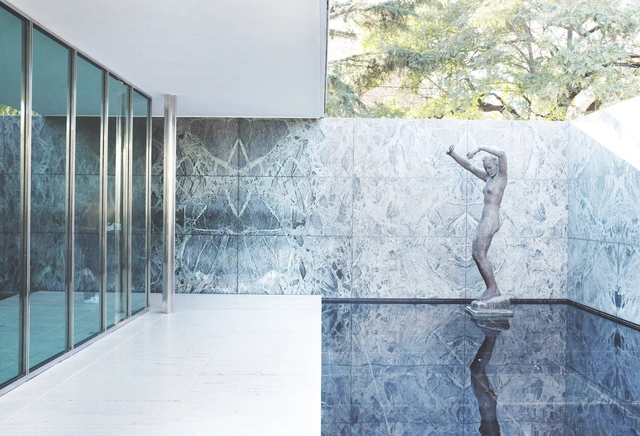
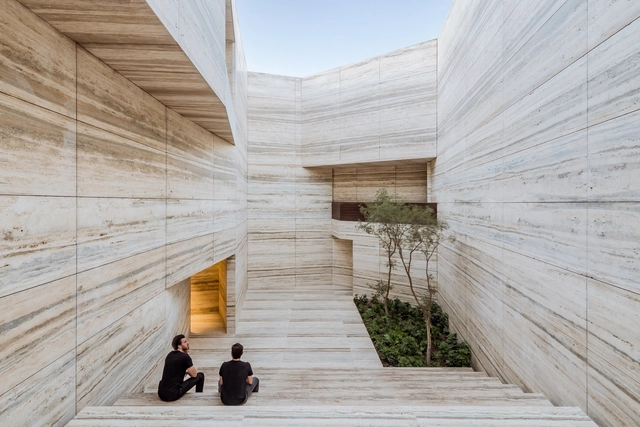
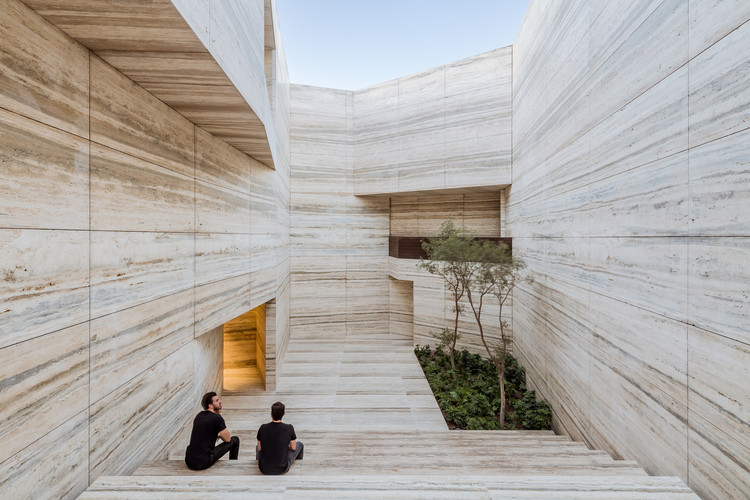
Michelangelo's sculptures. The ancient Greek temples. Castle interiors and palaces. The iconic Barcelona Pavilion of Mies van der Rohe. When we approach the history of architecture and sculpture, it is inevitable that we speak of marble. Originating from a chemical reaction in limestone when exposed to high pressures and temperatures for thousands of years, this notable material is a metamorphic rock generally found in regions where volcanic activity has occurred. Its extraction, by itself, is already a spectacle.
World Heritage Site is the title given to specific places on the globe (landscapes, cultural routes, cities, or architectural structures) by the United Nations Educational, Scientific, and Cultural Organization, or UNESCO, as a way to recognize their natural or cultural relevance and to encourage their preservation. Up to 2019, 1121 places in over 167 countries have been declared World Heritage Sites, of which 869 are cultural, 213 natural and 39 are mixed category.
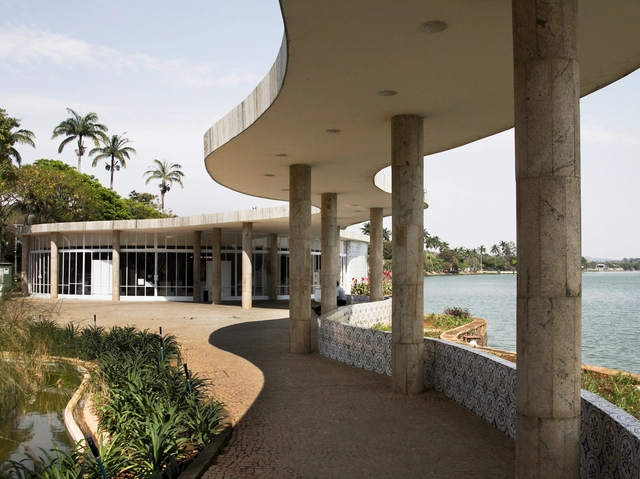
Oscar Ribeiro de Almeida Niemeyer Soares Filho, or simply Oscar Niemeyer, (December 15, 1907 – December 5, 2012) was one of the greatest architects in Brazil's history, and one of the greats of the global modernist movement. After his death in 2012, Niemeyer left the world more than five hundred works scattered throughout the Americas, Africa, and Europe.
As part of our 2018 Venice Architecture Biennale coverage, we present the proposal for the Israeli Pavilion. Below, the participants describe their contribution in their own words.
In Statu Quo: Structures of Negotiation is the theme of the Israeli Pavilion at the 16th International Architecture Exhibition, La Biennale di Venezia. Curated by Ifat Finkelman, Deborah Pinto Fdeda, Oren Sagiv and Tania Coen-Uzzielli it traces the complex mechanism of the 'Status Quo' within shared holy places in Israel-Palestine, which functions as a controversial and fragile system of coexistence.
Is there an aspect, a recurring mark, that reveals a difference in the way that male and female architecture photographers see the world? This is, perhaps, one of those rhetorical questions often used as an argument to shed light on works produced by women and for which there is no precise answer.
You’re a chipper young first-year student, still soft and tender in the early stages of your induction into the cult of architecture. Apart from fiddling with drafting triangles and furiously scribbling down the newfound jargon that is going to forever change how you communicate, you often find yourself planted in a seat, eyes transfixed to a projector screen as your professor-slash-cult-leader flashes images of the architecture world's masterpieces, patron saints, and divine structures.
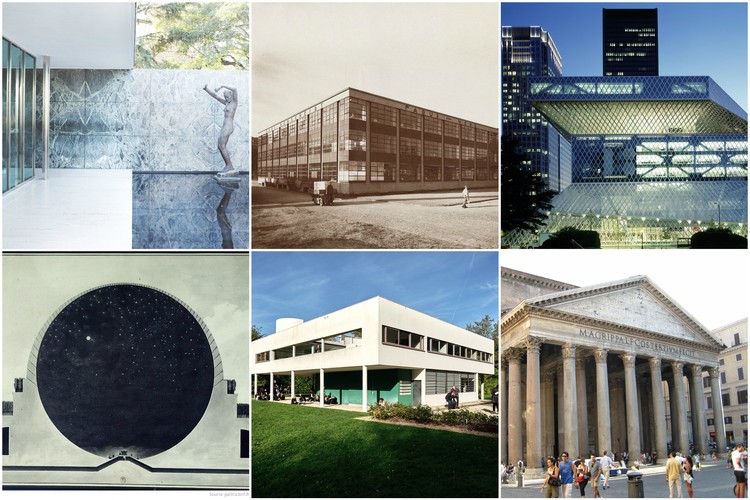
Soon, you develop a Pavlovian response: you instinctively recognize these buildings, can name them at once and recite a number of soundbites about their design that have lodged themselves in your brain. Your professor looks on in approval. Since we here at ArchDaily have also partaken in this rite of passage, here are 15 buildings that we all recognize from the rituals of architecture school.
Visiting architectural masterpieces by the greats can often feel like a pilgrimage of sorts, especially when they are far away and hard to find. Not everyone takes the time to visit these buildings when traveling, which makes getting there all the more special. With weird opening hours, hard-to-reach locations and elusive tours we thought we’d show a selection from our archives of masterpieces (modernist to contemporary) and what it takes to make it through their doors. Don’t forget your camera!
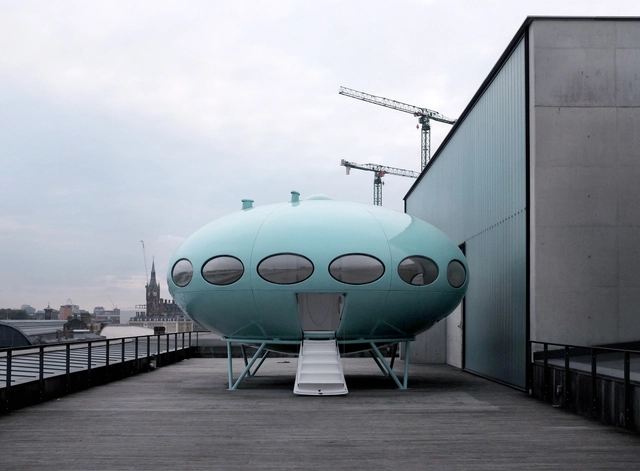
The Futuro House looks more like an alien spacecraft than a building. Designed by Finnish architect Matti Suuronen in 1968 as a ski chalet, the radical design was subsequently marketed to the public as a small prefabricated home, easily assembled and installed on virtually any topography. Its plastic construction and futurist aesthetic combined to create a product which is identifiable with both the future and the past.
In anticipation of the 100th anniversary of the founding of the Bauhaus school in 2019, Harvard Art Museums has released an online catalogue of their 32,000-piece Bauhaus Collection, containing rarely seen drawings and photographs from attendees and instructors of the revolutionary German design school.
The collection features work from the likes of Mies van der Rohe, Bertrand Goldberg, Marcel Breuer, and Bauhaus-founder Walter Gropius himself, and can be navigated through a search bar and an easy-to-use set of filters, allowing you to categorize work by topic, medium, date or artist.
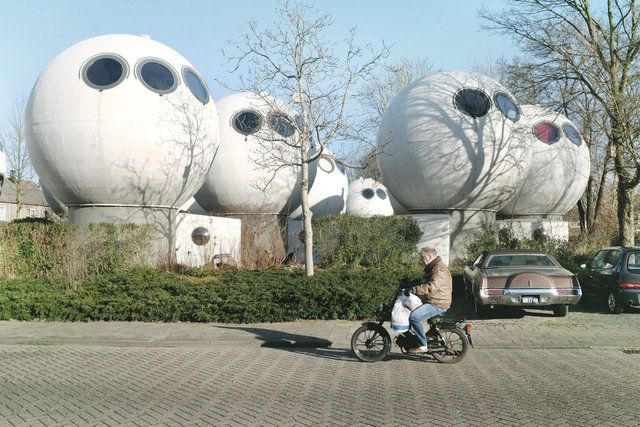
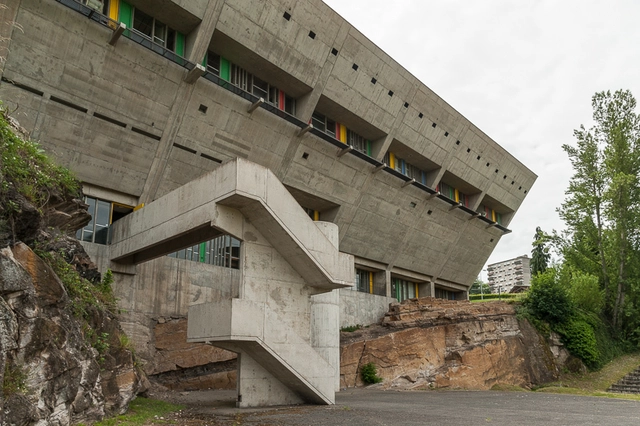
AD Classicsare ArchDaily's continually updated collection of longer-form building studies of the world's most significant architectural projects. Here we've rounded-up ten groundbreaking residential projects from this collection, ranging from a 15th century Venetian palazzo to a three-dimensional axonometric projection. Although some appear a little strange, all have been realised and have made lasting contributions to the wider architectural discourse. You can study residential cubes, spheres and inverted pyramids—plus projects by the likes of OMA, Álvaro Siza, and Richard and Su Rogers—after the break.
https://www.archdaily.com/792326/ad-classics-ten-groundbreaking-residential-projectsAD Editorial Team







.jpg?1462182949&format=webp&width=640&height=580)


.jpg?1462182949)







__the_Wailing_Wall__1980%E2%80%9382._Source_'Metaphors_and_Allegories-_Superstudio_Firenze'__Israel_Museum_Jerusalem__spring_1982.jpg?1526437624 "Courtesy of Metaphors and Allegories- Superstudio Firenze")