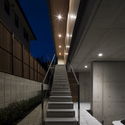
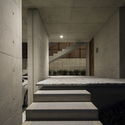
![Guest House [hanare] / arbol - Interior Photography, Houses, Beam](https://images.adsttc.com/media/images/5add/4e83/f197/ccdb/4900/0418/medium_jpg/_55A1870.jpg?1524452985)
![Guest House [hanare] / arbol - Houses](https://images.adsttc.com/media/images/5add/4e64/f197/ccd9/a300/09a0/thumb_jpg/_55A1851.jpg?1524452954 "© Yashunori Shimomura")
![Guest House [hanare] / arbol - Houses](https://images.adsttc.com/media/images/5add/4fe9/f197/ccd9/a300/09ac/thumb_jpg/_55A2082.jpg?1524453343 "© Yashunori Shimomura")
![Guest House [hanare] / arbol - Houses](https://images.adsttc.com/media/images/5add/503d/f197/ccd9/a300/09ae/thumb_jpg/_55A8139.jpg?1524453426 "© Yashunori Shimomura")
![Guest House [hanare] / arbol - Houses](https://images.adsttc.com/media/images/5add/4e37/f197/ccdb/4900/0417/thumb_jpg/_55A1776.jpg?1524452910 "© Yashunori Shimomura")
![Guest House [hanare] / arbol - More Images](https://images.adsttc.com/media/images/5add/4e83/f197/ccdb/4900/0418/newsletter/_55A1870.jpg?1524452985)
-
Architects: arbol
- Area: 61 m²
- Year: 2017
-
Manufacturers: HOSHIZAKI, Lixil Corporation, Sanwa, U,G FURNITURE, aizara
-
Professionals: ark home, iinuma katuki Furniture Mfg., Ljus Design, steradian associates




C.F Møller and MT Højgaard have unveiled their vision of a new Railway Quarter in Aarhus, Denmark, transforming the area into a car-free urban district. Covering 1,180,000 square feet (110,000 square meters) of new construction, the area will predominantly contain residential buildings up to six stories high, as well as retail and recreational areas.
The idea of covering the railway site in Aarhus has existed for decades, with upcoming infrastructural upgrades to the network calling for tracks be lowered further into the ground, creating the opportunity to occupy the existing overhead site currently dividing several areas of Aarhus.

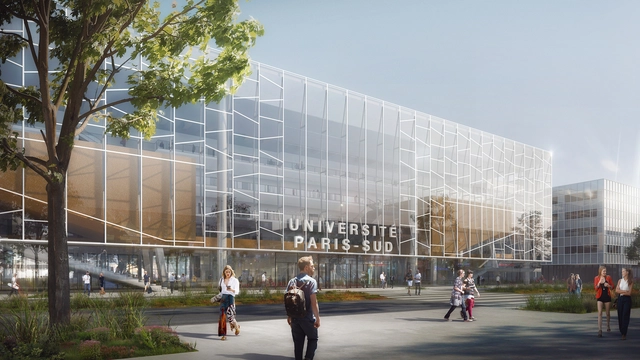
Bernard Tschumi Architects has been awarded one of the largest university commissions in France, with the design and build of a €283 million ($350 million) state-of-the-art educations and research center at the Université Paris-Sud in Saclay, just south of the French capital. The “METRO Center” will form part of the biology, pharmacy and chemistry wing of the university, comprising six buildings connected by flying bridges, featuring teaching facilities, research labs, offices, restaurants, and logistics areas.
Having won a competition against teams containing Herzog & De Meuron and MVRDV, Bernard Tschumi will work in collaboration with Bouygues Construction, Groupe-6 and Baumschlager Eberle Architekten for the scheme’s realization and operation.


The dream of universal affordable housing has been an idea tried and tested by architects throughout history. From the wacky Dymaxion House by Buckminster Fuller, an imagining of how we would live in the future, to mail-order houses able to be assembled like IKEA furniture, many proposals have tackled the challenge of creating affordable housing or dwellings which could be replicated no matter the time and place. However, although their use of techniques such as pre-fabrication and cheap materials seemed, in theory, to be able to solve pressing issues of homelessness and the global housing crisis, time and time again these proposals have simply failed to take off. But why?
IKEA’s research lab SPACE10 is attempting to find an answer to this question through open-source collaboration. By releasing their design of a micro-house that used only one material and one machine to make it and an accompanying website that catalogs the process and invites feedback, they are inviting architects, designers, and aspiring home-owners to work together in creating a solution which could improve the lives of millions. “The vision,” they say, “is that by leveraging the world’s collective creativity and expertise, we can make low-cost, sustainable and modular houses available to anyone and, as a result, democratize the homes of tomorrow.”

.jpg?1524020795&format=webp&width=640&height=580)
Miami's Brickell neighborhood has seen a boom of skyscrapers in recent years, dubbing it a “mini-Manhattan." Soon, Miami will really be able to stake this claim with its own version of Daniel Burnham's famous Flatiron Building. Located in the Financial district, the 64 story Brickell Flatiron luxury condominium tower has just reached the halfway mark of construction, with one floor to be constructed per week until completion.