

-
Architects: Nanjing Tianhua
- Area: 1445 m²
- Year: 2018
-
Manufacturers: Appleton Special Glass, Shanghai Xumo New Material Technology, Taibo Kunshan Glass


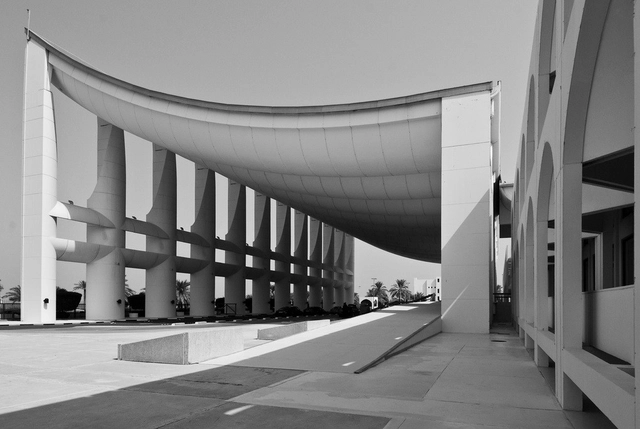
No single building typology reveals as much about a nation’s political culture as the seat of its government. Parliamentary or palatial structures can tell stories of bureaucratic sprawl, autocratic excess, democratic openness, and anything in between. Kuwait’s National Assembly Building, the home of its popularly elected legislature, is no exception. Much like the nominally-democratic, effectively-oligarchic government it hosts, the building projects conflicting messages of accessibility and regionalist modernity, referencing traditions that don’t necessarily exist in the country and sometimes ending up in direct contradiction with itself. As an emblem of political culture, the building is thus perhaps too accurate in its reading of the Kuwaiti story, yielding a revealing insight into the complex political fabric of the country through its own eclectic bricolage of ideas.
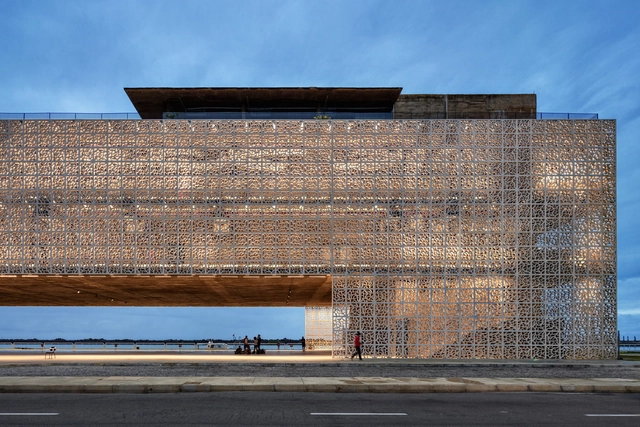

The regional expressions of a country’s culture are vital in helping us understand the relation between context and specific conditions of social manifestations. These nuances and singularities inside the realm of construction are translated into what can be called vernacular architecture. Although it has always existed, this universe of local exemplars of architecture with their particular materials, techniques and regional constructive solutions came to be well studied in the second half of the twentieth century in Brazil, in a project that traced national architecture history, headed by Lucio Costa.
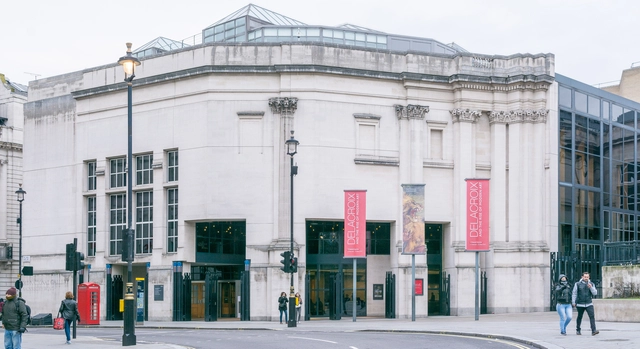
The American Institute of Architects (AIA) has selected Venturi Scott Brown's Sainsbury Wing at the National Gallery of London as the recipient of the 2019 AIA Twenty-five Year Award. Designed by Robert Venturi and Denise Scott Brown in an international competition, AIA commended the project for its ability to “...make its context better than it found it” - a citation borrowed from Venturi himself.
The award is presented annually to a project that has "stood the test of time by embodying architectural excellence for 25 to 35 years."

In 2017, ArchDaily Brazil reported that Smart City Laguna would become the first “smart city” in Brazil. With its inauguration scheduled for that same year, the venture opened with 1,800 units in its first phase, and in its final phase, 7,065 units divided between residential, commercial and technological uses.
Located in the Croatá district of São Gonçalo do Amarante, the first Brazilian smart city occupies 815 acres directly connected to the federal highway BR-22, which crosses the states of Ceará, Piauí, and Maranhão, starting in Fortaleza towards Marabá, in Pará. Its location has economic reasons: the proximity to Pecém Harbor, in Fortaleza, the Pecém Steel Company (CSP) and the Transnordestina Railroad make Croatá a strategic hub that has been recently occupied by technological companies, becoming a “digital belt” a little over 50 kilometers from the state’s capital.

.jpg?1546578932&format=webp&width=640&height=580)
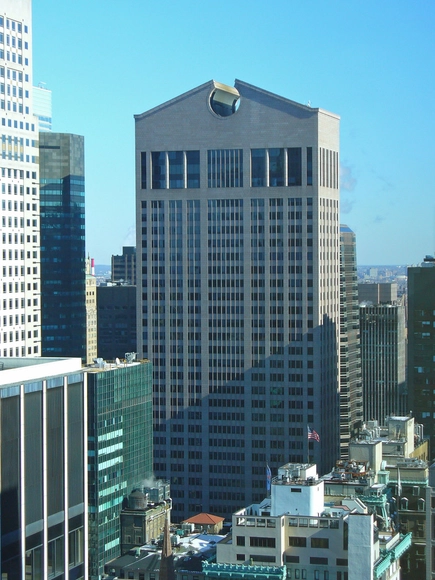
It may be the single most important architectural detail of the last fifty years. Emerging bravely from the glassy sea of Madison Avenue skyscrapers in midtown Manhattan, the open pediment atop Philip Johnson and John Burgee’s 1984 AT&T Building (now the Sony Tower) singlehandedly turned the architectural world on its head. This playful deployment of historical quotation explicitly contradicted modernist imperatives and heralded the mainstream arrival of an approach to design defined instead by a search for architectural meaning. The AT&T Building wasn’t the first of its type, but it was certainly the most high-profile, proudly announcing that architecture was experiencing the maturation of a new evolutionary phase: Postmodernism had officially arrived to the world scene.
MiniLook Berlin from Okapi on Vimeo.
When we get wrapped up in everyday life, it can be easy to take the place we live for granted. In the MiniLook Berlin video, Okapi Creative Studio takes a step back to show the beauty of daily life in the city of Berlin via a stop-motion, tilt-shift technique that makes the city appear as if in miniature. The video highlights everyday street scenes and picturesque shots of nature, while some famous buildings make appearances as well.






























.jpg?1546578932)