The built environment we all inhabit is part and parcel of global, interconnected processes and systems. When we appraise the historically significant architecture of our cities, the structural integrity and aesthetics of a building merits equal consideration with factors such as the labour conditions of its builders to the existing power structures of its time. Examples of ItalianModernism in Eritrea, for instance, might be worthy of aesthetic praise – but intertwined with the legacy of these buildings hailed as Modernist icons is the sobering fact that they were built to further an imperial project. In the complex fields of architectural conservation, preservation and cultural heritage, democratisation should always remain a key priority.
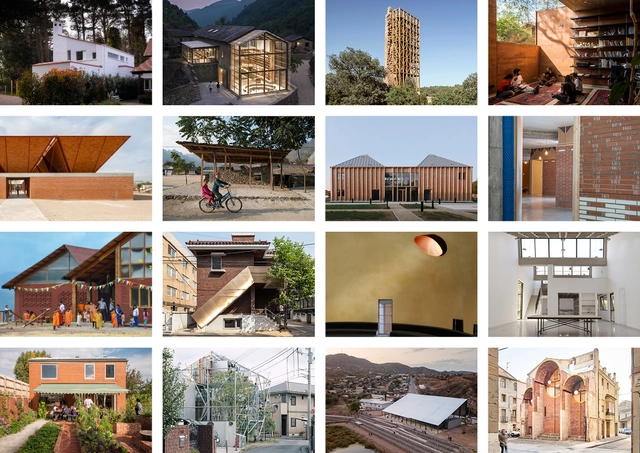
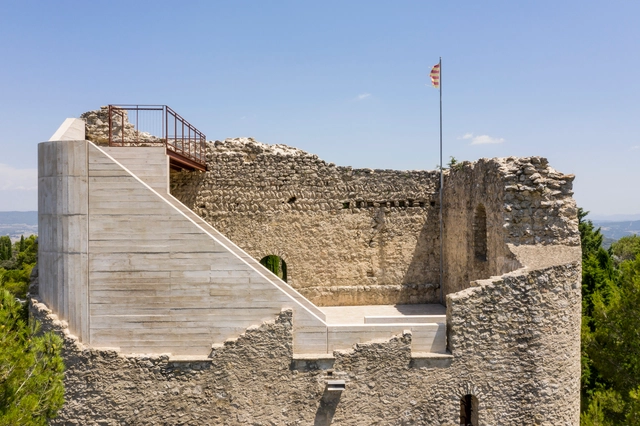
Carles Enrich Studio has been announced as the winner of the 2020 AR Emerging Architecture awards. Selected from a shortlist of 16 practices, the jury recognized the work of the Barcelona-based practice as one that "reconnects history with the future and understands heritage as infrastructure: something dynamic and appropriated rather than museumified". Khadka + Eriksson Furunes was also awarded with the Peter Davey Prize, and Taller Capital has received an honorable mention.
Today, a new generation of architects is trying to tackle the challenges of contemporary society while navigating different hurdles within the profession. Emerging architects are redefining the values and focus of design in response to the various issues facing the contemporary built environment, such as sustainability, affordability and equity. At the same time, new practices are operating a within rapidly changing field in which the architect's role is increasingly more ambiguous. The following explores the issues faced by young architects in their practice, as well as what they see as being architecture's most significant challenges, that inherently shape their work in a contrasting way to that of their older peers.
A rock like marble is usually light in color when formed through a process involving the heat and pressure of limestone. Carrara marble, for example, became famous for having good workability for sculptures, but also for its extremely uniform appearance. Under skillful hands, rough stone could become works of art such as Michelangelo's Pietá or David, among many others. But if during the rock formation process there are impurities such as clay minerals and iron oxides, the resulting stone may acquire bluish, gray, pink and black hues. Something that would make its use in a sculpture unfeasible can be seen as the real beauty of the piece, and how the passage of time was printed on it. Likewise, it is very difficult to predict exactly how zinc or copper will oxidize over time, and its patina effect takes on beautiful greenish, reddish or grayish tones, depending on the conditions to which they were exposed.
Admiring the unpredictability of materials and observing the beauty of the unexpected can bring surprising results to architectural projects. Through constant research, Apavisa has been able to develop modular ceramic pieces that combine strength and versatility, reproducing in detail the materials that our environment gives us. The strength of stone and metal with their oxidative processes, the roughness and timelessness of cement or the beauty of marble with its different veins, shades and patterns.
Grimshaw Architects, Archipel Generalplanung AG, and landscape architects LAND have won the competition to design the masterplan for University of Bern's Muesmatt campus in Switzerland. The winning design was selected from a shortlist of 26 participants, and was commended for how it opens up Bern's quarter and re-establishes urban and visual connections.
MVRDV has recently completed the Idea Factory, transforming a disused factory into a creative hub with an important community-oriented focus. Located in Shenzhen's urban village of Nantou, the adaptive reuse project refurbishes the existing structure to accommodate offices while adding a new layer of public space. The latter takes the form of a rooftop bamboo landscape packed with activities and amenities that provides a new leisure space for the historically disadvantaged neighbourhood.
In this new collaboration, originally titled Cartografías del Metaverso (Cartography in the Metaverse), Spanish architects and founders of the blog MetaSpace, Enrique Parra and Manuel Saga, explore the potential of mapping in video games. Mapping can sometimes go beyond the mere role of orientation, as in the Diablo sequel, and become a very important element of the game, as in Civilization and World of Warcraft.
The cartographic and planimetric language of architecture is also common to the world of video games. Many video games base much of their experience on interaction with one or more maps, through which users orient themselves to find out where they are and where they are supposed to be.
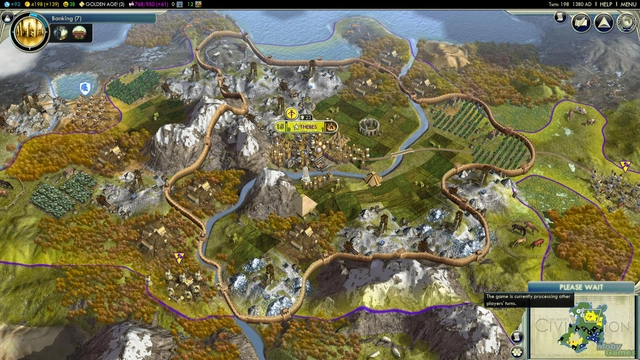
One example is the Civilization saga, a series of empire management games created from 1991 to date. All versions are played on a map, a geographical view of the world that represents different areas, available resources, geopolitical balance, and other factors. These variants are the rules of the game, the situation the player faces; the map becomes a dynamic fabric, ie, the interface that makes up the game.
https://www.archdaily.com/782818/cartography-in-the-metaverse-the-power-of-mapping-in-video-gamesEnrique Parra y Manuel Saga



.jpg?1637861666 "Casco Viejo - Panama City, Panama. Image © Wikimedia User David Broad under the Creative Commons Attribution 3.0 Unported license.")




















.jpg?1637919804)
.jpg?1637919815 "Courtesy of Grimshaw")
.jpg?1637919985 "Courtesy of Grimshaw")
.jpg?1637919878 "Courtesy of Grimshaw")
.jpg?1637920091 "Courtesy of Grimshaw")
.jpg?1637919804)