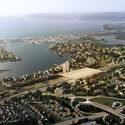
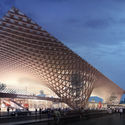
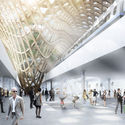
Zaha Hadid Architects' new Port House in the Belgian city of Antwerp, which has been almost a decade in planning and construction, officially opens this week. A monumental new structure sits above a repurposed and renovated (formerly derelict) fire station, providing a new headquarters for Europe's second largest shipping port. Housing 500 staff, who will now be under the same roof for the first time, the building represents a sustainable and future-proof workplace for its employees. Photographer Laurian Ghinitoiu has visited to capture his unique perspective on this new addition to the city's crane-covered skyline.
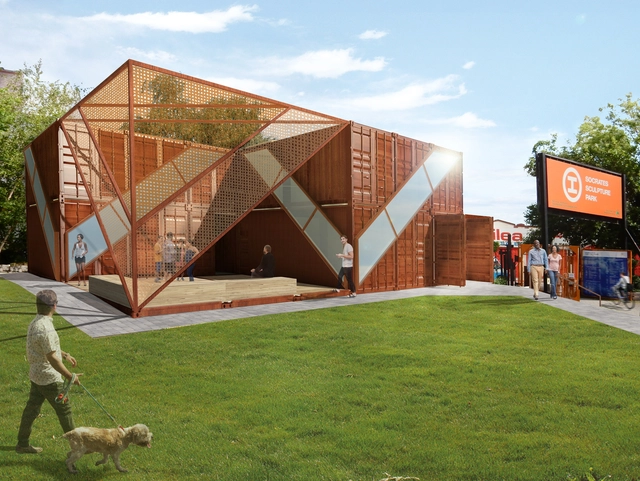
Perched on Long Island City’s waterfront, Socrates Sculpture Park is celebrating its 30th anniversary with its first permanent structure.
Its form? Cubes.
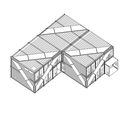
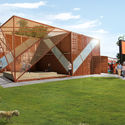
LOT-EK architecture firm’s “The Cubes” — initially commissioned for New York's Whitney Museum of American Art — is composed of eighteen recycled shipping containers that create two levels of indoor space. The building's 960 square feet of flexible interior space promises a multi-functional facility, with most areas built for holding classes of up to 70 people.
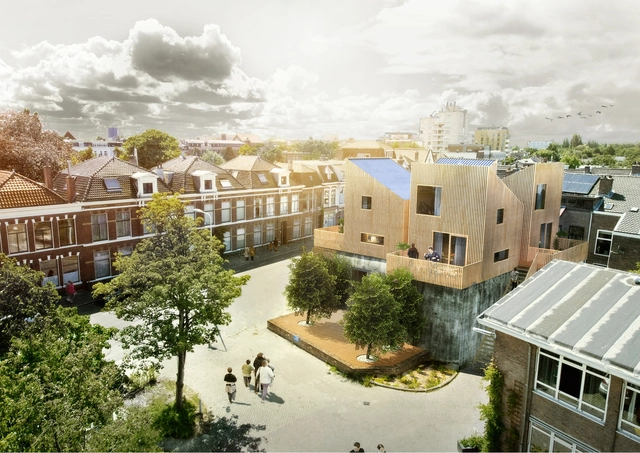
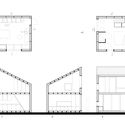
Dutch firm Froscen Architects has unveiled FOON HOUSE(S), a tiny house concept in Leiden, the Netherlands. To be built on a former communications bunker from World War II in the middle of the city, the design focuses on the adaptive reuse of a small concrete complex overgrown with ivy.
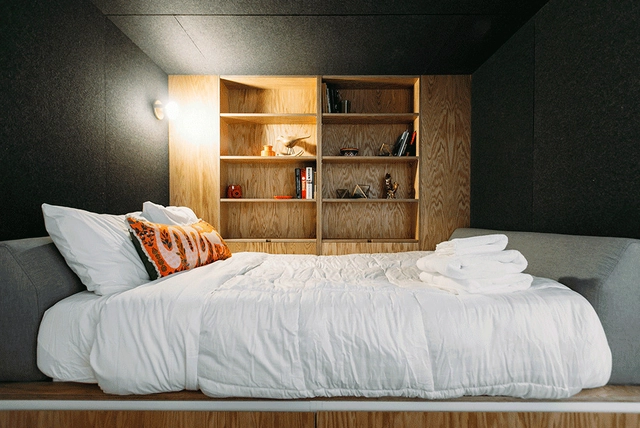
The project will consist of four separate micro-houses on top of the bunker, each with a floor space of about 38 square meters, and equipped with necessary facilities.
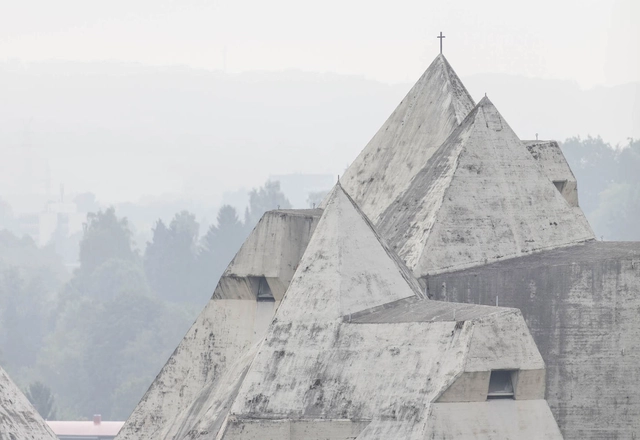
This exclusive photo essay by Laurian Ghinitoiu was originally commissioned for the fifth issue ofLOBBY. Available later this month, the latest issue of the London-based magazine—published in cooperation with the Bartlett School of Architecture—examines the theme of Faith as "a fervent drive, a dangerous doctrine, a beautifully fragile yet enduring construct, an unapologetic excuse, a desperate call for attention and a timely consideration on architectural responsibility."
In 1986 the Pritzker Architecture Prize announced their first German laureate. In a speech at the ceremony in London’s Goldsmiths’ Hall, the Duke of Gloucester suggested that the prize “may not guarantee immorality,” inferring, perhaps, that not even the most prestigious award in architecture could compete with an œuvre so compact, focussed and enduring as that of Gottfried Böhm – a “son, grandson, husband, and father of architects.”
Captivated by the lunar landscape and the sudden destruction of architecture, architect Adrian Kasperski has designed three new speculative projects that respond to the events and culture of the island: A Volcanism and Culture Centre, a Vineyard and Hotel, and a New village to replace the leveled Chã das Caldeiras.
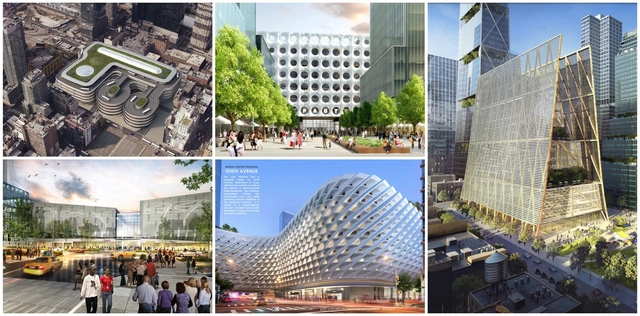
The Port Authority Bus Terminal International Design + Deliverability Competition challenged architects to reimagine the current terminal building, built in 1950 and expanded in 1979, for the demands of modernday ridership. The terminal currently accommodates approximately 220,000 passenger trips and more than 7,000 bus movements on an average weekday, with demand projected to increase to 270,000 daily peak-hour passengers by 2020, and as many as 337,000 daily peak-hour passengers by 2040.
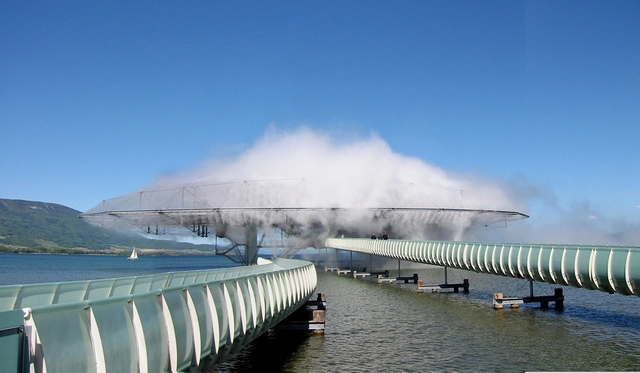
Blur Building. Exposition Pavilion: Swiss Expo, Yverdon-Les-Bains, 2002. Architects: Diller Scofidio + Renfro. Image Courtesy of Diller Scofidio + Renfro
Today, the MacArthur Foundation announced the 23 recipients of their 2016 MacArthur Fellowship Grants, which are awarded annually “to encourage people of outstanding talent to pursue their own creative, intellectual, and professional inclinations.” Each fellowship comes with a stipend of $625,000 for the recipients to use for individual pursuits, paid out in equal quarterly installments over a five year period. Fellows are selected based on 3 criteria: exceptional creativity, promise for important future advances based on a track record of significant accomplishment, and potential for the fellowship to facilitate subsequent creative work.
This year’s fellows include artists, playwrights, geobiologists, poets, jewelrymakers, novelists and historians, but, for the fifth straight year, no architects. In the program’s 36 year history, just 6 recipients have come from architecture-related fields.
According to urban sociologist Ray Oldenburg, people need three types of places to live fulfilled, connected lives: Their “first place” (home) for private respite; their “second place” (work) for economic engagement; and their “third place,” a more amorphous arena used for reaffirming social bonds and community identities.
This third place can be a barbershop, neighborhood bar, community center, or even a public square. The desire for these three separate spheres drives how human environments are designed at a bedrock level, but increasing urbanism—as well as geographic and economic mobility—are collapsing these multiple spaces into one. The result is a new hybrid building type: a live-work multiunit dwelling that is home, office, and clubhouse.
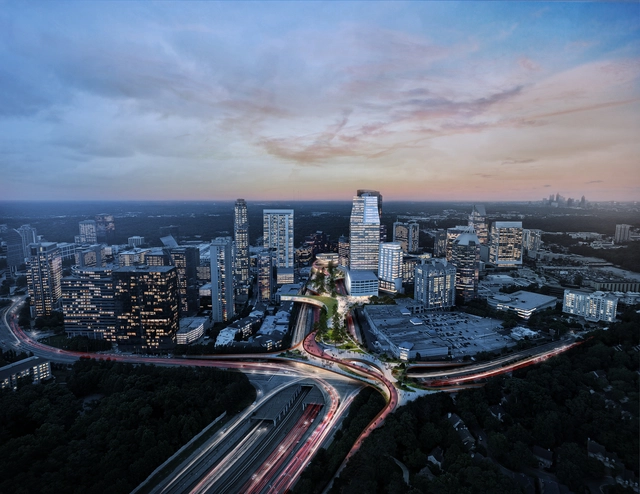
Aerial view looking south at dusk. Image Courtesy of Roger Partners / Nelson Byrd Woltz
Rogers Partners Architects+Urban Designers and Nelson Byrd Woltz Landscape Architects have released preliminary designs for a new park floating above a divisive highway and commuter rail line in the Buckhead neighborhood of Atlanta, Georgia. A 2,400-foot-long elevated traverse, Buckhead Park Over GA400 aims to bring the community together with safe, convenient access to the amenities and cultural attractions in Buckhead.
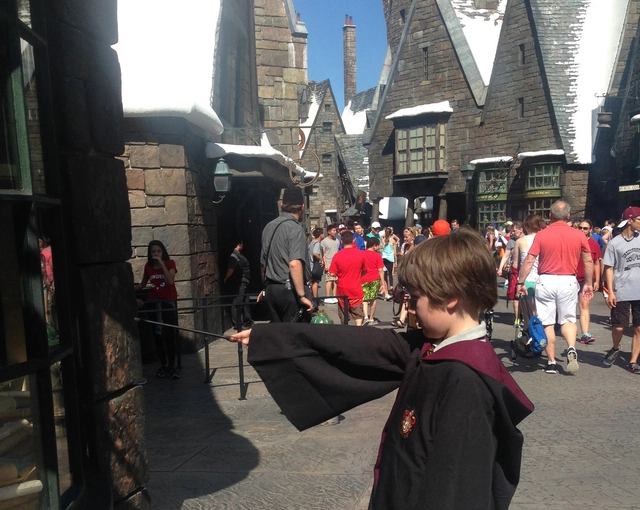
The Wizarding World of Harry Potter (WWoHP) at Universal theme parks in Florida. Image Courtesy of Volume Magazine
The following essay by Kazys Varnelis was first published by Volume Magazine in their 49th issue, Hello World! You can read the Editorial of this issue, Going Live, here.
During the last decade, the idea of a technological singularity has passed from science fiction to a plausible prediction of the proximate future. In its simplest terms, a technological singularity will take place when an artificial general intelligence (AGI), capable of modifying its own code, advances so rapidly that subsequent technological progress (and as a result history itself) become as unpredictable and unfathomable as what happens within a black hole. In the most radical vision, the ‘hard takeoff’, within hours or even minutes of artificial intelligence developing the capacity for recursive self-improvement, the intelligence advances so greatly that it fundamentally transforms life on Earth.
The Royal Institute of British Architects (RIBA) has announced Níall McLaughlin, founder of Níall McLaughlin Architects, as winner of the 2016 RIBACharles Jencks Award. The award is given annually to an outstanding architect or practice "that has recently made a major contribution internationally to both the theory and practice of architecture."
“Niall McLaughlin is a great inspiration for architects today, especially the young, because of his masterful skill in drawing from all traditions – classicism, modernism, postmodernism,” said jury member and award namesake Charles Jencks. “All the “isms” are under his belt, not on his back, and he extends them all through the commitment to architecture as an art and professional practice.”
Previous winners of the award include Herzog & de Meuron (2015), Benedetta Tagliabue (2013), Rem Koolhaas (2012), Eric Owen Moss (2011), Steven Holl (2010), Charles Correa (2009), Wolf Prix (2008), Ben van Berkel and Caroline Bos (2007), Zaha Hadid (2006), Alejandro Zaera-Polo and Farshid Moussavi (2005), Peter Eisenman (2004) and Cecil Balmond (2003).
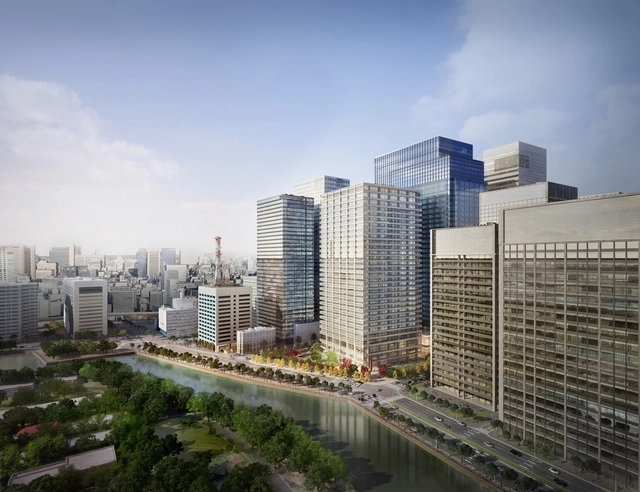
Construction is now underway on Skidmore, Owings & Merrill’s (SOM) OH-1 redevelopment project in the Ohtemachi District of Tokyo, Japan. Covering a 20,000 square meter (215,000 square foot) site, the project constitutes one of the largest revitalization projects in Tokyo’s history. The complex includes two high-rise, mixed-use buildings containing a luxury hotel, commercial office space, retail and cultural facilities, and is centered around a park and public area that will visually connect the development to the adjacent Imperial Palace East Gardens.
A year after the ancient city of Palmyra, Syria was destroyed by the Islamic State, a 3D-printed recreation of one of its most iconic structures has begun its world tour. Originally erected in London’s Trafalgar square in April, on Monday, the replica of Palmyra’s Arch of Triumph was unveiled in its new location outside city hall in New York City.
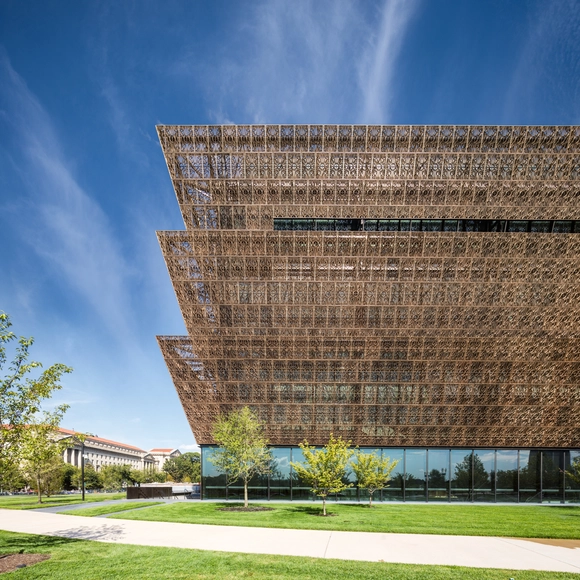
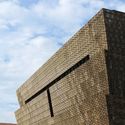
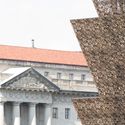
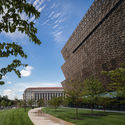
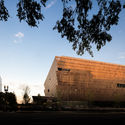
A century since the founding of the National Memorial Association and the start of a campaign by African-American war veterans for a monument of African American culture, the National Museum of African American History and Culture will finally be opened on September 24th. The Museum took $540 million and four years to build, resulting in a striking, and refreshingly unorthodox, architectural construction on Washington DC’s National Mall. The Freelon Adjaye Bond/SmithGroup JJR team, led by Ghanaian-British architect David Adjaye, defiantly broke the white-marble-Corinthian-column convention, opting instead for a bronze-coated aluminum façade bound to provoke a reaction from the critics.
The Chicago Architecture Biennial (CAB) has announced that Sharon Johnston and Mark Lee, of the Los Angeles-based firm Johnston Marklee, have been named Artistic Directors for the 2017 event. Following a successful inaugural run in 2015, the second edition of the biennial will take place from September 16 - December 31, 2017.
Speaking exclusively to ArchDaily, Artistic Directors Sharon Johnston and Mark Lee said:
We are thrilled with the invitation to be the Artistic Directors for the second edition of the largest exhibition of contemporary architecture in North America. To have a global platform to address current ideas and showcase the talent in the field of architecture in a city with such an extraordinary architectural pedigree is a once in a lifetime opportunity.
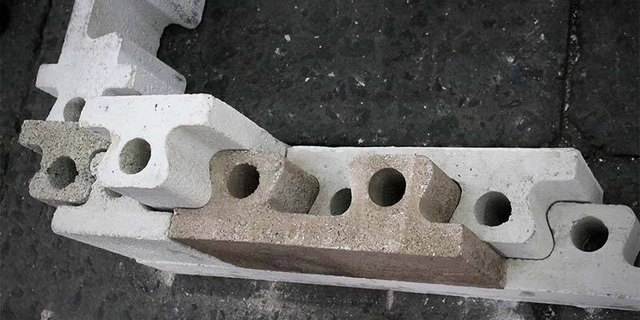
An emerging sector of construction is developing new systems that manage to not only reduce construction times and costs, but also solve the housing problem in Mexico’s most disadvantaged areas. Originating from previously known construction techniques, national companies are venturing into international markets by proposing new models of construction that use fewer materials and have a greater structural strength and greater comfort. They’re also introducing smart materials adaptable to any construction need.
As part of this new industry breakthrough, Juan Manuel Reyes from Armados Omega and architect Jorge Capistrán have developed a new, low-cost construction system which also reduces construction time by 50%. It uses single module blocks and doesn’t require binders, mixtures, or skilled labor.
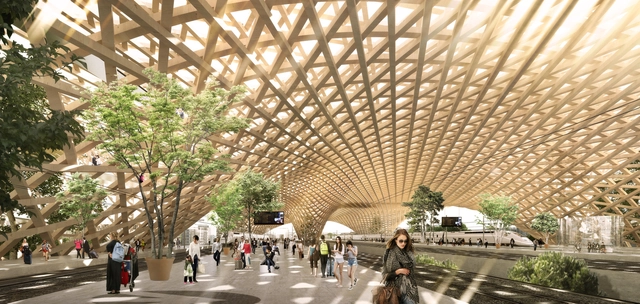
Erik Giudice Architecture has released its proposal for a transit station at Södra Munksjön, in Jönköping, Sweden, a design that was created as an entry for the station area ideas competition, which recruited four firms to create a new station as a part of the area’s larger expansion plan.
Based on the idea of connecting the city and its surrounding nature, the station proposal utilizes light and a playful wooden canopy structure to create a portal from Jönköping to Munksjön, a lake on its opposite side. The “matchstick” structure of the station additionally pays homage to the city’s past as Tändsticksstaden, a famous matchstick capital of Sweden.
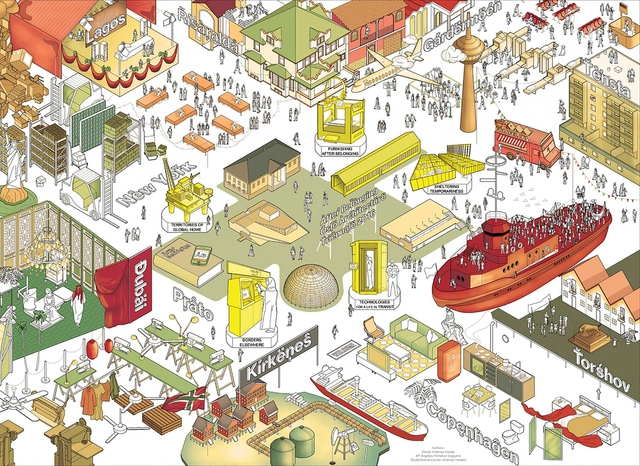
In the latest edition of Section D, Monocle 24's weekly review of design, architecture and craft, Henry Rees-Sheridan visits Oslo to speak to Hanna Dencik Petersson, Director of the 2016 Oslo Architecture Triennale, and Alejandra Navarrete Llopis and Ignacio González Galán – two members of its curatorial team, the After Belonging Agency. The show explores the concept behind the exhibitions of the Triennale, what it means to be located in Norway's capital, and how the event's trajectory is both a symptom and cause of Oslo’s development as a design city. ArchDaily's James Taylor-Foster weighs in on After Belonging's significance.
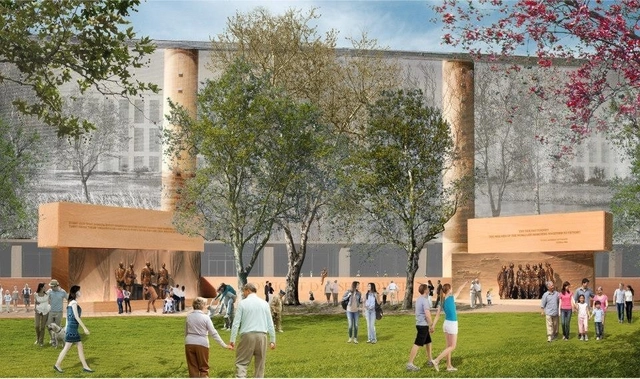
After years of steadfast disapproval of the proposed design for the Dwight D. Eisenhower Memorial in Washington, D.C., the Eisenhower family has finally voiced their support for the Frank Gehry designed park and monument – once a few more minor changes are made.
The 15-year-long process has already seen a multitude of design tweaks and revisions, but it appeared to have been decisively green-lit last summer following final approval by the National Capital Planning Commission (NCPC). In the past year, however, the project has once again stalled, as the Eisenhower Memorial Commission has struggled to find private donors following the withdrawal of congressional funding for the project in 2013.
Urban artist DAKU has created a dynamic solar mural, “Time Changes Everything,” on a building in the Lodhi Colony area of Delhi as part of India’s first ever public arts district. Words associated with human emotion and the passage of time have been mounted perpendicularly on the building facade, casting shadows that shift as the sun moves across the sky, eventually extinguishing as the sun completes its journey.
Patrick Bateman’s apartment from American Psycho is one of the most iconic locations in recent film history – his bone-white business card writ large. The sterile set design, by Gideon Ponte, is as impersonally creepy as Christian Bale’s performance (sure, put a telescope by the window, why don’t you; a serial killer without voyeurism just isn’t scary enough.) Archilogic’s interactive 3D model invites you to experience the apartment from the inside – without fear of an axe to the head.
Steven Holl has been awarded the 2016 Daylight Award in Architecture, which honors architects “who have distinguished themselves by realizing architecture or creating urban environments that showcase a unique use of daylight, for the benefit of overall quality of life, its impact on human health, well-being and performance, and its value to society.”
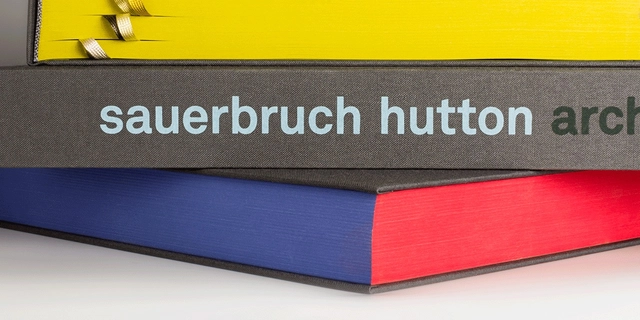
Archive 2 / Sauerbruch Hutton. Image Courtesy of Lars Müller Publishers
Louisa Hutton and Matthias Sauerbruch, of Berlin-based practice Sauerbruch Hutton, have recently published Archive 2– a second series of monographic volumes dedicated to the work of their practice between 2006 and 2015. In the nine years between two sets of books, the architects have observed that "the expansion of the digital realm has had a profound effect on the way we perceive, discuss and produce architecture." As such, and on the occasion of their second volume, they are inviting people to share their thoughts "on the convergence of architecture in concrete, pixel and print."
https://www.archdaily.com/795612/archive-2-sauerbruch-hutton-reflect-how-we-perceive-discuss-produce-architectureAD Editorial Team
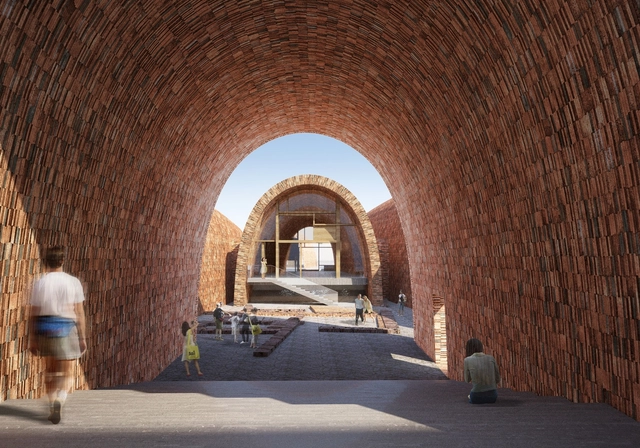
View to Historical Relics. Image Courtesy of Studio Pei-Zhu
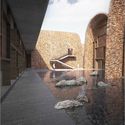
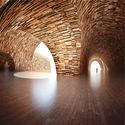
Studio Zhu-Pei has unveiled their design for the Jingdezhen Historical Museum of Imperial Kiln, a museum dedicated to the unique history of ceramics in Jingdezhen, China. Located in the heart of the historic china-making district of the city, nestled between ceramic workshops that date back to the Ming and Qing dynasties, the museum draws inspiration from the special forms of the kilns, creating gallery spaces out of a series of hand-crafted vaulted structures.


.jpg?1474634758&format=webp&width=640&height=580)
.jpg?1474634442 "© Laurian Ghinitoiu")
.jpg?1474634454 "© Laurian Ghinitoiu")
.jpg?1474634533 "© Laurian Ghinitoiu")
.jpg?1474634733 "© Laurian Ghinitoiu")
.jpg?1474634758)



.jpg?1474570511 "Courtesy LOBBY Magazine. Image © Laurian Ghinitoiu")
.jpg?1474569951 "Courtesy LOBBY Magazine. Image © Laurian Ghinitoiu")
.jpg?1474569428 "Courtesy LOBBY Magazine. Image © Laurian Ghinitoiu")
.jpg?1474569212 "Courtesy LOBBY Magazine. Image © Laurian Ghinitoiu")










_Niall_McLaughlin_Architects.jpg?1474486580&format=webp&width=640&height=580)


.jpg?1474339556 "Courtesy of Erik Giudice Architecture")