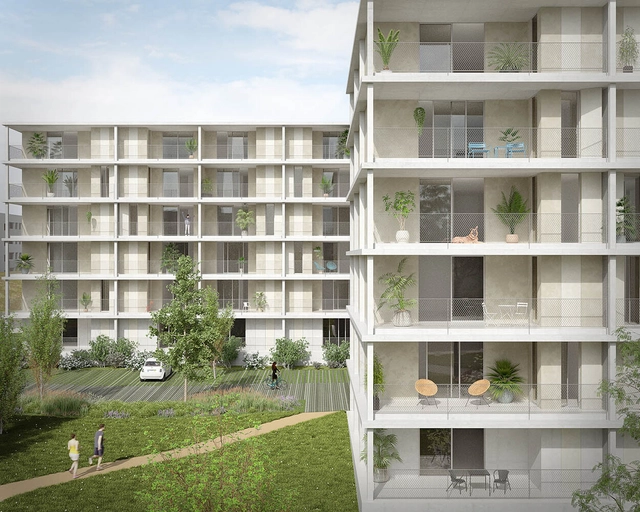
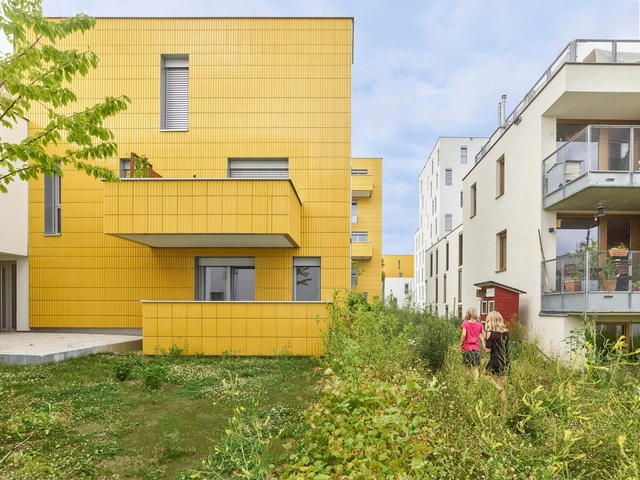
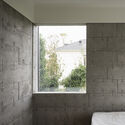
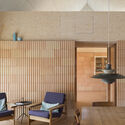
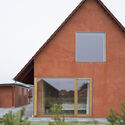
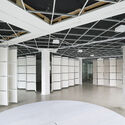
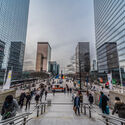
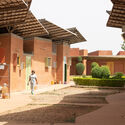
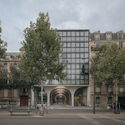
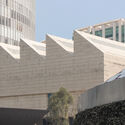
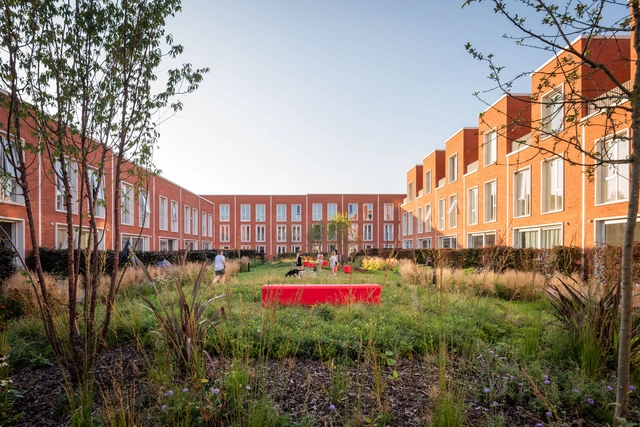
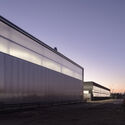
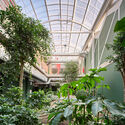
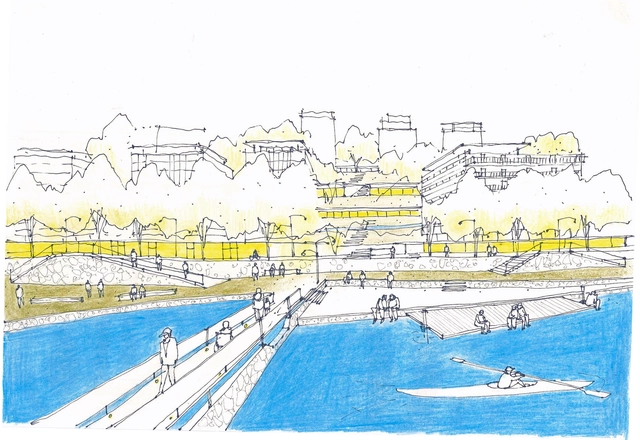
Conjunto habitacional Avenida Joaquim Campos em Setúbal . Image Cortesia de Branco del Río, Arquitectos
No País dos Arquitectosis a podcast created by Sara Nunes, who also runs the architectural film production company Building Pictures. The podcast aims to profile the professionals, projects, and stories behind leading contemporary Portuguese architecture. With just over 10 million inhabitants, Portugal is a highly compelling country regarding this professional field, and its architectural output punches far above its demographic or territorial scale.
In this episode of the fifth season, Sara talks with architects Paula del Rio and João Branco, from the firm Branco del Río, Arquitectos, about collective housing. Listen to the conversation and read part of the interview below.
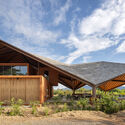
San Bernardo Chapel / Nicolás Campodonico. Image courtesy of Nicolás Campodónico
On two specific days of the year, June 21 and December 21, if you look up at the sky, you will notice that the sun seems to stand still at its northernmost or southernmost limit before completing its daily path and reversing direction. This impression of a stationary sun led to the event being named the "solstice," derived from the Latin words 'sol' and 'sistere', meaning to stand still. It occurs when the sun reaches its northernmost or southernmost diurnal arc relative to the Equator; thus, two solstices occur annually, marking the beginning of winter and summer in the respective hemispheres.
Historically, this moment has held immense significance for various cultures, marking holidays, rituals, festivals, and ceremonies that, in turn, are tied to religion, agriculture, and fertility. Recognizing the importance of these rituals for cultural heritage and ancient traditions, the UN established June 21 as the International Day of the Celebration of the Solstice to foster mutual respect between different cultures.
The nine winning projects of the second edition of the ARQUITECTURA Awards, organized by the Superior Council of Colleges of Architects of Spain (CSCAE), have been announced. Showcasing fundamental values of architecture and urbanism—such as social responsibility, cultural preservation, and environmental sustainability—the awards received a total of 429 submissions. In the first stage, the Official Colleges of Architects and Regional Councils selected 177 proposals, which were narrowed down to just 21 finalists.
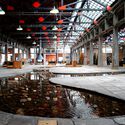
Architecture has always had a complementary - occasionally codependent - relationship with water. The Roman Domus, the Baths of Diocletian and Caracalla in Rome, and Villa Adriana in Tivoli are some prominent historical examples of how water influenced the design of compositional architecture. In a more modern context, Frank Llyod Wright designed a residential retreat in which water is its protagonist, redefining the relationship between man, architecture, and nature. Nowadays, as architects shifts their focus towards a more contextual, sustainable, and user-oriented practice, the use of water in architecture has become indisputable; cooling interior spaces, providing natural air conditioning when combined with plants, exuding a sense of tranquility, and serving as an organic decorative element.
The complexity of our world is constantly increasing, and with it, the pressure and demands placed upon our built environment. Architects are faced with a monumental task: to translate society’s ever-changing needs into tangible, effective and sustainable solutions. Pressing issues such as the climate crisis, rapid urbanization, population density and housing shortages call for a new architecture –one that isn’t afraid to questionthe traditional way of working and is prepared to take on the challenge. Today the industry must adapt, evolve and innovate to cope with these challenges. The availability of data is changing the game, and as technology continues to advance, it will open new ways of thinking, creating and engaging with the built environment.
In this article, we delve into the effects of the digital transformation, how it is reshaping the industry and the questions it raises about the future role of architects.
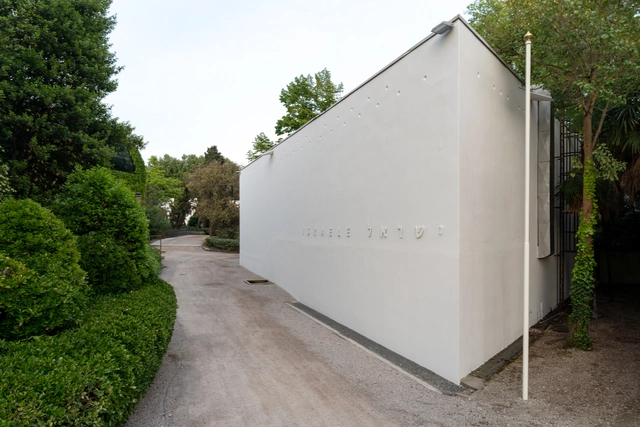
The National Pavilion of Israel presents “Cloud-to-ground,” an immersive installation exploring the nature of modern communication networks at the 18th International Architecture Exhibition of La Biennale di Venezia. The exhibition, curated by Arch. Oren Eldar, Arch. Edith Kofsky, and Hadas Maor, aims to initiate a multifaceted discussion regarding the physical aspects of virtual networks: the data centers and telephone exchanges commonly referred to as “black boxes.” The chosen theme is relevant for Israel due to its strategic location set at the intersection of continents and cultures. The pavilion in the Giardini will remain open for visitors until November 26, 2023.
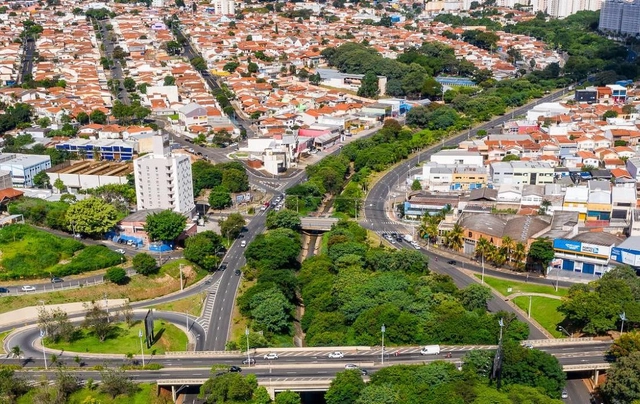
Campinas has revised its environmental plans, formalizing nature-based solutions (NBS) as a central component of the municipality's environmental policies, actions, and goals. Enacted by municipal decree, this revision strengthens the city's commitment to climate adaptation, resilience, and a long-term vision, while prioritizing sustainable, equitable, and inclusive urban development.
Pihlmann Architects is a young Copenhagen-based architectural run by Søren Pihlmann. In this interview with Louisiana Channel, the rising architect elaborates on his unique practice, the values he holds, and what he finds fascinating about architecture. Most notably, Pihlmann explains that his view on the practice has transformed from being an architect into becoming a type of curator, selecting very few things with great sensitivity.
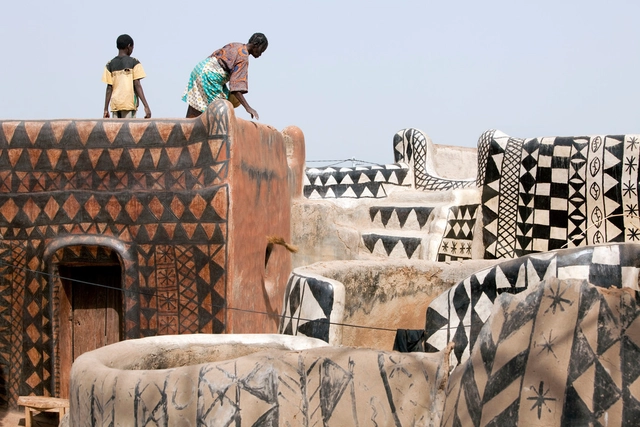
In the south of Burkina Faso, sharing borders with the northern environs of Ghana is Tiébélé; a small village exhibiting fractal patterns of circular and rectangular buildings, housing one of the oldest ethnic groups in West Africa; the Kassena tribe. With vernacular houses dating back to the 15th century, the village’s buildings strike a distinctive character through its symbol-laden painted walls. It is an architecture of wall decoration where the community uses their building envelope as a canvas for geometric shapes and symbols of local folklore, expressing the culture’s history and unique heritage. This architecture is the product of a unique form of communal collaboration, where all men and women in the community are tasked with contributing to the construction and finishing of any new house. This practice serves as a transmission point for Kassena culture across generations.
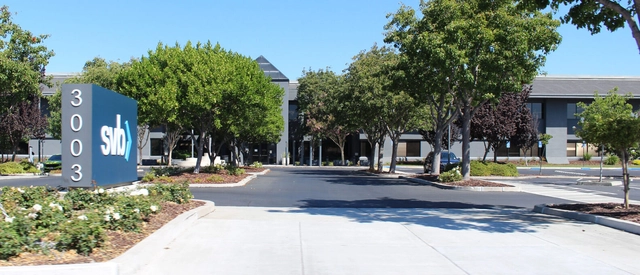
One of the principles of comedy is that you “punch up.” If you have to make fun of someone or something, make sure it’s more prominent than you, and deserving. You can’t get much higher than Santa Clara, California, and you can’t get much more deserving. Santa Clara is, arguably, the city at the heart of Silicon Valley, a globally famous urban region that is so ill-defined as to deny its own existence. Those ranch houses and corporate headquarters represent a distinctly 21st-century brand of power. And a distinctly 20th-century brand of urbanism.
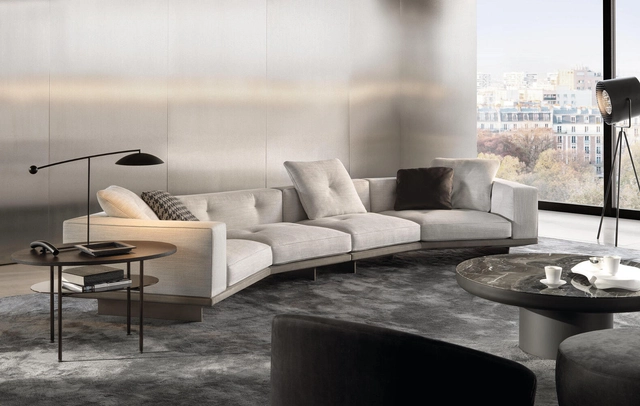
The airy and modern Dylan modular seating system by Rodolfo Dordoni for Minotti is contemporary with couturier details. Image Courtesy of Minotti
In a world of fast-paced change, Minotti’s pursuit of timeless design as well as its honed technical expertise result in elegant pieces that stand ready to elevate any interior with sophistication and style. The 2023 Collection demonstrates this, finding a balance between classicism and contemporaneity, organic lines and solid volumes.
Coordinated by Rodolfo Dordoni with Minotti Studio, the new collection expresses a single language of stylistic coherence derived from international voices such as Marcio Kogan / studio mk27, Nendo, GamFratesi, Inoda+Sveje and Gordon Guillaumier. While embracing consistency with Minotti’s design vision, the 2023 Collection explores new horizons with the aim of responding to the ever-changing nature of contemporary living.
In his latest TED Talk, Thomas Heatherwick decries a condition affecting areas of the city defined by monotonous buildings, or what he calls “an epidemic of boringness.” While recognizing the functionality which drove these designs, he states that functionality alone cannot ensure that the structures become active parts of urban life, as they often fail to provoke an emotional response from passers-by. Heatherwick explains that, in his view, this emotional function, or the ability of buildings to mean something to their users and visitors, is essential. When it succeeds, architecture can positively contribute to the quality of life and well-being of its residents, promote social cohesion and contribute to a sense of identity. So how can architecture provoke a positive emotional connection and provide an enjoyable backdrop to the communities it serves?
The Royal Institute of British Architects (RIBA) has announced the 30 winners of the 2023 RIBA National Awards for Architecture, providing an insight into the country’s architecture, design, and social trends. Among the key themes observed this year, the need to rebuild communities and to find sustainable ways of practicing stand out as the main concerns of the participant architects. The response to these themes is varied, ranging from buildings that aim to offer opportunities for collaboration for students to creating stimulating social spaces for the elderly or providing creative programs at a neighborhood scale. All the projects selected have been in use for at least one year and have provided data regarding their environmental performance. Examples of sustainable design include both new buildings, following the Passivhaus certification, and renovation of existing structures.
Videos
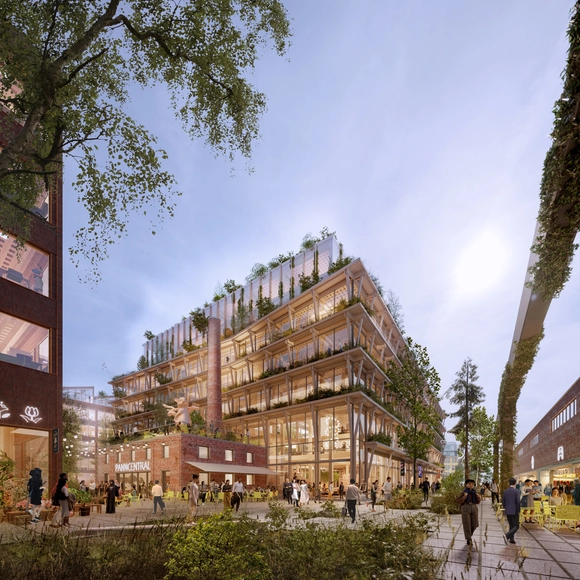
Courtesy of Atrium Ljungberg | White Arkitekter
Atrium Ljungberg has just revealed Stockholm Wood City – the world's largest urban construction project in wood. Construction on the project is expected to begin in 2025, and the first buildings are expected to be completed in 2027. The initiative is a demonstration of Swedish sustainability.
The largest wood-building project in the world is now in progress, covering an impressive 250,000 square meters. The project sets a sustainable example for the real estate market, which is essential because built structures contribute a sizeable 40% of the world's CO2 emissions. Furthermore, Stockholm Wood City is set to become a turning point in sustainable architecture and urban planning. Situated in Sickla, southern Stockholm, this innovative neighborhood will offer an additional 2,000 houses and 7,000 business spaces. By merging workplaces, homes, neighborhoods, dining establishments, and retail spaces, it aims to create a vibrant and dynamic urban environment.
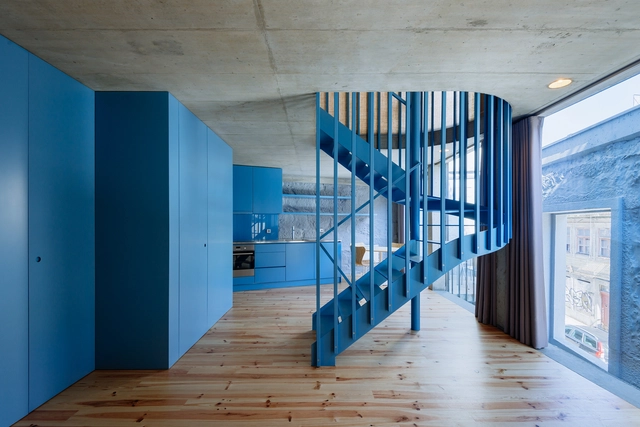
Colors directly influence space perception. Through them, it is possible to stimulate the user's mood - making the environment calmer or more dynamic - and also change our perception of space without changing a centimeter of any wall. Dealing with them is not always easy. In a time when we want rooms with more personality (or more "instagrammable"), learning to compose with different shades and textures is essential.
As true spatial orchestrators, architects’ expertise extends beyond the mere construction of buildings, often transcending the physical realm of design. They possess the unique ability to craft spaces that are not only visually appealing, but that also feel welcoming, harmonious, and, above all, functional. Embracing this vital role involves careful consideration of all the bits and pieces that make up a project; from a building’s foundations to a sofa, architects must ensure that all the elements, in every scale, tie together in a way that is cohesive and positively influences our everyday lives.
In this fourth feature, we met with co-chairs ofdesign for Health architectArif Hasan, former Visiting Professor NED University Karachi and member of UNs Advisory Group on Forced Evictions, and architectChristian Benimana, Senior Principal and Co-Executive Director atMASS Design Group
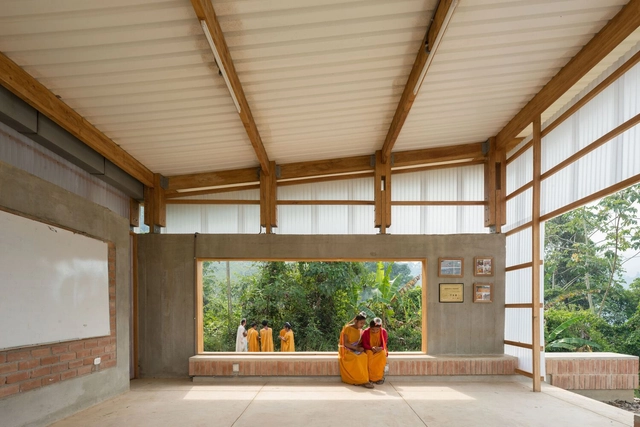
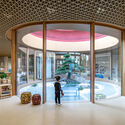
Environments that inspire, promote well-being and stimulate a connection with nature. Biophilic landscaping in education spaces recognizes the importance of this bond for student development, as it benefits well-being, academic performance, and people's health. We have selected eight projects that bring natural elements to the classroom or that place students directly in nature to illustrate the qualities in these spaces.
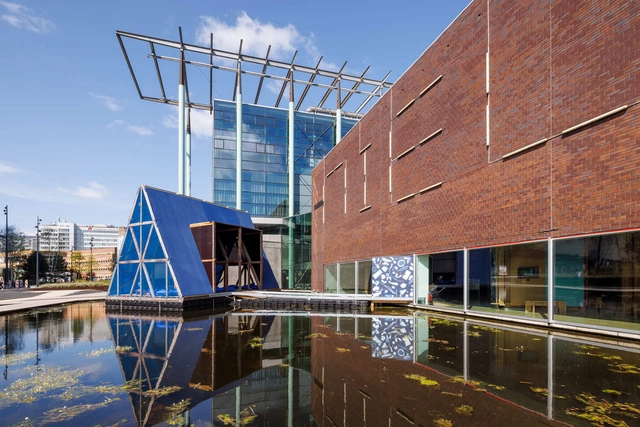
Nieuwe Instituut in Rotterdam has inaugurated the ‘Water Cities Rotterdam. By Kunlé Adeyemi,’ a cultural project comprising of exhibitions along with several floating pontoons and artist installations that present the Nigerian-Dutch architect Kunlé Adeyemi’s waterfront designs in the Netherlands. The exhibition brings a seven-meter-high floating wooden pavilion on the institute’s outdoor ponds. Inside the pavilion, landscape architect and artist Thijs de Zeeuw has created an artwork to allow visitors to experience the pavilion from the perspective of nature while contemplating the consequences of building and living on the water for the surrounding ecology and biodiversity. The entire exhibition is on display at the Nieuwe Instituut until 22 October 2023.
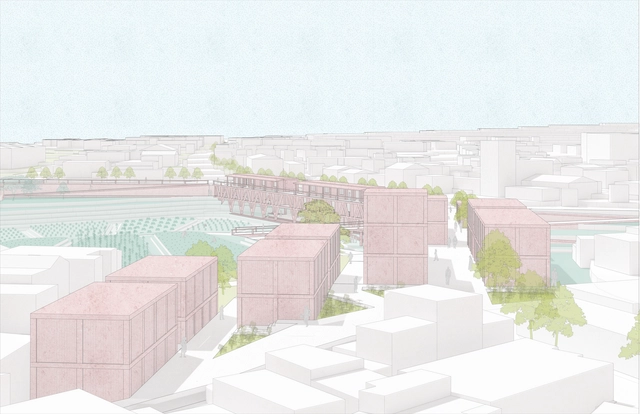
Project perspective for the Morro Vermelho stream, a tributary of the Lageado. Source: drawing by the author
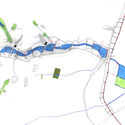
Urban rivers, across their various scales, can serve as structuring axes for urbanization with high environmental quality. The focus of this article, based on concepts developed by the Fluvial Metropolis Group, is the Lageado Creek Basin, located at the easternmost edge of the municipality of São Paulo and part of the municipality of Ferraz de Vasconcelos. The Tietê River, into which the basin's waters flow, the Lageado, and its tributaries establish three scales of rivers and urbanization, accommodating distinct programs related to water use: from regional navigation and energy to neighborhood-scale fluvial parks, spanning water supply, drainage, energy, and irrigation.
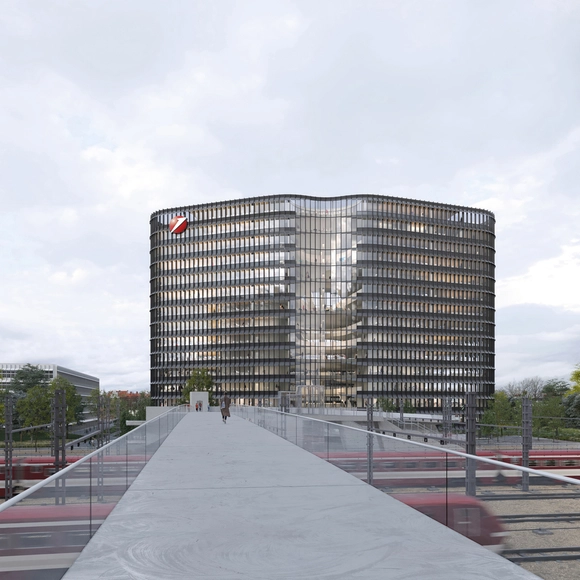
Sauerbruch Hutton has won the competition for Headquarters 2 (HQ2) for the Haidenauplatz Quarter in Munich. This high-rise building will be the focal point of the newly developing Haidenauplatz district in Eastern Munich. Serving as HypoVereinsbank's second central location, it will stand alongside the iconic Hypo high-rise from the 1970s in the neighboring Bogenhausen district. The design by Sauerbruch Hutton and landscape architect MDP Michel Desvigne Paysagiste was chosen from a pool of nine other international participants.
In a world of extravagant textures, colors, and flavors, who would have thought that a substance that has no color, no smell, and no taste is precisely the most essential for human existence? Antagonistic in itself, water carries an ambiguity of values and meanings that confer a high degree of complexity sustained by the versatile and soluble profile that distinguishes it in a complex simplicity. In this sense, water, as a source of life, has become an object of devotion and study over time. This has fostered a continuous effort focused on understanding, transporting, and controlling this element.
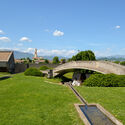
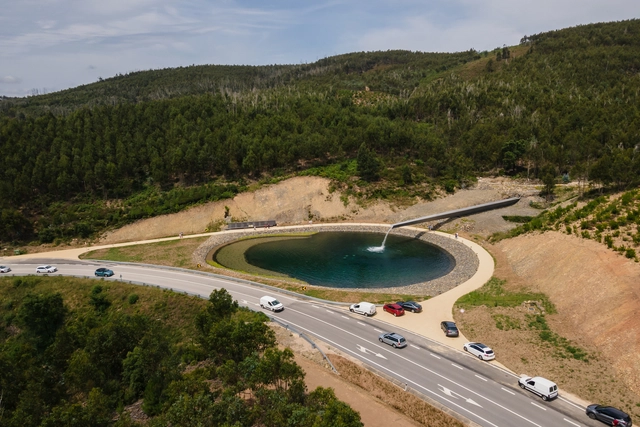
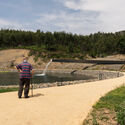
Pedrógão Grande, a Portuguese municipality located about 55 kilometers from Coimbra, inaugurated last week the Memorial in Homage to the Victims of the 2017 Forest Fires, a tragedy that claimed the lives of 66 people and left 253 others injured. The monument was designed by architect Eduardo Souto de Moura, winner of the Pritzker Prize in 2011.
The work cost about 1.8 million Euros and was initiated two years ago by Infraestruturas de Portugal (IP). The monument features "a framing lake, with about 2,500 square meters of area, fed by a 60-meter long gargoyle, bordered by a strip of plants consisting of white water lilies, lilies, and ranunculus," according to IP. In addition, the project includes a wall with the name of each victim inscribed on it.
Videos
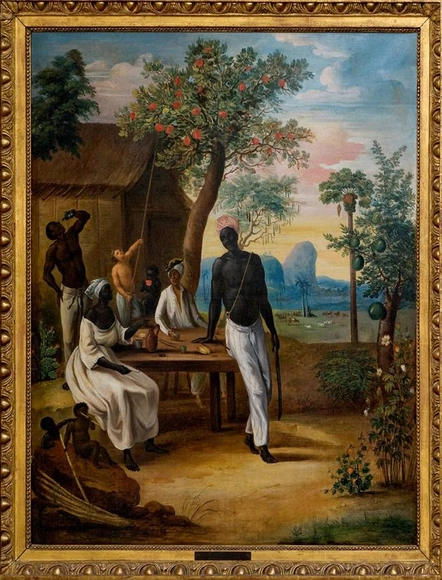
Le Masurier (documenté en 1769-1775). Esclaves noirs à la Martinique, 1775. Huile sur toile – 125 x 106 cm. Paris, ministère des Outre-mer / Archives nationales. Image Courtesy of Archives nationales
The institution of slavery shaped landscapes on both sides of the Atlantic Ocean. And in turn enslaved and free Africans and their descendants created new landscapes in the United States, the Caribbean, and Sub-Saharan Africa. African people had their own intimate relationships with the land, which enabled them to carve out their own agency and culture.