1. ArchDaily
  2. Mini

Mini

How to Create Architectural Presentation Boards

 | Sponsored Content

Produce personalized presentation boards that distill complex concepts into simple visual representations with a few helpful tools and effects.

20 Productivity Apps to Help Make Your Life Easier On Sale Now

Need some help being productive or organizing your life? Ranging from Clear, an app that helps create tasks, reminders and to-do lists, to Grafio, which lets you organize your thoughts via diagrams, Apple has put 20 productivity apps in the iOS App Store on sale.

Amsterdam is "Dirty, Filthy, and Too Full"

Wim Pijbes, director of Amsterdam's Rijksmuseum, has declared in an open letter to the Dutch newspaper NRC Handelsblad that the Dutch capital is "dirty, filthy, and too full." Complaining primarily about the culture of short-stay accommodation, segways, scooters and canal cruisers in the historic heart of the city, he argues that "the charm and spirited character has long since faded." Amsterdam, an apparent magnet for those who enjoy an "anything-goes atmosphere," faces an uphill battle in order to remold a dwindling reputation.

Does Australia Need More Design Competitions?

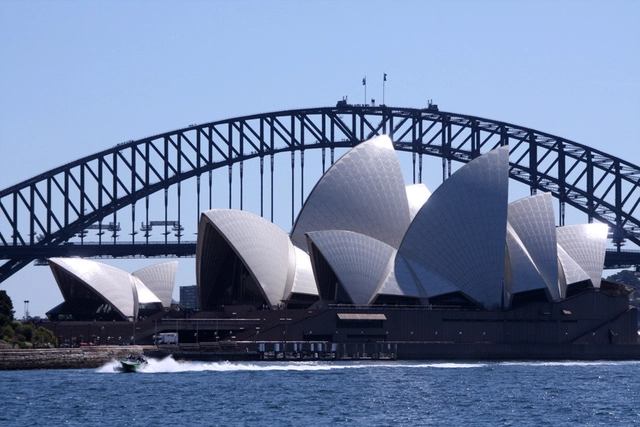
Architecture competitions offer an opportunity for architects to launch their careers, and in some cases generate unexpected designs in the process. Many iconic works of architecture, including the famous Sydney Opera House, were the result of open design competitions - but do architecture competitions today maintain the influence they might have had in the past? While critics in the United States have recently argued that it could be time to quit competitions, Donald Bates argues that Australians should be organizing more. In his article on The Conversation, Bates discusses the state of design competitions in Australia, and why we should take another look. Read the full article here.

Joseph Rykwert among the Winners of the 2014 UIA Prizes

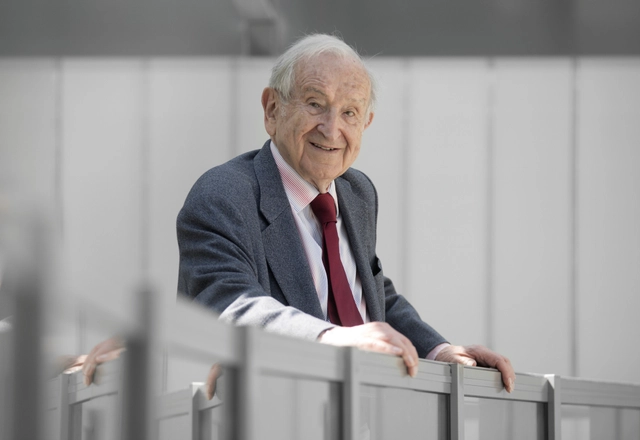
At the UIA World Congress last week, Joseph Rykwert was awarded the Jean Tschumi Prize for his work in architectural criticism and teaching over the past six decades. The prize adds to a fantastic year for Rykwert in which he received the RIBA Gold Medal and was awarded a CBE by the Queen. Read on after the break for all the winners of the 2014 UIA Prizes.

In Discussion With David Adjaye

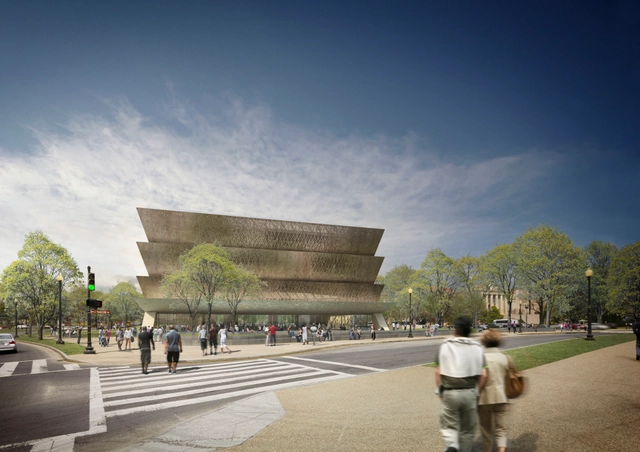
In an interview with Rowan Moore for The Observer, British born architect David Adjaye discusses his work, personality and ambitions as head of the one of the fastest growing internationally operating practices. With Moore's immersive descriptions and expertly written narrative, the "breadth of Adjaye's vision" becomes apparent. Featuring precise descriptions of some his upcoming projects, including the designs for the Smithsonian's National Museum of African American History and Culture and a number of smaller buildings in London, Moore's discussion ultimately explores Adjaye's early (and successful) steps into the African architectural market. You can read the interview in full here.

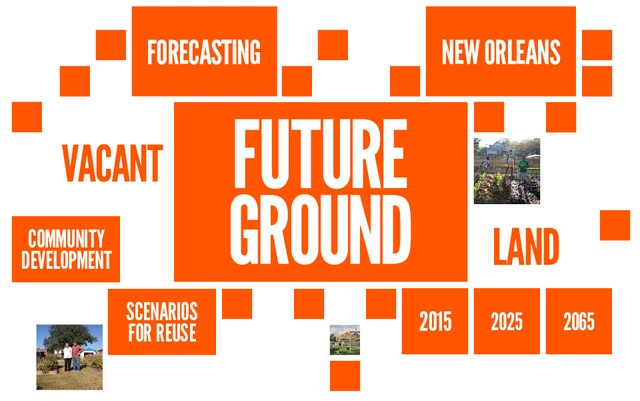
Future Ground Competition Open for Registration

What will New Orleans look like in one year? Ten years? Fifty years? The Future Ground design competition, hosted by the Van Alen Institute, is looking for multidisciplinary teams help shape the city's future by answering these questions. The competition is specifically looking for teams to "generate flexible design and policy strategies to reuse vacant land in New Orleans, transforming abandoned landscapes into resources for the city."

Amale Andraos Named Dean of Columbia GSAPP

New York-based architect and co-founder of WORKac, Amale Andraos, has been selected as the new dean of Columbia University’s Graduate School of Architecture, Planning and Preservation (GSAPP), the Columbia Spectator has reported. Andraos will assume the position on September 1, replacing Mark Wigley who announced his retirement last year.

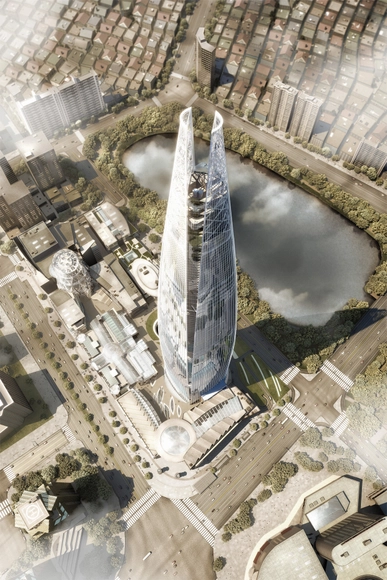
KPF's Lotte World Tower Jeopardized by Mysterious Sinkholes

Subscriber Access | 

Construction is well underway for KPF's Lotte World Tower in Seoul, however the mysterious appearance of sinkholes in the surrounding area - as reported by CNN - has brought on a slew of safety concerns. Authorities have been unable to determine the cause of the sinkholes which have appeared in a number of locations around Seoul's Songpa District, although they have ruled out sewerage as a possibility. To learn more about the bizarre phenomenon putting the 123-story tower under scrutiny, click here.

Can Buildings Make Us Healthier?

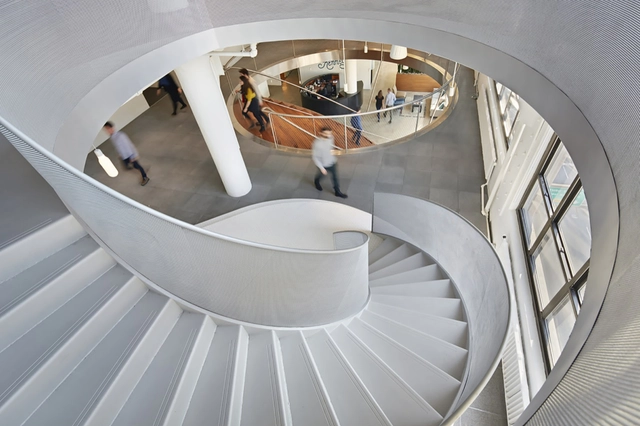
Since we spend most of our waking hours in buildings, shouldn't they be designed to encourage a healthy lifestyle? It turns out there are many ways in which architects can design spaces that encourage us to exercise as part of our daily routine. Likewise there are many design features that often dissuade people from physical activity. For example, while a dark or secluded staircase may be off-putting, centrally located and open staircases tend to be used even more than elevators. Find out how buildings can serve as our personal trainers in this article from Fast Co. Design, “How To Keep Our Buildings From Making Us Fat.”

Gehry on Art, Curvy Walls and "Jumping Off the Cliff"

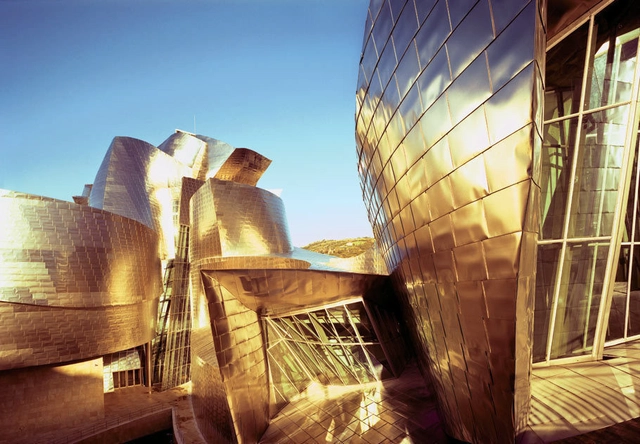
When someone is in the public eye as much as Frank Gehry, it's easy for them to be misrepresented in the media. Fortunately, this interview by Architectural Record's editor-in-chief Cathleen McGuigan sets the record straight: Gehry doesn't consider himself as an artist, and he doesn't think of architecture as sculpture (despite what he once said). He is however hugely influenced by the way artists work, inventing ways to make things when it might otherwise be thought impossible. That's why he's always the one to "jump off the cliff", as he puts it. You can read the full interview here.

Could a Window Office Help You Sleep Better?

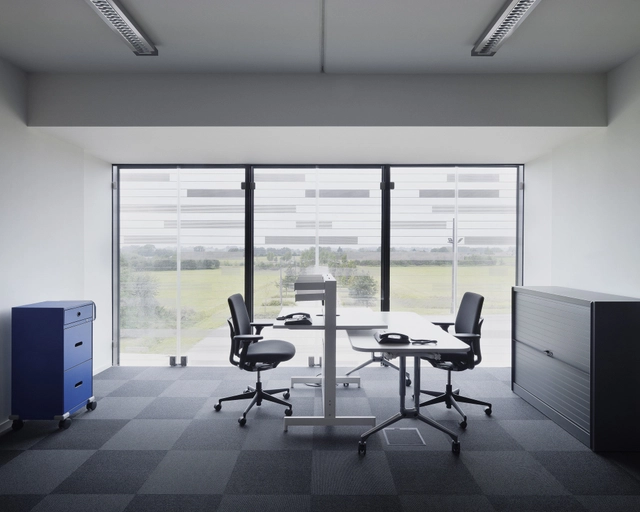
Having an office with a view may be more than just a symbol of seniority. New findings show that there are public health benefits associated with working by a window, Fast Co Design reports. An interdisciplinary group of architects and medical researchers compared workers exposed to natural light with those who aren’t, and found that window workers sleep, on average, 46 minutes more a night. They also scored better on self-report health and sleep surveys. Learn more about the study in the full article, “Workers in Windowless Offices Lose 46 Minutes of Sleep a Night,” at Fast Co Design and start convincing your boss that it’s time you had a window office!

Performance Space: Marina Abramović at the Serpentine Gallery

One of the latest installations at London's Serpentine Gallery, where Smiljan Radic recently unveiled an ethereal pavilion, is Marina Abramović's performance installation entitled 512 Hours. Creating what has been described as "the simplest of settings" in one of the gallery's large spaces, the artwork employs Abramović's most frequently used material: herself. Coupled with the audience and a selection of common objects, the constantly changing sequence of events on display is the very first live installation by the artist displayed in the UK. Upon arrival, visitors are asked leave their baggage (including mobile phones, cameras and any other electronic equipment) behind in order to enter the exhibition. Find out more about what you can expect from it here.

What Happened to Manhattan's Lowline Project?

Subscriber Access | 

In 2011, the Tribeca-based design duo of James Ramsey and Dan Barasch proposed a radical project to transform an abandoned subterranean trolley terminal in Manhattan's Lower East Side into an underground park filled with natural light and vegetation, eventually proving their design with a full size mock-up of their design for light-capturing fiber-optic tubes. Since then, they haven't had nearly the same level of publicity - but that doesn't mean they aren't still working. This article by The Architects' Newspaper catches up with Ramsey and Barasch as they attempt to make their $50 million project a reality by 2018. Read the full article here.

How New Elevator Technology Will Allow Our Cities to Grow Even Taller

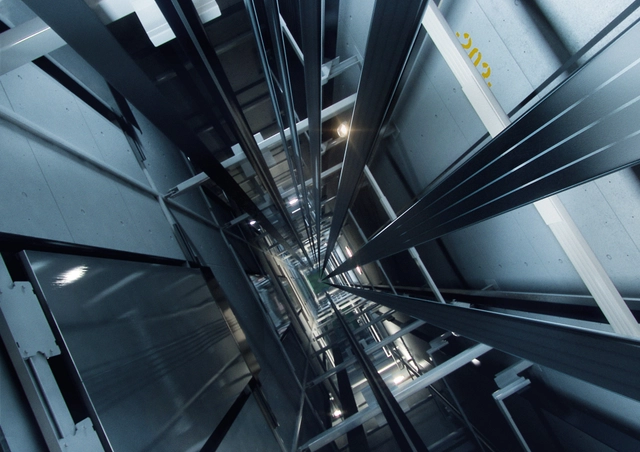
The sky is not always the limit when it comes to building vertically - rather, elevator technology is often the restricting factor when it comes to skyscraper height. With current technology, a single elevator can travel approximately 500m before the weight of the rope becomes unsupportable. This means that ascending a mile-high (1.6km) tower would require changing elevators up to 10 times. However, UltraRope, a recently unveiled technology by Finnish elevator manufacturer KONE, may change the heights of our cities. A new hoisting technology that will enable elevators to travel up to one kilometer, UltraRope doubles the distance that is currently possible.

IE School of Architecture and Design Announces SPACES FOR INNOVATION Prize

IE School of Architecture and Design announces IE SPACES FOR INNOVATION Prize for young architects and designers worldwide, seeking to attract top architecture and design talents to invite them to take part in the IE Master in Design for Work, Retail and Learning Environments starting next February 2015.

Damien Hirst Receives Planning Permission for "Hirst-on-Sea"

According to Will Doig of NextCity, world renowned contemporary artist Damien Hirst has received planning permission to build a town from scratch on the British coastline. Working alongside Rundell Associates the project, which has been dubbed "Hirst-on-Sea" near the town of Ilfracombe, will consist of 75 affordable homes built over the next ten to fifteen years. Most famous for his 2007 diamond-studded skull entitled For the Love of God and, more ubiquitously, glass cases containing sharks and cows preserved in formaldehyde, Doig wonders that, "given Hirst’s history, it’s hard to imagine he’s not trying to make some sort of statement." Time will tell as to what that might be.

Infrastructure, Data and Progress: Ireland's Pavilion at the 2014 Venice Biennale

The Irish pavilion's response to the theme of the 2014 Venice Biennale captures the tumultuous history of the Ireland's past hundred years through ten infrastructural projects which highlight the country's progress. Ireland's relationship to the theme of "Absorbing Modernity" was colored by their independence from the United Kingdom in the early 1920s, with modernism and infrastructure seen as the way to leave this past behind. The pavilion examines the outcomes of this approach, with Ireland treated as "a launch-pad and testing ground" for everything from concrete infrastructure to data centers. Read the curators' take on their pavilion after the break.

"Lina Bo Bardi: Together" at the DAZ Berlin

If you are in Berlin in August, make sure to check out the exhibition “Lina Bo Bardi: Together” at The Deutsche Architecture Zentrum, dedicated to the legacy of the famed Italian-born Brazilian architect, and focusing on her “capacity to engage with every facet of culture and to see the potential in all manner of people.” More on the exhibition after the break.

You've started following your first account!

Did you know?

You'll now receive updates based on what you follow! Personalize your stream and start following your favorite authors, offices and users.