NPR journalists David Eads and Helga Salinas have published a photographic essay by Patricia Evans alongside their story of Chicago’s public housing. Starting with Evans’ iconic image of a 10-year-old girl swinging at Chicago’s notorious Clarence Darrow high-rises, the story recounts the rise and fall of public housing, the invisible boarders that shaped it and how the city’s most notorious towers became known as “symbols of urban dysfunction.” The complete essay, here.
One of four shortlisted proposals (click to view them all). Image Courtesy of The Architects' Journal
Sutherland Hussey, Faed Brown Architects, Daykin Marshall Studio, and Gibson Thornley Architects have been announced as finalists in the RIBA-backed competition for a new community hub and sports pavilion for the Sessay Cricket Club in North Yorkshire. The four shortlisted competitors, selected from over 80 entrants, will be reviewed by a judging panel on January 8. A winning team is expected to be announced shortly after.
Architecture critic Alexandra Lange recently stumbled upon “On Architecture” - an Audible.com collection of over 16 hours of Ada Louise Huxtable’s best writings from the New York Times, New York Review of Books, the Wall Street Journal and more. Displeased with the narration, Lange has taken it upon herself to read Huxtable’s 1971 New York Times critique “A Look at the Kennedy Center” in honor of its “many famous witticisms." Give it a listen, here.
What happens at the intersection of urban culture and architecture? How can the four elements of hip hop (DJing, MCing, Breaking and Graffiti) inspire the built environment? Participants of JUX.TA.PO.SI.TION are encouraged to create a sketch using mediums of their choice to depict new building forms, urban design concepts, and/or architectural products inspired by the four foundational elements of hip hop. This international competition is open to all individuals including students, graffiti artists, architects, urban planners, landscape architects, graphic designers, muralists, etc. You can complete the free registration form and find more information, here.
In honor of Rockwell Group’s 30th year of design, Forbes has published a profile on its founder, American architect David Rockwell, detailing his life, work and thoughts on the power of theater. “My mother, Joanne, played a great role in forming my interest in design,” stated Rockwell. “She first introduced me to the excitement and spectacle of live theater, which has had a profound impact on my life and work. These productions really opened my eyes to the power of design to create emotional connections between people and their environment.” Read the complete article, here.
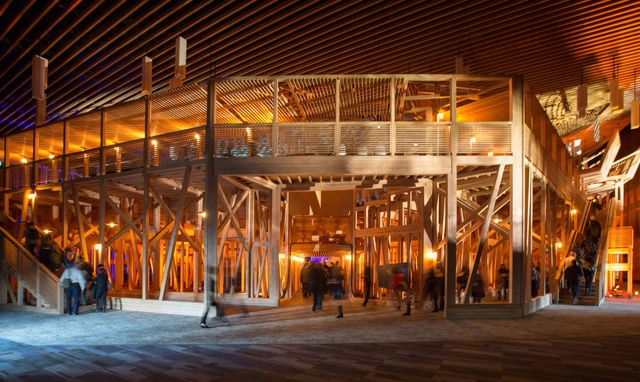
When fears regarding environmental pollution and potential catastrophe were at a high in the 1970s, Haus-Rucker-Co set out to develop a “new concept of architecture.” Based in Vienna, the group was known for their interactive exhibitions and their development of utopian architectural ideas, which showed how people could affect their own environment. Now, their work between 1967 and 1977 is the theme of “Architectural Utopia Reloaded,” the latest exhibition on display at the Haus am Waldsee in Berlin.
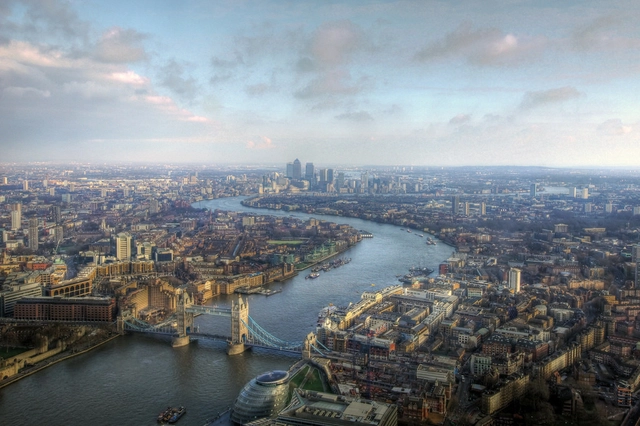
In the UK, urban issues are starting to see something of a renaissance, with problems such as the nation's housing shortage increasingly being subjected to scrutiny in ever more public arenas - in fact earlier this year housing overtook transport as the biggest concern among London voters. All of this means that 2015 will be "a golden opportunity to fix some of the worst city problems," according to the Guardian Cities, who have asked their architecture critic Oliver Wainwright to offer up a wishlist of positive changes that could benefit the nation's urban centres. From councils building more council housing to a tax on empty homes, Wainwright's four-point list offers straightforward policy advice that could truly transform the lives of British urbanites - and perhaps most promisingly, in three of these cases he explains how there are nascent movements already being made to bring his recommendations to fruition. You can read the full article here.
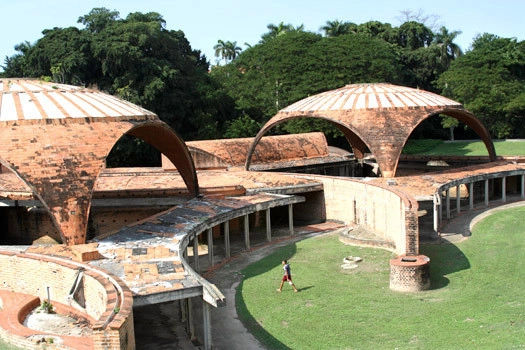
Ricardo Porro, the leading architect behind Cuba’s National Art Schools - one of the largest architectural achievements of the Cuban Revolution - has died of heart failure in Paris at the age of 89. After spending nearly a half a century in exile, Porro lived long enough to see his two arts schools reemerged on the world stage as “crown jewels of modern Cuban architecture.”
Nationwide Children’s Hospital has selected NBBJ to design their $85 million Livingston Ambulatory Center in Columbus, Ohio. The six-story, 200,000-square-foot center will serve more than 100,000 patients annually. It will feature modular and flexible units centered around shared employee workspaces. Construction will begin in February.
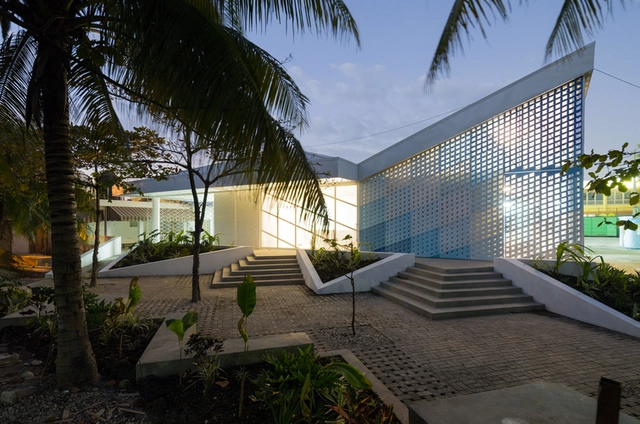
“Architecture and health are inseparable,” says Haitian doctor and founder of Gheskio in Michael Kimmelman’s latest New York Times piece In Haiti, Battling Disease With Open-Air Clinics. Recounting the devastating images of medical dysfunction that have circulated the internet since the Ebola epidemic, Kimmelman presents MASS Design Group’s nearly complete Port-au-Prince health clinics as a potential model for healthcare architecture worldwide. Combating cholera and tuberculosis with a modest, practical layout and open-air design, the new clinics will serve one of the city’s largest slums. Learn why Kimmelman declares them “handsome” and believes they will help eradicate disease in Haiti, here.
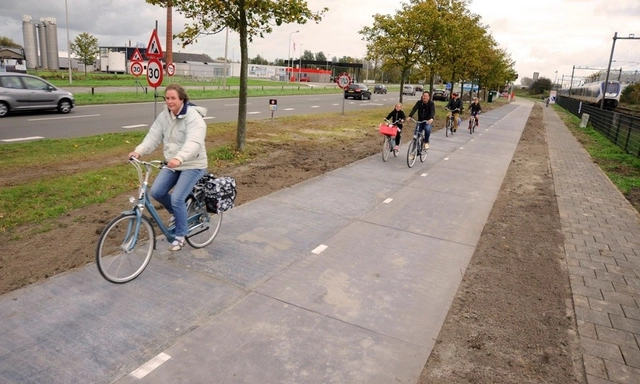
A popular bicycle lane and public road that connects the Amsterdam suburbs of Krommenie and Wormerveer has been impregnated with solar panels, making it the world’s first. The 70-meter stretch, serving 2,000 daily cyclists, was embedded with crystalline silicon solar cells encased within concrete and covered with a translucent layer of tempered glass. It is expected to be extended an additional 100-meters in 2016, providing enough energy to power three households. More information, here.
On the occasion of Ideas City 2015, the biennial Festival created to explore the future city and to effect change, Storefront for Art and Architecture, along with the New Museum and the New York City Department of Transportation, is launching a competition for the design and construction of an outdoor structure—a work of "Street Architecture" that facilitates new forms of collective gathering and engagement with the city.
The Cassa Depositi e Prestiti Investimenti Sgr has recently acquired the former Precision Electrical Components Factory in Flaminio, located between Via Guido Reni and Viale del Vignola, that will now be transformed into the new City of Science district.
Signaling the debut of a course of urban developments near Rome's historic neighborhoods, the area is marked by such iconic landmarks as Zaha Hadid's MAXXI Museum, Renzo Piano's Parco della Musica, and the Foro Italico and Olympic Village of 1960. The competition calls for a master plan for a neighborhood "integrated within the context of contemporary Rome." Covering an area of 5.1 hectares, the neighborhood should work in tandem with the City of Science, and feature landscaping, public areas that attract local residents as well as outside visitors, and residential spaces (including apartments and social housing) serving 1,500 to 2,000 people. Six participants will be chosen to move onto the second phase of the competition.
The Gay’s house in LaGrangeville, New York. Image Courtesy of Guinness World Records
In the ongoing battle to hold the Guinness World Record for the Most Lights on a Residential Property (aka the house-with-the-most-Christmas lights), the Gay family in LaGrangeville, New York has once again reclaimed their title. This year the family used 601,736 lights, spanning two acres and set to more than 200 songs. RITZ Crackers, part of Mondelēz International, helped the family top the record, providing 200,000 lights. The Gay family and the Richards family in Canberra, Australia, have been fighting for the title over the past three years. But not to be outdone, the Richards family took home the Guinness World Record for the Largest Image Made of LED lights for their Christmas light installation this year. The installation in Canberra used 1,194,380 lights to make a 3D image of three Christmas gifts spanning 3,865 square meters and raised money for the charity SIDS and Kids ACT. See more pictures and read more about the ongoing lights competition at City Lab and Guinness World Records.
The Award for Architectural Heritage Intervention AADIPA, arises from the belief that heritage, as a vehicle for social integration and an economic vitalizing resource for the community, deserves to be appreciated and encouraged. In the current context, in which architectural heritage is considered not only to be a fundamental instrument of knowledge but also a first rate socioeconomic resource for the sustainable development of the territory, the disclosure, distinction and recognition of works and quality projects contributing to the preservation of the collective memory is imperative.
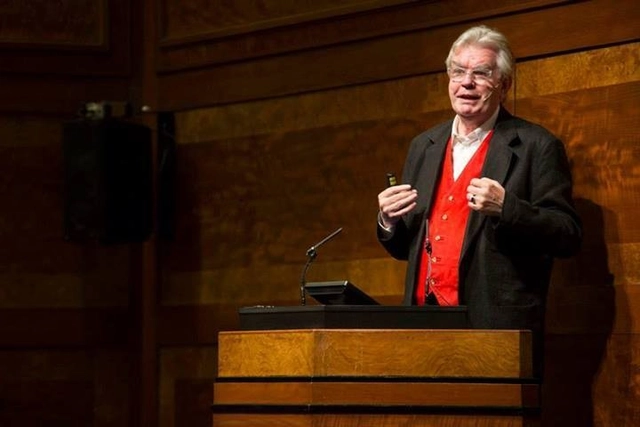
Last week the UK Government appointed a new housing design panel, intended to "ensure that new homes are not only lower-cost but also high-quality and well-designed." The panel will be led by Terry Farrell, classical architect Quinlan Terry and aesthetics philosopher Roger Scruton, as well as representatives from the Royal Institute of British Architects (RIBA), the Royal Town Planning Institute (RTPI), the UK Design Council and lobby group Create Streets. However, the profession was quick to criticize the selection of the three lead members of the panel.
In just three short years, Frank Gehry’s 450,000-square-foot Guggenheim Abu Dhabi will open. More than 12 times the size of Frank Lloyd Wright’s Guggenheim New York, the expansive $800 million museum will showcase 1960s art from around the world within an asymmetrical mountain of plaster blocks and self-cooling translucent cones. Anticipating its completion, the New York Times sat down with Gehry to hear the story behind the building’s design. Watch the full interview with Gehry, here.



_Haus-Rucker-Co__Gerald_Zugmann.jpg?1419952561&format=webp&width=640&height=580)