A room of one’s own: Feminist questions about architecture
A room of one’s own: Feminist questions about architecture
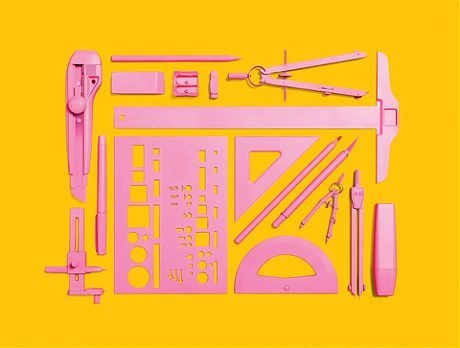
Whether it be the overly-dainty posture of scale model figures or the assumptions of being the in-house decorator, the portrayal of women in architecture is often one of subservience. Despite Despina Stratigakos' hands-on efforts behind Architect Barbie or the global impacts of the legacy of starchitect Zaha Hadid, there continues to be a lack of visibility of women in the profession.
In a recent article in the New York Times, writer Allison Arieff poses the echoed question that the architectural community keeps asking itself, "Where are all the female architects?" No longer an issue of uneven gender ratios in architectural schooling, the persistence of dwindling numbers of women principals at the top of firms simply does not resonate. She postulates, that perhaps more significant than the statistics, the real problem lies in the definition of success.




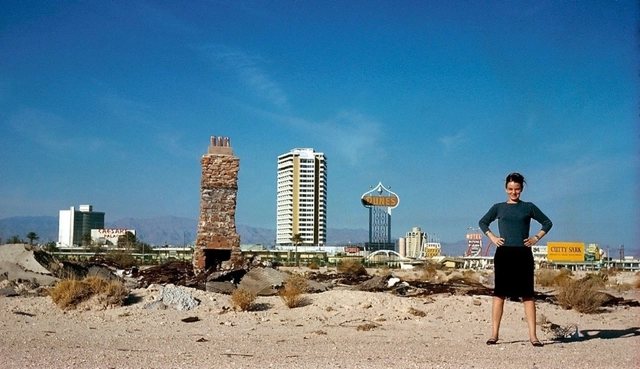
There’s something irresistible about Robert Venturi and Denise Scott Brown’s architectural romance. They met when they were both young professors at the University of Pennsylvania; Scott Brown held seminars in city planning, and Venturi gave lectures in architectural theory. As the story goes, Scott Brown argued in her first faculty meeting that Frank Furness’ masterful Venetian gothic library should not be torn down to build a plaza (then a dissenting opinion). Venturi approached her after the meeting, offering his support. As Paul Goldberger wrote of the couple in 1971, “as their esthetic viewpoints grew closer and closer, so did their feelings toward each other.” Architecture lovers can’t help but love the architect-lovers.
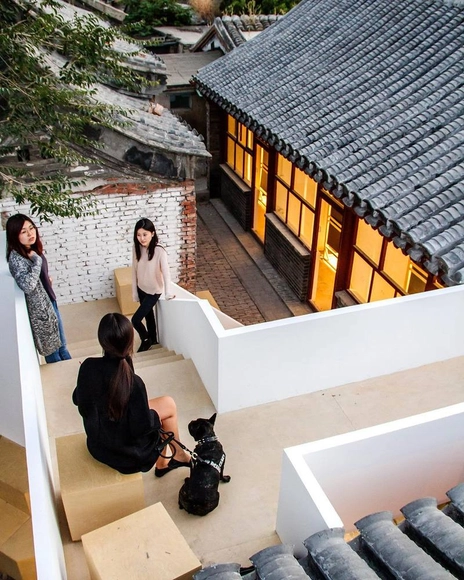
There's an old, weary tune that people sing to caution against being an architect: the long years of academic training, the studio work that takes away from sleep, and the small job market in which too many people are vying for the same positions. When you finally get going, the work is trying as well. Many spend months or even years working on the computer and doing models before seeing any of the designs become concrete. If you're talking about the grind, architects know this well enough from their training, and this time of ceaseless endeavor in the workplace only adds to that despair.
Which is why more and more architects are branching out. Better hours, more interesting opportunities, and a chance to do more than just build models. Furthermore, the skills you learn as an architect, such as being sensitive to space, and being able to grasp the cultural and societal demands of a place, can be put to use in rather interesting ways. Here, 3 editors at ArchDaily talk about being an architect, why they stopped designing buildings, and what they do in their work now.

Last week, ArchDaily covered a story about the gender pay gap at Foster + Partners. We thought such a story was "unsurprising" given that the gender pay gap is something that is widely reported on, and present in almost every industry, and we wanted to share a case of it happening in an architectural firm many of us are familiar with. What we did not expect was that readers would think it is a non-issue, or that such reporting was sensational. Is it possible for us to talk about gender in the workplace without being up in arms? Why does the gender pay gap issue make people uncomfortable?
Some of our editors discussed how gender plays into their workplace experiences as well as some hopeful recent signs that we are on a path to change.

The history of Mexican photography has contributed to highlighting Mexico's presence in the world. Photographers like Elsa Medina, Lola Álvarez Bravo, Graciela Iturbide, Maya Goded, and Juan Rulfo have masterfully portrayed the life of the buildings, houses and the streets of a rapidly built, nineteenth-century Mexico.
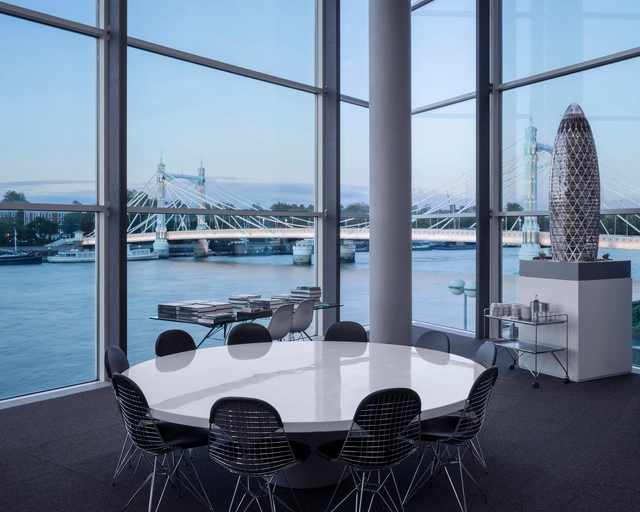
Disparity between men and women in the workplace has long been cause for concern, both within the architectural profession and beyond. To raise awareness of the need for gender pay equality, the British government in 2017 demanded that UK-based organizations with more than 250 staff publish annual reports of the gender pay gap within their offices.
As one of the largest architecture firms in the world, and based in Battersea, London, Foster + Partners has released their report into gender pay issues, becoming one of the first architecture firms to do so. The report reveals significant under-representation of women at senior level resulting in a pay gap across the firm, and outlines a commitment to encouraging gender diversity at all levels of management.
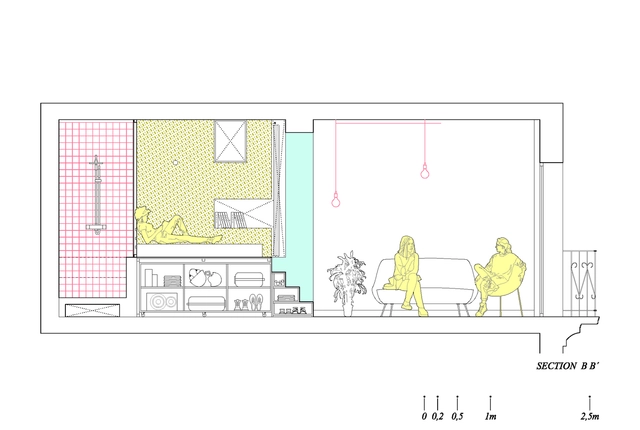
2017 is in the past. Nevertheless, the year has left us a series of lessons, new wisdom and better tools to help us face the challenges of 2018. What surprises will this year bring us?
We asked our editors at Plataforma Arquitectura (ArchDaily's Spanish arm) to make predictions based on what they've learnt in 2017, and to share with readers the topics they expect to be in the limelight in 2018.
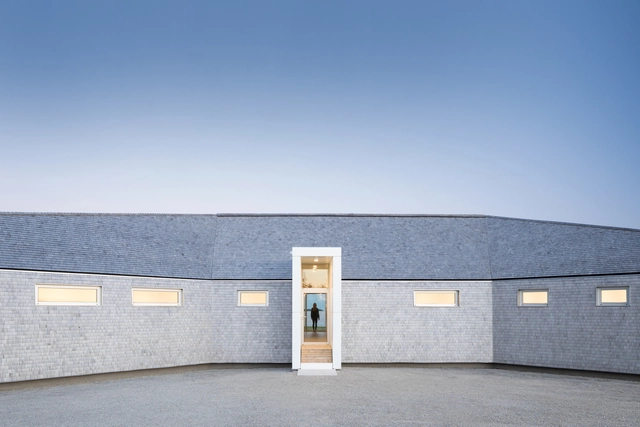
Is there an aspect, a recurring mark, that reveals a difference in the way that male and female architecture photographers see the world? This is, perhaps, one of those rhetorical questions often used as an argument to shed light on works produced by women and for which there is no precise answer.
Without claiming to offer an answer to this question—and in order to follow up on our first article that showcased a selection of women in architecture photography—we present here a new compilation of professionals who deserve attention for the quality of their photographic work. See our list below:
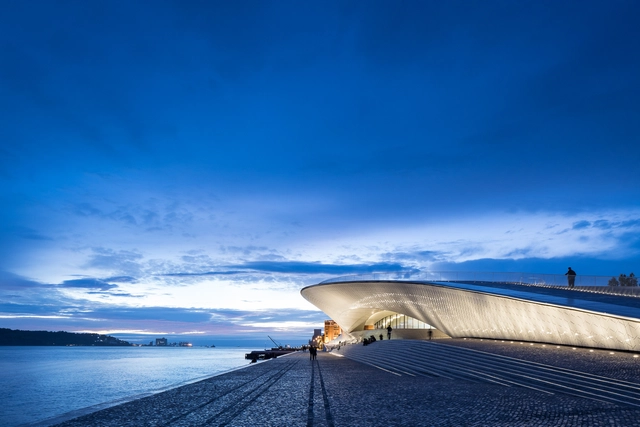
British architect Amanda Levete has been selected as the recipient of the 2018 Jane Drew Prize, recognizing “an architectural designer who, through their work and commitment to design excellence, has raised the profile of women in architecture.”
Founder of London-based practice AL_A, Levete rose to promise as one half of Stirling Prize-winning practice Future Systems, which she ran with then-husband Jan Kaplický. Together, they completed paradigm-shifting and critically acclaimed works such as the Birmingham Selfridges and the Lord’s Media Centre, winner of the 1999 RIBA Stirling Prize.
Levete left Future Systems to form AL_A in 2009, where she found continued success designing cultural venues with bold materiality. Some of the firm’s best known works include the Museum of Art, Architecture and Technology (MAAT) in Lisbon, the Central Embassy Shopping Center in Bangkok, the 2015 MPavilion in Melbourne, and the recently-opened addition to the V&A museum in London.
This week marks the first anniversary of the death of Zaha Hadid, the most successful and influential female architect in the architectural discipline. Born in Baghdad (Iraq) in 1950, Hadid became the first woman to receive the Pritzker Prize in 2004, and twelve years later received the gold medal from the Royal Institute of British Architects (RIBA).
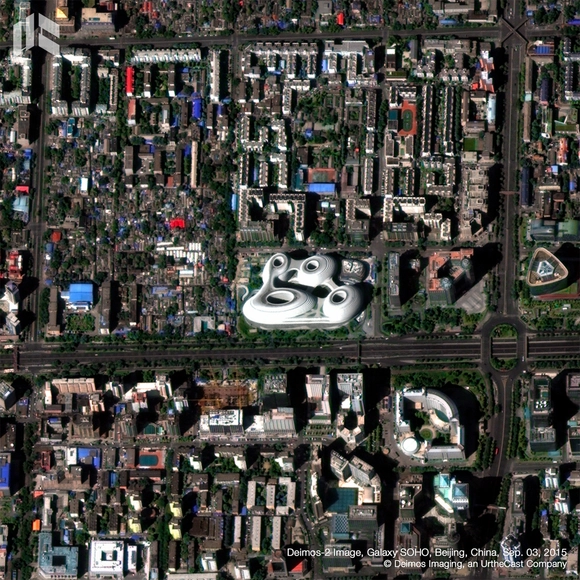
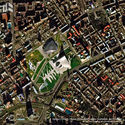
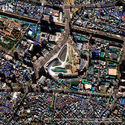
Hadid's untimely death left a fascinating and inspiring legacy. Meanwhile her firm, Zaha Hadid Architects, continues to work on nearly a hundred projects worldwide. To remember her legacy, Spanish company Deimos Imaging has shared a series of photographs focusing on Hadid's work in five countries.
The images were captured by the Deimos-2 satellite, which was launched in 2014 and designed for very high-resolution Earth observation applications, providing multispectral images of just 75 centimeters per pixel. Hadid's incredible works take on a new dimension when you contemplate their proportions from the sky—or rather, from a satellite.
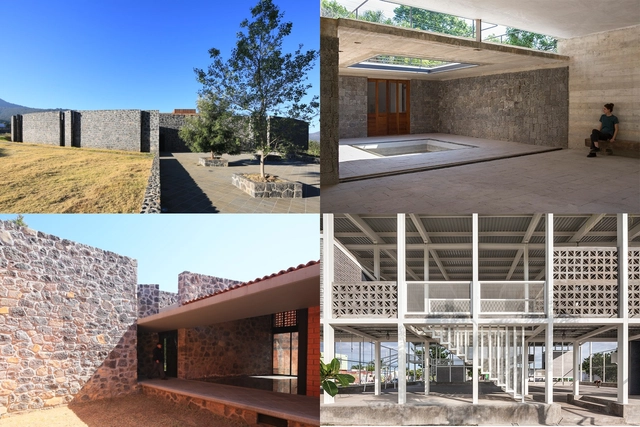
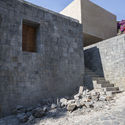
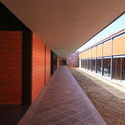
The Architectural Review and The Architects’ Journal have announced two Mexican architects as winners of their 2017 “Women in Architecture” Awards. This year’s Architect of the Year is awarded to Gabriela Carrillo of Taller Mauricio Rocha + Gabriela Carrillo, while Rozana Montiel Estudio de Arquitectura’s Rozana Montiel was named the winner of the Moira Gemmill Prize for Emerging Architecture. Both women were selecting for demonstrating “excellence in design and a commitment to working both sustainably and democratically with local communities.”
.jpg?1461556064&format=webp&width=640&height=580)
As a Japanese immigrant who has spent much of her life in the United States, the architecture of Toshiko Mori occupies an interesting space: on one hand, the material and tectonic culture of Japan is, as she puts it, her “DNA.” On the other hand, her work clearly draws inspiration from the Modernists of 20th century America, and most notably from Mies van der Rohe. In this interview from his “City of Ideas” series, Vladimir Belogolovsky speaks with Mori (his former architecture professor) about materials, details, and the inspiration behind her work.
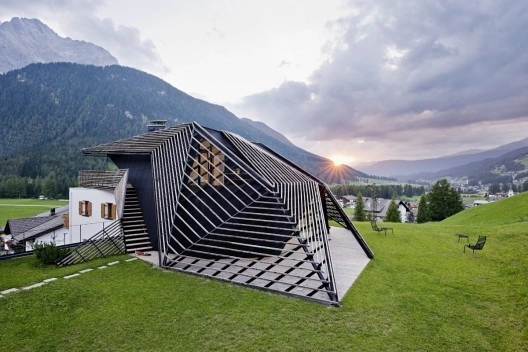
In honor of International Women's Day, we've once again rounded up some stunning architecture designed by female architects (In case you missed Part 1, featuring work by Zaha Hadid, Jeanne Gang, and more, click here).

Architect's Journal has reported on an embarrassing - and controversial - fumble from the BBC. Not only has the media outlet been criticized for "largely ignoring women architects in its series The Brits Who Built the Modern World," but it's now come under fire for an image (appearing at the beginning of episode 3) in which Patty Hopkins is photoshopped out of a group that includes her husband Michael Hopkins, Norman Foster, Richard Rogers, Nicholas Grimshaw, and Terry Farrell.
The six architects are featured in RIBA's tie-in-exhibition; however, as the series chose to focus on the five male architects, the photographer removed Ms. Hopkins from the shot (unbeknownst to the BBC).
Lucy Mori of KL Mori Business Consulting for Architects told Architect's Journal: ‘I am shocked that women’s contribution to architecture has again been “airbrushed” from this populist history programme."

The Missing 32% Project has a mission: to understand why in the US women represent about 50% of students enrolled in architecture programs, but fewer than 18% of licensed architects (and fewer in leadership roles). If you too are curious about this unusual discrepancy, you can help find an answer by participating in the Equity in Architecture Survey. The Missing 32% Project (along with AIA San Francisco) will use the results to determine best practices for attracting, promoting, and retaining talent in architecture.For more information about the project and to take the survey, go to http://themissing32percent.com/.
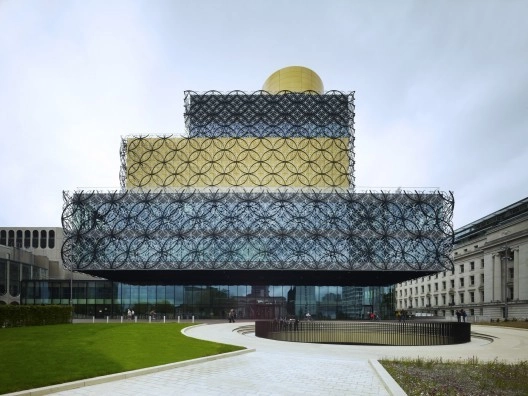
Architects’ Journal has just released the shortlist for theirWomen in Architecture Awards, which aim to "raise the profile of women architects in a sector where women still face an alarming degree of discrimination."
Christine Murray, Editor of Architects’ Journal, commented:“I’m delighted to announce this year's shortlist, which includes the women behind the celebrated Library of Birmingham, the new Stonehenge development and the Giant's Causeway visitor centre. The awards celebrate design excellence and leadership — qualities needed to succeed as an architect — and especially among women, who are under-represented in the construction industry.”See the list, after the break.
A lot of things happened in 2013. Zaha was in the news about every other week. She was copied in China and then accused of designing a giant vagina in Qatar. Rem’s son is producing a documentary about his dad. We lost Prentice Women’s Hospital. We almost lost the American Folk Art Museum. There were a lot of stellar exhibitions and one that took things On the Road. It was the year of high-rise after high-rise, with Rem changing the game yet again by lifting the podium off the ground and sticking to his formal guns, refusing to indulge in curvy shapes.
Things at Architecture for Humanity were shaken up with the departure of co-founders Cameron Sinclair and Kate Stohr. Resiliency became the new sustainability. China suddenly became defined less for its adventurous architecture and urbanism and more for its darker, smoggier flipside. My hometown, Los Angeles got a few more bike lanes, some big plans for its concrete river, plus a new Bloomberg-esque mayor with attendant sustainability tsar. There were people complaining about architecture and telling us why they left the profession. Kanye got attacked for daring to tell us why he likes architecture, and then architecture loved talking about Kanye for weeks on end until we just wanted architecture to shut up about Kanye. Poor Kanye. There are so many things we could say were key in 2013. It’s been a great year. And there were also a lot of fantastic buildings.
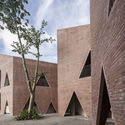
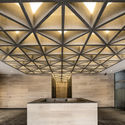
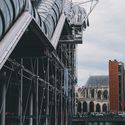
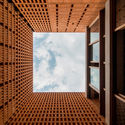





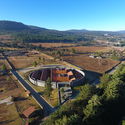

.jpg?1461555713 "Syracuse Center for Excellence, Syracuse, NY. Image © Iwan Baan")
.jpg?1461555891 "House in Columbia County, NY with Antony Gormley sculpture. Image © Iwan Baan")
.jpg?1461555072 "Extension to Marcel Breuer's House in Connecticut II. Image")
.jpg?1461556241 "Cultural Center in Senegal (Thread: Artists’ Residency + Cultural Center). Image © Iwan Baan")
.jpg?1461556064)