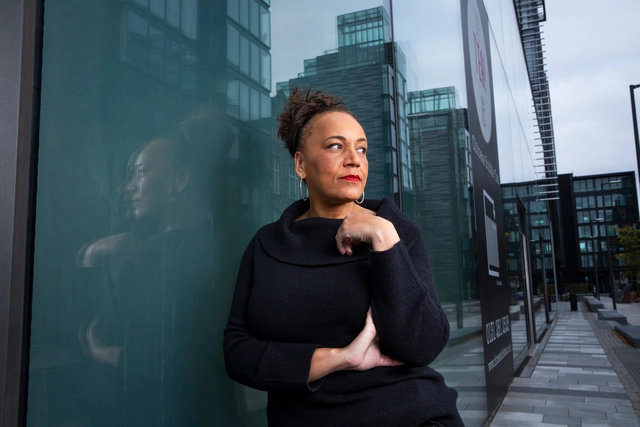
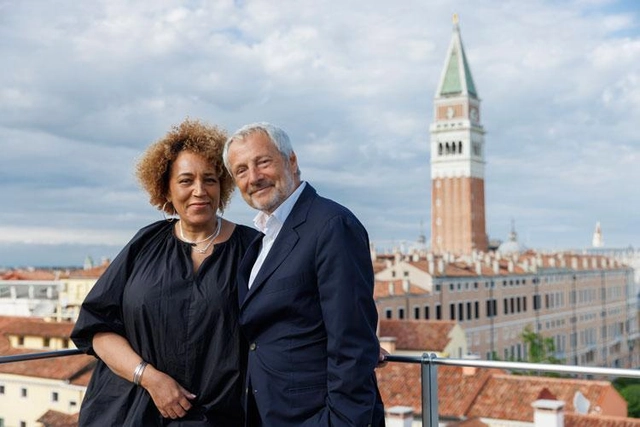
The President of La Biennale di Venezia, Roberto Cicutto, and the Curator of the 18th International Architecture Exhibition, Lesley Lokko by Jacopo Salvi. Image Courtesy of La Biennale di Venezia
Running from May 20th to November 26th, 2023 in the Giardini, at the Arsenale, and at various sites around Venice, the 18th International Architecture Exhibition will be titled: The Laboratory of the Future. Announced today by the President of La Biennale di Venezia, Roberto Cicutto, and the Curator of the exhibition, Lesley Lokko, the theme and title of this edition will consider the African continent as the protagonist of the future. “There is one place on this planet where all these questions of equity, race, hope, and fear converge and coalesce. Africa. At an anthropological level, we are all African. And what happens in Africa happens to us all”, explains Lokko.
The Graham Foundation has announced the award of 56 new grants to individuals exploring ideas that expand contemporary understandings of architecture. The recipients have been selected from an open call that resulted in nearly 500 submissions. The selected projects are led by 81 individuals with diverse backgrounds. The funded projects, including exhibitions, publications, films, and podcasts, among other formats, encourage experimentation and foster critical discourse in architecture.
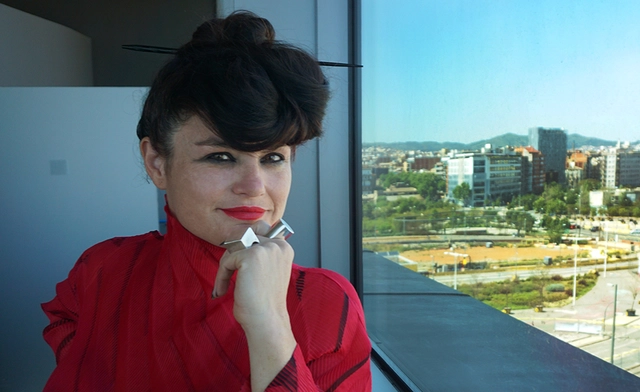
Eva Franch I Gilabert in the Design Hub Barcelona. Image
Eva Franch I. Gilabert is one of the three artistic directors of Model. Barcelona Architectures Festival, together with Beth Galí I. Camprubí and José Luis de Vicente. The first edition of a project that has taken the city of Barcelona as a place for experimentation and debate.
From the 5th to the 15th of May, they took the public space and transformed it into both a playground and platform for international voices, local architects, policymakers, politicians and citizens, to engage and discuss what the future of Barcelona and other cities could be.
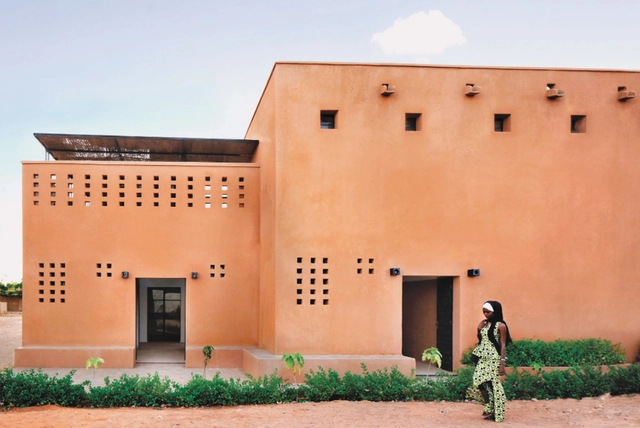
Architect Mariam Kamara—founder of Niamey, Niger-based firm Atelier Masōmī—is a contrarian of design pedagogy as it is largely practiced today. To Kamara, modern is not synonymous with European forms, architecture is not only for Westerners to define, and the so-called canon of great buildings actually ignores most of the built world. The Niger-based architect's rapidly growing practice informs a series of lectures she has delivered recently at MIT, Columbia University GSAPP, the African Futures Institute in Ghana, and Harvard GSD.
Videos
Background photograph courtesy of Charlie Hui, Viswerk. 2020
Led by architectural designers Khensani de Klerk and Solange Mbanefo, Matri-Archi is a collective based between Switzerland and South Africa that aims to bring African women together for the development of spatial education in African cities. Through design practice, writing, podcasts, and other initiatives, Matri-Archi — one of ArchDaily's Best New Practices of 2021 — focuses on the recognition and empowerment of women in the spatial field and architectural industry.
ArchDaily had the opportunity to talk to the co-directors of the collective on hegemonic space, informal architecture, technology, local idiosyncrasies, and the future of African and global cities. Read the full interview below.
The digitisation of architecture and design projects has been going on for some time now and has increased even more, largely due to the global pandemic. To hear talk of the metaverse, the NFT or the digital twins seems to be commonplace at this time, when the digital economy is booming and where architects and designers who seek to move from the physical world to the virtual world are beginning to proliferate. But will virtuality be the future of architectural visualisation?
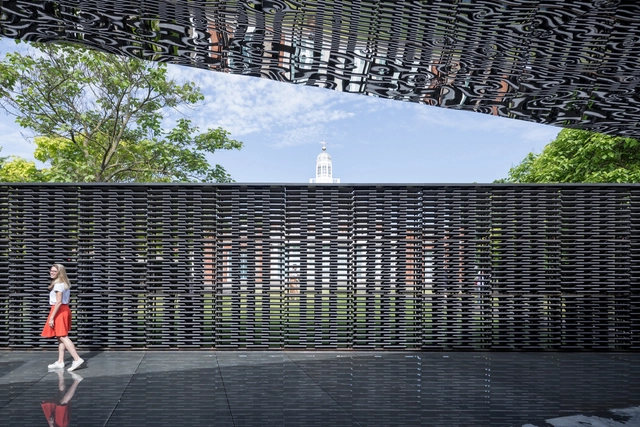
Technical precision combined with environmental concern and exploratory and investigative character make Carla Juaçaba one of the great representatives of Latin American architecture today. Carioca, born in 1976, Carla Juaçaba attended the University of Santa Úrsula and attributes much of her experimental and interdisciplinary style to this educational institution. It is not by chance that during her academic training her great inspiring masters were the architect Sergio Bernardes and the visual artist Lygia Pape, insinuating her interest in the multiple disciplinary branches that can compose architecture. In this sense, while still at graduation, Carla worked together with architect Gisela Magalhães, from Oscar Niemeyer’s generation, in scenography and expography projects.
There’s a famous quote—it’s usually attributed to Winston Churchill—that goes, “History is written by the victors.” This cynical and largely erroneous belief could only be true if history was fixed, settled, static. It never is, and that’s precisely why we have historians. It might be more accurately said that history’s first draft is written by the victors. But first drafts, as any writer will tell you, are famously unreliable. So it is with architectural history. Women have played significant roles in the field since the start of the profession, but that is not how history has recorded it. A new book, The Women Who Changed Architecture (Princeton Architectural Press), a collection of more than 100 mini-biographies of important women architects, covering more than a century, hopes to take a step toward correcting that oversight. Recently, I spoke to Jan Cigliano Hartman, the editor of the volume, about creating the book, important and overlooked figures, and why this isn’t a definitive list.
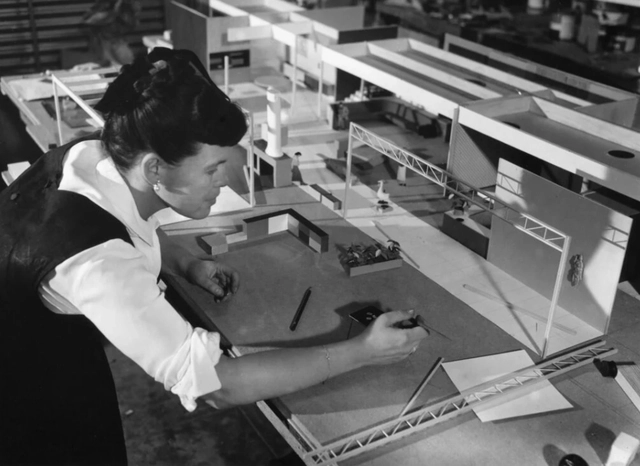
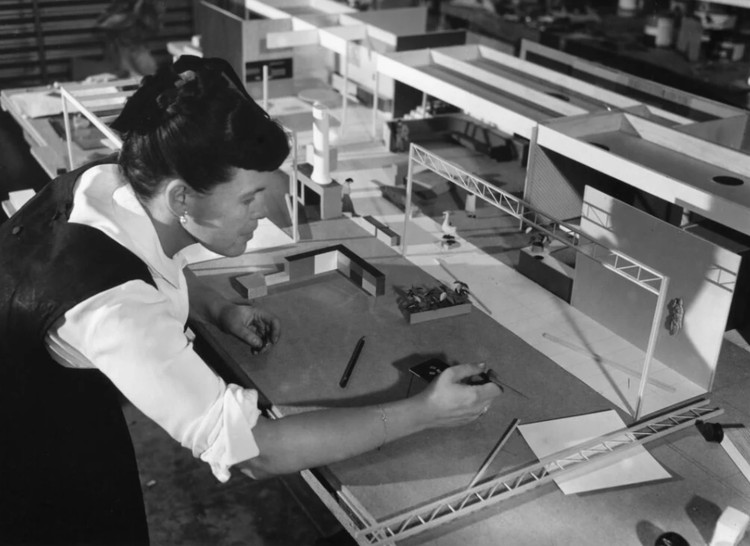
Ray working on a model for the Billy and Audrey Wilder House in 1950 (unbuilt).. Image Courtesy of Eames Office
On the heels of the Eames Office’s 80th anniversary marked by an exhibition and a Ray-inspired sneaker, director Eames Demetrios spoke to Metropolis about the matriarch who continues to inspire design.
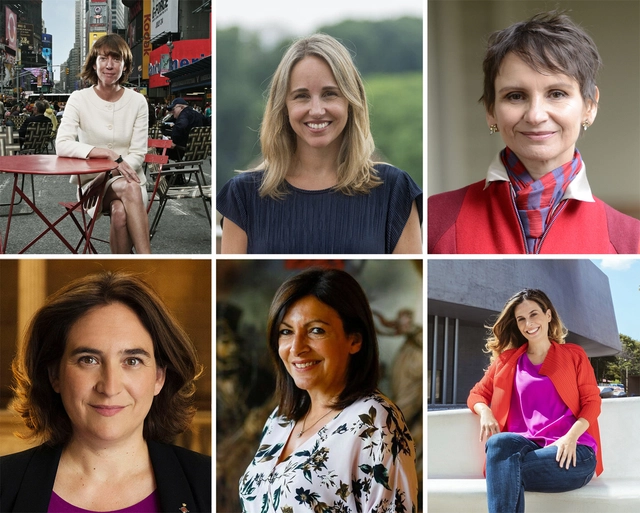
In different parts of the world, women are transforming cities and taking up spaces in urban planning and management as never before. Paris, Barcelona and Rome, for example, in addition to being cities where almost anyone would like to live, are now cities managed by women for the first time in their history, all in their second term. Major changes and currently celebrated plans, such as the “15-minute city” in Paris, the opening of Times Square to the people in New York, and the urban digitization of Barcelona as a smart city, were led by women.
The Metropolitan Museum of Art in New York has selected Mexican architect Frida Escobedo to design the new $500 million modern and contemporary art wing. The Met does not have, until now, a thematic area that would house pieces corresponding to this temporality in art.
While women make up an equal part of the population, they are not equally represented when imagining, planning, designing, and constructing the built environment around the globe. Thriving to rebalance forces and close the gap of gender inequality, the world is moving slowly but surely into a more diverse, equitable, and inclusive future. Looking back at 2021, this year has seen the selection of Lesley Lokko as curator of the 2023 Venice Biennale, Anne Lacaton winning with her partner Jean-Philippe Vassal the 2021 Pritzker Prize, the 6th woman to ever receive the award, and the MAXXI Museum celebrating the transformative role of female architects in the profession's evolution over the last century.
The 2022 Women's International Day, according to the UN is centered on “Gender equality today for a sustainable tomorrow”, focusing on females involved in building a sustainable future, while the official platform of the 8th of March is concentrating its efforts on breaking the bias and eliminating discrimination. Recognizing every single day the female force that shapes the built environment, ArchDaily on the other hand, turned to its global audience this year, seeking input to shed light on even more women architects, from the four corners of the world. Always trying to reach new realms, this selection of 25 professionals is looking to adjust the historical narrative by highlighting pioneers of the field, to present established practitioners molding the world we live in, and to share profiles of activists and scholars, implicated in change.
Sharjah Architecture Triennial (SAT) announced the appointment of architect Tosin Oshinowo as the curator of its second edition, which will open in 2023. From its inaugural edition of 2018, the triennial established itself as an international platform highlighting the architecture of West and South Asia, as well as the African continent. Oshinowo’s appointment is prompted by the architect’s socially responsive approaches to architecture and her deep knowledge of the African architectural and urban context. Her work reflects SAT’S mission to pursue a multidisciplinary design approach “that fosters an understanding of the broader role of architecture, including its relation to social and environmental issues.”
The Board of La Biennale di Venezia, has appointed Ghanaian-Scottish architect, academic, and novelist Lesley Lokko as Curator of the 18th International Architecture Exhibition - La Biennale di Venezia. The 18th International Architecture Exhibition will be held from Saturday 20 May to Sunday 26 November, 2023.
Since its founding in 1851, The New York Times has published thousands of obituaries listing the lives and legacies of some of the world’s most influential people. However, by their own admission, the listings have historically been dominated by white men. In order to address this, The Times launched its “Overlooked” series in 2018, telling the stories of women such as Sylvia Plath and Emma Gatewood.
In many parts of the world, more women have architectural degrees than men. However, this fact hasn’t translated past university into the working world as women continue to be underrepresented across nearly all levels of practice.
The conversation regarding women in architecture gained tremendous traction back in 2013 with the petition for Denise Scott Brown to be recognized as the 1991 Pritzker Prize winner, alongside her husband and the consequent rejection of that request by Pritzker. The Architectural Review and Architect's Journal have, since 2015, jointly presented awards to the exceptional female practitioners as part of their Women in Architecture Awards program. The swelling of these movements have helped to promote not only the role but also the recognition of women in architecture.









.jpg?1652860288&format=webp&width=640&height=580)
.jpg?1652860800 "Danish Architecture Center Exhibition. Image © Laura Stamer")
.jpg?1652860271 "Danish Architecture Center Exhibition. Image © Laura Stamer")
.jpg?1652861441 "Helen & Hard installation, Women in Architecture at DAC. Image © Laura Stamer")
.jpg?1652860454 "Helen & Hard installation, Women in Architecture at DAC. Image © Laura Stamer")
.jpg?1652860288)







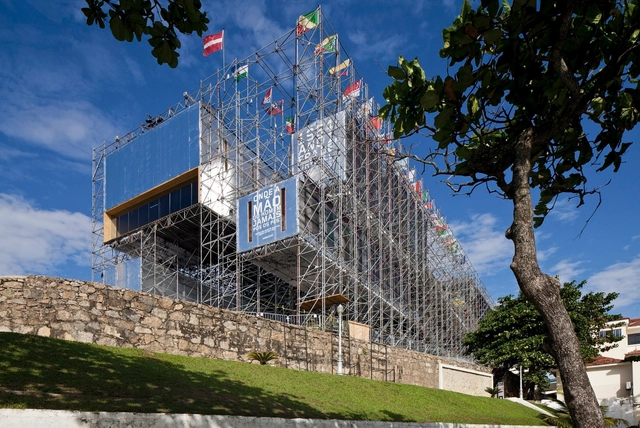


.jpg?1648076854 "Casa Santa Teresa / Carla Juaçaba. © Federico Cairoli")