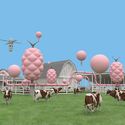
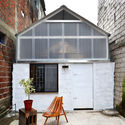
Surface Ex-Tension by Jonathan Craig, Luis Arjona, Marco Nieto & Philip Elmore. Image Courtesy of Arch Out Loud
Since its installation in the late 1990s, a large clock in New York City’s Union Square has been counting up to 24 hours in each day with the number of hours, minutes, seconds, and milliseconds on display. However, the digital screen was recently repurposed as a Climate Clock and now projects the amount of time the world has left to take large-scale action on climate change- and the alarming truth, based on an IPCC Special Report on Global Warming counts down to only a little over seven years left until we reach the point of no return.
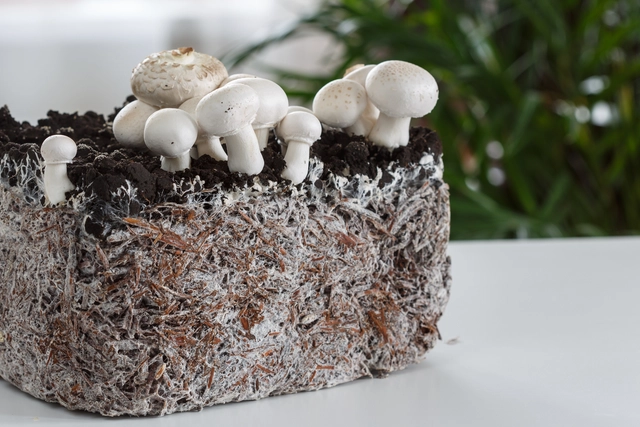
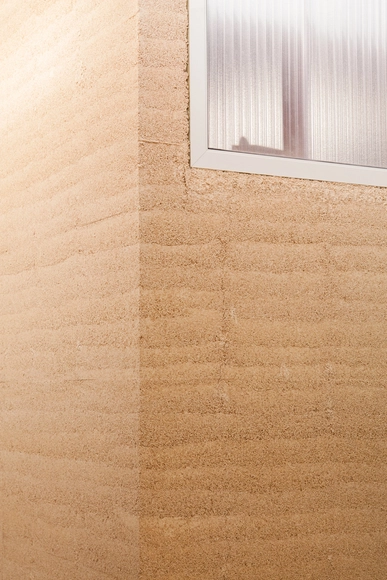
Fungi are everywhere. In the air, in the water, in our bodies, in the trees, in the ceilings of our bathrooms, underground. They can be mushrooms (edible, medicinal, hallucinogenic, or very poisonous), or take other simpler forms, such as molds. They can trigger illnesses, but they can also produce antibiotic remedies, such as penicillin, or help ferment amazing cheeses and breads. Could they also be the future of packaging and building materials?
Morland Gardens by Curl la Tourelle Head Architecture. Image Courtesy of Darcstudio
Curl la Tourelle Head Architecture received the green light to move forward with its latest “socially focused mixed-use scheme” that includes council homes, an adult education center, and affordable workspaces. Entitled Morland Gardens, the new project located in the London Borough of Brent, one of the district’s most deprived areas, is scheduled to start in the fall of 2020.
The Brundtland Report, 1987 - "Our Common Future" - introduced the notion that the sustainable use of natural resources must "meet the needs of the present generation without affecting the ability of future generations to meet theirs." Since then, the term sustainability has been popularized and, often, trivialized in our daily lives. In the construction industry, this is no different. As much as we know that to build, we need to destroy, how is it possible to mitigate the effects of construction during the useful life and demolition of buildings? A sustainable building, in its design, construction, and operation, must reduce or eliminate negative effects overall and may even generate net positive impacts on the climate and environment – preserving resources and improving the quality of life of the occupants simultaneously. To say that a building is sustainable is easy and even seductive. But what exactly makes sustainable construction?
Answering this question is not a simple exercise. That is why, in the last 30 years, several building sustainability certifications have been created. Through outsourced and impartial evaluations from different sources, they aim to verify the sustainable aspects of any construction. Each of them addresses particular building elements and is typically focused on certain regions of the world. While there are some certifications that verify whether the building meets certain efficiency criteria, others create different classifications, assigning a score based on these evaluations. Below, we list some of the primary sustainability certifications around the world – ranked alphabetically – and include their main architectural applications alongside a brief explanation:
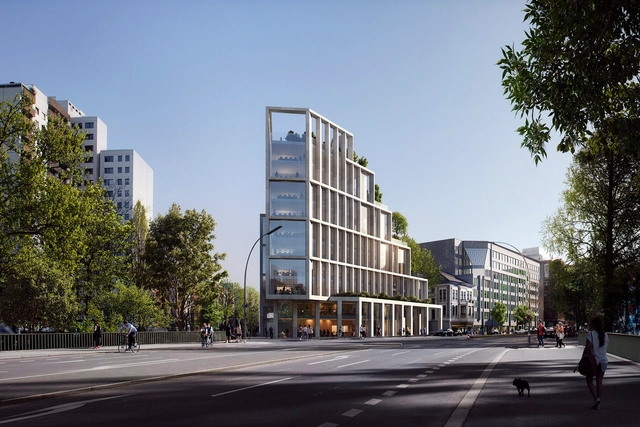
C.F. Møller Architects was selected to design the new HQ of Berlin Hyp, one of Germany’s leading real estate financiers. With a strong focus on sustainability, the winning proposal of the invited international competition, supports the bank’s vision, “contributing to the transition and urban development of the surrounding area”.
The Choice School - Calicut, India. Image Courtesy of CetraRuddy
Architects are mobilizing their efforts, to help schools around the world reconsider their design in order to guarantee sustainability, emotional wellness, and physical health. CetraRuddy, Cooper Robertson, and WXY are amongst those proposing an increase in outdoor programming and a rearrangement of classrooms, for post-pandemic school design.
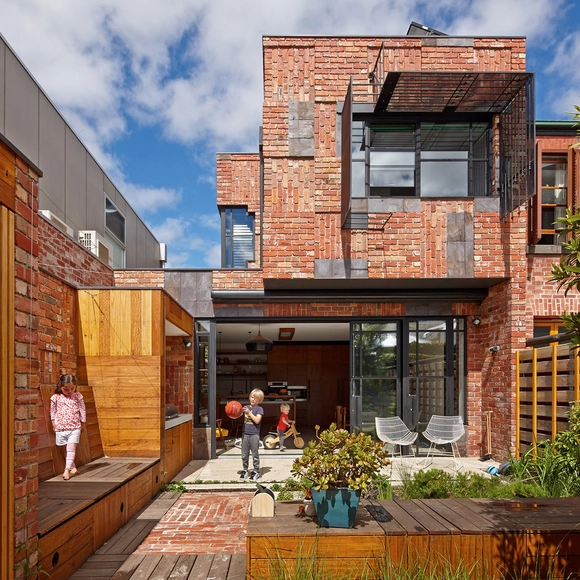
The architectural scene has been witnessing lately a growing focus on indoor/outdoor functions. Discover 3 different interventions from 3 different practices, tackling one common issue, and focusing on outdoor space as a major programming element.
Architects and designers of the built environment are often conceptualized in popular culture as progressive change agents whose canvas of steel and glass brings light to the public realm. At least one global survey of the public’s trust in various professions places architects in a top-ranked cohort that includes medical professionals and first responders. But in the United States, the architecture profession is surprisingly older and much less progressive than one might imagine.
https://www.archdaily.com/945591/the-drawdown-review-suggests-that-architects-move-toward-scalable-climate-solutionsJesse M. Keenan
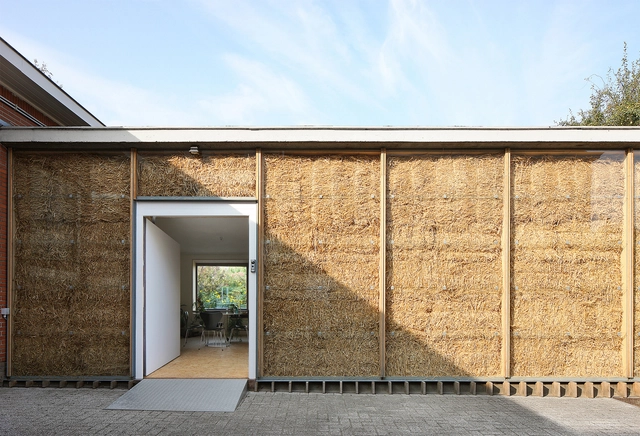
Despite a bad reputation in children's stories, straw buildings can be sustainable, comfortable, and, above all, solid and resistant. Several studies and experiments have been carried out with this agricultural waste substance, qualifying it as an potential material for the construction of walls, with good thermal, acoustic, and even structural characteristics. In addition, it is a renewable resource and easily constructed. Below, we'll talk about the characteristics of this material and how much more it would take than the breath of a big bad wolf to bring down a house made of straw.
As levels of pollutant emissions have increased over the years, awareness has also grown regarding actions that can be taken to minimize the damage caused to the planet. As a way to promote waste reduction or prevention, the 3 R's rule is created: reduce, reuse and recycle. These actions, together with sustainable consumption standards, have been promoted as a means to protect natural resources and minimize waste.
A lot of prejudice and contradictions surround the history of Cannabis sativa around the world. It is estimated that hemp was one of the first plants to be cultivated by mankind. Archaeologists have found remnants of hemp fabrics from ancient Mesopotamia (now Iran and Iraq) that date back to 8,000 BC [1]. There are similar records in China documenting the consumption of hemp seeds and oils, dating between 6 and 4 thousand BC. Upon its arrival in Europe, its main use was for the manufacture of ship ropes and fabrics: even the sails and ropes of Christopher Columbus' ships were made of this material. Likewise, the first books after Gutenberg's invention of the printing press [2] and many paintings by Rembrandt and Van Gogh were made of hemp.
The use of hemp for civil construction is not new either. Mortar made of hemp was discovered on the pillars of bridges built by the Merovingians in the 6th century, in what is now France. It is also well known that the Romans used hemp fiber to reinforce the mortar in their buildings. Nowadays, although there are legal barriers in many countries, the use of hemp as a construction material has had encouraging results, with research demonstrating its strong thermoacoustic and sustainable qualities. Hemp can be shaped into fibrous panels, coverings, sheets, and even bricks.
Videos
Courtesy of the Lisbon Architecture Triennale
The Lisbon Architecture Triennale published on Vimeo the series of debates Talk, Talk, Talk held during its 5th edition, which was curated by Éric Lapierre. Divided into five major exhibitions, the Triennale addressed in one of them the issue of economy of means, discussed in the debates below.
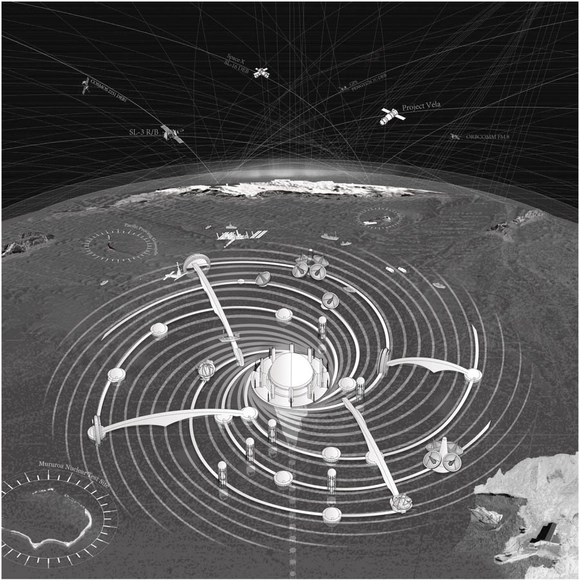
Cosmorama, a part of the U.S. pavilion at the Venice Biennale in 2018, comprised three sets of illustrated geographic stories: Mining the Sky, Planetary Ark, and Pacific Cemetery (a portion of which is pictured above). Courtesy Design Earth
I can’t stop thinking about refugia. In the years, months, and days before the COVID-19 pandemic, the term was confined to the literature and philosophy of climate crisis, referring to pockets of life that through geographic isolation or species resilience manage to hang on in spite of the environmental forces against them. Think of clusters of Pacific Northwest barnacles nestled high on coastal outcroppings to avoid falling prey to sea snails. Or old-growth forests insulated from rising temperatures in cool mountain valleys.
As self-quarantine set in earlier this spring, the word refugia, at least for me, expanded in definition from specific ecological condition to conceptual touchstone—a necessary leap to metaphor when faced with planetary crisis. The magnitude of this pandemic falls outside human comprehension, but for the luckiest of us, refuge is manageable: a place of relative safety, of sourdough starters and online Jazzercise classes.
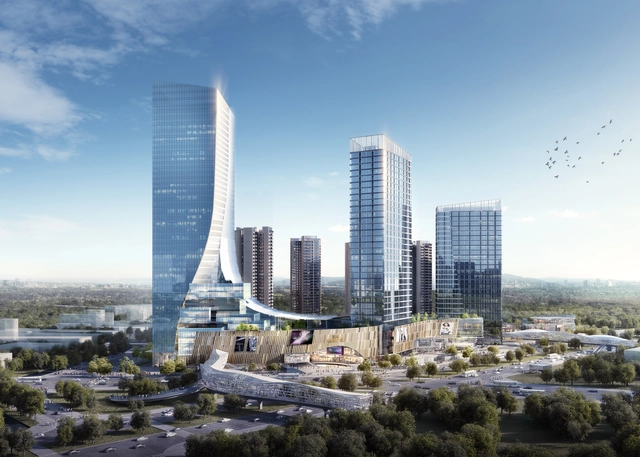
Ronald Lu & Partners, the leading TOD expert with over 60 TOD projects across China, is currently developing flagship Shunde ICC Country Garden Sanlonghui. Showcasing an upgraded TOD4.0 design concept, the mixed-use project generates “a harmonious relationship between people and the environment”.
The PHVision Masterplan for Heidelberg in Germany has been approved by the City Council. Located on the site of the Patrick-Henry-Village (PHV) in Heidelberg, the 100-hectare development, designed by KCAP can now move forward, transforming the former military area into a new quarter, establishing the knowledge city of the future.
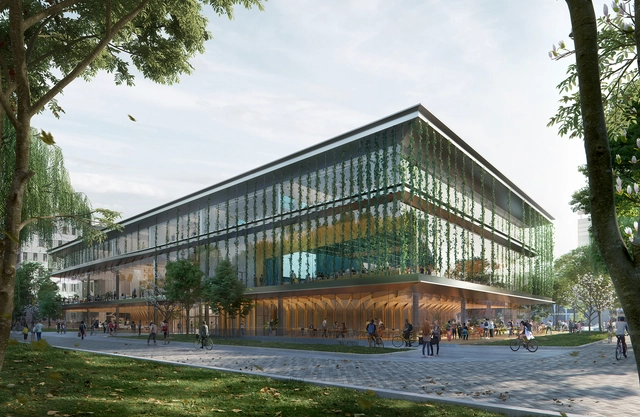
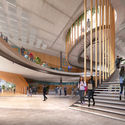
Part of Delft University of Technology (TU Delft), in the Netherlands, Echo is a new multifunctional and flexible inter-faculty building, now under construction and due for completion in Dec 2021. Designed by UNStudio, in collaboration with Arup and BBN, the future-proof facility meets the needs of the ever-increasing numbers of students.
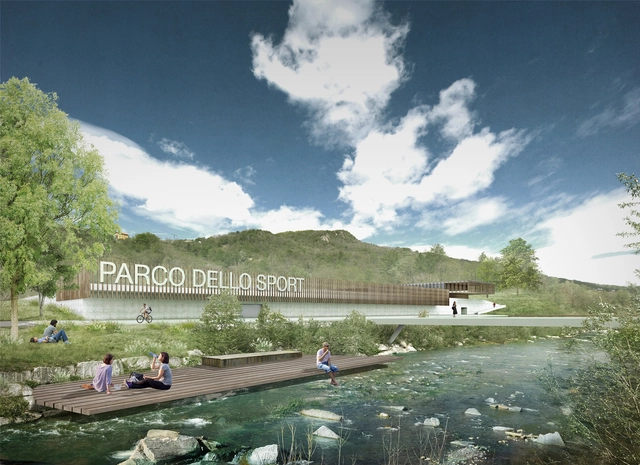
Focusing on the future of public space, and centering their approach on wellbeing and sport as drivers of sustainability, economic and social development, the Lugano Municipal Council in Switzerlandhas given the go-ahead for the planning of the new Pole of Sports and Events (PSE). Designed by LAND, the project dictates the direction for public spaces in the post-pandemic era.
The construction industry is responsible for 75% of the consumption of earth's natural resources. Stone, sand, iron, and many other finite resources are extracted in huge quantities to supply the markets. Additionally, construction sites themselves generate enormous quantities of waste, whether through construction, demolition, or remodeling. In Brazil, for example, construction waste can represent between 50% and 70% of the total mass of municipal solid waste [1]. This waste often ends up in landfills and dumps rather than being properly disposed of, overwhelming municipal sanitation systems and creating informal disposal sites.
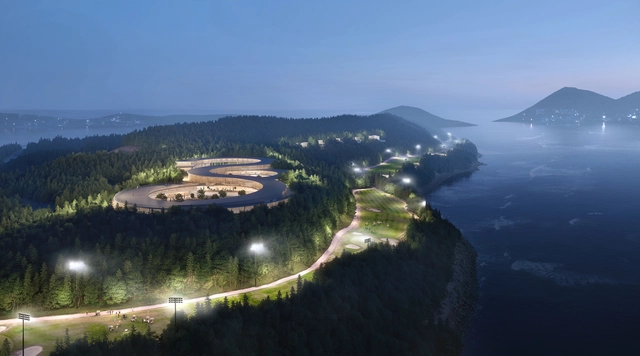
UNStudio has recently designed the masterplan for Gyeongdo Island, a new sustainable leisure destination in South Korea. Driven by nature, the 470,000 m2 buildings and public spaces are centered on the qualities of a green environment.
.jpg?1603161566&format=webp&width=640&height=580)
.jpg?1603161566)




.jpg?1597648211&format=webp&width=640&height=580)


.jpg?1597648186 "The Choice School - Calicut, India. Image Courtesy of CetraRuddy")
.jpg?1597648211)






_KCAP_PHV_Zentrum.jpg?1592834532&format=webp&width=640&height=580)