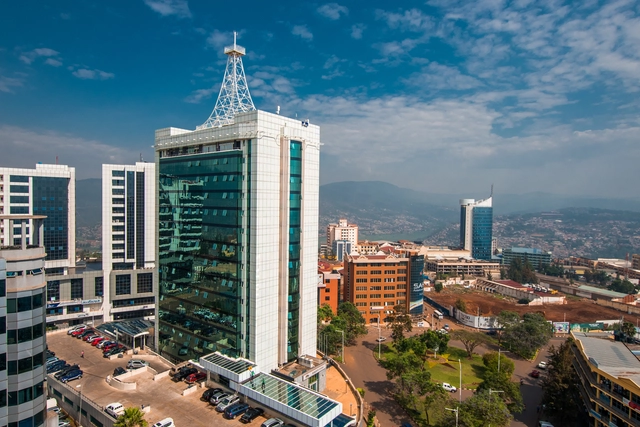
Kigali, Rwanda - September 21, 2018: a wide view looking down on the city centre with Pension Plaza in the foreground and Kigali City Tower in the background against a backdrop of distant blue hills. Image via Shutterstock/ By Jennifer Sophie
The urban metropolises of our planet are home to an abundance of stories. They are home to stories of wealth, of innovation, and of architectural marvels. They are home, too, to stories of inequality, inequity and of urban divides – places where one’s income determines the quality of the spatial environment around them. Within these stories has developed an increasing advocation for making cities “smarter”, the goal being to use data and digital technology to build more efficient and convenient urban environments.
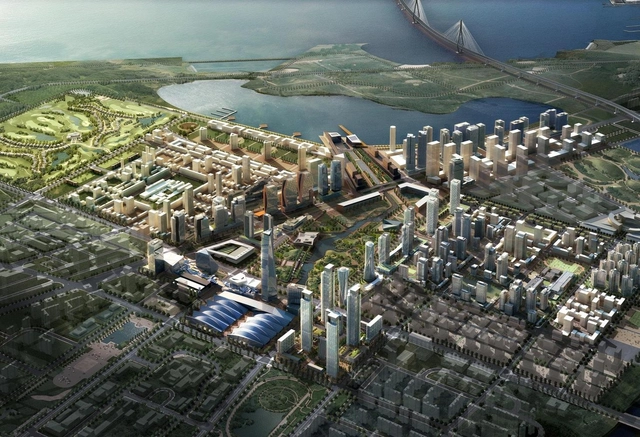
What does it take to build a smart city from nothing? Or maybe the better question is, what does it take to build a smart city from nothing and make it successful? For over a decade, architects and urban planners worked hand in hand to create Songdo, a brand new business district that sought to represent South Korean advancements in technology and infrastructure. Songdo was once a model for how we would live in cities of the future- but now, the reality of what this smart city quickly became has us rethinking how the combination of technology and community might have gone wrong.
Over the past two decades, new master-planned cities have risen at a pace and scale rarely seen in modern history. Concentrated largely in Asia, the Middle East, Africa and Latin America, more than 150 such projects are currently underway. For some, these cities are promoted as fast tracks to modernization and a way to leapfrog from resource- or agriculture-dependent economies into knowledge-driven ones. For others, they are strategic showcases, designed to attract global attention, foreign capital, and prestige. By packaging urbanization itself as an investment opportunity, these projects promise to stimulate growth and reposition nations within the global economy—all through the act of building anew.
According to Forbes, "The new city building movement that we are currently in the middle of is one of the most under the radar and most misinterpreted social and economic developments happening in the world today". What often escapes scrutiny, however, is not only the architecture of these projects, but the governance model they advance.
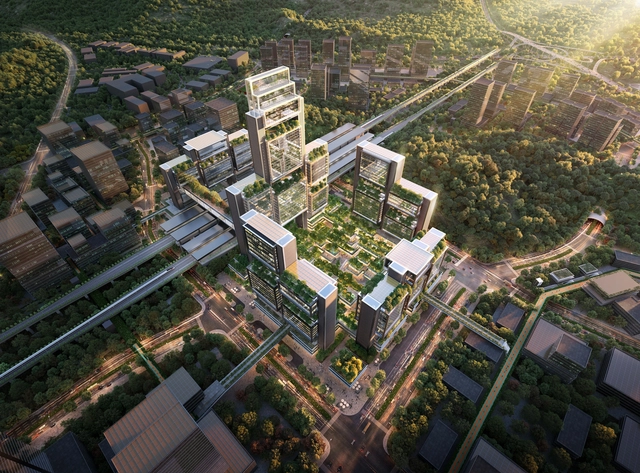
Foster + Partners has just unveiled its winning design scheme for a new urban destination in China, the Guangming Hub located on the high-speed rail connecting Hong Kong, Shenzhen, and Guangzhou. In fact, the Transport Oriented Development proposal generates a “smart city that supports the flow of people and goods with robust infrastructure, effective transport networks, reliable public services, and lush greenery”.
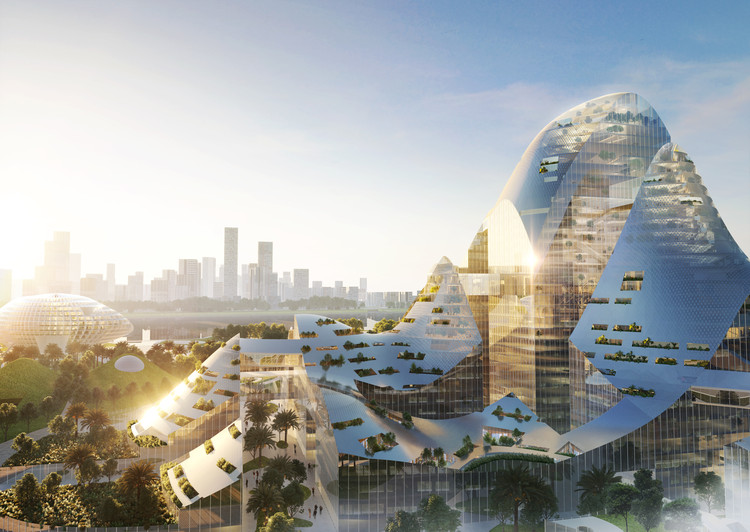
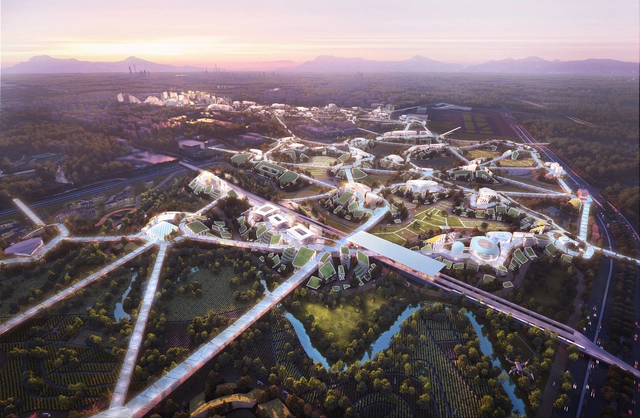
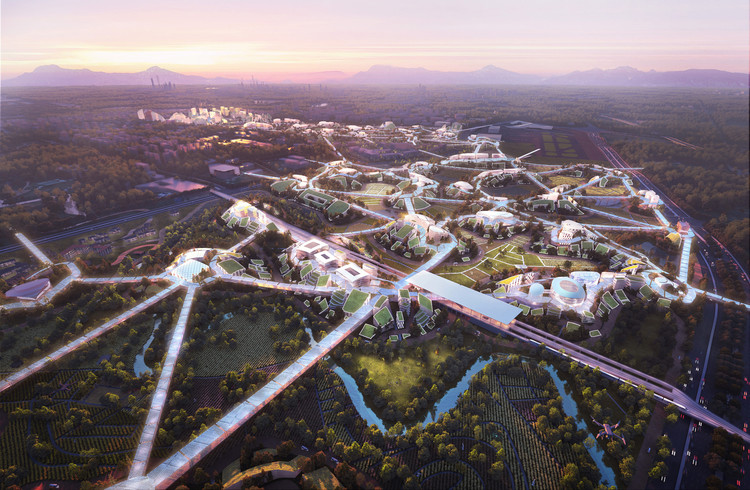
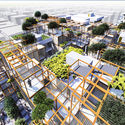
MVRDV has revealed the first images of Chengdu Sky Valley, the firm’s competition entry for the Future Science and Technology City in Southwest China. Fusing technology with nature, urban with rural, and modernity with tradition, the proposal introduces “a liveable city into the Linpan Landscape”. Located in one of China’s emerging cities, the project balances the competing needs of the area, through a computational workflow developed by in-house tech taskforce MVRDV NEXT.
Our cities, vulnerable by nature and design, have generated the biggest challenge that humankind has to face. With the vast majority of the population expected to settle in urban agglomerations, rapid urbanization is going to raise the issue of adaptability with future social, environmental, technological and economic transformations.
In fact, the main problematic of the decade questions how our cities will cope with fast-changing factors. It also looks into the main aspects to consider in order to ensure long-term growth. In this article, we highlight major points that help future-proof our cities and create a livable, inclusive and competitive fabric that adapts to any unexpected future transformation.
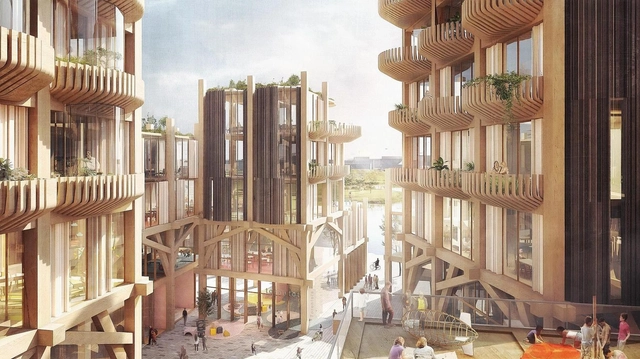
Stefano Boeri Architetti has unveiled its recent scheme for Tirana Riverside, in the Albanian capital. Tackling post-COVID 19 needs, the imagined neighbourhood, a first of its kind in Europe, is a technologically-advanced, green and sustainable novelty, designed in agreement with the Government and the City Authorities.
The use of artificial intelligence (AI) is based on the idea of optimizing, streamlining and expanding the reach of the most diverse operations. Their systems are programmed to identify patterns and carry out predictions, decisions, and ultimately perform and actions with speed and accuracy. The efficiency of the models depends on the quantity and quality of the data, which can be obtained by applications, cameras, and sensors. In the urban context, technology based on the use of artificial intelligence has been seen as a way to improve the management of cities, especially those that are denser and have larger footprints.
The “smart” movement has gained traction and generated buzz over the last decade, but despite all of the hype, what even is a smart city? The dogma behind its loose definition and goals has been rather elusive, and while some claim that it relies on digitization of all urban aspects, others argue an increase in personal data collection is the sole method for improving urban lifestyles. One person’s digital paradise is perhaps another person’s technophobic doomsday. Extending beyond the mere definition of these cities, what role do designers and researchers play in creating this loosely identified futuristic landscape? As Corbusier once defined a home as a machine for living, it’s time to redefine how our buildings shed their passive exteriors and become the true machines for working that they were always meant to be.
Reparametrize Studio has followed up their ongoing research “Re-Coding Post-War Syria”, with a project that focuses on analyzing the damaged fabric of post-war cities through 3D scanning technologies. Taking a Street in Zamalka Town in Damascus, Syria as a case study, the investigation can distinguish the areas in need of reconstruction from the areas in useful conditions.
Design and the City is a podcast by reSITE, raising questions and proposing solutions for the city of the future. In the sixth episode, Marianthi Tatari, Associate Director and Senior Architect at UNStudio, talks about creating inclusive spaces to connect people and generating 24/7 activity within their projects.
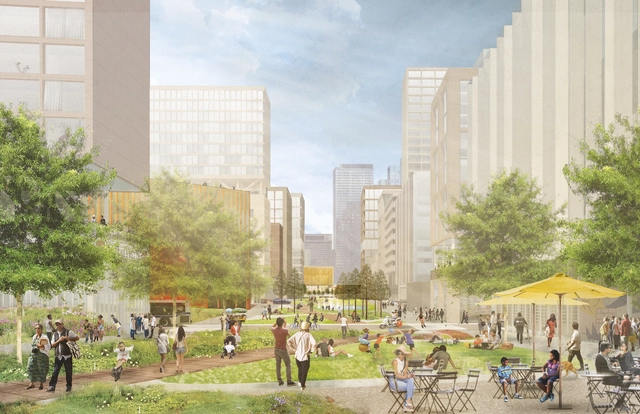
PAU or Practice for Architecture and Urbanism, a multi-disciplinary design and planning firm founded by Vishaan Chakrabarti, created a revitalization plan for Sunnyside Yard in western Queens, New York. Envisioning a more equitable and sustainable future, the 180-acre human-centered carbon-neutral master plan reflects the community’s needs.
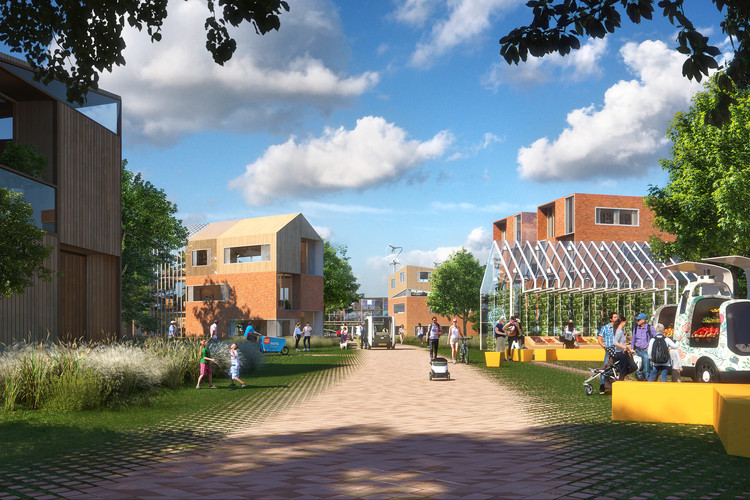
UNSense, the arch-tech company founded by UNStudio, is one step closer to the realization of the "100 Homes Project" after a successful feasibility study. Commissioned by the Brainport Smart District Foundation, the project is a collaboration between many different actors.
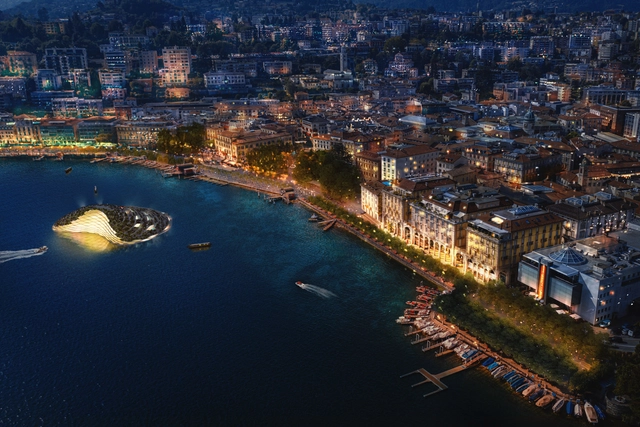
Designed by CRA- Carlo Ratti Associati and MIC-Mobility in Chain, the proposed plan for the Swiss city Lugano creates a network of public spaces, that connects the town to the lake. The project puts in place a floating garden and a reconfigurable waterfront.
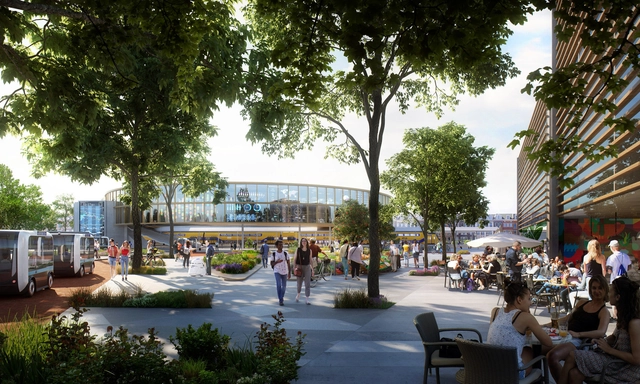
MVRDV has just released images of the firm’s competition entry for the next Tencent headquarters campus, located in Qianhai Bay, Shenzhen. Highlighting the green potential of Smart City Technology, the project imagines an entire urban district including offices, homes for Tencent employees, commercial units, public amenities, schools, and a conference center.
Cape Town, South Africa. Image Courtesy of Shutterstock
In a discourse about the future of cities, one could be forgiven for limiting their geographical scope to innovations in Europe, the United States, and increasingly, China and Southeast Asia. After all, Shenzhen is about to once again host the world’s only Biennale dedicated exclusively to urbanization, while smart, responsive architecture manifests in visions for cities such as Toronto and London, and tech giants such as Microsoft and Siemens. However, despite our preoccupation with the problems and opportunities of urbanization in the ‘Global North’, and the architectural innovations they herald, there is merit in expanding our horizons – and not just towards Mars. By the end of the century, none of the world’s largest 20 cities will be in China, Europe, or the Americas. Africa, meanwhile, will host 13 out of 20, including the top 3.
https://www.archdaily.com/927842/why-africa-is-the-future-of-megacitiesNiall Patrick Walsh
The new Quayside smart city development by Sidewalk Labs will be scaled back after a vote last week in Toronto. As the subsidiary of Google's parent company Alphabet, Sidewalk Labs aimed to "unlock the potential" of the city’s Eastern Waterfront. The government agency responsible for development of the area, Waterfront Toronto, voted unanimously to limit the team’s original 190-acre plan to 12 acres.
By 2050, the world’s population is expected to have exceeded 10 billion people, making overcrowded cities one of the most pressing issues of the present. Data analysis, machine learning, transportation developments, and the rapid development of new social technologies are increasingly changing the needs of people and communities, which will have a direct impact on the issue of overcrowding and on our built environment more largely.



.jpg?1611288061 "The Line project in Saudi Arabia. Image © NEOM")






.jpg?1591114518&format=webp&width=640&height=580)




JakubCervenkai_1_(131_of_589).jpg?1584354067 "© Jakub Cervenkai")
TomasPrinc-265.jpg?1584353916 "© Tomas Princ")