1. ArchDaily
  2. Smart Cities

Smart Cities: The Latest Architecture and News

Media City / GAD Architecture

For over ten thousand years, cities have maintained an industrial infrastructure to transform local materials into basic necessities, such as clothing, food, and shelter. Even in the present day, with advances in science, construction, and commercial technology, a need still exists for structures dedicated to industrial-scale production, storage and distribution. However, in this more advanced, environmentally-conscious age, a challenge has emerged to create industrial complexes which are ecologically sensitive, responsible and sustainable.

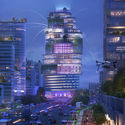
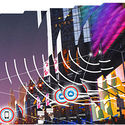
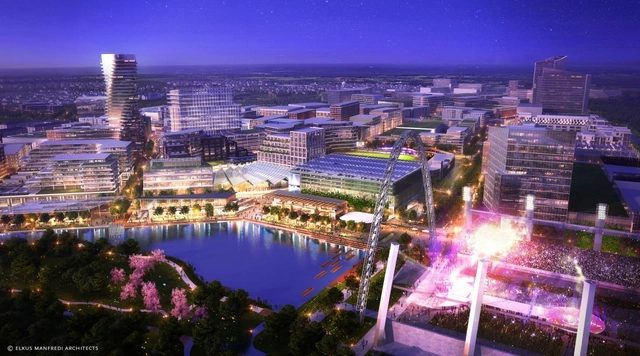
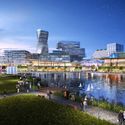
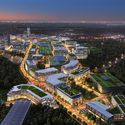
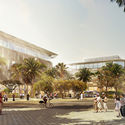
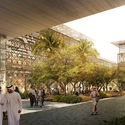
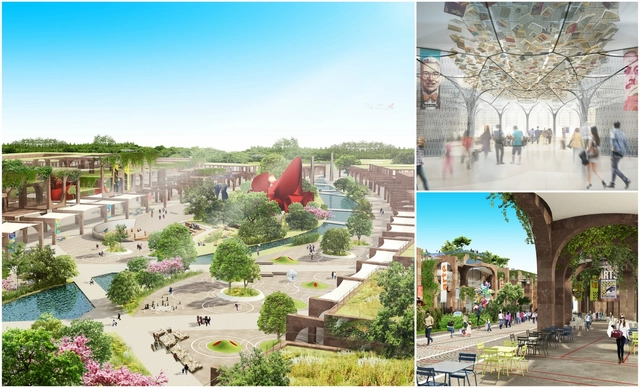
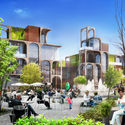
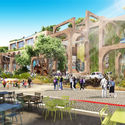
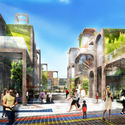
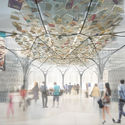
Against this environmental backdrop, Istanbul-based GAD Architecture have unveiled Media City, a multimedia-based industrial complex to serve Istanbul’s future airport, projected to be the world’s largest upon completion. Recognized with a Future Project Award by the Architectural Review, Media City will incorporate industrial buildings in an urban setting inspired by QR codes, where artistic and cultural values co-exist with a celebration of environmental and technological progress.

Media City / GAD Architecture - Image 1 of 4Media City / GAD Architecture - Image 2 of 4Media City / GAD Architecture - Image 3 of 4Media City / GAD Architecture - Image 4 of 4Media City / GAD Architecture - More Images+ 6

"Array of Things" is A Ray of Hope for Big-Data-Based Urban Design

Subscriber Access | 

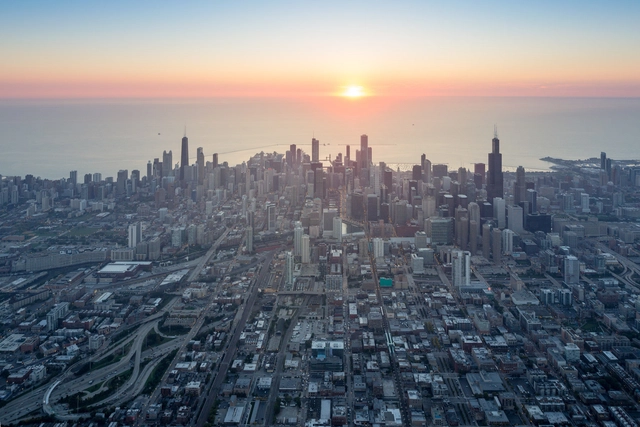
For a number of years now, Smart Cities and Big Data have been heralded as the future of urban design, taking advantage of our connected, technological world to make informed decisions on urban design and policy. But how can we make sure that we're collecting the best data? In this story, originally published on Autodesk's Redshift publication as "'Array' of Possibilities: Chicago’s New Wireless Sensor Networks to Create an Urban Internet of Things," Matt Alderton looks at a new initiative in Chicago to collect and publish data in a more comprehensive way than ever before.

If it hasn’t already, your daily routine will soon undergo a massive makeover.

For starters, when your alarm clock goes off, it will tell your coffeemaker to start brewing your morning joe. Then, when you’re on the way to work, your car will detect heavy traffic and send a text message to your boss, letting her know you’ll be late. When you arrive, you’ll print out the agenda for today’s staff meeting, at which point your printer will check how much ink it has left and automatically order its own replacement cartridges.

At lunch, you’ll think about dinner and use your smartphone to start the roast that’s waiting in your slow cooker at home. And when you come home a few hours later, your house will know you’re near, automatically turning on the lights, the heat, and the TV—channel changed to the evening news—prior to your arrival. It will be marvelous, and you’ll owe it all to the Internet of Things (IoT).

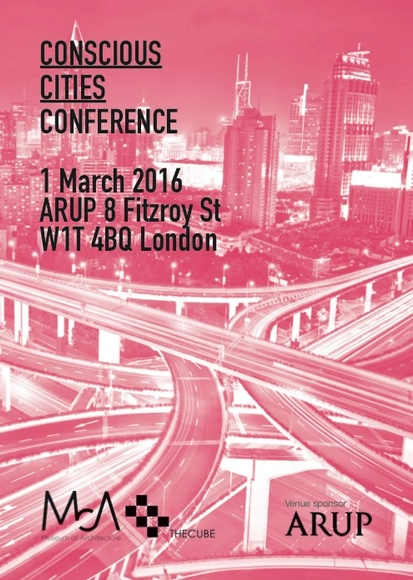
Event: Conscious Cities Conference

Conscious Cities is a one-day conference organised by MoA and THECUBE that aims to explore the relationship between neuroscience and architecture. By bringing together neuroscientists, architects, engineers, planners and developers, the conference aims to offer necessary tools for understanding how the built environment impacts our cognitive functions, while also showing how professionals can use research in neuroscience to design better spaces and cities for the future.

Call For Papers: New Architectures, Infrastructures and Services for Future Cities

Driving urban infrastructure modernization, improving citizen life by means of technology, sustainable innovation, wide band, Big Data… These are some of the subjects that will be discussed at the International Conference on City Sciences, that will take place at Santiago de Chile on the 16th and 17th of June.

United States Allocates $160 Million to Smart Cities Initiative

Subscriber Access | 

In the continuing quest for smarter cities, the White House has announced the dedication of 160-million dollars toward the integration of sensors and data collection in cities across the United States. The new initiative strives to produce better, real-time data for local organizations, companies and governments to improve responses, both in time and effectiveness. The initiative broadly covers various organizations and federal grants, but hopes to address issues like crime, traffic congestion and climate change. Read more after the break.

Rahul Mahrotra Discusses the "Flawed" Notion of 'Smart Cities'

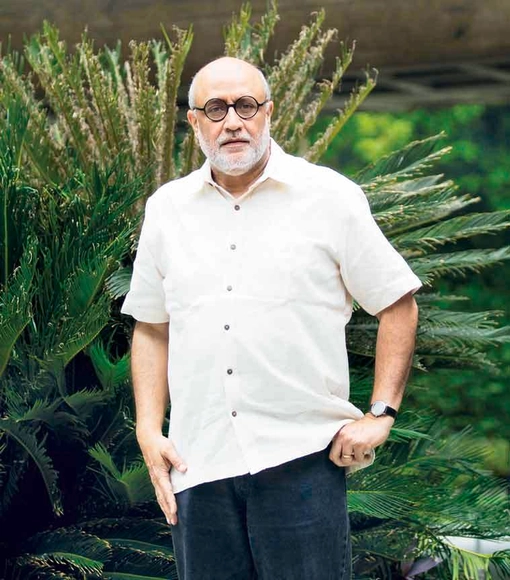
In an interview with The Indian Express, Rahul Mehrotra—conservationist, architect and author of Kumbh Mela: Mapping the Ephemeral MEGACITY—talks to Shiny Varghese about his belief that the current notion of a 'smart city' is about "blanket replication, [which] will result in gated communities and flattening of the city, driven by infrastructure and investment." He argues that this approach "will create a form of exclusion."

7 Rules for Designing Safer Cities

As a part of its EMBARQ Sustainable Urban Mobility initiative, the WRI Ross Center for Sustainable Cities has created a global reference guide called Cities Safer by Design “to help cities save lives from traffic fatalities through improved street design and smart urban development."

Causing over 1.24 million deaths annually, traffic fatalities are currently estimated to be the eighth leading cause of death worldwide, a ranking that is expected to rise to the fifth leading cause of death by 2030.

With these staggering numbers in mind, the Cities Safer by Design guide discusses ways to make cities less dangerous, particularly with its section entitled, “7 Proven Principles for Designing a Safer City.” Learn what the 7 concepts are, after the break.

AD Essentials: Smart Cities

Subscriber Access | 
AD Essentials: Smart Cities  - Image 1 of 4

This article is part of ArchDaily Essentials, a series of articles which give you an overview of architecture's most important topics by connecting together some of our best articles from the past. To find out more about ArchDaily Essentials, click here; or discover all of our articles in the series here.

B V Doshi and Rajeev Kathpalia on the Idea of the Indian Smart City

Subscriber Access | 
B V Doshi and Rajeev Kathpalia on the Idea of the Indian Smart City - Featured Image
Songdo in South Korea is one of the most advanced smart cities so far constructed. Image Courtesy of Cisco

Despite being largely invented and developed by Western technology companies such as IBM and Cisco, the concept of the Smart City has been exported all over the world, with some of the most advanced implementations of smart city ideals being found from Rio de Janeiro in Brazil to Songdo in South Korea. In this interview, originally published by Indian Architect & Builder as "Perceptions of a Smart City," Morgan Campbell talks with B V Doshi and Rajeev Kathpalia about Le Corbusier, urbanization, and what it might mean to establish a smart city in India.

Shortly after coming to office in 2014, Prime Minister of India, Narendra Modi announced an urban agenda in the form of 100 new Smart Cities for the country. The idea has captured attention at home and abroad, provoking intense discourse and debate regarding the form and context into which these cities should be developed. In January of this year, the city of Jaipur hosted the first annual Architecture Festival. Crafting Future Cities is just one of many platforms for this discussion.

The Transnational Urbanism of Paris: An Interview With Assistant Mayor Jean-Louis Missika

Subscriber Access | 

In the past century, the rise of globalism, of relatively cheap international transport, and above all, of the "world city" has fundamentally changed the way we think about citizenship and the nation state. To accommodate that change, we have also had to invent a new kind of "Transnational Urbanism": at the more esoteric end of this scale are ideas such as JG Ballard's "city of the 21st century," a geographically scattered "city" made up of the interconnected no-man's-land of international airports, which was recently exemplified by Eduardo Cassina and Liva Dudareva's hypothetical proposal for Moscow's Central Business district. At the other end of the scale are pragmatic choices that must be made by cities such as New York, London and Hong Kong that truly affect the lives of people not just living in the city, but around the world.

To probe this topic, MONU Magazine has dedicated their latest issue to the topic of Transnational Urbanism. In this extract from the magazine, MONU's Bernd Upmeyer and Beatriz Ramo interview French sociologist and Assistant Mayor of Paris Jean-Louis Missika to discover how the city is positioning itself as a 21st century global city, and how it is absorbing and adopting change in everything from the creative class to smart cities and 3D Printing.

The Transnational Urbanism of Paris: An Interview With Assistant Mayor Jean-Louis Missika - Image 1 of 4The Transnational Urbanism of Paris: An Interview With Assistant Mayor Jean-Louis Missika - Image 2 of 4The Transnational Urbanism of Paris: An Interview With Assistant Mayor Jean-Louis Missika - Image 3 of 4The Transnational Urbanism of Paris: An Interview With Assistant Mayor Jean-Louis Missika - Image 4 of 4The Transnational Urbanism of Paris: An Interview With Assistant Mayor Jean-Louis Missika - More Images+ 12

Rem Koolhaas: "Soon, Your House Could Betray You"

In the latest of a series of polemical arguments against smart cities, Rem Koolhaas has penned perhaps his most complete analysis yet of the role that emerging technologies and the way they are implemented will affect our everyday lives, in an article over at Artforum. Taking on a wide range of issues, Koolhaas goes from criticizing developments in building technology as a "stealthy infiltration of architecture via its constituent elements" to questioning the commercial motivations of the (non-architects) who are creating these smart cities - even at one point implicating his other erstwhile recent interest, the countryside, where he says "a hyper-Cartesian order is being imposed." Find out more about Koolhaas' smart city thoughts at Artforum.

Free Online Architecture and Design Courses

Thanks to the increasing popularity of massive open online courses -- or MOOCs as they’re commonly referred to -- learning has never been easier (or more convenient). Sites like Coursera and edX offer free classes online from accredited and well-known universities across the globe, including Harvard, MIT and the University of Hong Kong. While some classes are more structured and include a set lesson plan, homework assignments, quizzes and the option to receive a certificate at the end, others can be set at your own pace and approached more independently.

Following our wildly popular article on Four Ways to Learn About Architecture for Free, we’ve compiled a list of upcoming online classes related to architecture, engineering, urbanism and design. So whether you’re looking to embark on a new topic or dive deeper into an already familiar subject, take a look at these free online courses after the break.

Walkable Cities? Rooftoppers Want Climbable Cities

Subscriber Access | 

“The city for the people!” is the familiar rallying cry of the reformist architect - but which people, exactly? That’s the question at the heart of rooftopping, a new and thrill seeking variant of Urban Exploration which has recently captured the attention of the media. Spreading via social media outlets such as Instagram, the stunts draw attention by design, but why has coverage of the form of Urban Exploration climbed to such great heights?

Urban exploration has been at the fringes of the public consciousness since the mid 2000s as a form of punk sub-culture; anarchists poking around in sewer tunnels and proto-pinterest ruin exploration (although unsurprisingly the habit of people breaking into abandoned, closed off or normally inaccessible buildings dates back much, much farther). The way rooftopping has captured the public imagination, though, is as a form of public discourse: how it meshes with social media, the way corporate groups have attempted to market stunts, and the way these groups are interacting with the urban environment.

Walkable Cities? Rooftoppers Want Climbable Cities - Image 1 of 4Walkable Cities? Rooftoppers Want Climbable Cities - Image 2 of 4Walkable Cities? Rooftoppers Want Climbable Cities - Image 3 of 4Walkable Cities? Rooftoppers Want Climbable Cities - Image 4 of 4Walkable Cities? Rooftoppers Want Climbable Cities - More Images+ 2

Audi Urban Future Award 2014: Team Berlin's "Flywheel" Could Revolutionize Personal Mobility

One of three runners-up in the 2014 Audi Urban Future Award, the Berlin Team of Max Schwitalla, Paul Friedli and Arndt Pechstein proposed a futuristic and innovative concept for an entirely new type of personal transport. Drawing inspiration from sources as diverse as elevator technology and biomimicry, their designs offer a thought-provoking alternative to our existing transportation systems that could revolutionize the city as we know it.

Though their proposal ultimately lost out to Jose Castillo's Team Mexico City, the work of the Berlin team correlates closely with the aims of Audi's Urban Future Initiative, offering a compromise between the convenience and status of personal transport and the civic benefits of public transport. Read on to find out how this was achieved.

Audi Urban Future Award 2014: Team Berlin's "Flywheel" Could Revolutionize Personal Mobility - Image 1 of 4Audi Urban Future Award 2014: Team Berlin's "Flywheel" Could Revolutionize Personal Mobility - Image 2 of 4Audi Urban Future Award 2014: Team Berlin's "Flywheel" Could Revolutionize Personal Mobility - Image 3 of 4Audi Urban Future Award 2014: Team Berlin's "Flywheel" Could Revolutionize Personal Mobility - Image 4 of 4Audi Urban Future Award 2014: Team Berlin's Flywheel Could Revolutionize Personal Mobility - More Images+ 14

Rem Koolhaas Asks: Are Smart Cities Condemned to Be Stupid?

Subscriber Access | 

Originally published by the European Commission as part of their "Digital Minds for a New Europe" series, this article is an edited transcript of a talk given by Rem Koolhaas at the High Level Group meeting on Smart Cities, Brussels, 24 September 2014.

I had a sinking feeling as I was listening to the talks by these prominent figures in the field of smart cities because the city used to be the domain of the architect, and now, frankly, they have made it their domain. This transfer of authority has been achieved in a clever way by calling their city smart – and by calling it smart, our city is condemned to being stupid. Here are some thoughts on the smart city, some of which are critical; but in the end, it is clear that those in the digital realm and architects will have to work together.

How I Built A New China: A talk with Expo 2010 Planner Siegfried Zhiqiang Wu

Subscriber Access | 

"We need a new generation of cities in China" - Siegfried Zhiqiang Wu

As the tide of urbanization sweeps across most of the developing areas in China, the building frenzy has become a Chinese phenomenon. Some people are making money from it, some people are getting power from it, and some people are worrying about it. Recently, a new set of policies and reports have been published by the Chinese central government, and the whole society seems to be boosted by the new talk of a Chinese Dream. But, what is really happening inside China? Can it absorb this enormous growth? And, will urbanization continue in a proper way?

As the chief planner of the 2010 Shanghai Expo, Siegfried Zhiqiang Wu has been deeply involved for years in many of China’s main urbanization projects. It was almost midnight when we met Professor Wu in Shanghai, and although Wu had just gotten off a night flight from Beijing, his passion, frankness and intelligence remained undoubtedly impressive. In the following edited talk with interviewer Juan Yan, Professor Wu discusses China's dramatic urbanization, its architectural culture and the future of smart cities.

When Buildings React: An Interview with MIT Media Lab's Joseph Paradiso

Subscriber Access | 
When Buildings React: An Interview with MIT Media Lab's Joseph Paradiso - Image 1 of 4
Responsive Environment lab "Chain mail" project ("a flexible, high-density sensor network"). Image Courtesy of MIT Media Lab

Not so far in the future, smartphones and laptops will go the way of the beeper and fax machine, fading into obsolescence. Soon, according to MIT Media Lab's Joseph Paradiso, we will interface with the physical world via wearable technologies that continually exchange information with sensors embedded all around us.

Paradiso has been at the forefront of these developments for decades, exploring new applications for sensor networks in everything from music (he will lead a presentation of the lab’s musical innovations later this month at Moogfest) to baseball. In recent years, his group’s research has focused increasingly on smart buildings. I spoke with him about the implications of his work for the future of architecture and the built environment.

You run the Responsive Environments group at the Media Lab. Can you describe some of your work in the building realm?

Forget Flying Cars - Smart Cities Just Need Smart Citizens

Subscriber Access | 

This article by Carlo Ratti originally appeared in The European titled "The Sense-able City". Ratti outlines the driving forces behind the Smart Cities movement and explain why we may be best off focusing on retrofitting existing cities with new technologies rather than building new ones.

What was empty space just a few years ago is now becoming New Songdo in Korea, Masdar in the United Arab Emirates or PlanIT in Portugal — new “smart cities”, built from scratch, are sprouting across the planet and traditional actors like governments, urban planners and real estate developers, are, for the first time, working alongside large IT firms — the likes of IBM, Cisco, and Microsoft.

The resulting cities are based on the idea of becoming “living labs” for new technologies at the urban scale, blurring the boundary between bits and atoms, habitation and telemetry. If 20th century French architect Le Corbusier advanced the concept of the house as a “machine for living in”, these cities could be imagined as inhabitable microchips, or “computers in open air”.

Read on for more about the rise of Smart Cities