1. ArchDaily
  2. Smart Cities

Smart Cities: The Latest Architecture and News

Who Will Design Our Smart Cities? (Hint: Not Architects)

Subscriber Access | 

Originally published by Metropolis Magazine as "Big Data, Big Questions", this article by Alex Marshall examines what is arguably the most important aspect of smart city design: not how they will be created, but who will create them. He finds that, though an apparently new phenomenon, smart cities are just like their forebears in that they are built primarily by political will, not microprocessors.

Not long ago, I bought a beetle-shaped piece of silicone and metal that slips into my pocket and keeps track of how much I walk. Called a Fitbit One, it’s essentially a glorified pedometer. The device’s shell is jammed with hard- and software that lets it talk to my computer and iPhone. It sends me attaboys! on its tiny screen and, most importantly, the gadget talks with my spouse’s Fitbit, which allows us to compete with each other.

The Fitbit is not on anyone’s list of smart-city phenomena, but I would argue for including it, because it’s changing my relationship with the streets I walk in New York City. It also illustrates the pervasiveness of smart technology, and its limitations. For all its coolness—and it is cool—my device is doing something digitally that had already been done well mechanically, and at a lower price. A lot of the smart-cities technology is like this—it’s changing how we do things, but often not what we do.

Read on for more about the changes brought about - or not brought about - by smart cities after the break

How Should We Implement Smart Cities?

Subscriber Access | 

In this article, originally published by Arup Connect as "Anthony Townsend on Smart Cities", Townsend discusses his book "Smart Cities: Big Data, Civic Hackers, and the Quest for a New Utopia" and explains how, in his view, the push towards smart cities is being led by the wrong people - namely technology companies with short term goals; the architects, planners and scientists who should be leading this change, however, often struggle to share their knowledge.

Your book argues that there's a need for grassroots action rather than top-down, corporate-led implementation of smart cities. How do you see architects and engineers fitting into this picture?

Architects and engineers for the most part have to serve the interests of their clients. There's a balance that has to be struck, almost on a project-by-project basis, about how much they can push back in saying a piece of technology related to the business model for the project, or even a placemaking strategy, has unintended consequences, or that there may be a more democratic or innovative approach.

A lot of the vision of smart cities has been shaped by IT engineers and marketers. The problem there is not just that it's sort of a naïve vision being pushed by companies with very short-term sales goals. It just doesn't appreciate the complexity of good urbanism, and the role that both communications and information play in creating good places that people want to buy, work, live in.

Read more about the challenges facing smart cities after the break

Latin America's Top 8 Smart Cities

In this article for Fast Company, Boyd Cohen counts down the top 8 smart cities in Latin America. Using publicly available data and his own comprehensive framework to evaluate how smart a city is, he has generated a list which even he admits features a couple of surprises in the top spots. To see the list and discover what each city has achieved to deserve its ranking, you can read the full article here.

What Happens When Smart Cities Malfunction?

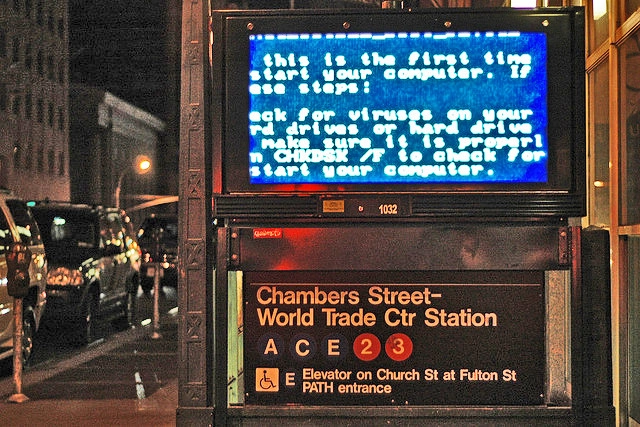
An interesting essay by Anthony Townsend in Design Observer investigates a largely unconsidered aspect of smart cities: what happens if (or perhaps when) they malfunction? Townsend argues that as technology seeps into every aspect of our life within a complex system such as a smart city, glitches and bugs are likely to be magnified many times. He also explains that many of the communications systems that smart cities will rely on are insufficiently resilient, meaning entire cities could be vulnerable to failure or attack - an issue that will not sit well with the AIA. You can read the whole essay here.

Could Virtual Cities Make Our Real Cities Smarter?

Subscriber Access | 

This article, by Klaus Philipsen, FAIA originally appeared on his blog Community Architect.

As BIM (Building Information Modeling) slowly finds broader acceptance in the architecture and engineering of individual buildings, perhaps it is time to consider the next scale: the city. Just like virtual models help us design and understand buildings and embed information, virtual city simulations could have an application in real city planning, allowing us to go from “flat” GIS to three dimensional information modeling that includes terrain, infrastructure, buildings and public spaces. Could virtual cities be the answer to "smart cities"? Find out after the break.

Without Architects, Smart Cities Just Aren't Smart

Subscriber Access | 

Arguably the biggest buzzword in urbanism right now is the 'Smart City'. The idea, although certainly inclusive of eco-friendly practices, has even replaced “sustainability” as the major intent of cities planning for positive future development. Smart City thinking has been used successfully in countries as diverse as Brazil, the US, the UAE, South Korea, and Scotland (Glasgow just won a £24million grant to pioneer new schemes throughout the city).

But what exactly are Smart Cities? What benefit do they bring us? And, more importantly, how can we best implement them to secure our future?

The answer, in my opinion, lies in the hands of architects.

More on the potential of Smart Cities after the break...