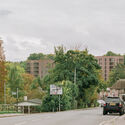
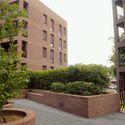
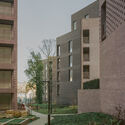
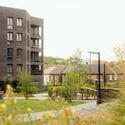
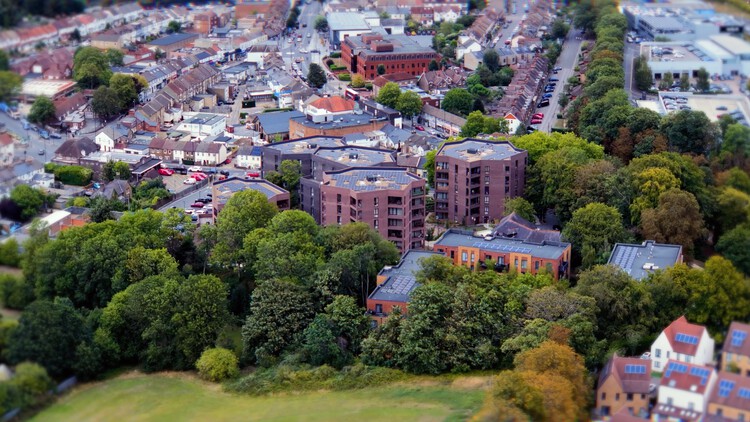
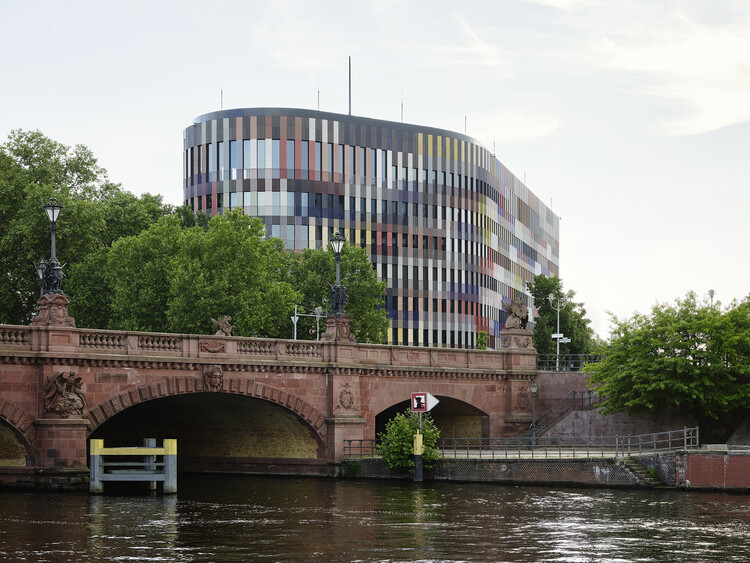
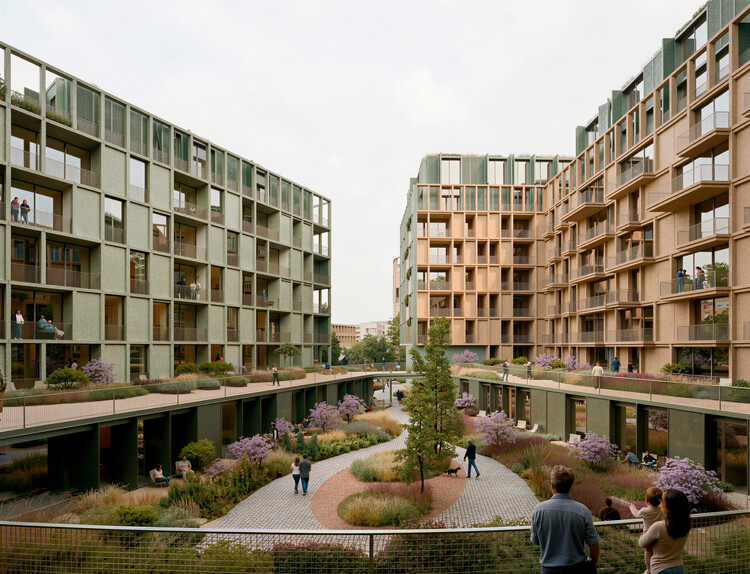
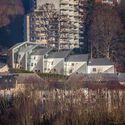
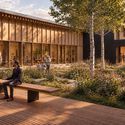
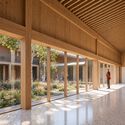
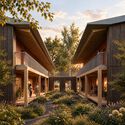
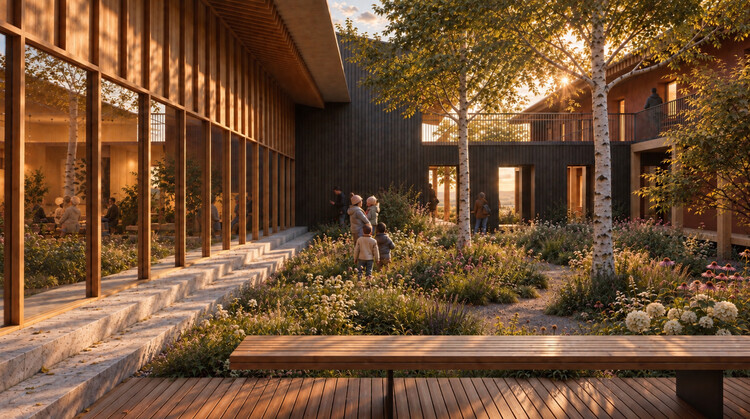
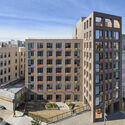
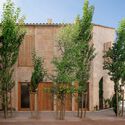
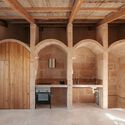
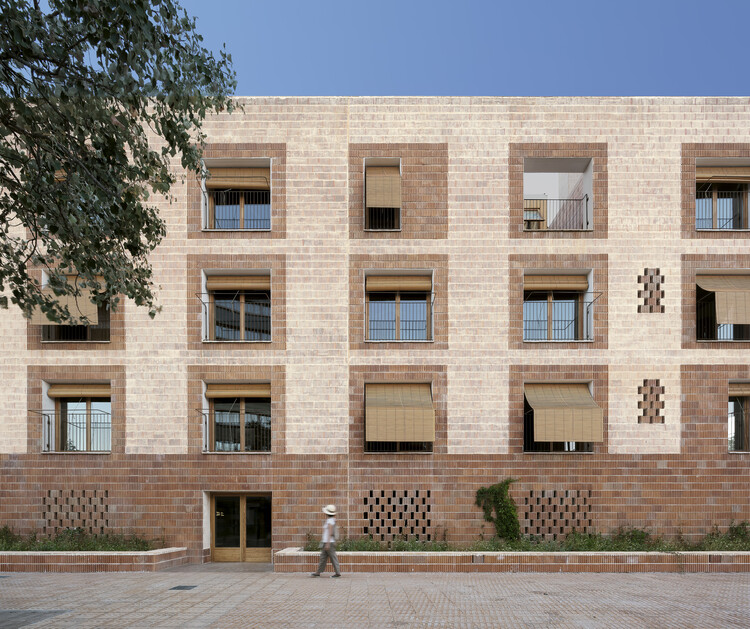
The RIBA Stirling Prize 2026 has been awarded to Lion Green Road, a housing development in Coulsdon, South London, designed by Mary Duggan Architects with RUFFARCHITECTS for Croydon Council. Comprising 157 homes across five residential blocks, the project combines privately owned and socially rented housing on a former car park. Presented annually by the Royal Institute of British Architects (RIBA), the Stirling Prize recognizes a building considered to make a significant contribution to the evolution of architecture and the built environment. The 2026 winner was announced at a ceremony at Old Billingsgate in London on October 15, marking the prize's 30th anniversary.
Architect: Tina Hočevar. Image Courtesy of VELUX Group
What happens to the space beneath a roof? In many houses, the answer is simple: it becomes an attic, a storage space, or a largely unused volume between the upper floor and the roof. Yet the same space can become a bedroom, home office, playroom, or additional living area if the roof and the room beneath it are considered together.
This potential matters in both existing buildings and residential architecture. Converting an attic can add usable space without extending the building's footprint, while designing a new house with a usable roof space in mind can make it more adaptable over time. The question is therefore not only how to convert an attic, but how to recognize the architectural potential of underused space created by a sloped roof.
This week, questions about housing, safety, and the future of cities came into focus, from the impact of natural hazards to architecture's role in shaping more inclusive urban environments. The International Day for Disaster Risk Reduction, observed on October 13 under the theme "Resilience Starts at Home," highlighted these questions just days after a magnitude 7.7 earthquake struck Panama, damaging buildings and prompting evacuations nationwide. Beyond disaster preparedness, the week's developments also reflect broader efforts to address housing needs, give existing buildings new purposes, and create spaces that support education, culture, and public life.
Portuguese architecture and urbanism practice OODA has released new images of an urban design project in Prague, Czech Republic. The design transforms an existing building block into a permeable site with municipal social housing, commercial units, and a landscaped central plaza. The project, titled Kodaňská 1441, prioritizes walkability, green mobility and public space. In addition to opening new connections between the existing building and the urban fabric, it includes a landscape and water management system that increases the permeable surfaces of the courtyard by 21.5%. The project is an example of urban renewal that incorporates contemporary concerns such as communal spaces, a regulated relationship with public space, planted environments, and the sustainable use of natural resources.
Every year on October 13, the International Day for Disaster Risk Reduction (IDDRR) draws attention to the ways communities can reduce exposure and vulnerability to hazards. Established by the United Nations in 1989, the day provides an opportunity to consider how governments, communities, and professionals can strengthen preparedness and resilience before disasters occur. For its 2026 edition, the United Nations Office for Disaster Risk Reduction (UNDRR) has selected "Resilience Starts at Home" as its theme, placing housing at the center of this year's campaign.
UN-Habitat has announced the five recipients of the 2026 Scroll of Honour Award, recognizing contributions to adequate housing and sustainable urban development in Brazil, Myanmar, Pakistan, Tunisia, and the United Kingdom. This year's winners include a housing organization working with communities affected by conflict and displacement, a researcher developing building materials from local and mining residues, an Indigenous village in Brazil, a public housing agency in Pakistan, and London Mayor Sadiq Khan. Selected from 101 nominations submitted across Africa, Asia, Europe, and the Americas, the recipients represent a range of approaches to addressing housing and urban development challenges.
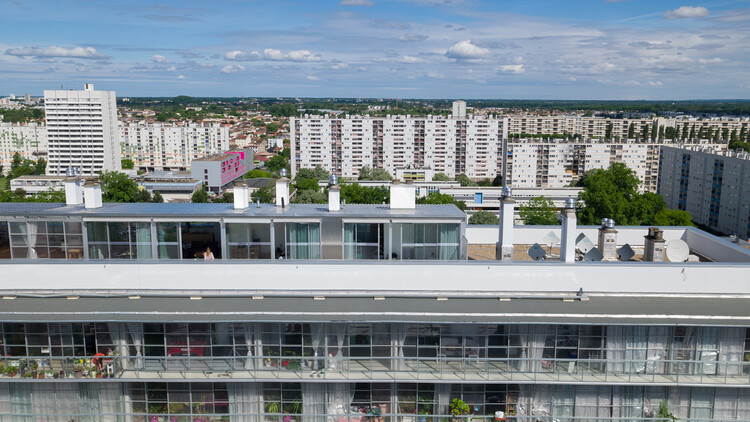
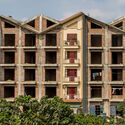
Transformation of 530 dwellings / Lacaton & Vassal + Frédéric Druot + Christophe Hutin architecture. Image Courtesy of Philippe Ruault
The International Union of Architects designates the first Monday of October as World Architecture Day each year, aligning it with the United Nations' World Habitat Day. This year, both occasions are drawing attention to the global housing crisis as a fundamental element of human dignity, inclusion, and well-being. The UIA's motto reads: "Housing is a Human Right. Build It." The organization calls on architects to contribute to advancing equitable access to housing through design, research, and advocacy. From a holistic perspective, the crisis consists not only of a shortage of residential buildings, but of multiple, interconnected barriers to accessing an adequate place to live. The challenge calls on the dual nature of the architect's work: the capacity for abstract design thinking, and the practical knowledge to transform material reality. For architecture to make the right to housing a reality, both capacities must be put into practice: building new governance structures, different models of shared ownership, designs for alternative forms of cohabitation, and new, environmentally sustainable construction systems.
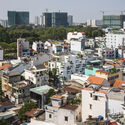
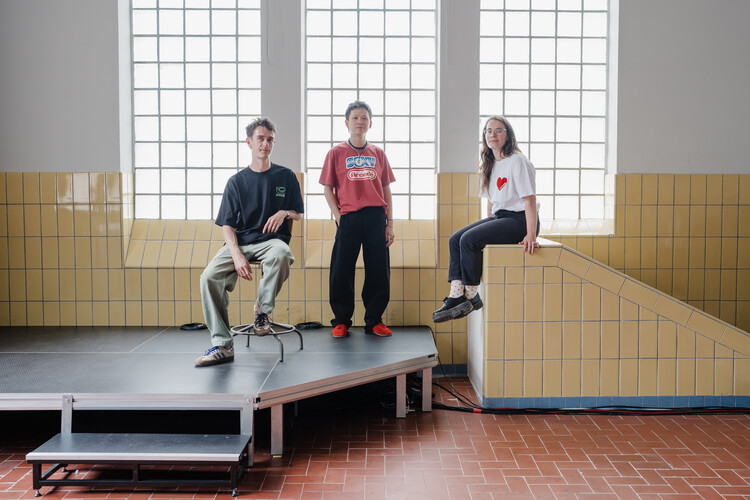
A jury of arts and architecture professionals recently announced the selected curatorial proposal for the Luxembourg Pavilion at the Biennale Architettura 2027. The exhibition will be curated by housing expert Céline Zimmer and architects Bùi Quý Sơn and Paul-Antoine Lucas, co-founders of the critical spatial practice Exutoire, one of the winning practices of the ArchDaily 2026 Next Practices Awards. The proposal is titled "Excess! On the Overconsumption of Living Space" and addresses the inequitable distribution of living space as a reflection of "broader habits of excess that contribute to the current housing and ecological crises." The issue will be illustrated through a dialogue between the realities of Luxembourg and Vietnam to reflect on spatial consumption. The Luxembourg Pavilion is located on the first floor of the Sale d'Armi in the Arsenale, which will open to the public for the Biennale on May 8, 2027.
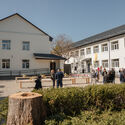
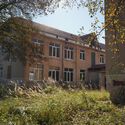
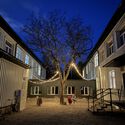
Office for Future is converting a former school in Stavyshche, Ukraine, into housing for 42 families displaced by the war. Developed for the Charity Foundation Housing for IDP, the project, titled "Dvir – The Shared Courtyard," reuses the approximately 1,900-square-meter building to create 42 apartments and 200 square meters of shared indoor spaces. The intervention combines the existing structure with new timber elements, an energy retrofit, and the transformation of the former asphalt courtyard into a permeable green space.
"Right to Housing! Now and Forever" is an official European Citizens' Initiative (ECI) to demand affordable, sustainable, and fair housing across the European Union. The ECI is a governance tool that allows citizens to propose new laws for the European Commission to consider. Initiatives must be organized by a group of at least seven EU citizens living in seven different countries and must gather 1 million valid signatures within one year of receiving official approval. The signature collection for "Right to Housing! Now and Forever" launched on September 14, 2026, and aims to collect 1.2 million signatures across the EU to require the European Commission to formally respond to and address the proposal. The project builds on the HouseEurope! European Citizens' Initiative, which focused strictly on building renovation and closed unsuccessfully on January 31, 2026. This new proposal, put forward by a broader coalition, encompasses not only renovation but also financing tools and measures to ensure access.
Every housing crisis eventually becomes a land question, and every land question eventually becomes a values question. The United States' West Coast has arrived at that point. As cities from Los Angeles to Seattle search for parcels to build the affordable housing they have promised for years, they keep landing on the same answer: the park or the greenbelt. What looks like a zoning decision is a referendum on which form of wellbeing a city is willing to sacrifice for another.
A week of architecture news has highlighted the growing connections between environmental change, public systems, and the evolving role of architectural practice. Extreme weather events in different regions have drawn attention to the vulnerability of settlements, infrastructure, and territorial networks, while new approaches to housing demonstrate how changes in procurement, construction, and governance can influence architectural outcomes. At the same time, the recognition of established practitioners points to the lasting impact of architectural ideas across generations, as the profession continues to engage with questions of resilience, systemic change, and the broader conditions shaping the built environment.
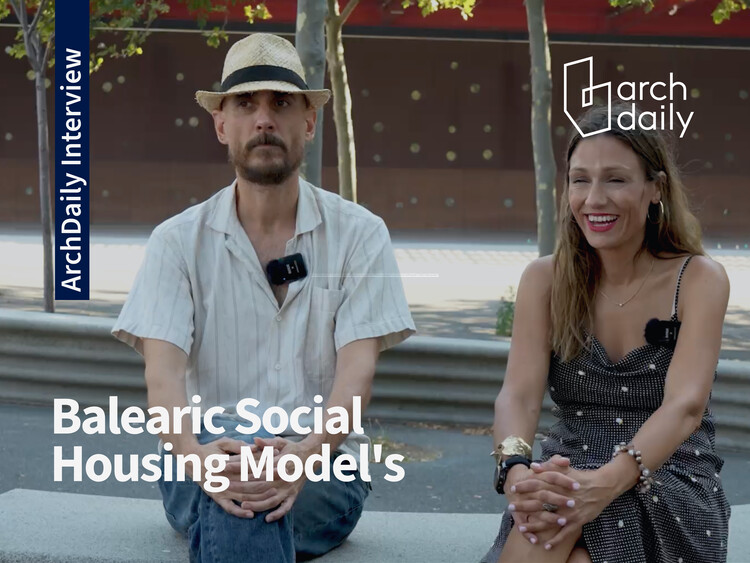
On 1 September 2026, the Balearic Social Housing Model was announced as the recipient of the 2026 OBEL Award. The focus of this award's cycle was "Systems' Hack," calling on architecture to critically engage with the systems that underpin contemporary society and to examine how these interconnected networks might be reconfigured in response to accelerating global challenges. The Balearic Social Housing Model, created by economist and independent consultant Cris Ballester and architect and civil servant Carles Oliver, is a six-point approach to public housing developed between 2019 and 2023, providing additional value and comfort to traditional affordable housing by bringing procurement, architecture, materials, energy, tenure, public capacity and learning together as responses to current social, environmental and economic challenges. In this interview with ArchDaily, the model's creators discuss its origins, ambitions, and material challenges in making social housing a desirable place to live.
Amid growing economic, political, and climatic instability, the 2026 OBEL Award highlights the need for architectural approaches that rethink both existing and emerging infrastructures. The title for this edition is "Systems' Hack," where "systems" are understood as interrelated mechanisms governed by shared rules and "hacking" is framed as a strategic intervention that seeks to alter how these mechanisms operate. Within this framework, the OBEL Foundation has announced the Balearic Social Housing Model as the winner of this year's award, while also announcing a new cycle in 2027 under the same topic. The Balearic Social Housing Model is recognized for "transforming the role of social housing administration in the Balearic Islands between 2019 and 2023," proposing new approaches in response to an acute housing shortage and a critically limited public rental housing stock in Spain.
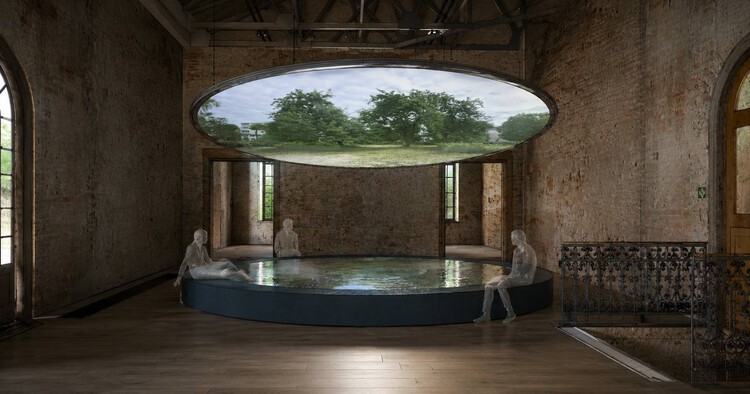
The Ukrainian pavilion at the 20th International Architecture Exhibition – La Biennale di Venezia is being designed by the team from CO-HATY, a local volunteer initiative restoring abandoned buildings in the country to transform them into stable homes for internally displaced people. The team is formed by METALAB and relocated members of the Ukrainian Urban Curators agency, who have been developing CO-HATY since 2022. Titled "Pool of Questions," the project poses a question the organization argues is rarely voiced in the context of survival: not simply where displaced people should live, but when they can begin to live. For Venice, the imagined installation extends the restoration and adaptive reuse work into a discourse on affordable housing, dignity and rest during an ongoing war.
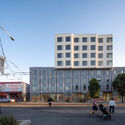
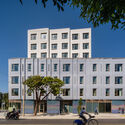
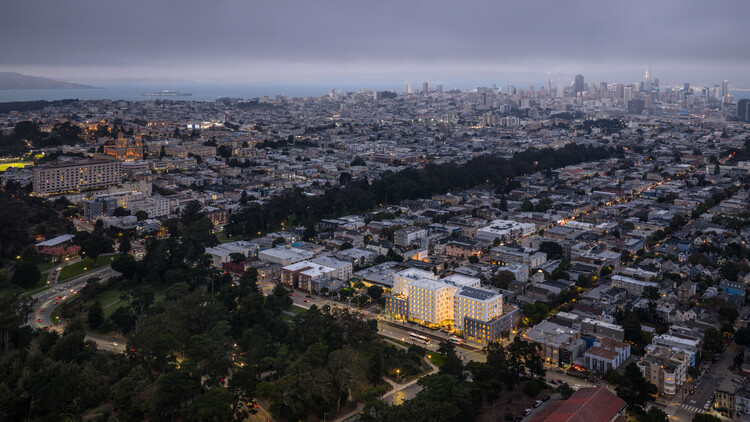
OMA, led by Partner Jason Long, together with San Francisco-based Y.A. Studio, has completed 730 Stanyan, a mixed-use affordable housing development in San Francisco's Haight-Ashbury neighborhood. Developed by the Tenderloin Neighborhood Development Corporation (TNDC) and Chinatown Community Development Center (CCDC), the project provides 160 permanently affordable homes for low-income families, formerly unhoused families, and Transitional Age Youth (TAY). Located at the intersection of Haight and Stanyan Streets, adjacent to the entrance of Golden Gate Park, the development marks OMA's first completed 100% affordable housing project in the United States.
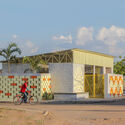
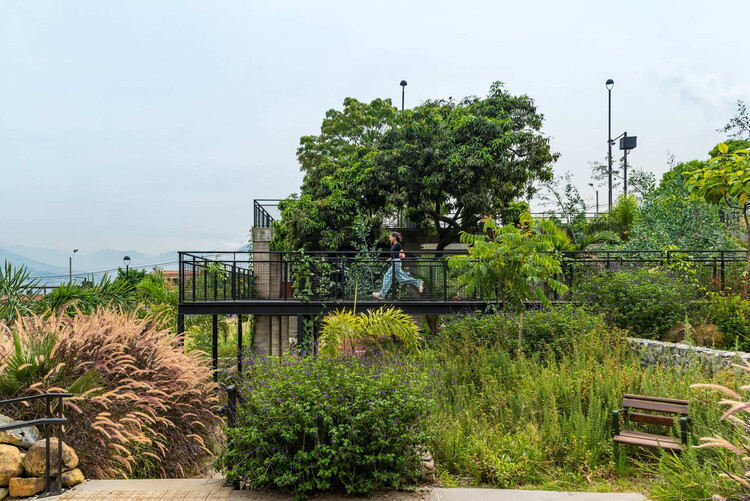
Parque Prado, Colombia, by Connatural Arquitectura en el Paisaje. Image Courtesy of International Union of Architects (UIA)
International Youth Day, observed annually on August 12, is marked in 2026 under the theme "Different Contexts, Common Aspirations," highlighting the shared aspirations of young people across diverse social, economic, and geographic realities. Despite differences in where and how they live, young people around the world continue to seek dignity, opportunity, meaningful participation, decent work, quality education, and a sustainable future. The day provides an opportunity to recognize their contributions while drawing attention to the conditions and opportunities that shape their lives.