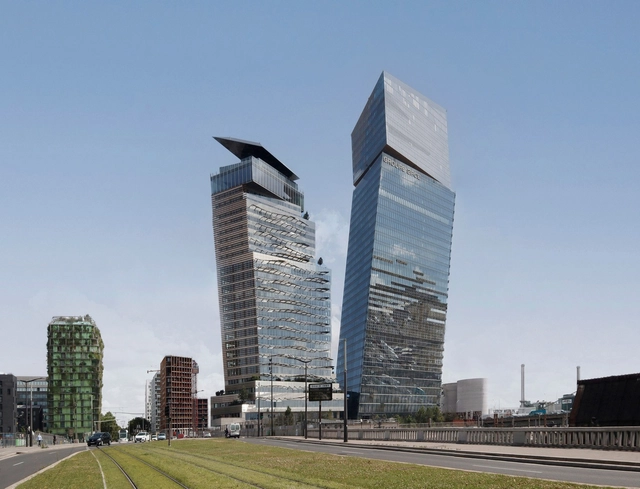
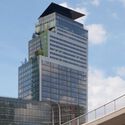
Jean Nouvel'srecently completed towers, Tours Duo, redefined the Parisian skyline. Captured by Paul Clemence in his latest photo series, the project by Ateliers Jean Nouvel creates a singularity in relation to the rails that lead into the city's heart and define the Avenue de France. Established as a landmark on the East side of Paris and considered to be the city's future, Tours Duo is a mixed-use project that completes and modifies the unfinished context of this part of the city.
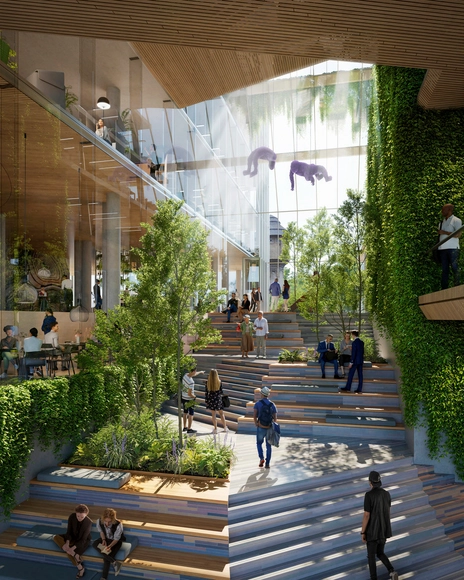
Interior view to the Lobby . Image Courtesy of UNStudio
Incorporating the Environmental, social, and corporate governance objectives, the 45,000 m2 Office Tower in the Europaviertel in Frankfurt aims to be one of Germany's most sustainable office buildings. Designed by UNStudio in partnership with Groß & Partner in collaboration with OKRA landscape architects, the project focuses on environmental and social sustainability as an integral part of Frankfurt's green network. The ecological agenda includes a low-carbon load-bearing structure and recyclable construction materials. The architecture program offers a public urban space to add value to its surroundings to encourage communication and gathering.
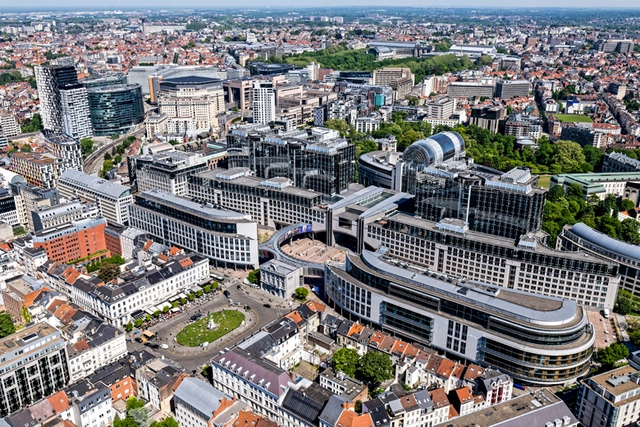
The European design team integrated by architectural firms JDS Architects, Coldefy, Carlo Ratti Associati, NL Architects, and Ensamble Studio has been announced as the winner of the international design competition for the renewal of the Paul-Henri SPAAK Building, the European Parliament plenary building in Brussels, Belgium.
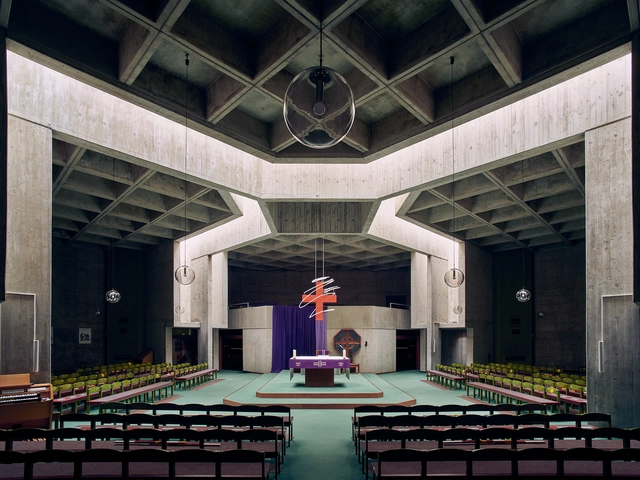
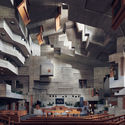
If one were asked to picture a Catholic Church, the first image to come to mind would probably resemble a medieval gothic cathedral with buttresses, pointed arches, and a spire pointing toward the sky. On second thought, many more styles could easily be identified as catholic architecture: the simple yet grandiose structures of the Romanesque or maybe the ornate styles of Baroque and Rococo. An image more difficult to associate with sacred architecture is that of Modernism. The Roman Catholic Church is a particularly conservative establishment. Modernism, on the other hand, is revolutionary; it is rational, functional, and technical; it rejects ornaments and embraces innovation. Surprisingly, in the years after the end of the Second World War, places of worship defied expectations. Blocks of concrete, raw materials, angular shapes, and exposed structures have all been employed to break from tradition and create churches that barely resemble a church. This article will explore Modernist mid-century Church architecture with the support of images from Jamie McGregor Smith.
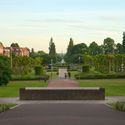
At the turn of the 19th century, a British publishing house would release a book written by an English urban planner – a book with an optimistic title. The title of this book was To-morrow: A Peaceful Path to Real Reform, later reprinted as Garden Cities of To-morrow. The English urban planner in question was Ebenezer Howard – and this book would lay the foundations for what would later become known as the Garden City Movement. This movement would go on to produce green suburbs praised for their lofty aims, but it would also produce satellite communities that only catered to a privileged few.
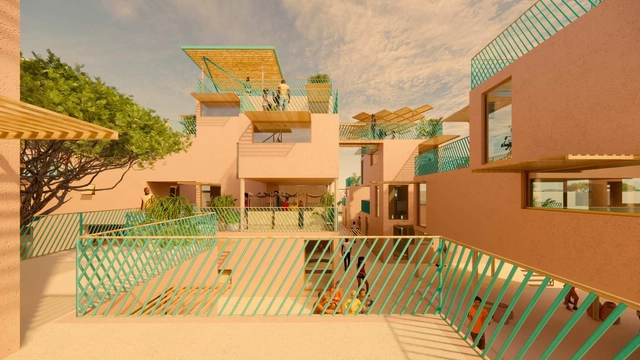
Render of affordable homes created out of plastic waste. Image Courtesy of Othalo
A lot of people around the world would agree that we are currently in a climate emergency. The IPCC report, released last year, makes for difficult reading. Practitioners in the built environment have taken to direct climate action, with organizations such as ACAN and Architects Declare fostering carbon literacy and calling for designers to re-evaluate how they practice.
Cities across the Northern Hemisphere are preparing for the upcoming summer months, which are expected to be warmer and drier than average. The European Center for Medium-Range Weather Forecasts warns about temperatures rising above the norm in central and southern Europe this summer. Similarly, the forecast for the Unites States predicts hotter weather and below-average rainfall likely to fuel a megadrought. This poses threats for citizens, especially in larger cities, where heat-absorbing asphalt and waste heat generated by energy use create a “heat-island” effect. It translates to temperatures being up to 10°F (5.6°C) warmer in cities compared to the surrounding natural areas.
After a prolonged period known as the Middle-Ages, a growing desire to both study and mimic nature itself began to emerge, with an inclination to discover and explore the world. Between 1400-1600 A.D. Europe was to witness a significant revival of the fine arts, painting, sculpture, and Architecture. The ‘Renaissance’, meaning ‘rebirth’ in French typically refers to this period of European history, although most closely associated with Italy, countries including England and France went through many of the same cultural changes at varying timescales.
Prior to the dawn of the Renaissance, Europe was dominated by ornate and asymmetrical Gothic Architecture. Devoured by the plague, the continent lost approximately a third of its population, vastly changing society in terms of economic, social and religious effect. Contributing to Europe’s emergence into the Renaissance, the period ushered in a new era of architecture after a phase of Gothic art, with the rise of notions of ‘Humanism’. The idea of attaching much importance to the essence of individualism. The effect of Humanism included the emergence of the individual figure, greater realism and attention to detail, especially in depictions in art.
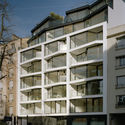
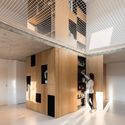
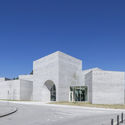
The European Centre for Architecture Art Design and Urban Studies and The Chicago Athenaeum: Museum of Architecture and Design have announced the winners of the "Europe 40 under 40" program for 2021-2022. The selection gathers emerging architectural and design talents spread across Europe from Albania, Austria, France, Greece, Ireland, Italy, Poland, Portugal, Russia, Spain, The Netherlands, and Turkey.
“During these challenging times, it is crucial to keep insightful visions alive. Presenting Europe’s most hopeful personalities in the fields of architecture and design is what gives us hope for a better tomorrow”, explains the official brief. Providing an insight into the architectural scene in Europe, the program initiated by The European Centre highlights the next generation of young architects, landscape architects, urban planners, and industrial designers currently under the age of 40, who will impact future living and working environments, cities, and rural areas.
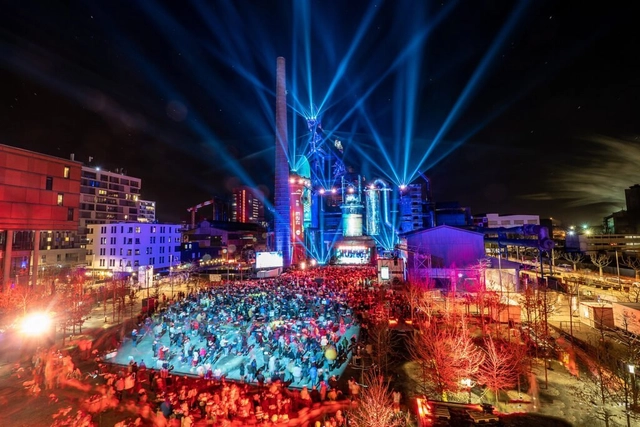
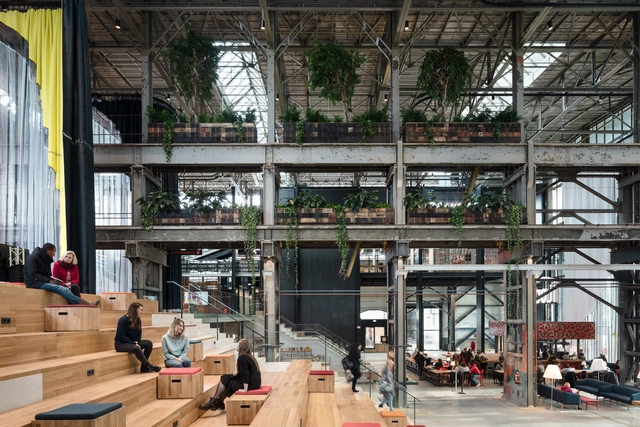
For quaint riverfront views, historical fortifications, and castles, head to Luxembourg. For sky-high remnants of the steel industry, there’s the country’s second largest city, Esch-sur-Alzette. Suffering, until recently, from the 1970’s steel manufacturing exodus, Esch, 10 miles to the northeast of the border of France, is emerging as an unexpected cultural mecca, where industrial infrastructure is being converted en masse into cultural and learning space. This rebirth is being celebrated thanks to a generous flow of cash via its designation as Esch2022: Esch-sur-Alzette European Capital of Culture 2022 (Kaunas, Lithuania and Novi Sad, Serbia, also named European Capital of Cultures this year, share the designation for 2022). For Esch, the title comes with $54.8 million in funds from EU, national, local, and private sources.
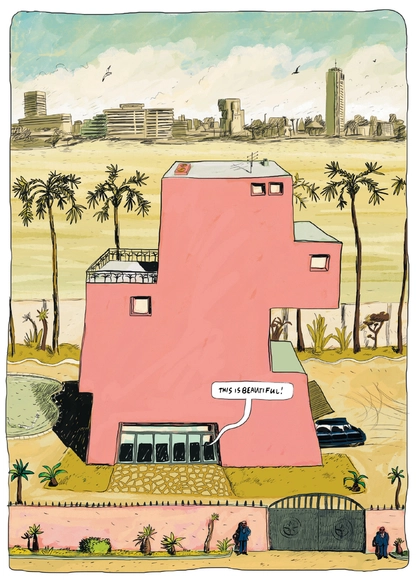
Modernist House - From Aya: Life in Yop City by Marguerite Abouet and Clément Oubrerie, translated by Helge Dasche. Image Courtesy of Drawn & Quarterly
The comic strip, la bande dessinée, the graphic novel. These are all part of a medium with an intrinsic connection to architectural storytelling. It’s a medium that has long been used to fantasise and speculate on possible architectural futures, or in a less spectacular context, used as a device to simply show the perspectival journey through an architectural project. When the comic strip meshes fiction with architectural imagination, however, it’s not only the speculation on future architectural scenarios that takes place. It’s also the recording and the critiquing of the urban conditions of either our contemporary cities or the cities of the past.
Focused on 3 main titles, "the European city: a model for the sustainable smart city", "defining common European culture while reflecting the diversity of expression" and "an architecture that has social impact and transmits a cultural message", we have grouped the selected projects, nominated by a jury formed by Tatiana Bilbao, Francesca Ferguson, Mia Hägg, Triin Ojari, Georg Pendl, Spiros Pengas and Marcel Smets to give a better understanding of the selection criteria and the architectural situation in Europe.
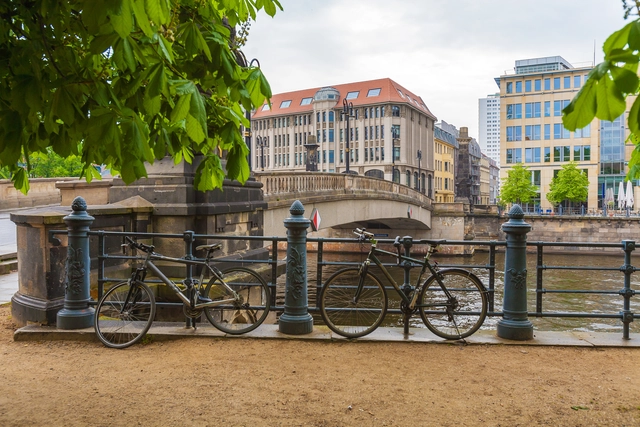
Volksentscheid Berlin Autofrei (People’s Decision for Auto-Free Berlin), has proposed a plan to limit cars within Berlin's Ringbahn, a long circle route around the inner city, making it the world's largest car-free area once approved. The citizen-initiative is aimed mostly at banning the use of private cars in central Berlin, with the exception of emergency vehicles, garbage trucks, taxis, delivery vehicles, and residents with limited mobility, who would all be given special access permits.
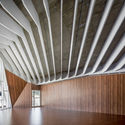
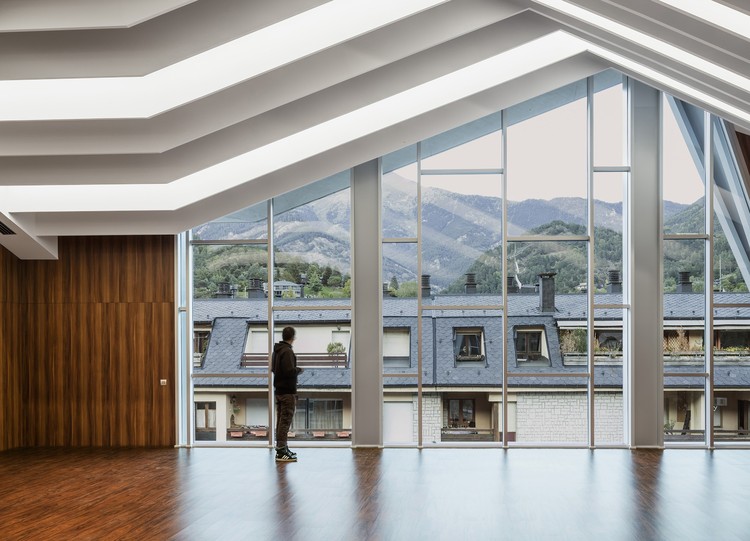
Wedged between France and Spain, Andorra is the sixth smallest nation in Europe. Less than 500 square kilometers in area, the landlocked microstate can be found in the eastern Pyrenees on the Iberian Peninsula. Today, new architecture is being built between Andorra’s rugged mountains and three narrow valleys that combine to form its Gran Valira river.
Buildings around the world are getting taller. Since the year 2000, global skyscraper construction has increased by 402%. Cities like Dubai are home to nearly 1000 high-rise buildings, and New York’s vibrant luxury real estate market has shown no signs of slowing down, with more high-rise additions slated to be added to its already towering skyline. There’s good in this – high-rises create much-needed space in already dense cities and can reduce urban sprawl in city centres, allowing for better preservation of natural areas.
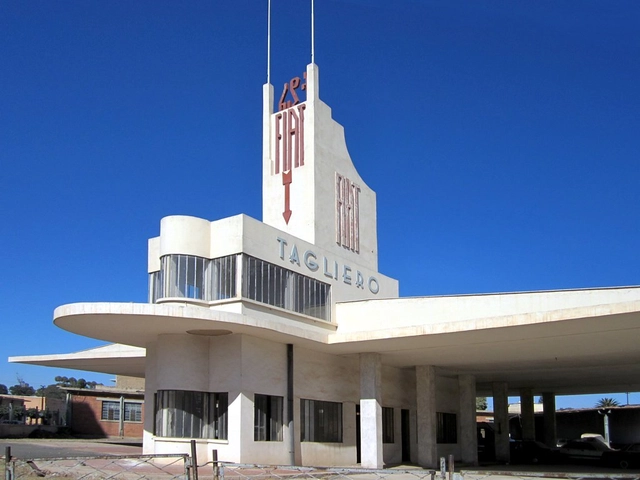
The built environment we all inhabit is part and parcel of global, interconnected processes and systems. When we appraise the historically significant architecture of our cities, the structural integrity and aesthetics of a building merits equal consideration with factors such as the labour conditions of its builders to the existing power structures of its time. Examples of ItalianModernism in Eritrea, for instance, might be worthy of aesthetic praise – but intertwined with the legacy of these buildings hailed as Modernist icons is the sobering fact that they were built to further an imperial project. In the complex fields of architectural conservation, preservation and cultural heritage, democratisation should always remain a key priority.
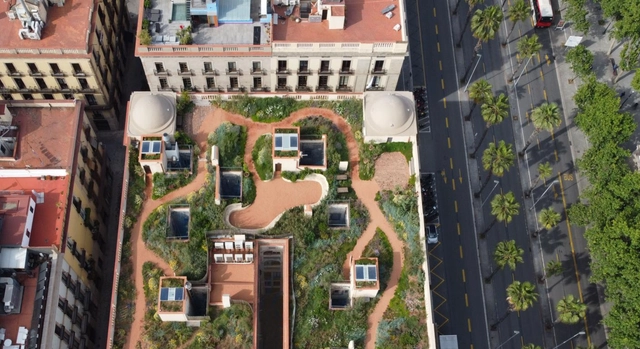
Xifré’s Rooftop: “Floating” Wild Garden (Barcelona, España). Image Cortesía de New European Bauhaus
The European Commission's New European Bauhaus has announced the winners of the 2021 edition at the Ateliers des Tanneurs in Brussels, Belgium.
According to the organization, the main objectives have been to recognize current achievements and help the younger generation to continue developing emerging concepts and ideas that illustrate three values: sustainability, aesthetics, and inclusion. Accordingly, President of the European Commission Ursula von der Leyen has stated that "these projects give a lot of hope for our fight against climate change and the European Green Deal."






































.jpg?1637861666 "Casco Viejo - Panama City, Panama. Image © Wikimedia User David Broad under the Creative Commons Attribution 3.0 Unported license.")