Time is running out! We invite you to take part in the ArchDaily 2025 Building of the Year Awards by casting your vote for the projects that have made the biggest impact on the built environment.
This year, ArchDaily's projects database has featured thousands of inspiring works, and thanks to your participation, 4,000 projects have been narrowed down to just 75 finalists—representing the best in each category. Now, it's time to choose the winners.
After two weeks of open voting in the16th edition of the Building of the Year Awards, our readers have meticulously narrowed down a pool of almost 4,000 projects to a select group of 75 finalists spanning 15 categories. This year's awards honor the pinnacle of design, innovation, and sustainability on a global scale, showcasing an exceptional range of projects within the shortlist. As a crowdsourced award, we take pride in affirming that your selections authentically mirror the current state of architecture, and the caliber of this year's finalists further underscores the excellence and diversity prevalent in the field.
The OBEL Award is an international prize for architectural practice, presented annually by the Henrik Frode Obel Foundation. The jury, composed of representatives from firms such as Snøhetta and MVRDV, alongside professionals from other disciplines, selects a theme to guide the choice of winners for each edition. The goal is to steer proposals toward solutions that foster dialogue and generate knowledge on emerging issues, aiming to promote architecture in service of social and ecological development worldwide. For its seventh edition, the 2025 call focus is Ready Made, targeting projects that place reuse and repurposing at the core of architecture for the common good.
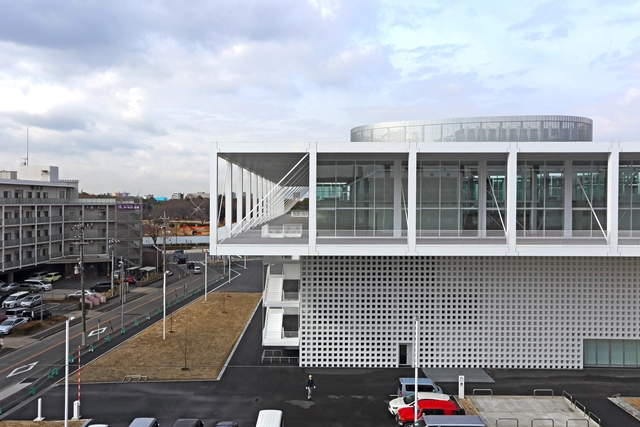
The Royal Institute of British Architects (RIBA) has announced that Japanese architects Kazuyo Sejima and Ryue Nishizawa, founders of the practice SANAA, will receive the 2025 Royal Gold Medal for architecture. Awarded on behalf of His Majesty the King, the medal is one of the highest honors in the field, recognizing what RIBA describes as SANAA's contribution to shaping contemporary architecture through simplicity, light, and refined design.
We invite you to participate in the ArchDaily 2025 Building of the Year Awards. We ask you to recognize and reward the projects that you feel are creating the largest impact in the built environment, that ArchDaily has published on our projects database in 2024. By nominating and voting, you form part of an interdependent, impartial, distributed network of jurors and peers that has consistently helped us celebrate architecture of every scale, purpose, and condition, from countries large and small, and architects of all descriptions. Over the coming weeks, your votes will result in 4000 projects being filtered down to just 15 – representing the best in each project category on ArchDaily.
Welcome to the ArchDaily Building of the Year Awards! Now in its 16th edition, this award continues to be the most democratic recognition in architecture, celebrating excellence and innovation across the built environment. With over 4,000 projects participating annually, it has become a global benchmark, powered by the voices of our passionate readers.
Each year, your votes shape the future of architecture, highlighting the most outstanding projects that push boundaries and redefine possibilities. As we embark on this journey once again, we invite you to be part of this collective celebration—honoring diversity, creativity, and ingenuity in architecture and design. Together, let's recognize and elevate the projects that inspire, challenge, and shape our world. Cast your vote and help define the architecture of today and tomorrow!
Why demolish when you can embellish? A collaboration between ArchDaily and ICEX highlights the most outstanding remodeling, reuse, extension and renovation works recently built in Spain. This competition focuses on how Spanish architecture values the revitalization of historic buildings and centers, and recovers existing structures promoting a more balanced urban development. In Spain, old casonas become boutique gems, and factories like Madrid's Matadero morph into cultural havens—a clever mix of tradition and modern flair. After all, good design isn't built—it's built upon.
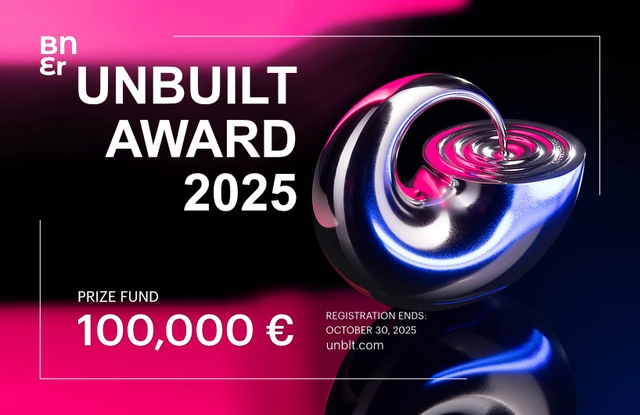
Unbuilt projects hold untapped potential. They tell stories of creativity, vision, and exploration. The Unbuilt Award 2025 shines a spotlight on these extraordinary designs, creating a platform for ideas that redefine boundaries.
With categories for small, medium, and large-scale projects, this competition ensures every vision receives the attention it deserves. No qualifications are required—this open call is for everyone, everywhere.
The Mies Crown Hall Americas Prize (MCHAP) hosted its inaugural Conference on Critical Practice at S. R. Crown Hall, where two figures were celebrated for their transformative contributions to architecture. Phyllis Lambert, founder of the Canadian Centre for Architecture (CCA) and Illinois Institute of Technology alumna, was named an MCHAP Luminary. Meanwhile, Román Meyer Falcón was honored as the first-ever recipient of the Phyllis Lambert Agent of Excellence Award, recognizing individuals or organizations whose work has directly elevated contemporary architecture. In an interview with ArchDaily, Meyer Falcón shared insights into his impactful tenure as Mexico's Secretary of Agrarian, Territorial, and Urban Development, discussing his approach to public architecture.
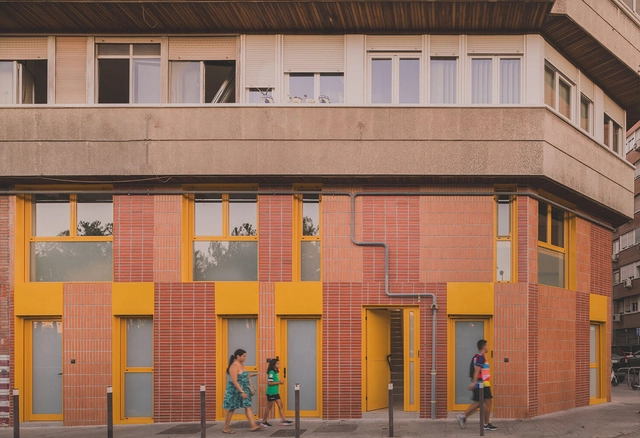
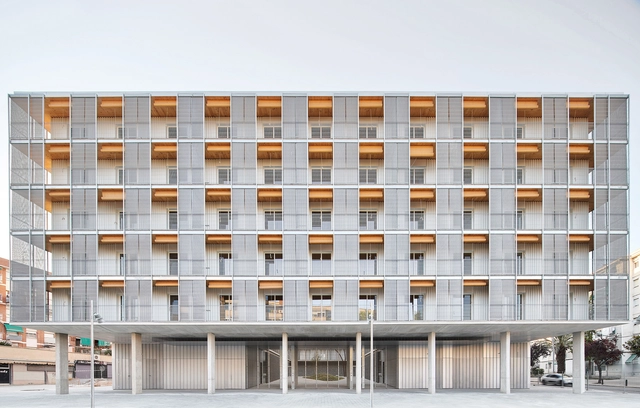
Modulus matrix -85 social housing in Cornellà, Barcelonaby Peris + Toral Arquitectes. Image Courtesy of RIBA
The Royal Institute of British Architects (RIBA) awarded its 2024 International Prize to Modulus Matrix, an 85-unit social housing development in Cornellà, near Barcelona. Designed by Peris + Toral Arquitectes, the six-story timber-framed building is a notable example of innovative social housing design. Its modular structure, based on a 3.6m x 3.6m grid inspired by traditional Japanese homes, creates a flexible and adaptable living space. The design prioritizes cross-ventilation, dual orientation, and a central communal courtyard, fostering social interaction and community building.
The Pritzker Architecture Prize has released a special video honoring Riken Yamamoto, the 2024 Laureate. Presented in a documentary-style format, the film celebrates Yamamoto's distinguished architectural career and his contributions as the 53rd Laureate, honored earlier this year in Chicago. This milestone coincided with the 100th birthday of Cindy Pritzker, co-founder of the Prize with her late husband, Jay A. Pritzker.
Ammodo Architecture has just revealed the first 23 recipients of its inaugural Ammodo Architecture Awards, an annual recognition dedicated to advancing socially and ecologically conscious architecture worldwide. The awardees, chosen for their exemplary contributions, will receive financial support ranging from €10,000 to €150,000 to further their work and projects across three categories: Social Architecture, Social Engagement, and Local Scale.
The Buildner Unbuilt Award is an exciting new annual competition offering a 100,000 EUR prize fund, designed to highlight architectural design that hasn't yet been brought to life.
With an upcoming registration deadline at the end of October, the 2024 Unbuilt Award presents a unique opportunity for architects and designers to submit their best unbuilt work—whether published, unpublished, fully developed, or still in concept form. This year's competition is divided into three categories based on project scale: small, medium, and large. This structure allows participants to showcase their work on an equal footing, ensuring that every vision, regardless of size, has a chance to be celebrated.
Lord Norman Foster has been announced as the recipient of the 2025 Andrée Putman Lifetime Achievement Award by the Créateurs Design Awards. The award, now it its fifth edition, recognizes Foster's significant contributions to urban design and the environmental movement within architecture. This recognition highlights his longstanding influence and contributions to the field since founding Foster + Partners in 1967. The award ceremony will take place in Paris on January 18th, 2025.
The International Union of Architects (UIA), in partnership with UN-Habitat, has just announced the winners of the second cycle of the UIA 2030 Award. This prestigious award recognizes architectural achievements that advance the UN's 2030 Agenda for Sustainable Development and the New Urban Agenda. Honoring projects that embody sustainable design principles, the UIA 2030 Award celebrates contributions to Sustainable Development Goal 11: "Make cities and human settlements inclusive, safe, resilient, and sustainable."
After receiving 100 submissions from 33 countries, regional finalists were selected in the first stage, representing the five UIA regions: Western Europe, Central and Eastern Europe and the Middle East, the Americas, Asia and Oceania, and Africa. These finalists moved on to Stage 2, where they submitted three-minute videos showcasing their projects in action and detailing their alignment with the SDGs. The winners in the six categories have been awarded during the World Urban Forum (WUF12), taking place in Cairo,Egypt, from November 4-8, 2024. This biennial competition highlights how architects around the world are advancing sustainable, inclusive urban solutions to address global challenges and shape resilient communities for the future.
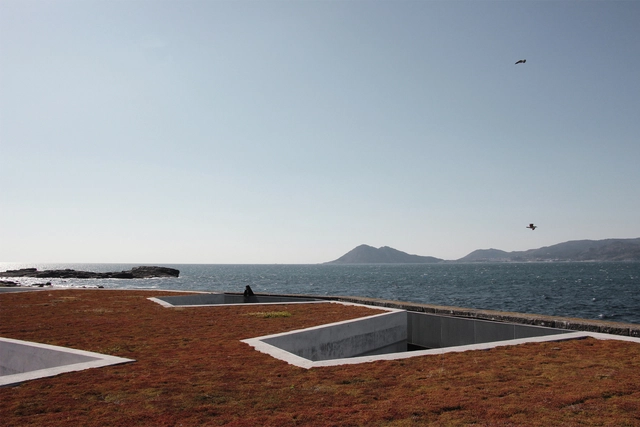
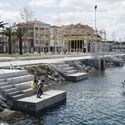
The 2024 European Prize for Urban Public Space has announced the overall winners for the 12th edition: For the General Category, the "Park at the Warsaw Uprising Mound" in Poland by studios topoScape and Archigrest received recognition its ability to honor the site's historical significance; while the Seafront Category prize was given to the "Beach Improvement and Redevelopment of the Harbour Edge" in Porto do Son, Spain, designed by CREUSeCARRASCO and RVR Arquitectos for its careful integration of natural and manmade elements. Selected from a list of 10 finalists, the projects were appreciated for their sensible response to local memory and an understanding of the interplay between various elements that interact with urban life.