Buildner has announced the results of its competition, the Last Nuclear Bomb Memorial No.6. This competition is held each year to support the universal ban on nuclear weapons. In 2017, on the 75th anniversary of the 1945 bombings of Nagasaki and Hiroshima, which claimed the lives of over 100,000 people, the United Nations adopted the Treaty on the Prohibition of Nuclear Weapons.
"I want to start by thanking architecture itself." With these words, Chilean architect Smiljan Radić, the 55th laureate of the Pritzker Architecture Prize, opened his acceptance speech in Mexico City. Reflecting on what he calls "distractions," he thanked the many encounters that have accompanied him throughout his life and practice: from art, cities, materials, structures, and compositions to landscapes, poetry, nature, forms, stories, and memories. He spoke about what, within them, provoked him and the marks they left on his architectural imagination.
From the black light in Chandigarh and the interior of San Salvatore in Rialto, to the heaps of stone on the Croatian island of Brač; from the fallen columns of the Temple of Poseidon and the abandoned shires scattered across Chile, to People Meet in Architecture, Kazuyo Sejima's 2010 Venice Architecture Biennale, the traveling Chilean circus, and the silence of the water within the cisterns of Hagia Sophia, his speech unfolded as a tribute to moments, encounters, and distractions. A collage of memories and impressions that, together, shaped the architect he became.
Buildner has also announced the results of Buildner's Unbuilt Award 2025, the second competition in a series celebrating architectural design that has yet to be realized. With a generous 100,000 EUR prize fund, this initiative provides a global platform for architects and designers to showcase their most compelling unbuilt projects, whether conceptual, published, unpublished, or fully developed.
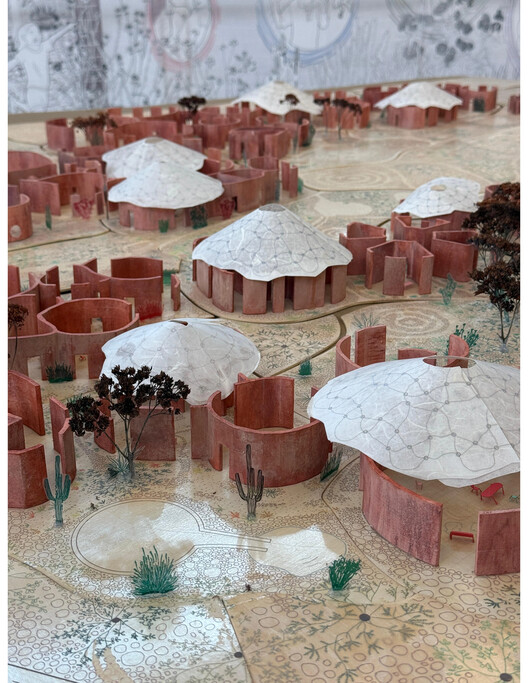
Small Scale Category Winner + Student Winner: Architecture as Resilient Machine. Image Courtesy of Buildner
Buildner has launched the Unbuilt Award 2026, the third edition of its annual competition, offering a €100,000 prize fund. At the same time, the results of the Unbuilt Award 2025 have been announced, marking the second competition in a series that celebrates architectural designs that have yet to be realized. The initiative provides a global platform for architects and designers to showcase their most compelling unbuilt projects—whether conceptual, published, unpublished, or fully developed.
Following two exciting weeks of nominations, ArchDaily's readers have evaluated 455 projects and selected 15 finalists for the Building of the Year Award China. Architects and enthusiasts participated in the nomination process, choosing projects that exemplify what it means to push architecture forward. These finalists are the buildings that have inspired ArchDaily readers the most, which also reveal the growing trend of Chinese architecture.
Among the 15 finalists of the 2026 China Building of the Year Award, we can see a gradual shift in focus from large-scale public buildings to rural revitalization, community public spaces, exploration of new typology of school and small-scale interior spaces. People are paying more attention to their personal needs and living experiences as well as the surrounding spaces. We can also observe how different firms are responding to the needs of cities and users during the period of transformation in the real estate.
Before we get to shortlisted nominees, we want to highlight the values of this awards process — as the world's largest platform for architecture we are acutely aware of our responsibility to the profession, and to the advancement of architecture as a discipline. Since our mission is directly related to the architecture of the future—inspiring and educating the people who will design the urban fabric of the future—the trust placed in us by our readers to reflect architectural trends from regions around the whole world creates challenges that we are eager to rise to. The democratically-voted, user-centered Building of the Year Awards is one of the key pillars of our response to these challenges, aiming to tear down established hierarchies and geographical barriers. Here are the 15 finalists of the 2026 China Building of the Year Award, and the voting period will run from April 8th to April 15th, 11:59 PM (Beijing Time), 2026. The final winners will be announced on April 16th, 2026. Click here to see the details and how to vote.
We invite you to participate in the ArchDaily China's 2026 Building of the Year Awards. We ask you to recognize and reward the projects that you feel are creating the largest impact in the built environment, that ArchDaily China has published on our projects database in 2025. By nominating and voting, you form part of an interdependent, impartial, distributed network of jurors and peers that has consistently helped us celebrate architecture of every scale, purpose, and condition, from countries large and small, and architects of all descriptions. Over the coming weeks, your votes will result in 455 projects being filtered down to just 15 projects. The 15 projects with the most nominations will move on to the voting round.
https://www.archdaily.com/1040283/last-days-for-nominations-in-the-archdaily-chinas-2026-building-of-the-year-awards韩爽 - HAN Shuang
In November 2025, ArchDaily launched its first edition of the Student Project Awards. The decision to introduce this new award came from a place of hope; hope in the next generations of architects, their talent and vision, and the importance of giving them visibility and recognition. After all, the future of architecture is being shaped right now, in classrooms, studios, and workshops around the world, and it is vital to support those shaping it. The response was remarkable, with projects from students in every continent, showcasing a wealth and breadth of viewpoints, solutions and visions.
Five months after the launch of the open call, and following the announcements of a longlist of 104 projects and a shortlist of 20, our external jury of architects and practitioners carefully reviewed the proposals to select the three winners and four honorable mentions of the ArchDaily Student Project Awards. Approaching each project with care, the jury looked beyond final outputs, focusing on the ideas, questions, and positions driving the work. The result is a selection of winning projects that reflect both the spirit of the awards and the shifting priorities shaping architecture today.
The architecture of Latin America and Spain is testament to the rich and diverse cultures, traditions, needs, and solutions that define these territories. With more than 700 projects built in Spanish-speaking countries published on ArchDaily en Español, the time has come to explore, debate, and choose your favorites for the Obra del Año 2026 award.
In its seventeenth edition, the Obra del Año reaffirms its place as the largest architecture award in the Spanish-speaking world, decided by its community. Starting today, March 24, readers will take on the responsibility of choosing the best architectural works of 2025.
Every architecture student knows what it's like to spend sleepless nights working away, rushing to finalize a project as a deadline looms ahead. Revising every detail, putting the finishing touches and hoping for the best. The pay-off? Seeing the finished project, talking about it with your classmates, and getting to dream about your perfect idea of what a space should look and feel like.
While making the shortlist selection throughout the past two weeks, the ArchDaily jury panel was well-aware of what it feels like to be an architecture student. Comprised of architects, the panel carefully studied, considered and debated each individual project, with an understanding of what goes into each and every submission. The result is a shortlist that exemplifies the spirit of the Student Project Awards and its mission to recognize the creativity and vision of students who are redefining architectural practice and discourse.
Lesley Lokko OBE has been recognized with the African Cultural Icon Award, honoring "leaders in the creative arts who promote African culture and heritage on a global stage." The accolade is one of nine awards presented annually to publicly nominated and industry-recommended figures by a panel of judges from across Africa. Nominees are evaluated based on "impact, innovation, sustainability, and contribution to Africa's growth." Lokko is the Founder and Chair of the African Futures Institute (AFI), headquartered in Accra, Ghana, and Director of the Nomadic African Studio, an annual month-long itinerant teaching program working across the African continent. She has been acknowledged for her transformative contributions to architecture, education, and cultural discourse within and beyond Africa, consistently challenging conventional narratives around African identity, space, and creativity.
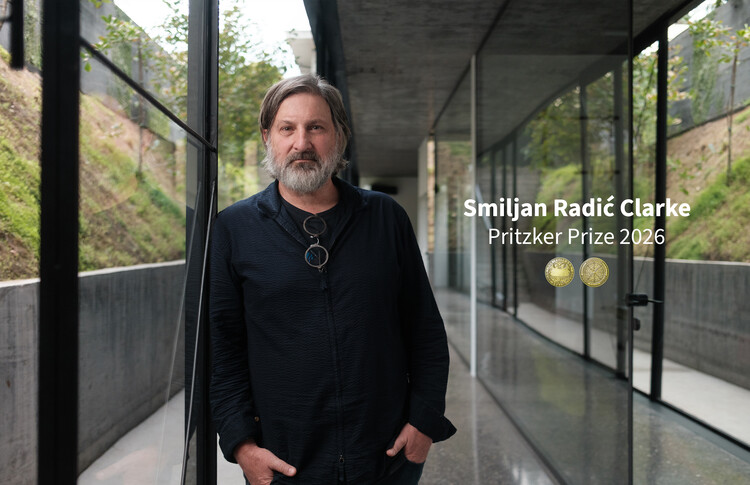
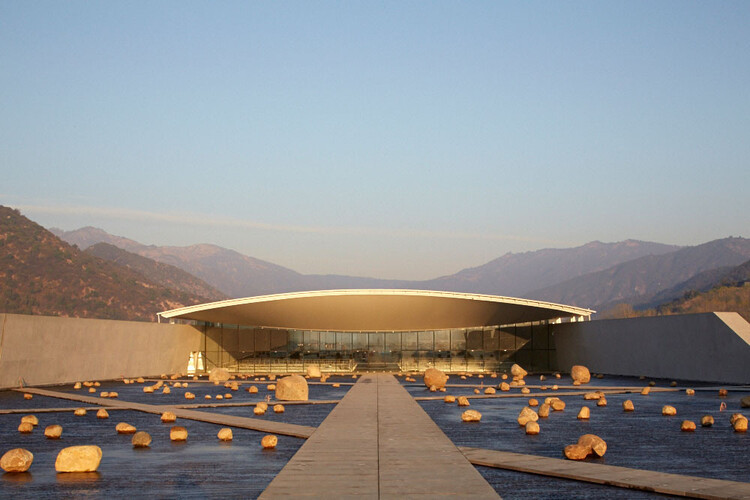
Smiljan Radić Clarke, the 2026 Pritzker Prize winner, is a contemporary Chilean architect known for his experimental approach to design, with a practice that balances the elemental with the intimate, the monumental with the fragile. Over the course of more than three decades, Radić has developed an architecture that resists repetition and conventional stylistic categorization, favoring instead deeply site-specific, materially attuned, and culturally reflective interventions.
His work negotiates between permanence and impermanence, memory and imagination, creating buildings that are as much about human experience and emotion as they are about structure and form. Across residences, cultural institutions, and temporary installations, Radić's architecture foregrounds the interplay between context, materials, and the subtle gestures that shape how spaces are inhabited and perceived.
Courtesy of Tom Welsh for The Pritzker Architecture Prize
Chilean architect Smiljan Radić Clarke has been announced as the laureate of the 2026 Pritzker Architecture Prize, regarded as one of the highest honors in the field of architecture. The award recognizes Radić for a body of work that explores architecture through material experimentation, spatial perception, and a careful engagement with landscape and context. Born in Santiago, Chile, where he continues to live and work, Radić leads the practice Smiljan Radić Clarke, established in 1995. As the second Chilean to receive the prize, after Alejandro Aravena in 2016, he joins a distinguished list of previous laureates, including Liu Jiakun in 2025, Riken Yamamoto in 2024, David Chipperfield in 2023, and Diébédo Francis Kéré in 2022.
Radić's architecture operates within a territory where the phenomenological experience of space precedes explanation. His buildings often appear quiet, elemental, and resistant to easy verbal interpretation, encouraging visitors to experience them through movement, atmosphere, and perception rather than through formal expression.
The 2026 Pritzker Price Award has been awarded this year to the Chilean architect of Croatian descent, Smiljan Radić Clarke. Born in Santiago, Chile, in 1965, his practice evokes a geography of extremes, shaped by the tectonic tension between the staggering weight of the Andes and the seismic instability of the territory. After graduating from the Pontifical Catholic University of Chile and pursuing further studies in aesthetics in Venice, Smiljan Radić Clarke established his base in Santiago. From there, he has developed one of the most singular visions in contemporary architecture. His work privileges the intensity of the moment through a fragile architecture. Within it, the building operates as a temporary and tactile refuge that places the spectator in a state of aesthetic uncertainty, oscillating between ancestral ruin and avant-garde artefact.
A revitalized canning factory in a coastal Portuguese city, a memorial park in Ethiopia, a small-town Brazilian home, a wooden pavilion evoking Bahrain's heritage, and 11 other visionary projects comprise the winners of the 2026 ArchDaily Building of the Year Awards. Chosen over three weeks of public voting, the winners are representative of the current architectural landscape, reflecting a diversity of approaches, materialities and aesthetics, while also showcasing common threads across cultures.
In its 17th edition, this year's Building of the Year Awards received more than 120,000 votes from over 100 countries, marking a record-breaking year for the world's largest community-driven architecture award. The winners represent 14 different countries, cultures and perspectives, coming from Brazil, Canada, Chile, Colombia, Denmark, Ethiopia, Germany, India, Indonesia, Japan, Portugal, South Korea, United States and Vietnam.
https://www.archdaily.com/1038873/meet-the-15-winning-projects-of-the-2026-archdaily-building-of-the-year-awardsDaniela Porto
With only two days left to vote, this is your last chance to pick your favorite projects of 2025 and help showcase the most influential architecture of the moment. There are 75 finalists to choose from in 15 different categories, with voting ending on February 18, 2026 at 18:00 EST.
https://www.archdaily.com/1038799/last-days-to-vote-for-the-2026-archdaily-building-of-the-year-awardsDaniela Porto
Two weeks and over 85,000 nominations later, the finalists of this year's Building of the Year Awards are in. The selection is much like the ArchDaily audience that chose it: diverse in geography, generous in ideas, and precise in intent. With projects from 46 countries, in a variety of typologies and scales, they present a beautiful snapshot of the current architectural moment.
We invite you to sit back, browse, and vote for your ultimate favorites. Below, you will find all of the 75 finalists in their respective categories. Voting is open until February 18th at 18:00 EST. Thank you—your participation is key to making this the world's largest community-driven architecture award.
What matters more: looking to the past or to the future? Recognizing established trajectories or fostering paths still under construction? Perhaps this is not a question with a single answer. Traditionally, architecture awards have operated as devices of consecration, recognizing completed works, established careers, and already tested solutions, most often through a retrospective lens. But what would happen if recognition ceased to be an end in itself and instead began to operate as a catalytic agent, investing less in what has already been done and more in what is still yet to unfold?