Hufton_Crow-12.jpg?1430883252&format=webp&width=640&height=580)
Hufton_Crow-18.jpg?1430884225&format=webp&width=230&height=230&crop=true)
Hufton_Crow-04.jpg?1430883376&format=webp&width=230&height=230&crop=true)
Hufton_Crow-08.jpg?1430883574&format=webp&width=230&height=230&crop=true)
Hufton_Crow-06.jpg?1430883467&format=webp&width=230&height=230&crop=true)
Hufton_Crow-12.jpg?1430883252)
-
Architects: Studio Libeskind
- Area: 1210 m²
- Year: 2015
-
Manufacturers: Vectorworks, FiAM, Keil, Lasvit
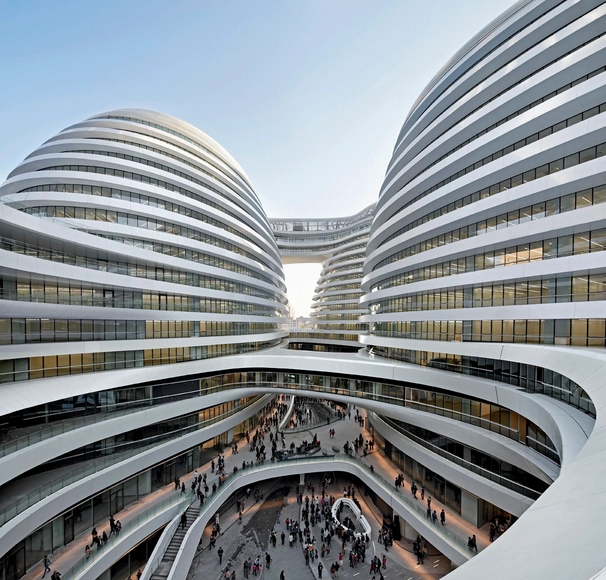
Last week Patrik Schumacher, director at Zaha Hadid Architects and the practice's frontman in the field of architectural theory, took once again to Facebook to disseminate his ideas - this time arguing that "the denunciation of architectural icons and stars is superficial and ignorant." In the post, Schumacher lamented the default position of the architectural media which he believes sees success and reputation as "a red cloth and occasion to knock down icons," going on to outline his beliefs on why stars and icons are useful and even inevitable mechanisms of architectural culture.
Schumacher has made headlines via Facebook before, with a post last year in which he argued for an end to the "moralizing political correctness" that has led to the popularity of socially-conscious design - a post which attracted almost universal outrage from architects, critics and social media users of all stripes. However this latest post had a very different feel; many people, myself included, seemed to find themselves at least partially agreeing with Schumacher. After all, at the most basic level he was asking for designs to each be judged on their individual merits - what's not to like?
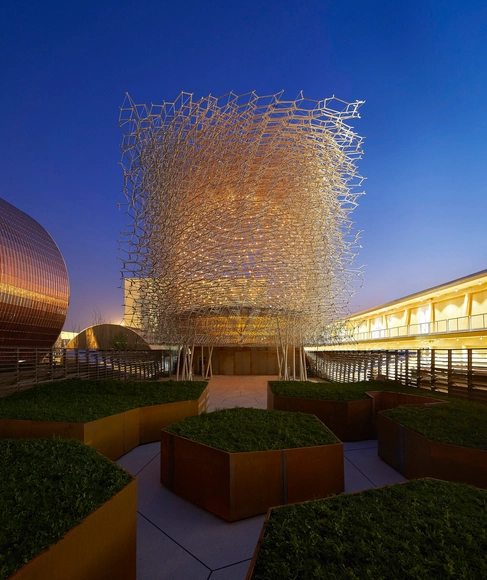
Wolfgang Buttress' “pulsating” beehive is one of the first pavilions to complete for the 2015 Milan Expo. Serving as the UK's contribution, “BE,” the “virtual hive” is designed to highlight the plight of the honeybee and offer an “immersive sensory experience” that leaves visitors with a “lasting flavor of the British landscape.”
Comprised of a 14-meter lattice structure, made from 169,300 pieces of aluminum and steel, the domed structure sits at the end of a meandering wildflower meadow that leads visitors to the "hive." Once inside, a sensory composition of audio and visual effects will mimic the activity of an existing beehive in Nottingham.
A look inside the beehive, after the break.
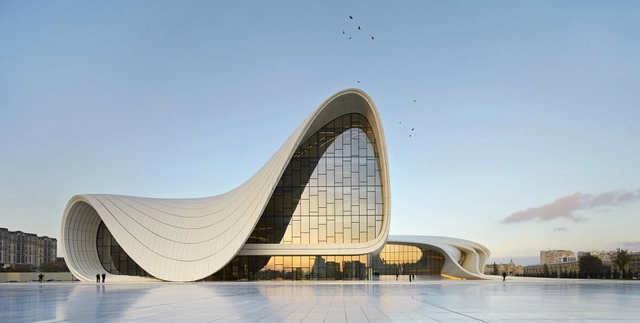
In the latest of his provocative posts on Facebook, Patrik Schumacher has come out in defense of iconic design and star architects, arguing that the current trend of criticism is "superficial and ignorant," and "all-too-easy point-scoring which indeed usually misses the point."
Schumacher says that critics "should perhaps slow down a bit in their (pre-)judgement and reflect on their role as mediators between the discourse of architecture and the interested public." In the 1,400 word post, he goes on to elaborate that so-called icons and the star system are inevitable results of this mediation, adding that "explanation rather than dismissal and substitution should be seen as the critics’ task."
Read on after the break for more highlights from Schumacher's argument
_Hufton___Crow.jpg?1427821798&format=webp&width=640&height=580)
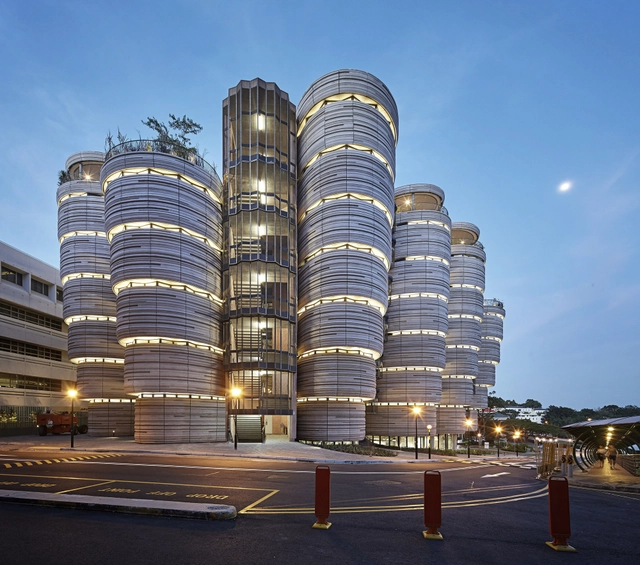
A casual observer might be forgiven for wondering how Thomas Heatherwick has developed such a reputation among architects. A scan of the works of Heatherwick Studio reveals relatively few completed buildings, and many of those that do make the list are small projects: kiosks, retail interiors, cafés. Indeed, to the average Londoner he is probably better known as the designer of the new homage to the iconic red Routemaster bus and as the creator of the wildly popular cauldron for the London 2012 Olympics - both unveiled in a year in which Heatherwick all but officially became the state-approved designer of 21st century Britain.
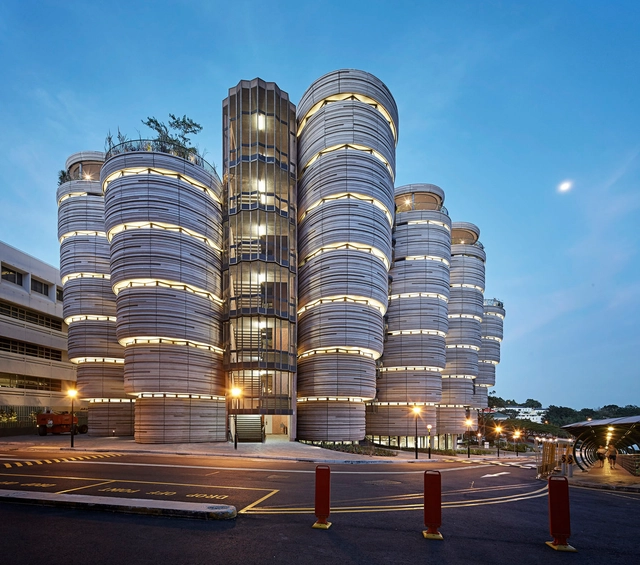
A look at the website of Heatherwick Studio sheds some light on this conundrum. With projects separated into “small,” “medium” and “large,” it is clear that a progression in scale is mirrored by a progression in time, with many of the smallest projects completed in the Studio’s early years, and most of those in the “large” category either recently completed or (more frequently) still on the drawing board. Their most recently completed project is also one of their largest, a “Learning Hub” for Nanyang Technical University in Singapore. How does a design studio that made its name in small projects adapt to such scale? ArchDaily spoke to Thomas Heatherwick about the Learning Hub and the increasing size of his projects to find out.
AlanWilliams.jpg?1426489201&format=webp&width=640&height=580)
A total of 15 projects have been shortlisted for RIBA North West 2015 Awards, featuring buildings by John McAslan + Partners, Feilden Clegg Bradley Studios, MUMA and Carmody Groake. All shortlisted buildings will now be assessed by a regional jury. Regional winners will then be considered for a RIBA National Award in recognition of their architectural excellence, the results of which will place some projects in the running for the 2015 RIBA Stirling Prize. The 2014 RIBA Stirling Prize was won by Haworth Tompkins for the Everyman Theatre in Liverpool, a project which was shortlisted by this branch of the RIBA. Feilden Clegg Bradley Studios' Manchester School of Art also made it to the national finals.
See the complete list of shortlisted projects after the break.
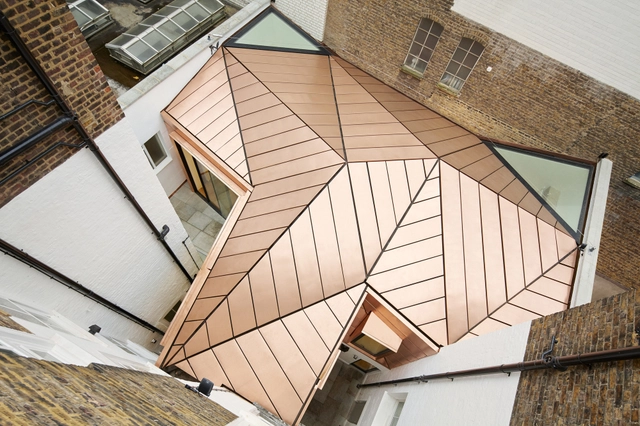
A total of 68 buildings have been shortlisted for RIBA London 2015 Awards, featuring buildings by AHMM, dRMM, John McAslan + Partners and Grimshaw, to Níall McLaughlin Architects, Eric Parry Architects, and Rogers Stirk Harbour. Winning projects from last year included three Stirling Prize shortlisted projects, as well as another by Haworth Tompkins who ultimately took the prize in 2014 for the Everyman Theatre in Liverpool. All shortlisted buildings will now be assessed by a regional jury. Regional winners will then be considered for a RIBA National Award in recognition of their architectural excellence, the results of which will place some projects in the running for the 2015 RIBA Stirling Prize.
See the complete list of shortlisted projects after the break.
In light of the recent opening of Mons International Congress Xperience (MICX), Daniel Libeskind hosted a private tour through the conference center, explaining his thinking behind the building’s expressive form. The experience was captured on this short film by Spirit of Space with the intention to open the discussion up to a larger audience.
The building, an important new landmark in the Belgium city of Mons, is described by Libeskind as “an expression of contrasting geometric forms.” Aside form providing function and “lively” spaces for auditoria and conference use, the building aims to be “a hinge between the old city and the new.”
Modern times have seen the rise and proliferation of architectural media, allowing people to remotely experience spaces and buildings without ever physically entering them. As such, the importance of the architectural image has never been greater.
Opening on January 15 at London’s Sto Werkstatt and organized in conjunction with Arcaid Images, Building Images celebrates the "power and impact of photography on the way we sense and experience spaces." Described by Arcaid Images co-founder Lynne Bryant as having "long been the means of communicating architecture," photography is a medium that has grown inseparable from the notion and creation of the architectural image. Learn more and view selected images from the exhibition, after the break.

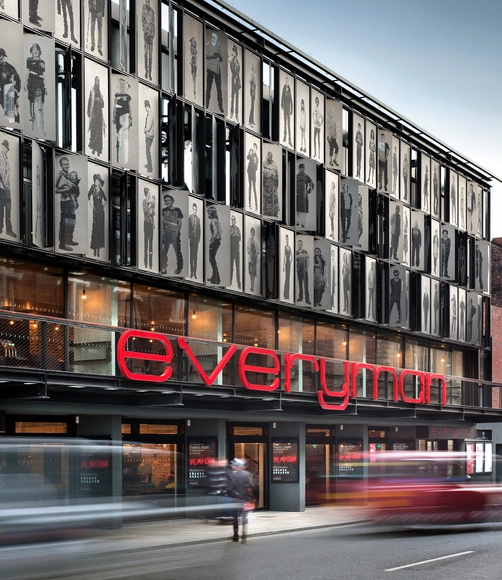
Haworth Tompkins' Everyman Theatre has won the RIBA Stirling Prize for 2014, beating competition from Zaha Hadid, Renzo Piano, Mecanoo, O'Donnell + Tuomey and Feilden Clegg Bradley. The result was announced last night by RIBA President Stephen Hodder at an event held at the RIBA's Headquarter's in London, with Hodder saying that "Haworth Tompkins have struck the perfect balance between continuity and change" and calling the scheme "a ground-breaking example of how to build a daring, bold and highly sustainable large public building in a historic city centre."
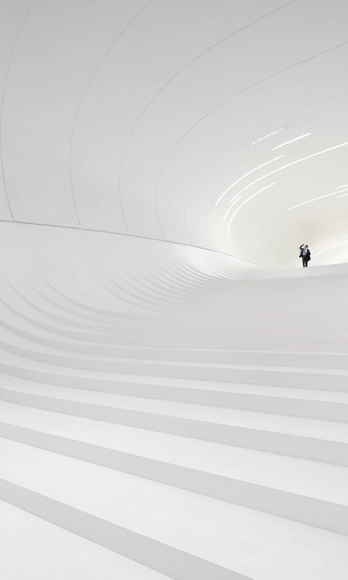
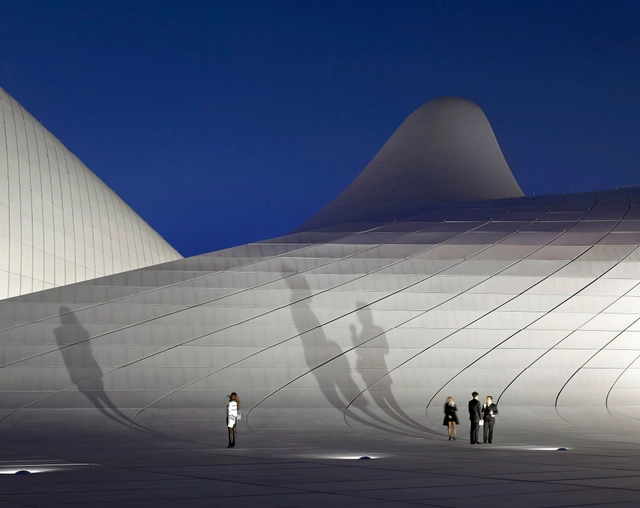
Hufton + Crow have been named “Architectural Photographer of the Year 2014” by Arcaid Images. The news was announced in Singapore at the World Architecture Festival after the duo’s interior image of Zaha Hadid’s Heydar Aliyev Centre staircase received the highest score from the judges. Hufton + Crow also received runner-up in the award's exterior category with another image from the Heydar Aliyev Centre. You can check it out, after the break.
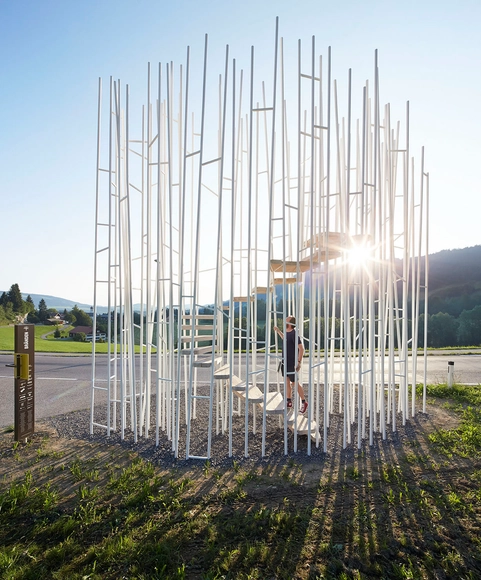
What happens when seven internationally acclaimed architects are invited to design sculptural bus stops for a tiny Austrian village of 1000 inhabitants? Collaborating with local architects and utilizing local materials to design the pavilions, Alexander Brodsky, Rintala Eggertsson, Ensamble Studio, Architecten de Vylder Vinck Taillieu, Smiljan Radic, Sou Fujimoto, and Wang Shu's Amateur Architecture Studio worked with Austria's Verein Kultur Krumbach to carry out the BUS:STOP project and usher in a unique new facet of culture to Krumbach. We brought you images of the design proposals earlier, and now we have photos of the incredible results: Hufton + Crow has just released a stunning new set of images showcasing the completed bus stops.
Hufton + Crow's brilliant photography captures the inimitable originality and sensational quality of the uniquely crafted pavilions embedded within the Austrian landscape. Immerse yourself in Krumbach and check out the latest images after the break.
_Hufton___Crow.jpg?1427820634&format=webp&width=230&height=230&crop=true)
_Hufton___Crow.jpg?1427821656&format=webp&width=230&height=230&crop=true)
_Hufton___Crow.jpg?1427819483&format=webp&width=230&height=230&crop=true)
_Hufton___Crow.jpg?1427821291&format=webp&width=230&height=230&crop=true)
_Hufton___Crow.jpg?1427821798)


