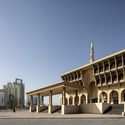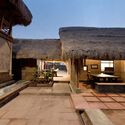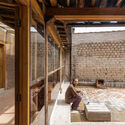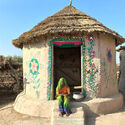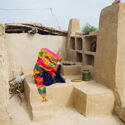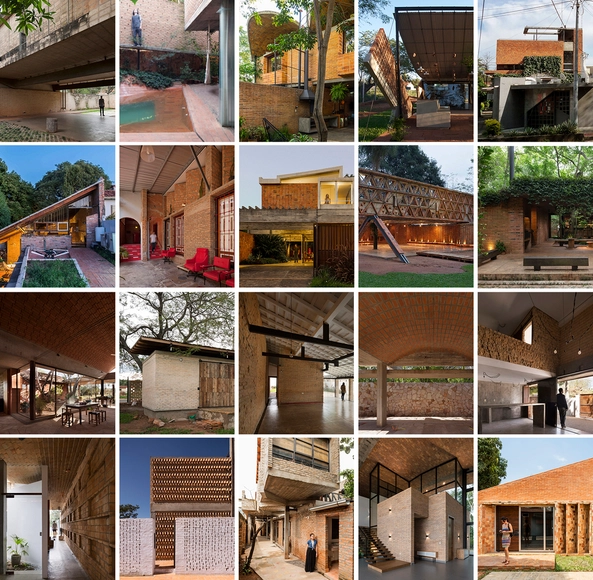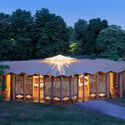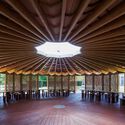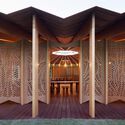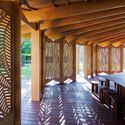
The professional career of Mexican architect Gabriela Carrillo reveals an impeccable and relentless commitment to recognizing the values of the territory in order to provide spaces that dignify their inhabitants. This approach has shaped her practice for 19 years, nine of which she spent as a partner at Taller de Arquitectura Mauricio Rocha + Gabriela Carrillo. Her work has been recognized with numerous awards, including the Gold Medal from the French Academy of Architecture.
An exclusive issue dedicated to Mexican architecture is the theme of the latest edition of World Architecture (WA) magazine in China, curated by the ArchDaily team. Published by Tsinghua University since its founding in 1980, World Architecture magazine is one of the largest and most prestigious architectural publications in China.
Our jury of experts—meaning you, our readers—have nominated their favorite projects from among nearly 1,000 built works in Latin America and Spain: today, the day has come to meet the finalists of ODA2020!
During the presentation of the Obra del Año Awards held earlier this month at the Mirador Pablo Neruda, ArchDaily CEO David Basulto shared a series of data with the audience, providing a quantitative and qualitative overview of Chilean architecture in 2019:
“Based on the data we have collected over nearly 12 years, at ArchDaily we have managed to build a highly representative profile of how architecture is designed and built in Chile. I hope this information is useful for creating more and better cities, and for understanding how the digitization of architecture has influenced how we inhabit our cities.”
https://www.archdaily.com/1123440/archdaily-releases-the-state-of-chilean-architecture-reportPola Mora
As part of the feminist demonstrations that took place last weekend in Mexico, a group of Mexican women architects organized to join the march held on Sunday, March 8, in various parts of the country. The march aimed to 'take back the city' to demand direct state action to reverse the wave of violence and historical bias against women in Mexico, where numbers have reached 10 femicides a day.
https://www.archdaily.com/1123477/building-equity-mexican-women-architects-demonstrate-for-a-world-without-violenceArchDaily Team
I am thrilled to share a very important milestone with all of you. Today, August 3, 2021, ArchDaily Mexico celebrates its 9th anniversary! Indeed, nine years ago, with great excitement and high expectations, we launched the Mexican edition of ArchDaily—already the most visited architecture website in the world. Our mission remained to deliver inspiration, knowledge, and tools, but with a dedicated focus on this country's architects, who over these years have enabled us to continue serving as their primary tool for international and Mexican architectural inspiration and knowledge.
"True love is a span, extending infinitely, An immense monolith, our architecture." - Gilberto Gil, Drão
Just over two years ago, the Casa da Arquitectura - Portuguese Centre for Architecture began a major effort to assemble a collection of significant works from the last 90 years of Brazilian architectural history. In addition to expanding the institution's already impressive archive—which includes, among other items, hundreds of original scale models by Souto de Moura—this collection of more than eight thousand documents of Brazilian architecture will form the core of the exhibitionInfinito Vão, curated by Guilherme Wisnik and Fernando Serapião.
Over the past three weeks, we received a total of 230,000 votes from our readers to select the winners of the ArchDaily 2018 Building of the Year Awards in China. With a readership composed largely of industry professionals, voters selected the three most exemplary projects from more than 300 Chinese works published on ArchDaily.cn in 2017. As a peer-voted accolade, this recognition carries significant weight.
https://www.archdaily.com/1114625/2018-archdaily-china-building-of-the-year-awards-winners-announcedJoanna Wong
Eduardo Souto de Moura, the 2011 Pritzker Prize laureate, is perhaps, alongside Álvaro Siza, the most influential Portuguese architect today, with a consistent body of work marked by projects that demonstrate an impressive attention to local specificity.
https://www.archdaily.com/1114750/eduardo-souto-de-moura-being-incompetent-is-a-way-of-being-reactionaryPedro Vada e Romullo Baratto
Presenting a project in a clear and convincing manner can be a major challenge—even a torment for many students. When you add high doses of caffeine, sleep deprivation, and a jury ready to evaluate your work, we can all agree that, once the moment arrives, it is impossible not to tremble inside (at best) and outside (in most cases).
As the annual graduation season arrives worldwide, we recognize that among the various ways to learn architecture, nothing is more direct than a hands-on design-build project. It offers a firsthand look at how different materials form structures, how those structures respond to compression and tension, and how the process of construction shapes the final outcome. In recent years, architecture schools have increasingly embraced opportunities for students to build, producing work that ranges from small-scale temporary interventions and pavilions to permanent structures, each with its own unique character.
To demonstrate that exceptional architecture can emerge from an educational environment, ArchDaily has issued an open call for student work for four consecutive years, inviting submissions of student-built projects completed over the past year. ArchDaily’s four localized platforms—English, Chinese, Spanish, and Portuguese—are now accepting submissions for our fourth annual selection of the "Best Student Design-Build Projects," which will be featured and shared with our global audience.
https://www.archdaily.com/1113969/global-call-outstanding-student-build-projectsJoanna Wong
We spoke with Griselda Balian and Gastón Noriega, members of the Argentine architecture studio BAAG —Buenos Aires Arquitectura Grupal— a team that, through its understanding of the value of collective work, aims to make an exploratory contribution to the discipline.
Protagonistas del V Congreso Internacional de Arquitectura y Sociedad. Image Cortesía de Fundación Arquitectura y sociedad
Yesterday, June 13, marked the opening of the 5th International Congress of Architecture and Society, an event presided over by King Felipe VI for the second consecutive edition. The President of the Government of Navarra, Uxue Barkos, and the Minister of Development, José Luis Ábalos, also participated in the official opening.
Architect Francisco Mangado was responsible for opening the event, which in its fifth edition will focus on cities and the challenges architecture faces in addressing urban demands. The architect from Navarra stated that “Architecture is not an isolated event of personal preferences; it is a profoundly cultural and social act, linked to the city as a reality that belongs to the common good,” adding that “the quality of architecture and the city is not a luxury, it is a right for all citizens.”
https://www.archdaily.com/1113864/francisco-mangado-opens-the-v-congress-of-architecture-and-society-the-quality-of-the-city-is-not-a-luxury-it-is-a-rightJavier García Librero
In April 2018, the inaugural edition of the Provincia Festival was held, aiming to create an open forum for dialogue and the discussion of civic interest topics, with an emphasis on responsible engagement in regional architectural development.
The festival took place in the city of Tuxtla Gutiérrez in Chiapas, México—a region currently lacking high-quality urban spaces, planning, and a clear vision regarding the impact of architectural projects. Meanwhile, there is a constant drain of local talent, driven by a combination of factors that foster the belief that professional success can only be achieved through large-scale projects in major metropolises. We want to reaffirm the idea that architecture is everywhere, and that the true success of the profession lies in serving everyone, regardless of their gender, social background, or economic status.
At ArchDaily en Español, we recognize the need to maintain constant contact with architecture students, who will be responsible for designing and building the cities of the future. For this reason, we periodically open a call for applications to join our editorial team through our internship program.
If you currently reside in Argentina, this could be your opportunity to contribute local content to the world's most visited architecture platform, which inspires and informs hundreds of thousands of architects around the globe. If you are interested, please read on.
Western philosophical tradition has long placed culture in opposition to nature. This dual thinking has shaped the canon of the sciences and humanities, and architecture was not left aside. Under that logic, everything that is not human exists to be exploited by them and is named "natural resource". This extractivist mindset has shaped the development of many parts of the world in the last centuries, leaving deep—sometimes irreparable—marks on the planet. Nevertheless, other ways of living have always existed. From West-African religious practices based on animism to the herbal sciences of the masters of the Sacred Jurema in Brazil; from indigenous communities in India whose life rhythm mirrors the monsoons, to the Arctic's Inuits who can see dozens of shades of white: humans and nature bear no distinction, what exists is life.
Contemporary authors bring this discussion to the realms of philosophy and, more specifically, architecture. Donna Haraway, Antônio Bispo dos Santos, Achille Mbembe, and Beatriz Colomina are only a few whose work has helped expand the narrow Western perspective, shedding light on alternative ways of living together—with other humans and more-than-humans—on this planet.
Cobe and ArchDaily invite you to the launch of the guest-edited edition of Cobe Notes x ArchDaily, on June 10, 2026. Focused on the theme of Thresholds, the event will explore architecture as a condition of ongoing transition.
Hosted at the Cobe Bookcafé, the public launch will feature a live conversation with Christele Harrouk, Editor-in-Chief of ArchDaily, Mads Birgens, Head of Urbanism at Cobe, and Jacob Blak, Head of Sustainability, moderated by Kristoffer Lindhardt Weiss, CEO and Publisher of the Danish Architectural Press.
https://www.archdaily.com/1041502/cobe-notes-x-archdaily-irl-on-thresholds-in-architectureArchDaily Team
Walking into an electrical store can be intimidating. At first glance, all the lights are on, and the thousands of chandeliers and lamps are blinding. When you walk toward the shelves, you see dozens of options, shapes, colors, prices, and uses. On each package, informational tables display numbers that can seem confusing at first. Lumens, color temperature, wattage—there are many unfamiliar terms. Before defaulting to the cheapest option, only to find that it creates an uncomfortable or poorly balanced atmosphere, understanding a few key concepts can make a significant difference.
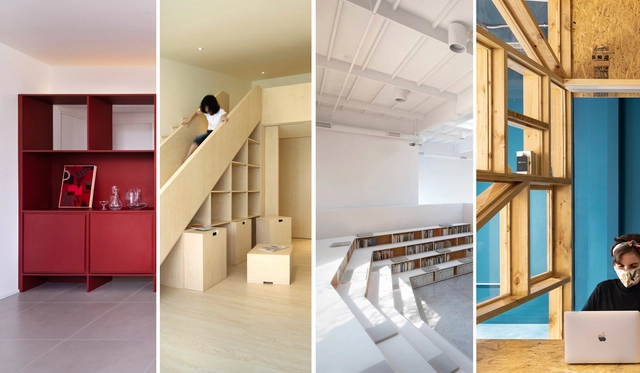
Lighting design plays a fundamental role in shaping how spaces are perceived and used, influencing comfort, atmosphere, and even productivity. Poorly designed lighting, on the other hand, can compromise these qualities. Rather than approaching lighting as a purely technical decision, it can be understood as an integral part of architectural design. To help clarify these choices, the following overview introduces the most common types of light sources and key concepts associated with them.