3 Ways to Transform Public Transit with a Focus on Climate, Health, and Equity

Subscriber Access | 

The Covid-19 pandemic hit public transit hard. Initially, global ridership dropped by up to 80%, and by the end of 2020, public transit was still operating with only about 20% of its pre-pandemic passenger volume. The concern is that, if public transit does not recover, people will increasingly opt for private vehicles.

Electric buses can make our cities more sustainable

Subscriber Access | 

Over the last few decades, discussions on addressing climate challenges have unfolded even as we experience their effects. Although cars and motorcycles are the primary emitters of pollutants, buses also play a significant role in greenhouse gas emissions and the rise of illnesses related to air pollution. In this regard, adopting new technologies, such as electric buses and alternative fuels, is essential to reducing their impact on public health and the environment.
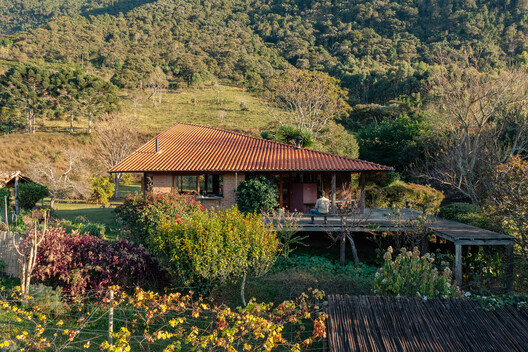
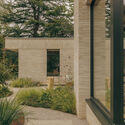
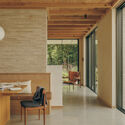
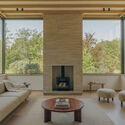
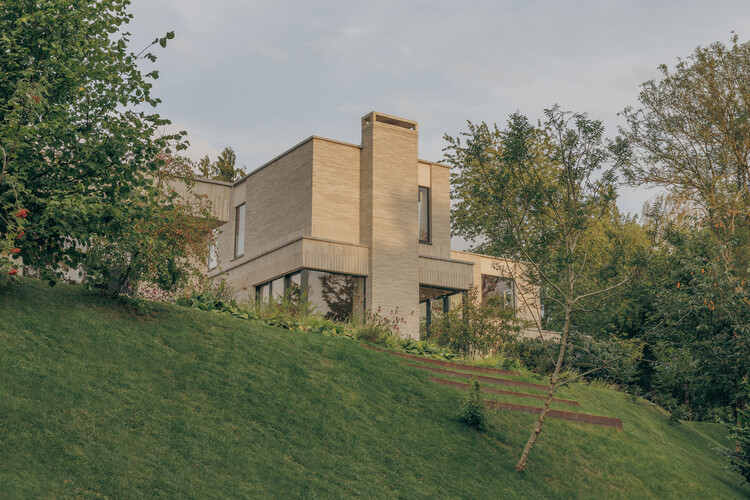
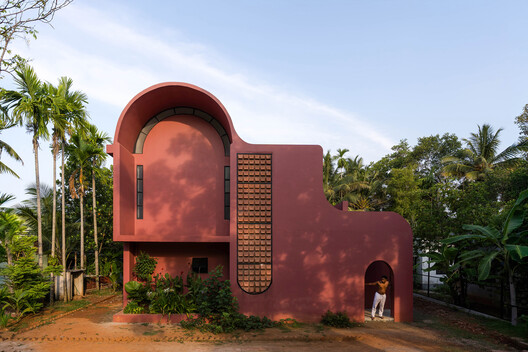
Brise House / Frechal Arquitetura

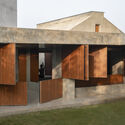
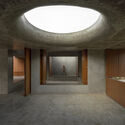
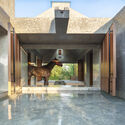
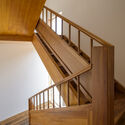
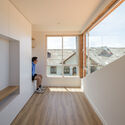
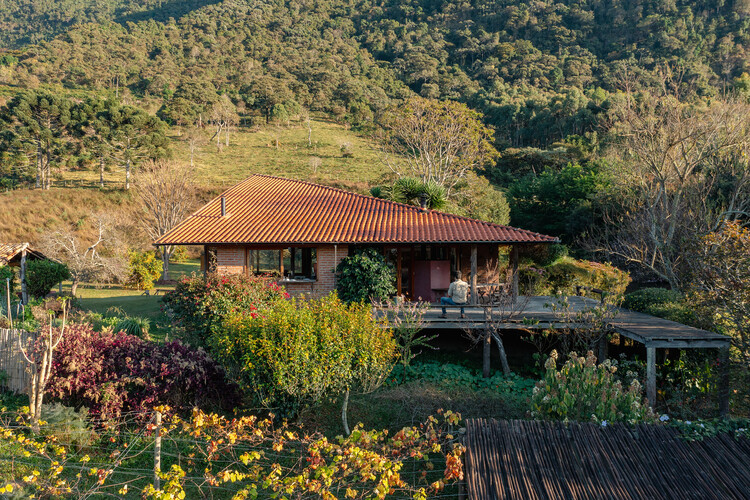
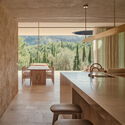
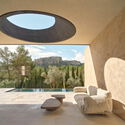
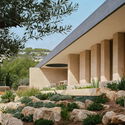
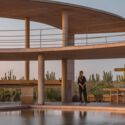
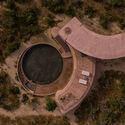
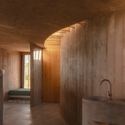
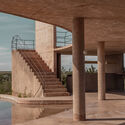
Brise House / Frechal Arquitetura - HousesBrise House / Frechal Arquitetura - Interior Photography, Houses, ChairBrise House / Frechal Arquitetura - Exterior Photography, HousesBrise House / Frechal Arquitetura - Exterior Photography, HousesBrise House / Frechal Arquitetura - More Images+ 33

  • Area Area of this architecture project Area:  422
  • Year Completion year of this architecture project Year:  2019
  • Manufacturers Brands with products used in this architecture project
    Manufacturers:  AutoDesk, Lumion

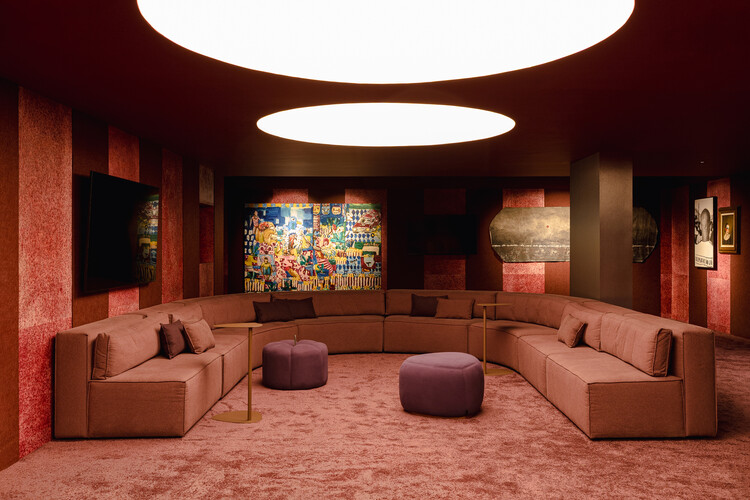
BTG Bank Headquarters / Perkins&Will

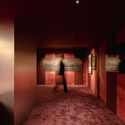
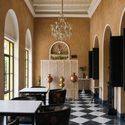
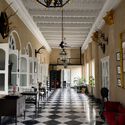
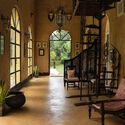
BTG Bank Headquarters / Perkins&Will - Interior Photography, Adaptive Reuse, KitchenBTG Bank Headquarters / Perkins&Will - Interior Photography, Adaptive Reuse, Stairs, FacadeBTG Bank Headquarters / Perkins&Will - Interior Photography, Adaptive ReuseBTG Bank Headquarters / Perkins&Will - Interior Photography, Adaptive Reuse, ChairBTG Bank Headquarters / Perkins&Will - More Images+ 13

  • Architects: Perkins&Will
  • Area Area of this architecture project Area:  4000
  • Year Completion year of this architecture project Year:  2022
  • Manufacturers Brands with products used in this architecture project
    Manufacturers:  Interface, Insight, OWA, Vescom

Electric and autonomous robotaxi begins testing in the US

In 2020, US-based startup Zoox revealed the prototype of its autonomous electric vehicle. Now, the robotaxi is entering an advanced testing phase in California. 

Resembling a minivan, the vehicle is tall, boxy, and features sliding glass doors. Its large wheels and rounded corners stand out, giving it a cartoonish appearance. 

"Architects complicate things, pretend to be artists": Interview with Eduardo Souto de Moura

Subscriber Access | 

No País dos Arquitectos is a podcast created by Sara Nunes, who is also responsible for the architectural film production company Building Pictures. The podcast aims to profile the professionals, projects, and stories behind leading contemporary Portuguese architecture. With just over 10 million inhabitants, Portugal is a highly fascinating country in this professional field, and its architectural output far exceeds what its small population or territorial scale would suggest.

In this episode, Sara talks with architect Eduardo Souto de Moura about the Braga Municipal Stadium. Listen to the full interview and read a partial transcript of the conversation below:

"Architects complicate things, pretend to be artists": Interview with Eduardo Souto de Moura - Imagen 1 de 4"Architects complicate things, pretend to be artists": Interview with Eduardo Souto de Moura - Imagen 2 de 4"Architects complicate things, pretend to be artists": Interview with Eduardo Souto de Moura - Imagen 3 de 4"Architects complicate things, pretend to be artists": Interview with Eduardo Souto de Moura - Imagen 4 de 4Architects complicate things, pretend to be artists: Interview with Eduardo Souto de Moura - More Images+ 11

Cultivating territories: new food spaces

Subscriber Access | 

For the first time in history, the global urban population has surpassed the rural population. Today, 55% of people live in urban areas, and projections indicate this figure will reach nearly 70% by 2050—an increase of 2.5 billion urban dwellers. This prompts us to ask: what model of urbanization do we want for the coming decades? The answer depends on understanding rising urbanization rates as a challenge not only for cities but also for rural and peri-urban territories, whether productive or natural.

Cultivating territories: new food spaces - 1 的图像 4Cultivating territories: new food spaces - 2 的图像 4Cultivating territories: new food spaces - 3 的图像 4Cultivating territories: new food spaces - 4 的图像 4Cultivating territories: new food spaces - More Images+ 3

ArchDaily Brasil 2022 Building of the Year Award: Voting Now Open

For the sixth time, we are giving our readers the responsibility of recognizing and rewarding the projects that have made the greatest impact on the profession through the ArchDaily Brasil 2022 Building of the Year Award. By voting, you become part of an unbiased network of jurors recognizing the most outstanding projects of the past year.

Over the next three weeks, the collective intelligence of our readers will filter through hundreds of projects from Portuguese-speaking countries—Brazil, Portugal, Mozambique, Angola, Guinea-Bissau, East Timor, Equatorial Guinea, Macau, Cape Verde, and São Tomé and Príncipe—published in 2021, selecting the best works built in Portuguese-speaking territories.

From hundreds of projects published in 2021, readers will choose their favorites, and the 15 projects with the most votes will move on to the second stage of the award.

The 2022 Building of the Year Award is presented by Dornbracht, an internationally renowned manufacturer of kitchen and bathroom fixtures.

Concrete Voids: A Look at Urban Idleness

Subscriber Access | 

São Paulo's downtown area clearly displays the contradictions of our cities. On one hand, vacant properties sit idle in areas well-served by urban infrastructure; on the other, the number of people experiencing homelessness is growing, sheltered in tents and precarious, makeshift structures.

Concrete Voids: A Look at Urban Idleness - Image 1 of 4Concrete Voids: A Look at Urban Idleness - Image 2 of 4Concrete Voids: A Look at Urban Idleness - Image 3 of 4Concrete Voids: A Look at Urban Idleness - Image 4 of 4Concrete Voids: A Look at Urban Idleness - More Images+ 1

Three reasons why we need architects in healthcare systems

Subscriber Access | 

When we think of healthcare, we think of doctors, nurses, surgeons, radiologists, and anesthesiologists  – the people who treat illnesses and save lives.

Yet we often overlook a large group of people who make saving lives possible – medical coding specialists, healthcare service managers, hospital architects and engineers, and others working behind the scenes to deliver positive health outcomes.

How UX Design Can Help Build Better Cities: An Interview with Cuca Righini

Subscriber Access | 

UX Design, or user experience-centered design, is not, as is commonly thought, a field focused exclusively on the digital world, screens, and visual interfaces. Rather, it deals with the "complex networks of relationships that users have with one another and within the system itself," whether virtual, graphic, architectural, or urban. This is according to Cuca Righini, an architect who graduated from FAUUSP and a specialist in UX design, design thinking, and the pedagogy of cooperation.

"Like a fine wine, a building has to know how to age": Interview with Diogo Aguiar

Subscriber Access | 

No País dos Arquitectos is a podcast created by Sara Nunes, who also runs the architectural film production company Building Pictures. The podcast aims to profile the professionals, projects, and stories behind benchmark contemporary Portuguese architecture. With just over 10 million inhabitants, Portugal is a highly compelling country within this professional field, and its architectural output far outstrips what its population or territorial scale might suggest.

"Like a fine wine, a building has to know how to age": Interview with Diogo Aguiar - Imagem 1 de 4"Like a fine wine, a building has to know how to age": Interview with Diogo Aguiar - Imagem 2 de 4"Like a fine wine, a building has to know how to age": Interview with Diogo Aguiar - Imagem 3 de 4"Like a fine wine, a building has to know how to age": Interview with Diogo Aguiar - Imagem 4 de 4Like a fine wine, a building has to know how to age: Interview with Diogo Aguiar - More Images+ 15

Students create 3D-printed coral reef to clean up rivers

Students at Tunghai University in Taiwan have designed a type of artificial coral reef. The proposed structure is made of 3D-printed eco-friendly ceramic to help revitalize urban rivers. 

While natural corals are irreplaceable and essential to ocean health, this 3D-printed structure has a specific mission: to provide shelter for aquatic organisms. This alone can help sustain various species. 

Are bike lanes to blame for urban congestion?

In 2021, the average London driver spent 148 hours in traffic jams—double the national average, according to a new report by Inrix, a road traffic analytics company. These findings led to a BBC report that attributed this new, alleged status as the world's most congested city to an increase in bike lanes, implemented across London to ensure social distancing during pandemic travel. This analysis seems to overlook the fact that congestion in 2021 was practically the same as in 2019.

To understand what is happening, we must remember that the amount of time available to each of us limits how much we can travel. There are many things we need to fit into 24 hours and, on average, we spend only one hour commuting. This limits the accumulation of congestion in cities.

Exhibitionism and seclusion: the Glass House complex of Philip Johnson and David Whitney

Subscriber Access | 

The Glass House, located on Ponus Ridge Road in New Canaan, Connecticut, was designed and built in the late 1940s as the home of its architect, Philip Johnson. Considered an icon of modern architecture, the house explores the boundaries between interior and exterior. One year after its completion, its mimesis, the Brick House, was built 25 meters in front of it, sharing the same length but only half the depth of the glass house.

3.3 billion people are highly vulnerable to climate impacts

Subscriber Access | 

The impacts of human-induced climate change have already caused loss and damage to people and ecosystems. These impacts are most severe among marginalized urban populations, such as slum dwellers. In the most vulnerable regions, the number of deaths from droughts, floods, and storms was 15 times higher over the last decade than in the least vulnerable regions.

Stone House / Arquitetare

Stone House / Arquitetare - Exterior Photography, Houses, FacadeStone House / Arquitetare - HousesStone House / Arquitetare - Interior Photography, Houses, Deck, Handrail, Balcony, Table, Chair, CoastStone House / Arquitetare - Exterior Photography, HousesStone House / Arquitetare - More Images+ 18

AA House / Barino Arquitetura

  • Architects: Barino Arquitetura
  • Area Area of this architecture project Area:  320
  • Year Completion year of this architecture project Year:  2021
  • Manufacturers Brands with products used in this architecture project
    Manufacturers:  CCL Pisos, Madereira Gonçalves, Sporch Vidros

You've started following your first account!

Did you know?

You'll now receive updates based on what you follow! Personalize your stream and start following your favorite authors, offices and users.