The Basque Country is one of Spain’s most advanced autonomous communities in terms of public housing, thanks to policies sustained since the transfer of powers in 1981. Regardless of the political party in office, laws and regulations have evolved to meet societal demands. After 37 years, what remains to be done? In what direction should public housing policy move?
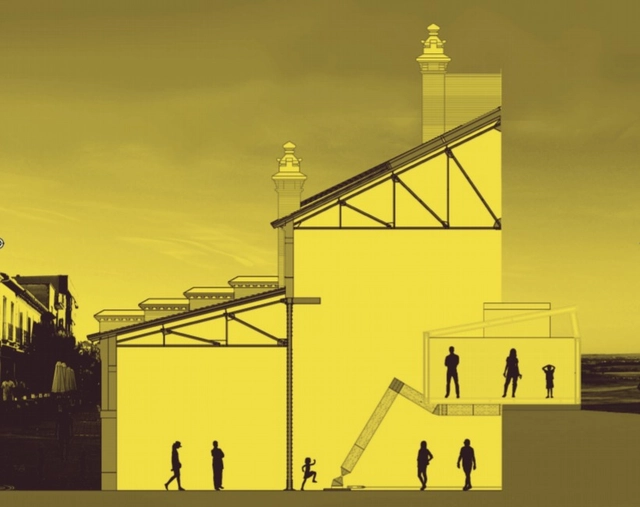
Artist and social architect Santiago Cirugeda will build a house suspended in mid-air inside Nave 11, developing its full artistic potential by inviting creators—Llorenç Barber and Montserrat Palacios, Ignacio Marín Bocanegra, Vértebro, and Los Bárbaros—as well as spectators, to live in and experience it. Once its time at Naves Matadero concludes, the house will be rebuilt by members of the Network of Feminist Women for Gender Equity in Development; the Amalgama Association, a group of Latin American women fighting against gender-based violence; and the Dinamia Cooperative and Trabe Foundation, both of which specialize in integration processes.
Coinciding with the opening of the 15th Architecture Week, an exhibition is being presented to commemorate the centenary of the birth of architect Francisco Javier Sáenz de Oíza, a fundamental figure in Spanish architecture, and particularly in Madrid.
As part of the HAY Festival Segovia 2018, the film Mies on Scene (2018), directed by Pep Martín and Xavi Campreció, will be screened in Segovia, Spain, this Saturday, September 22. And ArchDaily en Español is giving away tickets!
Mies on Scene explores the history of a building that changed the course of architecture in Europe and across the globe. It tells the story of the Barcelona Pavilion, the masterpiece through which Ludwig Mies van der Rohe and Lilly Reich staged their revolutionary ideas in 1929. Its construction and subsequent reconstruction immerse us in a reflection on the perception of art, space, and the concept of a masterpiece.
The 4th Smart Cities Congress promotes the exchange of knowledge and experiences regarding Smart Cities in Spain, using technology and innovation as the foundational tools for their development. To this end, it addresses the main topics related to the Smart City in a transversal, multidisciplinary, and multisectoral manner, showcasing initiatives currently being developed in the country.
Logo of the 5th Nearly Zero Energy Buildings Congress
The Nearly Zero Energy Buildings Congress (EECN) is the premier professional forum for addressing the current state of high-efficiency buildings and their implications for the building, construction, architecture, and related services sectors in our country. The Congress addresses key aspects affecting Nearly Zero Energy Buildings in Spain from a comprehensive and multidisciplinary perspective. A wide range of topics will be covered, including technical and regulatory issues, as well as business opportunities, considering solutions for both new construction and renovation projects. It covers the current state and future of the sector through various formats, such as paper presentations, NZEB project exhibitions, roundtables, and keynote speeches. The thematic areas established for the 5th Nearly Zero Energy Buildings Congress are:
INSÒLIT is a festival of ephemeral interventions in the courtyards of Palma de Mallorca, Spain, that aims to promote the city's rich architectural heritage through creative, ephemeral actions.
INSÒLIT is a cross-disciplinary event that uses cultural action to address and connect three key aspects of the Mallorca region: culture, heritage, and creativity. The festival focuses its efforts on Palma's Old Town, where these three factors converge.
Videos
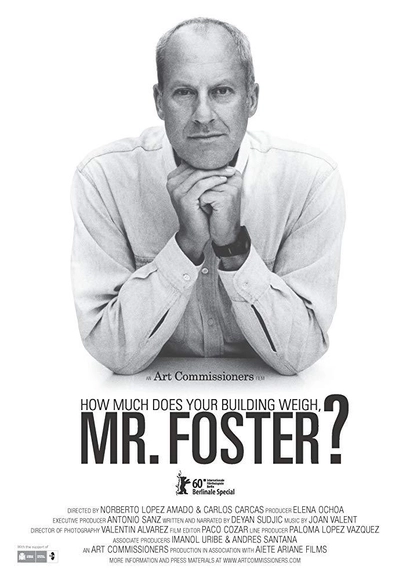
'How Much Does Your Building Weigh, Mr. Foster?' (2010). Image
In conjunction with the 15th Madrid Architecture Week, the Norman Foster Foundation presents Architecture on Screen, a film series curated by the foundation for Sala Equis in the Spanish capital.
Since the early 20th century, both architecture and film have found ways to express new ideas and develop avant-garde languages. Avant-garde movements, such as Futurism, established a close link between art, film, and architecture. As seen in the drawings of Sant'Elia, they convey the concept of the industrial city, moving trains, and buildings inspired by hydroelectric power plants, using the machine as a metaphor.
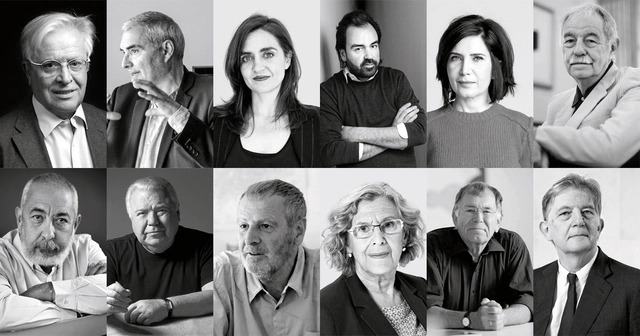
Titled "Less Architecture, More City," the 5th edition of the International Congress of Architecture and Society will focus on the city to reflect on new forms of urbanism, exploring dimensions such as ecology, sustainable mobility, and the humanization of public spaces.
As in the four previous editions, the Baluarte-Palacio de Congresos y Auditorio de Navarra will once again host this international event on June 13 and 14. While previous editions were more focused on architecture and architects—having featured renowned international figures such as Álvaro Siza, Alejandro Aravena, David Chipperfield, and Rem Koolhaas, and gathering up to 10 Pritzker Prize winners—this year marks a shift. In fact, from its first edition, titled "More for Less," to the most recent one in 2016, "Climate Change," the event has hosted major international figures in the field.
https://www.archdaily.com/1102517/the-city-will-take-center-stage-at-the-5th-international-congress-of-architecture-and-societyJavier García Librero
At first glance, it might seem unusual to think of an architect as a highly valued professional within certain areas of the digital sector. However, upon closer analysis, we can observe the significant similarities between architecture and digital product design, helping us understand why these professionals are becoming highly sought-after profiles among industry leaders.
El Inventario de Abestudio is launching its graphic experimentation workshops with The Shadow Laboratory. Over three sessions, participants will explore the capacity of shadows to generate images that can detach from their source objects, take on their own identity, and design a new reality. They will construct and compose shadows, capturing an infinite array of possible configurations derived from the object and light beams on a flat plane.
After a long period in which photography was effectively the only language used to document architecture, moving images are increasingly gaining prominence as a way to enrich the architectural discourse.
On Thursday, May 24, at 7:00 PM, the Espai Alfaro will host the opening of the exhibition AlfaroSiza: Ideas encontradas, which brings together and exhibits, for the first time, works by architect Álvaro Siza and sculptor Andreu Alfaro. The explorations of both in sculpture, drawing, and architecture, along with the undeniable and striking relationship between their creations, serve as the exhibition's main draw.
https://www.archdaily.com/1101634/fifty-works-bring-alvaro-siza-and-andreu-alfaro-together-in-valenciaJavier García Librero
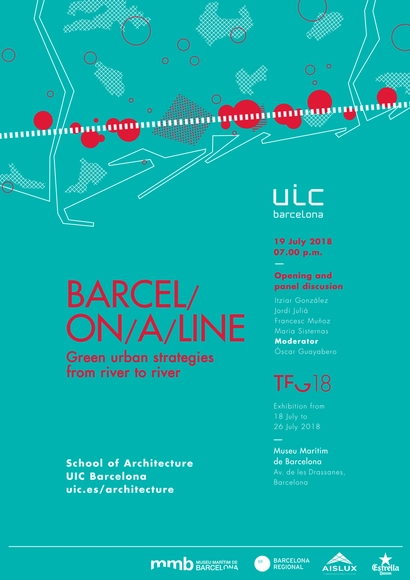
For the seventh consecutive year, the UIC Barcelona School of Architecture is inaugurating its final degree project exhibition at the iconic architectural complex of the Reales Atarazanas in Barcelona, the current home of the Maritime Museum. Titled Barcel/on/a/line. Green urban strategies from river to river, the exhibition arrives amidst an ongoing debate regarding the difficult balance between the economic and social roles of Barcelona's waterfront, which is currently strained by mass tourism. It presents proposals that connect and reprogram the open spaces along the 10-kilometer coastline between the Besòs and Llobregat rivers, aiming to strengthen its civic character and its connection to the adjacent urban fabric.
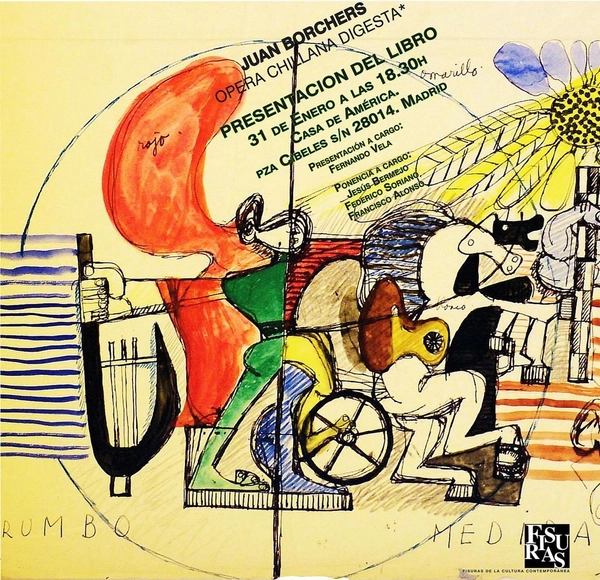
On January 31, the book Opera Chillana Digesta, recently published by Editorial Fisuras, will be presented at Casa de América in Madrid.
Opera Chillana Digesta is a large-format portfolio written and illustrated by Juan Borchers in early 1964. It is one of the most valuable Borchers manuscripts preserved in the Original Archives of the Faculty of Architecture at the Pontificia Universidad Católica de Chile. In this manuscript, Borchers aims to synthesize the intellectual background of the project for the Cooperativa Eléctrica de Chillán building, which was nearing completion at the time. It is written in simple language—at least in comparison to other texts by Borchers—and is accompanied by beautiful drawings. Beyond presenting the architectural concept behind the project, Borchers provides insights into how this concept is embodied in the work. Among the many topics covered, the Borcherian idea of "act" and a theory of form embodied in his concept of "bastones" (staffs), conceived as differences between magnitudes, stand out.
The MAS in Collective Housing is celebrating an anniversary, and we are pleased to share our excitement at reaching 10 editions. With 256 students from 38 countries and 70 international workshops behind us, we are confident that we are on the right track, and we have now opened the application period for the next edition.
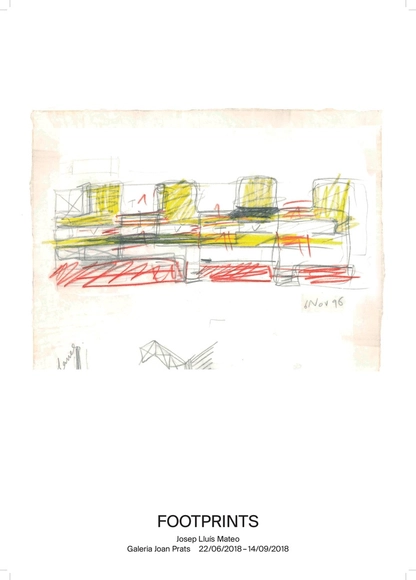
Galeria Joan Prats presents Footprints, the first exhibition by architect Josep Lluís Mateo. Through a selection of completed works and projects, the exhibition explores Mateo’s career in a non-chronological manner, seeking ways to narrate architecture through the themes inherent to his practice. Mateo’s architecture is characterized by a modernist legacy, focusing on the pursuit of light, an intense dialogue with context, and a connection between idea and material. His projects are thoughtful and strategic; they speak to space and carefully balance the relationship between the mineral and the vegetal.

.jpg?1537997160&format=webp&width=640&height=580)