Chilean Architecture

Capital Santiago

Language Spanish

Area 756,096.3 km2

Population 18,006,407

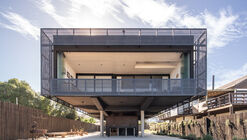
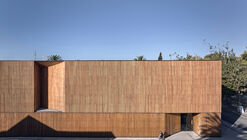
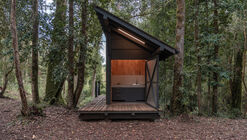
Chile's architecture ranges from a traditional colonial aesthetic to contemporary modern architecture as it traverses the variety of landscapes that make up the South American country. Chilean architecture and chilean architects have continued to define their place in contemporary architecture, with firms such as Alejandro Aravena and Pezo von Ellrichshausen garnering global attention and awards. This list of projects, news, and interviews delves into the intersections of geographies and styles that make up the chilean architectural identity.
  1. ArchDaily
  2. Countries
  3. Chile

Latest projects in Chile

Latest news in Chile

Alejandro Aravena and Smiljan Radić Receive Chile's 2026 National Architecture Prize

Audio available

On Monday, 27 July, the shortlist of finalists for the 2026 National Architecture Prize was presented at an extraordinary session of the National Board of the Colegio de Arquitectos de Chile (Chilean Institute of Architects). Representing the institution, the five board members jointly awarded the prize to architects Alejandro Aravena Mori and Smiljan Radić Clarke, in recognition of their contributions to positioning Chilean architecture internationally. Both architects have been awarded the Pritzker Architecture Prize: Aravena in 2016 for his work with ELEMENTAL, and Smiljan Radić Clarke this year. The institution also recognised the quality of their work and the contribution of both professionals to the local development of the discipline, as two major figures in architecture from the context of a small country at the southern end of the world.

Responding to Displacement: Architectural Strategies Across Latin America

Audio available

Displacement is usually understood through movement: the moment people are forced to move from one place to another. Yet from an architectural perspective, that movement is only the beginning of what comes next. A house may need to be rebuilt, an entire community relocated, or everyday life reestablished somewhere completely new. What is lost through displacement is not always something architecture can simply replace.

Teatro Mauri Restoration Preserves a 1951 Modernist Landmark in Valparaíso, Chile

Audio available

In June 2026, the refurbished Teatro Mauri reopened its doors on Cerro Bellavista in Valparaíso, formerly Chile's main port. The building forms part of Latin America's modernist legacy and stands adjacent to La Sebastiana, one of the renowned residences of the poet Pablo Neruda. It was designed by architect Alfredo Vargas Stoller, author of other icons of modern architecture in Valparaíso, such as the Edificio Cooperativa Vitalicia and the Conjunto de Viviendas Vargas in Viña del Mar. Teatro Mauri opened in 1951 as a venue for performances and cinema. Following a fire in the early 1990s, it fell into disrepair, serving only sporadically as a venue for local parties and events. In 2015, it was purchased by the Sociedad Chilena de Autores e Intérpretes (SCD), which commissioned its restoration from architects Laura Garrido and Gregorio Garretón.

Architecture in the Andes: How Altitude Shapes Design Decisions

Subscriber Access | 
Audio available

The Andes are often understood as a continuous mountain range, yet they encompass a wide range of climates and ecosystems. In Ecuador, Peru, Bolivia, Colombia, and Chile, páramos, dry highlands, temperate valleys, and snow-covered landscapes can exist within relatively short distances of one another. As elevation changes, so do temperature, solar radiation, humidity, wind, vegetation, and topography, producing environments that require different ways of building.

Architecture Inspired by Birds: Fundación Cosmos and the Wetland Parks of Chile

Audio available

How can architectural design become an active tool for conservation? By considering nature as an inexhaustible source of inspiration, a harmonious connection with it frames the countless interrelationships that exist among humans, living organisms, and natural cycles. Designing with the landscape means learning to coexist with its temporal dynamics without controlling its processes. Traditions, ecology, and the past and present of a place all contribute to creating spaces that interpret their communities. Landscape architecture can draw inspiration from birds, plants, and other natural elements to shape the complex, dynamic network of ecosystems and human activities that make up the environment.

The Delay of Meaning: On the Architecture of Smiljan Radić

Subscriber Access | 

Smiljan Radić's architecture often begins elsewhere: in a memory, a journey, a material, a stone, a half-seen structure, or a situation not yet organized as an architectural idea. In "Architecture: Distraction and Knowledge," his 2026 Pritzker Architecture Prize Laureate Lecture, distraction does not appear as a lack of focus, but as a way of receiving the world. It is through these peripheral encounters — travel, ruins, cities, stories, industries, and materials — that architectural knowledge slowly accumulates.

Distraction in Architecture: In Conversation with 2026 Pritzker Laureate Smiljan Radić

Subscriber Access | 
Audio available

"I want to start by thanking architecture itself." With these words, Chilean architect Smiljan Radić, the 55th laureate of the Pritzker Architecture Prize, opened his acceptance speech in Mexico City. Reflecting on what he calls "distractions," he thanked the many encounters that have accompanied him throughout his life and practice: from art, cities, materials, structures, and compositions to landscapes, poetry, nature, forms, stories, and memories. He spoke about what, within them, provoked him and the marks they left on his architectural imagination.

Mapping the Technosphere: Architecture as an Interface Between Systems and Territories

Audio available

Architecture can no longer be thought of as an isolated object, detached from the technical networks that sustain contemporary life—a scenario that demands different readings and approaches. Against this backdrop, in March, ArchDaily's monthly topic focused on The Technosphere: Architecture at the Intersection of Technology, Ecology, and Planetary Systems, a broad and inevitably complex topic. Stemming from the concept of the technosphere, coined by geologist Peter Haff to describe the collective artifacts produced by humanity, a panorama emerges in which contemporary life is deeply intertwined with machines, data, and energy grids.

Energy Landscapes: How Infrastructure Reshapes Territory in South America

Audio available

Some of the most significant transformations of South American landscapes have been produced not by cities, but by large infrastructures built to extract and distribute natural resources. Mining operations, energy systems, and transport networks have connected remote landscapes to broader economic structures while transforming rural territories and urban settlements throughout the continent. These infrastructures do not simply occupy space; they reorganize it. They have not only supported economic growth but also reconfigured territories in ways that continue to generate political, environmental, and social debate across the continent. From this perspective, territories can be understood not as fixed geographic areas but as socio-ecological systems shaped by cultural, environmental, and political relations, a point emphasized by anthropologist Arturo Escobar in his work on territorial thinking in Latin America.

Smiljan Radić: Material Explorations Between Ephemerality and Permanence

Subscriber Access | 
Audio available

Chilean architect Smiljan Radić Clarke has developed a body of work that resists easy categorization. His buildings often seem both ancient and provisional, carrying a monumental presence while retaining an unexpected sense of fragility. Stone, concrete, timber, fabric, and fiberglass are combined in unexpected ways, producing architectures that hover between permanence and ephemerality. Rather than pursuing a stable formal language, the 2026 Pritzker laureate approaches architecture as an open field of experimentation, where material behavior and structural perception are constantly tested.