1. ArchDaily
  2. displacement

displacement: The Latest Architecture and News

Responding to Displacement: Architectural Strategies Across Latin America

Audio available

Displacement is usually understood through movement: the moment people are forced to move from one place to another. Yet from an architectural perspective, that movement is only the beginning of what comes next. A house may need to be rebuilt, an entire community relocated, or everyday life reestablished somewhere completely new. What is lost through displacement is not always something architecture can simply replace.

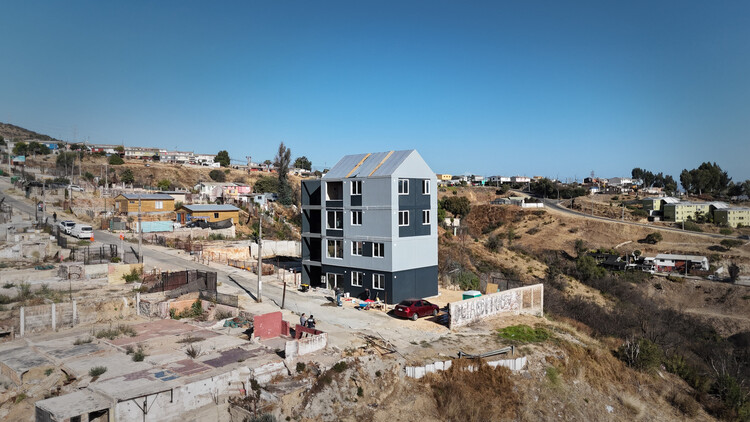
This question is particularly relevant in Latin America, where displacement has shaped communities under different circumstances and at different scales. What happens afterward depends on why people were forced to move, whether they can return, and what remains of the places they inhabited. Some communities rebuild within familiar surroundings. Others must establish everyday life somewhere new. These differences shape what architecture is being asked to do.
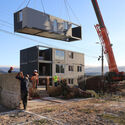
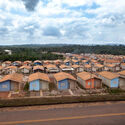
Responding to Displacement: Architectural Strategies Across Latin America - Image 1 of 4Responding to Displacement: Architectural Strategies Across Latin America - Image 2 of 4Responding to Displacement: Architectural Strategies Across Latin America - Image 3 of 4Responding to Displacement: Architectural Strategies Across Latin America - Image 4 of 4Responding to Displacement: Architectural Strategies Across Latin America - More Images+ 16

Schools at the Border: How Architecture Supports Learning in Conditions of Displacement

Audio available

For millions of displaced children and young people, education unfolds amid conditions of forced mobility, administrative uncertainty, and prolonged precarity. Schools situated in borderlands, refugee settlements, and sites of climate-induced displacement therefore operate as more than educational facilities. They become spatial infrastructures that negotiate the contradictory demands of emergency and continuity, offering environments where learning persists despite the instability of legal status, living conditions, and the very feeling of being at home.

According to UNHCR, approximately 45 million of the world's 117.8 million forcibly displaced people were children under the age of eighteen at the end of 2025. As displacement increasingly results from armed conflict, political persecution, environmental crises, and economic instability, humanitarian architecture faces a growing challenge: not simply how to construct more schools rapidly, but how to create educational environments capable of supporting continuity, safety, and belonging amid uncertain futures.

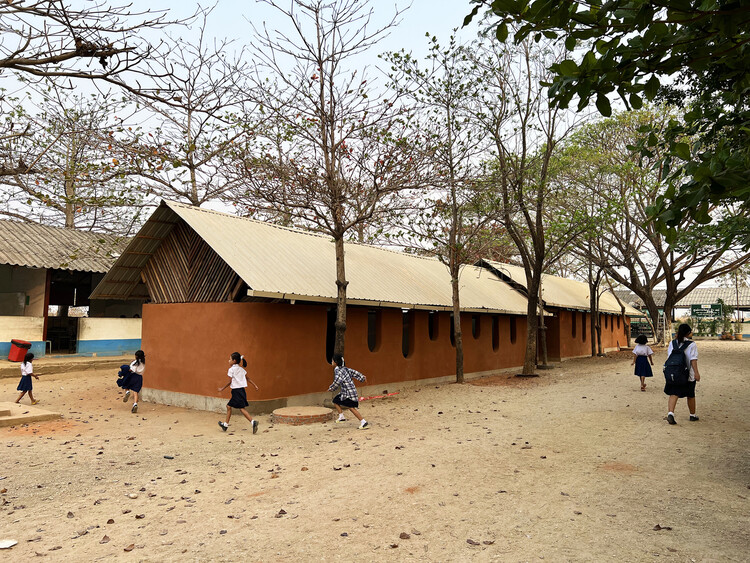
Schools at the Border: How Architecture Supports Learning in Conditions of Displacement - Image 1 of 4Schools at the Border: How Architecture Supports Learning in Conditions of Displacement - Image 2 of 4Schools at the Border: How Architecture Supports Learning in Conditions of Displacement - Image 3 of 4Schools at the Border: How Architecture Supports Learning in Conditions of Displacement - Image 4 of 4Schools at the Border: How Architecture Supports Learning in Conditions of Displacement - More Images+ 8