Award-winning architect Nicolas Valencia is the former Head of Editorial at ArchDaily, leading a global editorial team ---- @nicolasvalencia.cl | nicolasvalencia.cl | hellonicolasvalencia@gmail.com
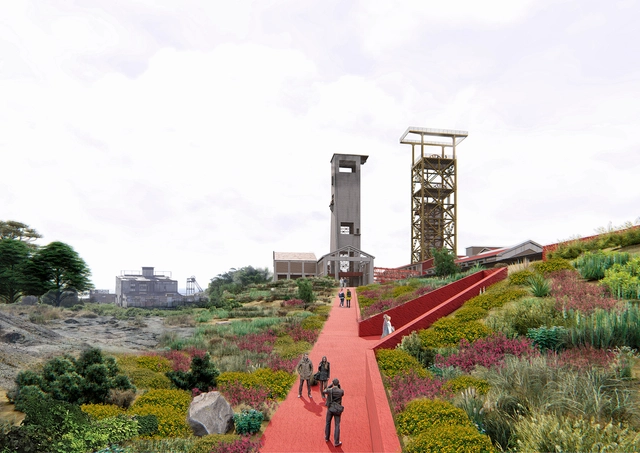
Designed by Nicolás Moraga, the project Chambeque Ruins Cultural Park was selected as one of the 10 winners in the Thesis Projects category of the 2018 Arquitectura Caliente Competition (CAC 2018), a Chilean contest organized by Grupo Arquitectura Caliente and funded by the Ministry of Cultures, Arts, and Heritage.
A ruin does not only signal the end of a cycle; it is also the first stage of a long process of change. Based on this premise, the project proposes the progressive recovery of the Chambeque area through a series of architectural interventions that will shape a new public, cultural, and educational park for the city of Lota and the region.
Our team is proud to introduce a new editorial partner for ArchDaily en Español: the FORM+ research group from the Universitat Politècnica de Catalunya (UPC), which was responsible for the recent publication and exhibition Bogotá en la mirada de 10 fotógrafos in the Colombian capital.
This new editorial partnership stems from a shared interest between FORM+ and ArchDaily en Español in cities, architecture, and photography—a medium that decisively shapes how society perceives and understands the world, its landscapes, and its buildings. "Photography has a significant impact on learning and design activity, which requires not only seeing but also anticipating—that is, seeing ahead," says the FORM+ team. "Photography is a form of intellectual and sensory mediation with the world, expanding our perceptual experience and renewing our visual sensitivity: an instrument for learning how to look, a resource for creative imagination, and a means of recognizing space and the built environment," they add.
On Wednesday, November 21, the winners of the XXI Pan-American Architecture Biennial of Quito (BAQ2018) were announced in Ecuador.
Divided into six participation categories, the juries selected a series of projects and publications that stand out as meaningful contributions to their respective fields, offering relevant lessons for our discipline. The following are the winners in Category A (Architectural Design), Category B (Urban Design and Landscape Architecture), Category C (Social Habitat and Development), and Category D (Architectural Rehabilitation).
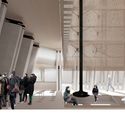
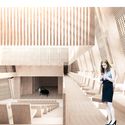
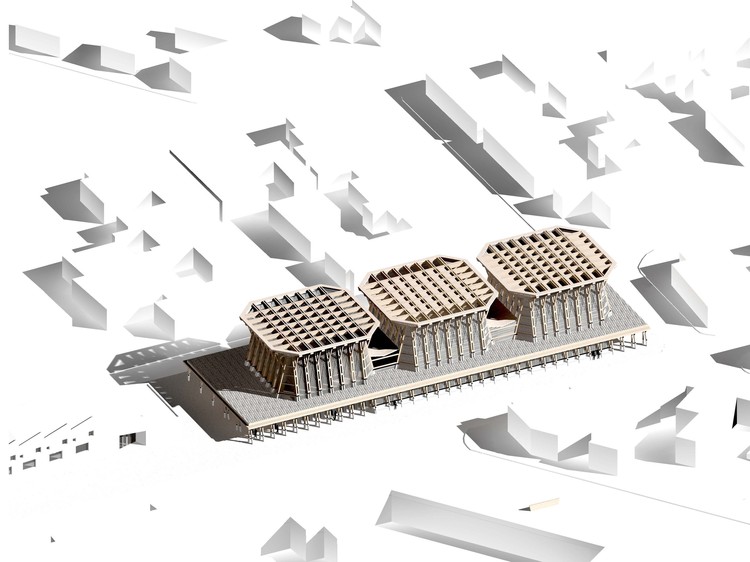
On Friday, August 10, the community of Licantén, Chile, gave its final approval to a new project by Chilean architect Sebastián Irarrázaval. The Licantén Theater, built primarily of laminated timber, will span 2,500 square meters and require an estimated investment of approximately 3 billion Chilean pesos (USD 4.47 million).
The Licantén Theater is developed under the Cultural Donations Act, resulting from a public-private partnership involving the Fundación la Fuente —the organization behind the Arauco Cultural Center and the Constitución Public Library—, the forestry company Arauco, and the Municipality of Licantén. Following community approval, the next step is "to apply for regional funds to finance its construction," Irarrázaval explained in an interview with ArchDaily.
Videos
Eduardo Castillo. Image Cortesía de Dostercios Editorial
The news spread quickly that Wednesday afternoon. Chilean architect Eduardo Castillo, a partner of Smiljan Radic, was in critical condition following a car accident earlier that day in Santiago. The local architectural community barely had time to react before his unexpected passing at the age of 45 was confirmed the following morning, Thursday, October 5, 2017.
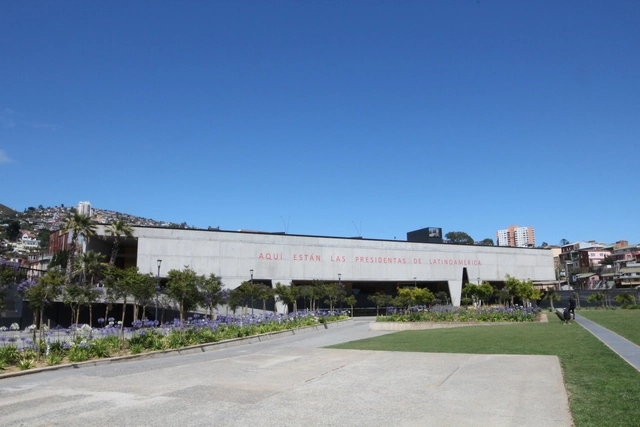
At a ceremony held on Monday, September 3, the Valparaíso Cultural Park, located in the Chilean city of the same name, was named the winner of the 3rd Rogelio Salmona Award. Organized by the Rogelio Salmona Foundation, the Latin American competition recognizes works whose architecture "clearly generates significant, open public spaces that are embraced and enjoyed by their community within a context of local and global communities."
Designed by the firm HLPS (Martín Labbé, Carolina Portugueis, Osvaldo Spichiger, and Jonathan Holmes), the Valparaíso Cultural Park is the result of rehabilitating the former Valparaíso prison, constructing a new cultural center, and converting the surrounding grounds into a public park.
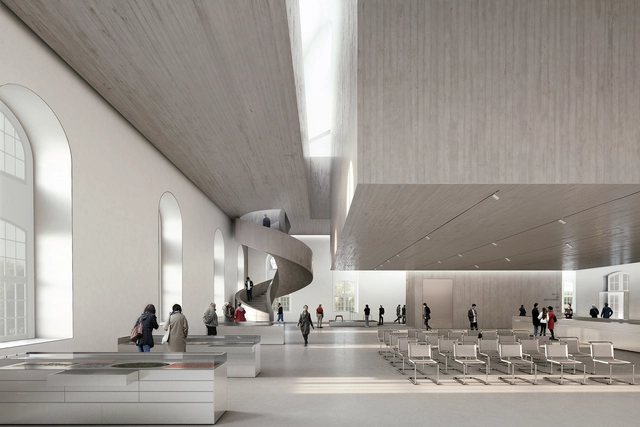
Spanish firm Nieto Sobejano Arquitectos has been awarded the design of the Archive of the Avant-Gardes headquarters in Dresden, Germany, after winning first place in the international competition. The project will rehabilitate and expand the historic Baroque Blockhaus building to house the archive donated in 2016 by Italian-German collector Egidio Marzona.
The competition jury, organized by the State of Saxony (Land), selected Nieto Sobejano's proposal from 28 finalists, following an initial selection of 103 European architects. Second and third place went to projects by Schulz & Schulz and Wandel Lorch, respectively. Honorable mentions were awarded to Diener & Diener, Rohdecan, and Riegler Riewe.
The entry of a new professional into the workforce brings work filled with dedication and innovation. John Octavio Ortiz, an award-winning architect at BAL 2017 and one of Latin America's most prominent young architects, shares in a TEDx Talk his field experience working with vulnerable communities in the comunas of Medellín, Colombia.
Projects are often designed based solely on analyses conducted within the architecture firm, where the area's systems and dynamics are modeled. This is a common pitfall not only in architecture but across various professions, as these proposals inevitably require countless modifications during the process of engaging with the local community.
Si estas paredes hablasen / SERRANO+BAQUERO Arquitectos. Image Cortesía de Festival Arquia/Próxima
The 6th Arquia/Próxima Festival: Relevant Practices in Madrid has announced the winning projects of this edition. Aiming to provide visibility to Spanish architects during their first ten years of practice, the Arquia/Próxima cultural program focuses on disseminating, promoting, and highlighting their achievements and professional principles.
The biennial's theme, defined by its curator, Iñaki Carnicero, invited reflection "on the paradox produced by the international success of Spanish architecture, which does not correspond to the volume of architectural production in recent years, but nevertheless reflects work that is more relevant than ever," the organization explained.
The following awards were presented during the festival:
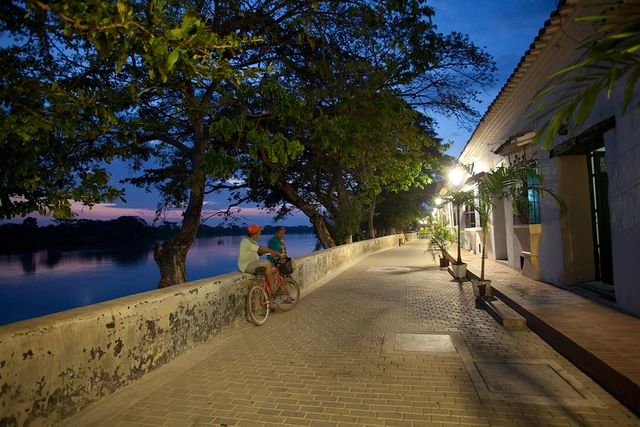
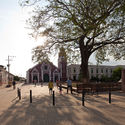
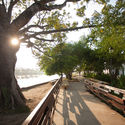
The landscape master plan to revitalize the western bank of the Magdalena River in Mompox—a Colombian city declared a UNESCO World Heritage Site—is the winner of the III Latin American Biennial of Landscape Architecture (BLAP).
Designed by the Colombian firm OPUS, the Revitalization of the Albarrada de Mompox is the grand prize winner of the competition organized by the Mexican Society of Landscape Architects (SAPM). The biennial also recognized works, proposals, and publications in Mexico, Colombia, Argentina, and Chile across its six categories. Established in 2014, the BLAP seeks to highlight the role of landscape architecture in building habitats in Latin America, with a particular emphasis on the region's environmental and social challenges.
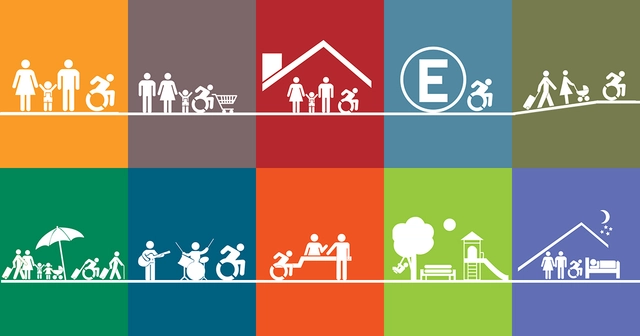
Since 2016, Chile has been undergoing a gradual transformation of its building regulations thanks to the enactment of the historic Decree 50 of the General Ordinance of Urban Planning and Construction (OGUC). This decree mandates a national standard for universal accessibility, ratifying both the Convention on the Rights of Persons with Disabilities (2008) and Law 20,422 (2010), which establishes standards for equal opportunities and social inclusion for people with disabilities.
This regulatory shift prompted the team at Corporación Ciudad Accesible to update their 14 “Accessible Fact Sheets,” now that compliance is a requirement rather than an option. "We want to achieve an accessible and universal vision where design envisions people beyond the traditional mold, so that those who do not move, see, hear, or understand the environment in conventional ways find the same opportunities and participation," explains their team.
Since 2016, we have joined forces with Spotify, the world's largest music streaming platform. Since then, we have created our own playlists for those moments in every architect's life. At the same time, we have invited architects from Latin America and Spain to share the music that inspires them, or even better, the sounds that have shaped their careers.
As you know, ArchDaily has joined forces with Spotify, the world's largest music streaming platform. From the very beginning, we have been sharing our own playlists for those key moments in the lives of all architects. At the same time, we have invited architects from Latin America and Spain to share the music that inspires them, or better yet, the sounds that have shaped their careers.
In this installment of ArchDaily en Español + Spotify, we share our most popular playlist: Música para Maquetear (Music for Model Making). If you have to spend your day among cardboard and renders, this ten-hour playlist will keep you company during those long late-night sessions.
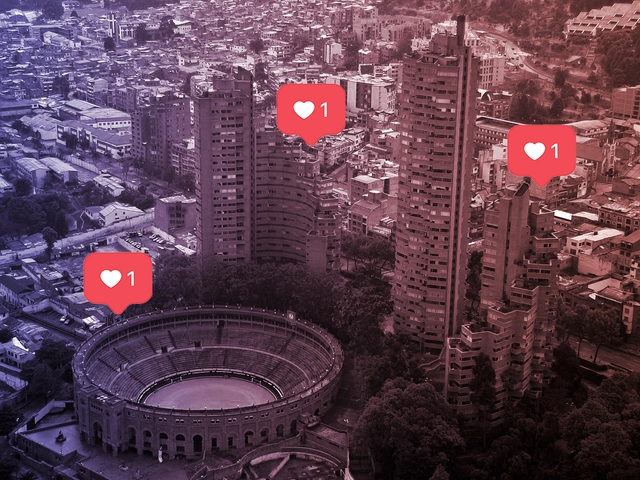
It is time to welcome @archdailyco to Instagram! Our dedicated account on this social network is a new showcase for Colombian architecture. It offers both a local and global perspective: classics and rising talents; historic works and must-see future projects; brick, guadua, and concrete; the Caribbean and the Pacific; you and us.
We invite you to follow our Instagram account and tag your photos of Colombian architecture with the hashtag #ArchDailyCo. On Tuesday, July 17, we will share the best photos uploaded by our readers!
Mike Smith, co-founder of the Costa Rican firm Entre Nos Atelier, has become the first Central American to receive the Loeb Fellowship from the Harvard Graduate School of Design (Harvard GSD).
Led by John Peterson, founder of the NGO Public Architecture, the program annually selects a cohort of architecture and urban planning professionals, aiming to "strengthen their ability to advance positive social outcomes and support a more equitable collective future." During their one-year residency, fellows receive financial support and unrestricted access to the digital educational resources of Harvard and MIT.
In late November, we published the winners of the second call for thesis projects in Colombia, which received 70 submissions from 14 cities and 29 universities. Ultimately, nine projects passed the three stages of evaluation, standing out for addressing critical contemporary issues, conducting deep research and analysis, and proposing challenges in both urban and rural contexts, just as in 2016.
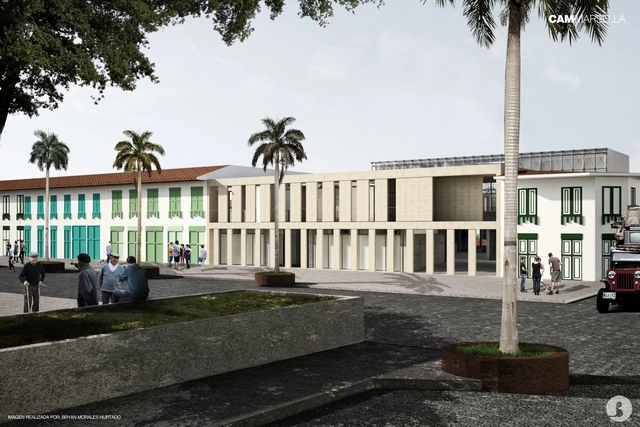
Here, we take an in-depth look at CAM Marsella: Municipal Administrative Center of Marsella, a project selected in the 2016 Colombian Biennial of Architecture Students, developed by Manuel Murgueitio and Edward Zapata, both graduates of the Universidad Católica de Pereira in Colombia.
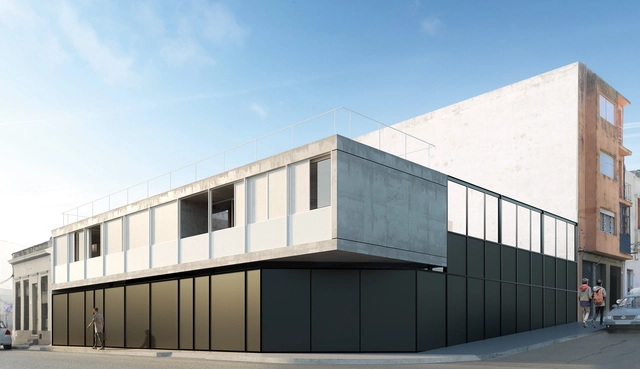
Primer Lugar / Nicolás Arsuaga + Pablo González + Fabrizio Libralesso + Camilo Méndez. Image Cortesía de Concurso de Vivienda Rifa 2018
Held since 1949, the Raffle House Competition is a historic contest that has given new generations of architects at the School of Architecture, Design, and Urbanism (FADU – UdelaR) the opportunity to design and build a real project in Uruguay. The winning design becomes one of the prizes of the Architecture Raffle, an initiative through which each graduating class from the school takes a trip around the world to experience the best of global architecture.
This annual competition is open to all students at the Universidad de la República's School of Architecture, "contributing to collective construction and serving as a fundamental academic tool in the education of all students in general, and the competition participants in particular." For this edition, the brief was based on the concept of a sustainable city, utilizing existing infrastructure and connectivity while enhancing the landscape, urban, historical, and cultural heritage of Montevideo's Rambla Sur area.
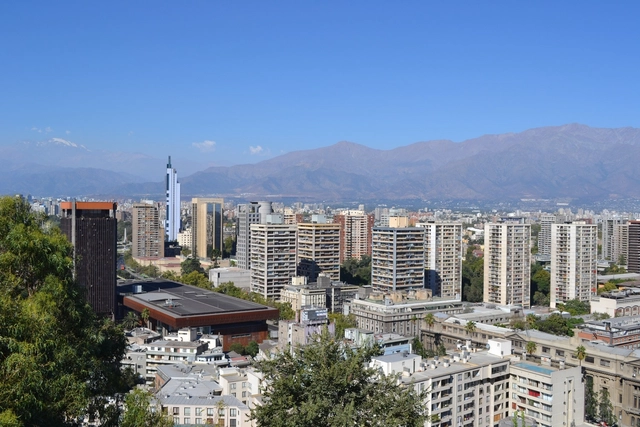
"Hidden within the co-residence and overcrowding of our Chilean cities lies the solution to the chronic housing deficit: people want the city, not just housing." So begins a statement released on May 24 by academics from the Universidad de Chile and the Universidad Católica, which to date has been endorsed by more than 50 prominent figures, including members of parliament, mayors, foundations, professional associations, universities, research centers, and former public authorities in the field.
Supported by the authors' own research and state metrics such as the CASEN survey and the national census, the signatories argue that in recent years, co-resident households have grown and the overall deficit has decreased, yet housing subsidies remain unused by citizens "because people prefer to forgo subsidies that would ultimately displace them to other municipalities."
The coordinators of the statement—Juan Pablo Urrutia, Cristián Robertson, Francisco Walker, and Javiera Martínez—propose "consolidating an agenda that prioritizes addressing this social phenomenon through integrated policies of medium-density development, urban regeneration, and social integration" through a cross-sector working group to help draft concrete proposals. The document has already been delivered to the Minister of Housing and Urbanism, Cristián Monckeberg.
Below, we present the full original text, titled "Co-resident households grow, overall deficit decreases, and subsidies go unused":







.jpg?1527528570&format=webp&width=640&height=580)