Award-winning architect Nicolas Valencia is the former Head of Editorial at ArchDaily, leading a global editorial team ---- @nicolasvalencia.cl | nicolasvalencia.cl | hellonicolasvalencia@gmail.com
After analyzing 94 undergraduate student projects from 20 architecture schools across 8 regions in Chile, the jury of the 2018 Arquitectura Caliente Competition has announced the winning projects of its latest edition.
These projects span the entire country and encompass a wide range of typologies, from urban planning to student housing, alongside landscape architecture projects and structural initiatives for emergencies.
Below, we present the award-winning fourth and fifth-year projects:
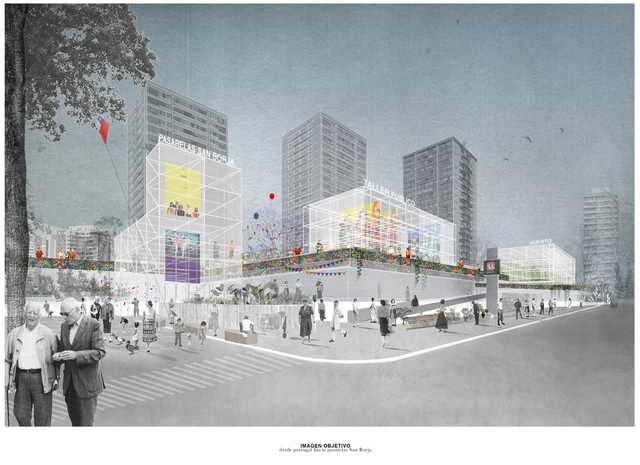
The proposal Temporary Activation Circuit was awarded third place in the Pasarelas San Borja competition in Chile. The main objective of the competition was to recognize "the best urban design ideas that contribute to defining intervention criteria and generating proposals for the San Borja neighborhood."
As the authors explain, the third-place-winning proposal offers "a mutable and flexible system that reflects contemporary times."
Probably the only certainty we have about the 21st century is that there is no certainty at all. Global warming, job insecurity, geopolitical tensions, artificial intelligence, populism, the crisis of political models, automation, the concentration of wealth, global migration flows, the rapid urbanization of the Global South, and so-called fake news are just some of the topics dominating public debate.
Nothing is stable, and architecture, obviously, is no exception: automation, BIM methodology, augmented reality, and 3D printing are some of the main trends in the discipline, and both their impact and contribution spark a wide-ranging discussion within the profession. What is certain is that they are a reflection and consequence of the multiple transformations our society is undergoing.
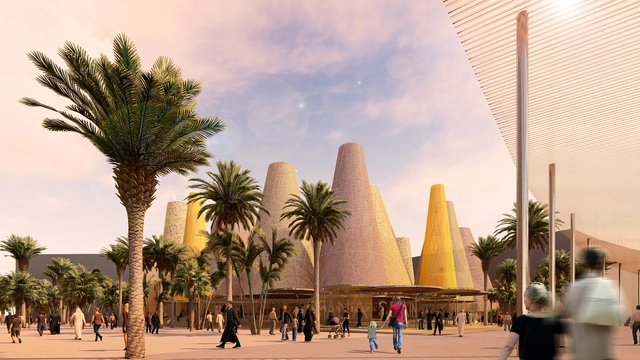
Out of 47 submitted proposals, the firm Amann-Cánovas-Maruri has been selected as the winner of the competition to design the Spanish Pavilion at Expo Dubai 2020.
According to the public agency Acción Cultural Española (AC/E), the competition organizer, the project titled People and Places "was particularly valued for its iconic strength, its sustainability criteria, and a design based on the idea of total recycling of its materials," in line with the principles of the circular economy.
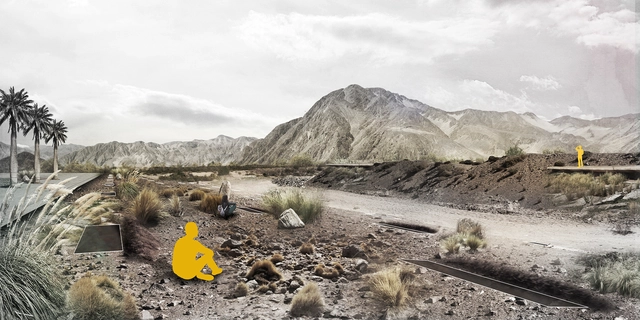
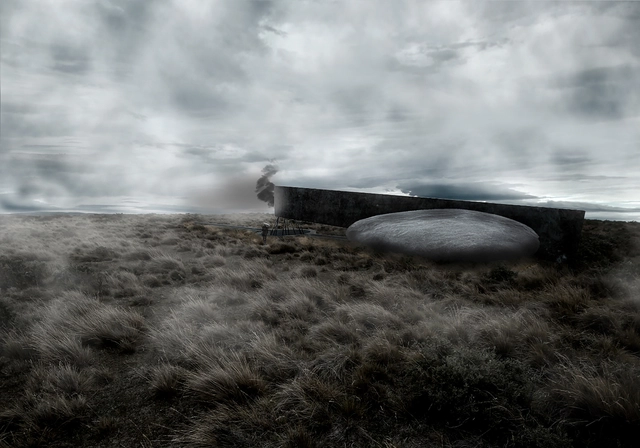
Designed by Ignacio Lira Montes, the Ruta Memorial Selk'nam project was selected as one of the 10 winners in the Thesis Projects category of the Concurso Arquitectura Caliente 2018 (CAC 2018), a Chilean competition organized by Grupo Arquitectura Caliente and funded by the Ministry of Cultures, Arts, and Heritage.
The project stems from research on the Selk’nam people of Tierra del Fuego and how this ethnic group was exterminated by the owners of the Magellanic ranches. Studying Selk'nam cosmogony and visiting the site determined the design approach to this theme.
Over four days, the public space of Pontevedra, Spain, was transformed by urban interventions designed to foster imagination and play. This marked the inaugural edition of Experimenta Pontevedra, held from June 21 to 24, 2018, in the Spanish city.
Pontevedra, which received the UN-Habitat Award for its pedestrian-friendly urban model, has become a benchmark for many cities in recent years, having achieved a milestone where over 70% of urban trips are made on foot or by bicycle within a 15-year period. Accordingly, as the organizers explain, Experimenta Pontevedra is part of this urban development strategy. With the pedestrianization of the city center now fully established, the initiative seeks to foster public spaces that stimulate the imagination and playfulness of their users.
As part of the events of the XXVI Colombian Biennial of Architecture and Urbanism, the winning projects and publications have been announced.
Divided into 8 categories, the 283 submitted projects were evaluated by an international jury comprising Iñaqui Carnicero (Spain), Alejandro Beals (Chile), and Fabián Farfán (Bolivia), alongside local architects Germán Fonseca, Julián Rincón, Sara Giraldo, and Diego Aguilera.
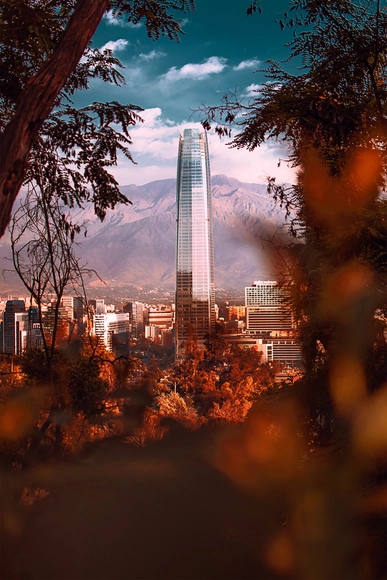
With over 11,000 Instagram followers, industrial designer Juan Cristóbal Lara(@eljuancri) has transformed his account into a photographic essay of Santiago, Chile. His main subjects are the Andes Mountains, San Cristóbal Hill, and the Mapocho River, all bathed in the rich palette of colors that the sky paints as the hours pass.
Here, we invite you to take a closer look at his work, his personal interests, and his vision of the city he photographs. "On Santiago's hills, you can grasp the magnitude of where you live; they offer the true scale of who each of us is in the city," Lara says.
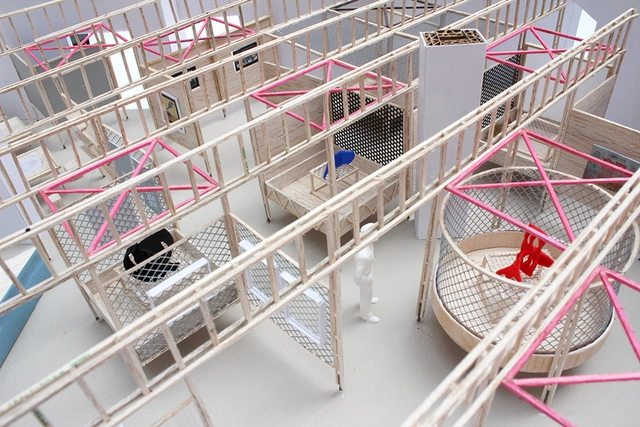
Instalación 'La forma del futuro'. Image Cortesía de Antonio Yemail
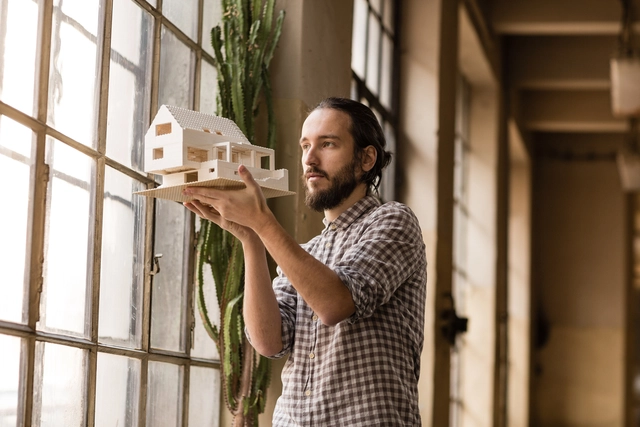
In late 2017, Colombian architect Antonio Yemail and his team moved to a new office in Bogotá. After eleven years of working in a single, open-plan space where all activities overlapped, the move became an opportunity to inventory, reconstruct, destroy, and document design processes through their physical models.
Out of 150 models produced over the years, 90 were restored and photographed again. "It is the primary visual record of how our design inclinations have evolved and linked together, because as Álvaro Siza says, a project is the model for the next," Yemail explains in a conversation with ArchDaily.
On Monday, April 16, Chilean architect María Isabel Tuca, a prominent academic and professional association leader, passed away in Santiago. In 2000, she became the second female president of the Chilean Association of Architects, following Eliana Caraball in the mid-1980s.
In an interview with the Chilean newspaper El Mercurio after taking office, Tuca recalled that despite the warnings of the nuns at her school ("that was a career only for men," they told her), she chose to study architecture at the University of Chile, graduating in 1965.
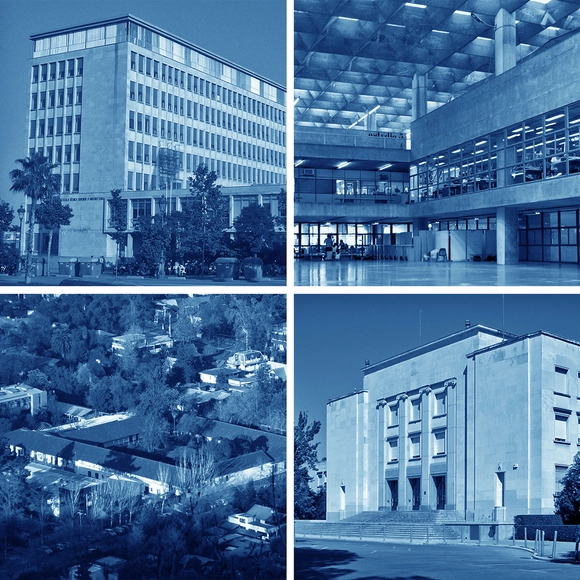
These are the best universities in 2018 to study architecture in Spain and Latin America. Image
On Wednesday, February 28, Quacquarelli Symonds (QS) released the 2018 edition of its annual ranking of the world's best universities. In the field of architecture, the Massachusetts Institute of Technology (MIT) in the United States once again leads the list for the fourth consecutive year.
In Latin America and Spain, the ranking has shifted once again compared to 2017: a Mexican university has broken into the top five, while Spain has expanded its representation at the expense of Brazilian institutions. Furthermore, two universities have entered the regional ranking in this edition. Discover the top institutions below!
Last October, we published the winners of the third call for final graduation projects in Colombia, also known as undergraduate theses, receiving 94 submissions from more than 10 cities and 22 universities.
Our editorial team selected six winning projects, and for the first time, a jury composed of leading Colombian architects was tasked with choosing the 2018 Grand Prize Winner: Lina Toro, Carlos Cano (OPUS, Medellín), and Jorge Noreña (Ruta 4, Pereira).
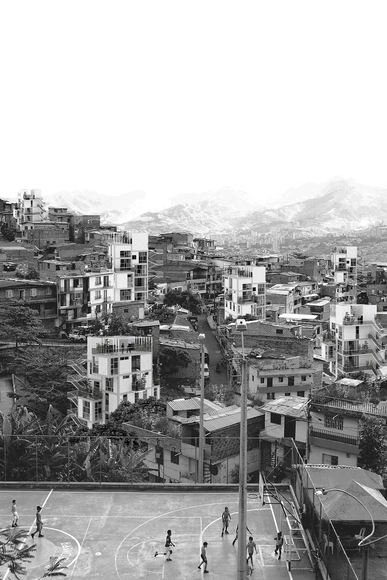
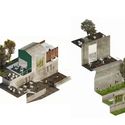
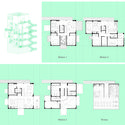
The jury awarded the Grand Prize to the thesis project Rehabitar la ladera, designed by Daniela Núñez and Roger Escalante, graduates of the Universidad Nacional de Colombia, Medellín campus. "The project does not limit itself to describing and documenting a housing situation based on that built intuition as a testament to local dwelling; instead, it proposes an open design project that generously and simply outlines the guidelines for intuitive yet regulated growth," Toro noted in the jury's official statement.
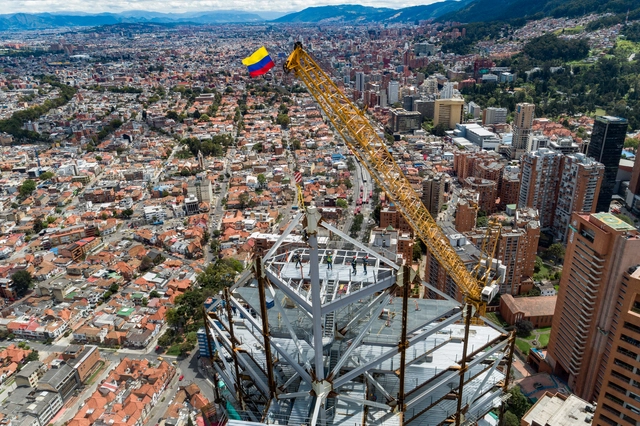
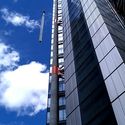
The ATRIO Towers —the tallest project in Colombia— reached a new milestone in Bogotá with the structural completion of its North Tower, the first of the development's skyscrapers, which has topped out at 201.6 meters and 46 stories.
During a ceremony held on Friday, August 24, on the rooftop of the North Tower, the final two steel beams—each 10 meters long and weighing 3.3 tons—were installed. The event symbolically marked the completion of 20 months of construction for the first phase of the skyscraper complex.
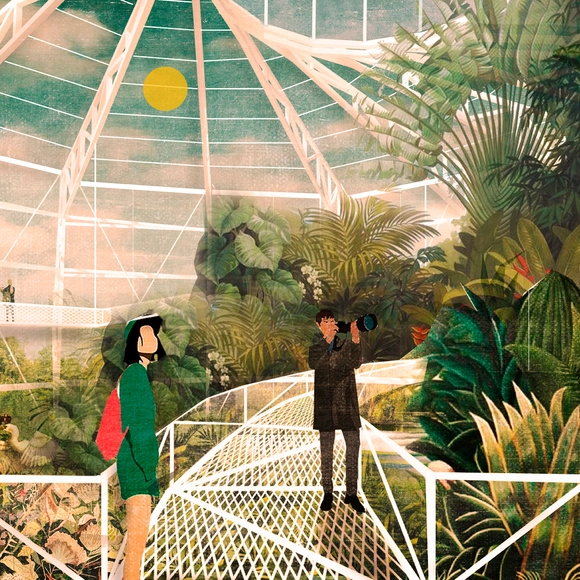
The team comprising Giovani Valeria, Nitzy Vera, Sofía Vargas, and Stefanía Ruiz (Universidad San Sebastián) has been awarded third place in the XXXII CAP Chile Competition. Designed for Teja Island in Valdivia, the competition jury praised the greenhouse system's "innovative and well-thought-out steel structure, with exterior and interior pathways that highlight the flora. It must, however, pay close attention to the scale of the structural elements in the smaller spaces."
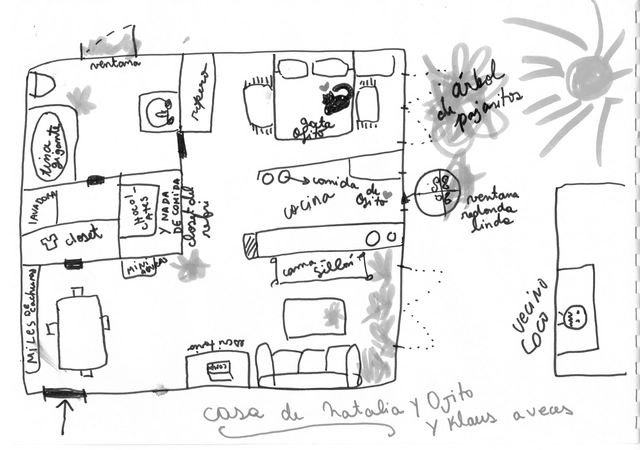
The Chilean series Proyecto Habitar dives into the intimacy of homes to explore the reality of housing in Chile. Divided into 9 episodes exploring a range of housing-related themes, directors Joaquín Mora and Verónica Wüst aim to spark a discussion. "I think it is important that we start asking ourselves how we are living and how we want to live," Mora reflects.
During the filming stage, the filmmakers explored various ways to gain the protagonists' trust and tell the story of how they inhabit their spaces. "Throughout the process of working as a team, the opportunity and curiosity to use different formats arose, allowing room for exploration," Wüst comments.
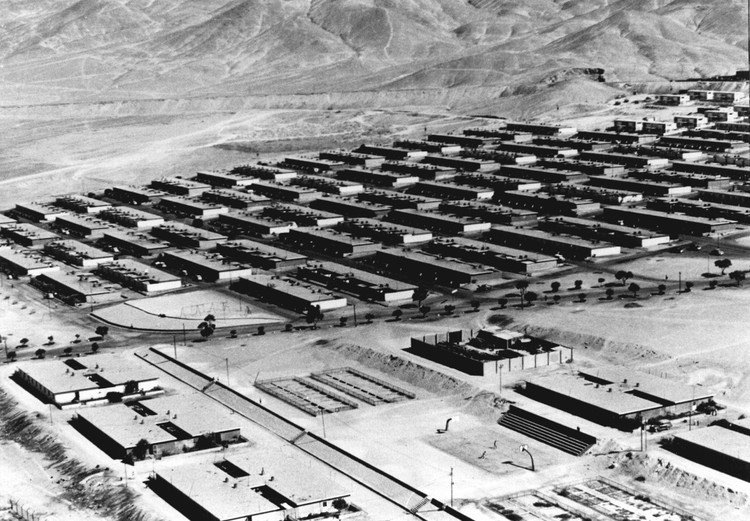
Mined since pre-Hispanic times, Chuquicamata (Chile) is currently the world's largest open-pit copper and gold mine. Industrial-scale mining began in the late 19th century, but it was not until 1916 that its dedicated mining camp opened. The camp housed hundreds of workers and their families alongside a mine that today is over a kilometer deep.
In the 1990s, environmental concerns and mine expansion plans forced the relocation of residents, leading to the camp's permanent closure in 2007. Its current state of abandonment, deterioration, and partial transformation inspired Viviana Vilches Wolf, an architect born in Chuquicamata, to compile the historical records and architectural drawings that shaped the mining settlement.
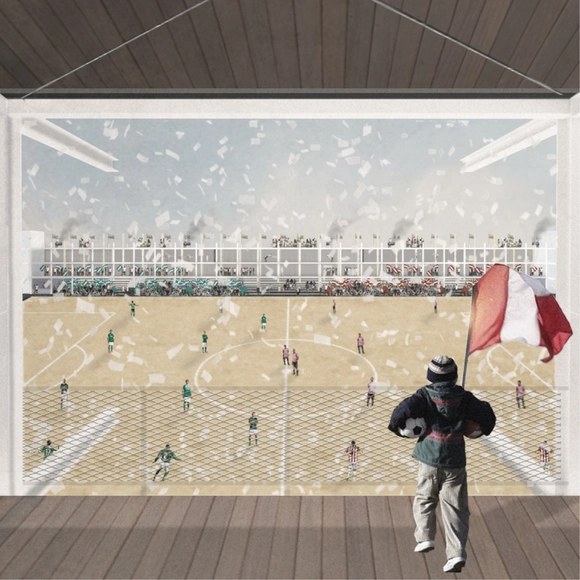
Designed by Sebastián Simonetti, the project Todo es cancha was chosen as one of the 10 winners in the Thesis Projects category of the Concurso Arquitectura Caliente 2018 (CAC 2018), a Chilean competition organized by Grupo Arquitectura Caliente and funded by the Ministry of Cultures, Arts, and Heritage.
Amateur soccer, through the architectural typology of the neighborhood pitch, serves as a means of social organization and local identity. Its significance lies in the edge of the field, where the entire neighborhood surrounding this public space expresses its identity.
Some of Santiago's 207 pitches are currently falling into neglect, turning into neighborhood liabilities. They have been enclosed along their perimeters with impenetrable walls, squandering their programmatic potential. The Todo es Cancha concept critiques this potential public space and proposes combining the soccer field with architectural interventions that transform these typologies into permanently active spaces.
An urban opera performed by residents and a cyberfeminism project in a stigmatized neighborhood are among the initiatives comprising Imagina Madrid, a project where creators, organizations, and residents join forces to artistically intervene in deteriorated public spaces on Madrid’s outskirts.
Promoted by the Madrid City Council's Department of Culture and Sports and coordinated by Intermediae, Imagina Madrid has structured a decentralized, collaborative, and multidisciplinary methodology to define its interventions. This approach is grounded in Elinor Ostrom's research on the economics of the commons and what sociologist Saskia Sassen describes as the "operational and rhetorical" openings that slip into the global city.
.jpg?1531429636&format=webp&width=640&height=580)











4.jpg?1535587028 "Cortesía de ATRIO")
1.jpg?1535586996 "Cortesía de ATRIO")





..jpg?1517438900 "Entrance arch to Chuquicamata. Image © Archivo CODELCO")