Award-winning architect Nicolas Valencia is the former Head of Editorial at ArchDaily, leading a global editorial team ---- @nicolasvalencia.cl | nicolasvalencia.cl | hellonicolasvalencia@gmail.com
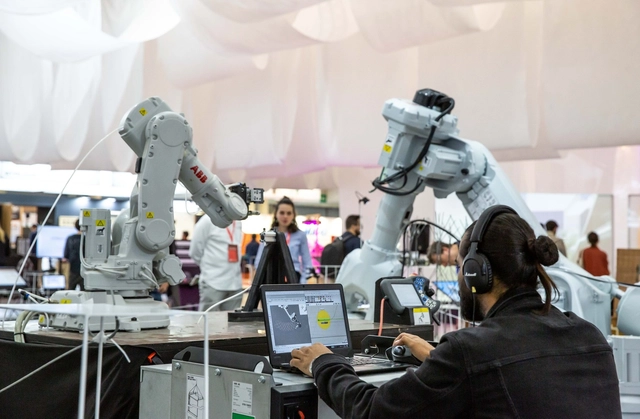
In its most recent edition, BBConstrumat, Spain's largest construction trade fair, underscored its commitment to supporting a new model in the construction industry—one centered on the circular economy and sustainable development.
Among the event's key highlights, Ricardo Devesa—editor-in-chief at Actar and urbanNext and professor at IAAC—curated the refreshing congress Logics of Innovation and Change, where presentations and discussions revolved around global challenges such as climate change, robotics, resilience, migration, and new global narratives.
Sandra Ili, ganadora del Premio Marta Scheu Torres 2019. Image Cortesía de Premio Marta Scheu Torres
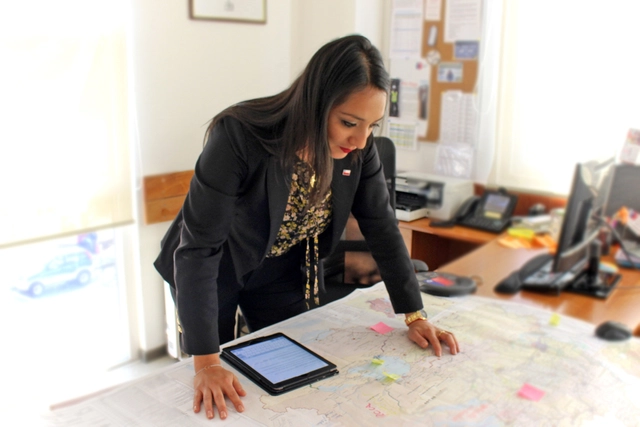
Chilean architect Sandra Ili has been selected as the winner of the 2019 Marta Scheu Award, an annual recognition granted by the Institute of Architecture and Urbanism of the Universidad Austral de Chile (UACh) to outstanding professionals in the fields of architecture and urbanism in Chile, regardless of their nationality.
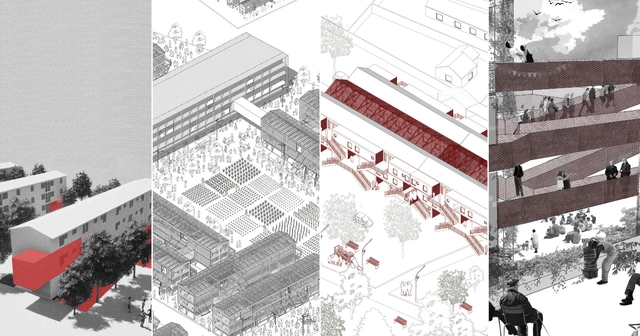
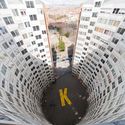
As part of Semana UTEM 2019—"The Project Within the Project"—21 teams from the Faculty of Architecture at the Metropolitan Technological University of Chile (UTEM) participated in the Domestic Pre-Existences workshop. The students proposed interventions for the historic "C Blocks" in Santiago's pericenter—residential complexes designed by the state Housing and Urban Development Service (SERVIU) between 1986 and 1996.
Automation has become a major talking point—not only for its potential to replace countless low-income or low-skilled jobs, but also for its capacity to render entire professional careers obsolete through artificial intelligence and machine learning.
At ArchDaily, we opened the floor to this discussion in 2017 with an in-depth report on the subject, and we recently turned to our Instagram audience to ask what they think about automation. Do they believe it will affect them? Our readers seem confident: some argue that architecture is an art—or rather, a discipline centered on emotions—even if they overlook the standardization and modulation processes already established in the real estate market. According to those who responded to our poll, this emotional dimension inherent to architecture is precisely what makes it harder to automate.
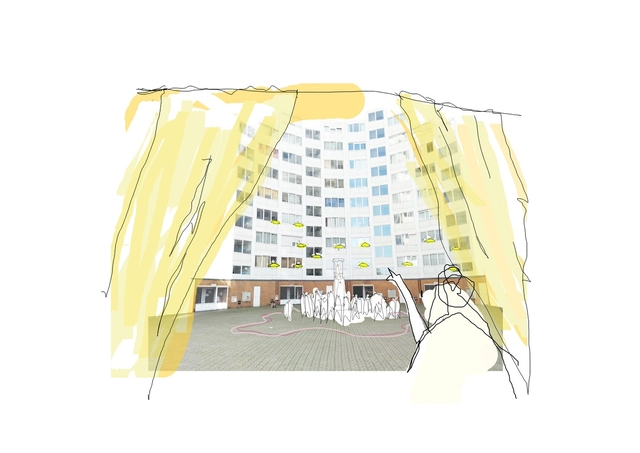
A spotlight illuminates a window opening in a Madrid building. A woman looks out. "I am a young, beautiful dove, full of hope," she declaims before breaking into Volare, the 1980s flamenco hit by the Gipsy Kings. This is one of the scenes from Kópera, the dystopian opera written by architects and neighborhood organizations for the first edition of Imagina Madrid.
In 2017, the experimental public art program of the Madrid City Council, coordinated by Intermediae, launched an open call to explore new forms of cultural intervention in the Spanish capital's public space. Out of 175 submissions, an international jury selected ideas, merged teams, reassigned proposals, and designated nine districts on Madrid's periphery.
During the Ordinary General Assembly of Members on Thursday, April 25, the Association of Architecture Offices of Chile (AOA) held the award ceremony for the AOA Medals, alongside the formal presentation of the current AOA board of directors and the 40th edition of Revista AOA.
Many were surprised that this edition of BBConstrumat in Barcelona lacked carpeting across its 34,000-square-meter exhibition space, or that the schedule of events was only available via the event's app. As climate change—or rather, the climate emergency—becomes irreversible and adaptation demands more drastic measures, the construction sector is also feeling the pressure to reinvent itself.
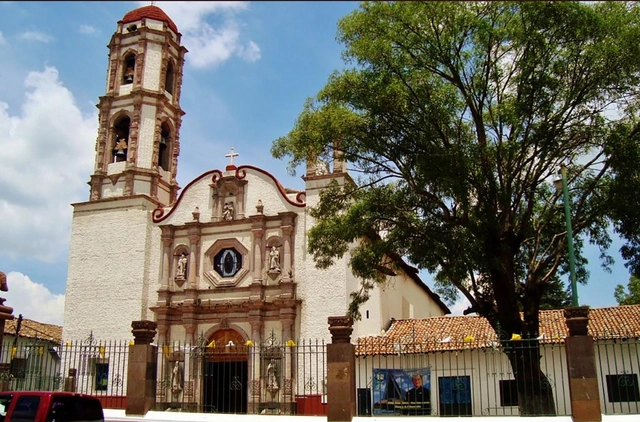
The Latin American Coordinator of Architecture Students (CLEA Latinoamérica) has confirmed on social media that the 2020 edition of the Latin American Social Workshop (TSL) will be held in San Felipe del Progreso, Mexico.
In 2018, Chilean researchers Teodoro Dannemann, Boris Sotomayor-Gómez, and Horacio Samaniego published the results of a study in Royal Society Open Science that, by anonymously tracking the "footprint" of 350,000 mobile phones during working hours, visualized urban segregation in Santiago.
Inspired by the successful Tejiendo la Calle initiative—winner of the Design and Citizen Participation Award at the 2016 Ibero-American Design Biennial—Supertrama is a public art program in the autonomous community of Extremadura, Spain, focused on rural areas. In municipalities with fewer than 5,000 inhabitants, residents collaborate with architects, artists, and other creative professionals interested in public art to transform their local public spaces.
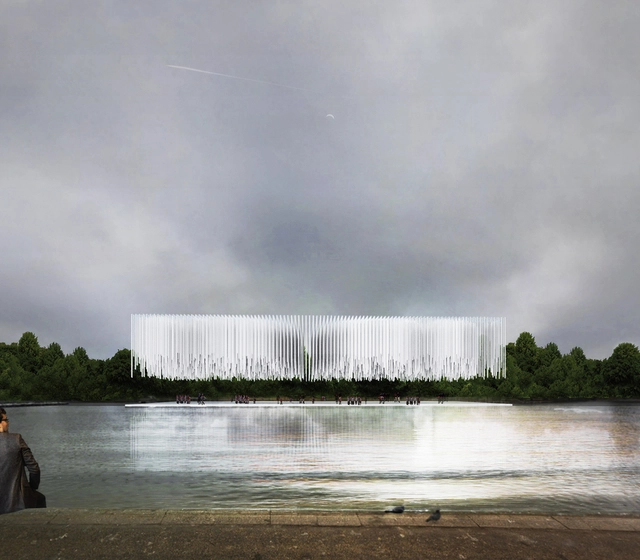
After receiving 94 proposals from 29 different countries, the Hyde Park Music Pavilion (HPMP) international ideas competition, organized by arquideas, has announced the winning projects. Hyde Park is one of the largest parks in London, England, and one of the city's nine Royal Parks, three of which form a chain from the entrance of Kensington Palace, through Kensington Gardens and Hyde Park, to Buckingham Palace.
In the context of the XI Ibero-American Biennial of Architecture and Urbanism (XI BIAU), held for the first time in Paraguay, we spoke with Manuel Blanco, a Spanish architect and director of ETSAM since 2017. Blanco has an extensive international career in curating and design, including serving as curator of the Spanish Pavilion at the 2006 Venice Biennale and as the first director of the National Museum of Architecture and Urbanism in 2007.
After several editions focused on international themes, this year Madrid will take center stage as the host of the 16th Architecture Week, taking place from September 30 to October 7. The event is organized by the Official College of Architects of Madrid (COAM) through the COAM Architecture Foundation.
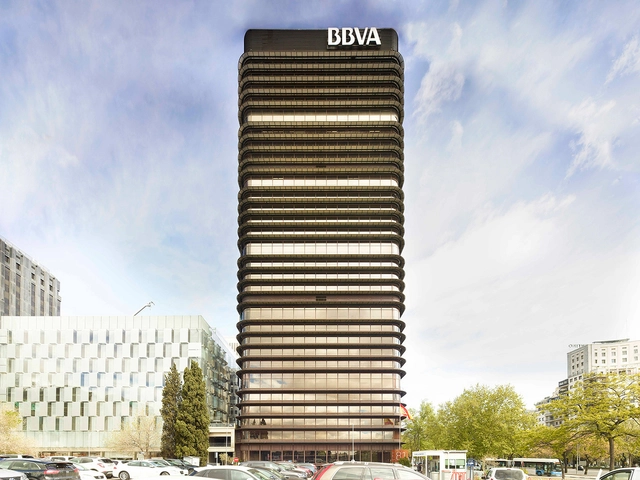
The Arquitectura magazine has been a benchmark for debate, thought, and the profession of architects and urban planners, capturing the best of Madrid and Spanish architecture while also gaining international recognition in the publishing landscape. It was initially published by the Central Society of Architects, and following the creation of the Architects' Associations in 1929, the COAM began editing it in 1932, maintaining ownership throughout.
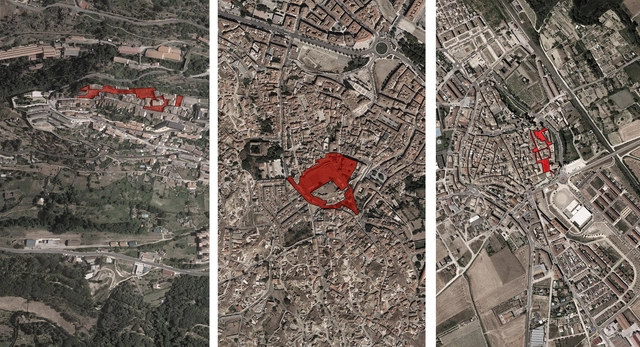
Guadix, Olite, and Béjar, municipalities of the Richard H. Driehaus Architecture Competition
The second phase of the 3rd Richard H. Driehaus Architecture Competition is now underway. This international contest aims to "promote the practice of architecture and urbanism that preserves and continues local traditions" in the Spanish cities of Guadix (Granada), Olite (Navarra), and Béjar (Salamanca).
From Friday, May 31, to Sunday, June 2, the Plaza Mayor Medellín Convention and Exhibition Center will host La Feria de Diseño, the largest design exhibition and business platform in Colombia. The event allows the country's emerging creative industries to explore and forge new paths in one of the world's most promising investment sectors: the orange economy.




.jpg?1551453530 "The palanquin-chair of the character Guardia Ramón in Kópera. Image © Kópera")




.jpg?1566510800&format=webp&width=640&height=580)

.jpg?1554240390&format=webp&width=640&height=580)