Award-winning architect Nicolas Valencia is the former Head of Editorial at ArchDaily, leading a global editorial team ---- @nicolasvalencia.cl | nicolasvalencia.cl | hellonicolasvalencia@gmail.com
Ceremonia de inauguración de la XXI Bienal de Arquitectura y Urbanismo de Chile el pasado jueves 03 de octubre en Santiago, Chile. Image Cortesía de Bienal de Chile
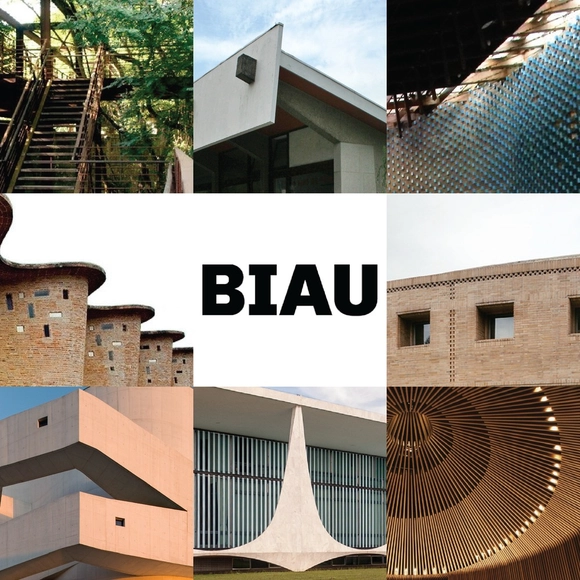
In each edition of the Ibero-American Biennial of Architecture and Urbanism (BIAU), the event honors masters of Ibero-American architecture with the Ibero-American Architecture and Urbanism Prize.
The Ibero-American Architecture and Urbanism Prize recognizes work "directly related to architecture and/or urbanism, highlighting its aesthetic, functional, technical, social, economic, and environmental aspects. This may include built work, planning, heritage conservation and restoration, knowledge production, or social commitment," as outlined in the competition guidelines.
Along with the 17 winning projects of the Panorama of Works section, the XI Ibero-American Biennial of Architecture and Urbanism (XI BIAU) has announced the winners in the publications, research papers, and academic works categories.
Ecuadorian firm URLO Studio has been selected as the winner of the ideas competition for the southern articulating axis of Quito, a contest aimed at urban renewal in the Ecuadorian capital through the development of micro-centralities along the 13-kilometer tourist route.
Miguel Eyquem walks with one hand resting on his bag, bringing a handkerchief to his nose. He says he has a cold and hopes it will not be an obstacle to our conversation. Like all those who embody history, Eyquem's ideas race ahead of him. He walks, speaks, stops, thinks, speaks again, changes the subject, and keeps walking.
The Chilean city of Valparaíso is comprised of 42 hills overlooking the Pacific Ocean. Its unique topography has prompted—or forced—residents to build a creative network of elevators, staircases, and alleys, connecting every corner of the city despite its rugged terrain.
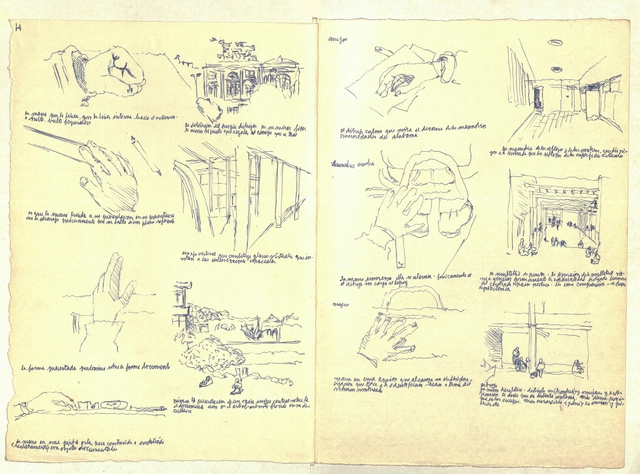
Alberto Cruz, one of the Chilean architects who re-founded the School of Architecture of the Pontificia Universidad Católica de Valparaíso and founder of Amereida and the subsequent Open City, left behind more than 2,200 notebooks and folders, 200 drawings in various techniques, formats, and mediums, and around a thousand documents when he passed away in 2013.
Five years earlier, his granddaughter, historian Sara Browne, began working with Cruz to catalog his private output. Today, this entire archive is part of the Alberto Cruz Covarrubias Foundation, a space dedicated to honoring the memory of the 1975 National Architecture Award recipient.
In this email conversation with Browne, the historian examines the challenges of conserving and digitizing this historic archive, while also reflecting on Cruz Covarrubias's legacy.
Aiming to propose “ordinary” solutions that meet the needs of the majority of people in Chile, the open call for the Feria Libre de Arquitectura—as this year's XXI Chilean Architecture Biennial is known—received 543 registrations, “a historic figure for this type of event,” according to the organizers.
During the first half of this year, the XXI Chile Biennial of Architecture and Urbanism invited students, architects, firms, institutions, publishers, and collectives to participate in one of the most important architectural events in Chile and Latin America, which this year will focus on proposals geared toward the "everyday" public.
Whether seeking distraction, escape, or reflection, metro passengers shorten their commutes by checking their phones, reading books, or listening to music. For Chilean photographer and civil engineer Felipe Lavín, this conceals a contradiction. "Commuting en masse is a highly social act, yet at the same time, it is deeply solitary. As Marc Augé notes, in the metro we constantly brush against the lives of others without ever truly encountering them," Lavín says in conversation with ArchDaily.
In 2018 ArchDaily spoke in Madrid with Spanish architect Izaskun Chinchilla, who reflected on the challenges our cities face due to gender bias. "We live in cities built by and for men between 35 and 55 years old who drive and commute to work in a private car," the architect states.
According to the academic at UCL, ETSAM, and IE, private transport reveals one of the aspects demonstrating that we live in discriminatory and non-inclusive cities. "Men still drive twice as much as women, and in cities, all we have to do is step outside: they are designed by and for cars," she explains.
Colombian firm DARP has won second place in the design competition for the memorial space at the former Mónaco Building in Medellín, Colombia. Organized by the EDU and the Colombian Society of Architects (SCA), the international competition sought to design a space of memory and reflection on the period between 1983 and 1994, located on the site of the demolished building that was once the home of drug trafficker Pablo Escobar.
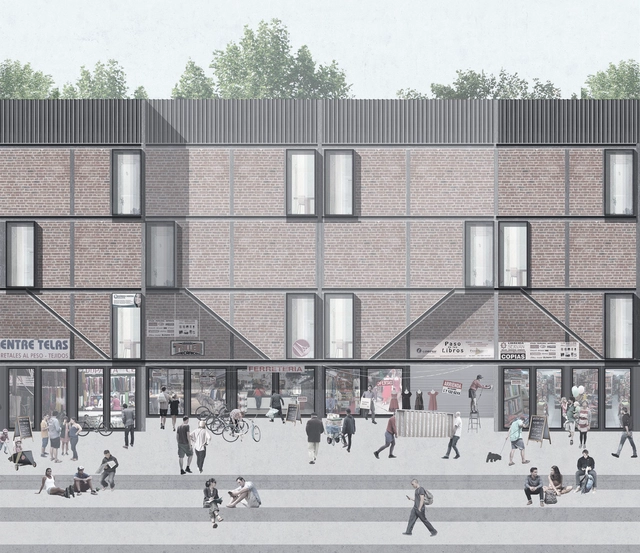
Vivienda de uso mixto / Andrea Fuentes Núñez. Image Cortesía de Archiprix
On Tuesday, April 23, Archiprix Chile 2019 announced the winners of this year's edition at the Centro Cultural Estación Mapocho, honoring the thesis projects of young Chilean architects with three top prizes and three honorable mentions. The award ceremony was preceded by a lecture by Martín del Solar, co-founder of Grupo Talca, a Chilean practice featured in the 2016 Venice Biennale.
Construction of Colombia's second-tallest skyscraper, BD Bacatá, is finally resuming following an agreement signed between BD Promotores, Prabyc Aluman, and Acción Fiduciaria. The deal involves a total investment of 48 billion Colombian pesos ($15.5 million), according to reports by local media outlets Portafolio and W Radio.
Do you have ideas on how to improve existing social housing to transform environmental conditions? That was the question posed by Proyectar a Conciencia 2.0, a competition open to students and faculty throughout Chile, aiming to intervene in the Family Heritage Protection Program (PPPF) of the Chilean Ministry of Housing and Urbanism (MINVU).
In light of the social crisis Chile is currently experiencing, ArchDaily speaks with urban and regional planning specialists to understand its impact on our cities. On this occasion, we speak with Isabel Serra, an architect graduated from the Pontificia Universidad Católica de Chile, specialized in public policy, a member of the City and Territory Laboratory (Laboratorio de Ciudad y Territorio) at Universidad Diego Portales, and an academic at the same institution.
On Wednesday, May 15, the winners of the BBConstrumat 2019 Awards, curated by the Fundació Mies van der Rohe Barcelona, were announced at the Roca Gallery Barcelona.
.jpg?1571676447&format=webp&width=640&height=580)





_2018_-_Fotomontaje_Digital.jpg?1553477725&format=webp&width=640&height=580)