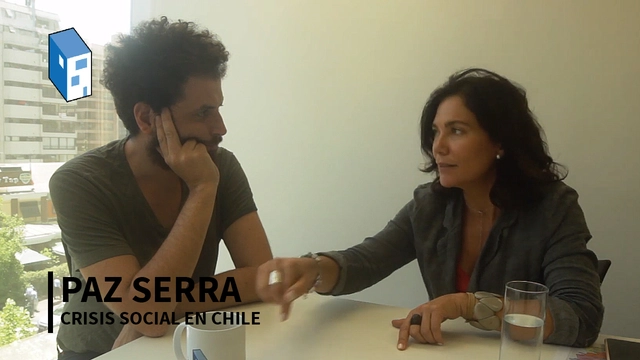
In the wake of the social crisis Chile is currently experiencing, ArchDaily speaks with urban and regional specialists to understand its impact on our cities.
Award-winning architect Nicolas Valencia is the former Head of Editorial at ArchDaily, leading a global editorial team ---- @nicolasvalencia.cl | nicolasvalencia.cl | hellonicolasvalencia@gmail.com
In the wake of the social crisis Chile is currently experiencing, ArchDaily speaks with urban and regional specialists to understand its impact on our cities.

In the context of the global health emergency caused by the COVID-19 pandemic, Chile's Ministry of Cultures, Arts, and Heritage has launched a public survey for freelancers, workers, and representatives of the cultural and artistic sectors to assess the status of their organizations, centers, and agents across the country.

For the third time since its founding in 2002, Mexico will host the Latin American Social Workshop of Architecture Students (TSL Mexico 2020). This edition is organized by the Latin American Coordinator of Architecture Students (CLEA Latin America), alongside CONEA Mexico and the Municipality of San Felipe del Progreso.
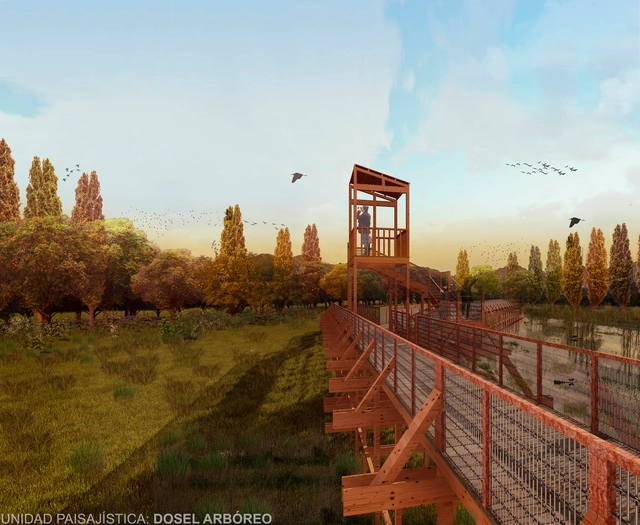
Designed by Milena Lara Silva, the project Ruta de las aves was selected as one of the 10 winners in the Thesis Project category of the 2018 Concurso Arquitectura Caliente (CAC 2018), a Chilean competition organized by Grupo Arquitectura Caliente and funded by the Ministry of Cultures, Arts, and Heritage.
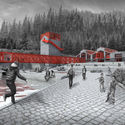
The constant industrial threats endangering the delicate wetland ecosystems are primarily the result of Chile's weak environmental legislation. In the rural sector of Trumao, 11 kilometers from the city of La Unión, this has led to the gradual degradation of its forested wetland. This decline risks not only its biodiversity but also local communities that have persisted since ancient times thanks to the dynamic landscape and its natural resources—both of which are vital for their survival, economy, and, above all, their culture.
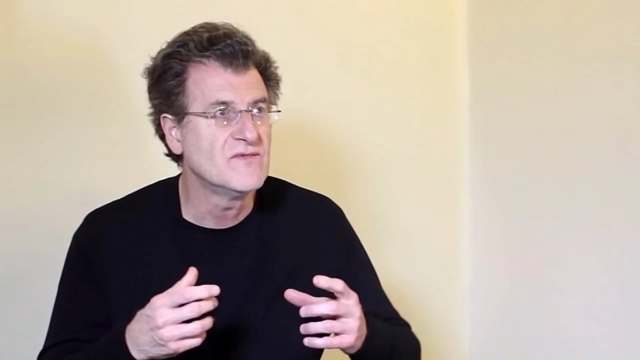
The city of Hiroshima, Japan, has selected prominent Chilean visual artist, architect, and filmmaker Alfredo Jaar as the winner of the 11th edition of the prize (Hiroshima Art Prize).
Jaar, who studied architecture at the University of Chile before permanently leaving the field in 1980, worked during the Chilean military dictatorship on projects such as Studies on Happiness (1979-1981) and Opus 1981 / Andante desesperato performance (1981), before settling permanently in the United States. Jaar's global recognition is reflected in his participation in the 1987 and 2002 editions of Documenta, as well as the retrospectives dedicated to his work in 2012 by the Neue Gesellschaft für Bildende Kunst (NGBK) and the Berlinische Galerie in Berlin.
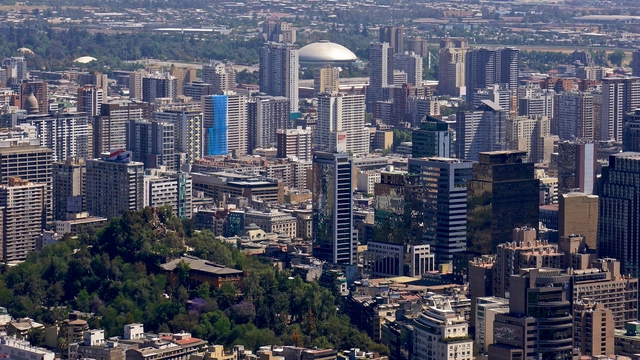
On Tuesday, March 20, the board members of the College of Architects of Chile met with the newly appointed Minister of Housing and Urbanism (MINVU), Cristián Monckeberg, along with Paz Serra, Head of the MINVU Urban Development Division, and journalist Sebastián Zúñiga, Chief of Staff.
They shared their professional experience in urban development and architecture and invited the Minister to establish a joint working group that could include other government agencies, civil society, and the private sector. The association presented six key areas of focus for this new presidential term:
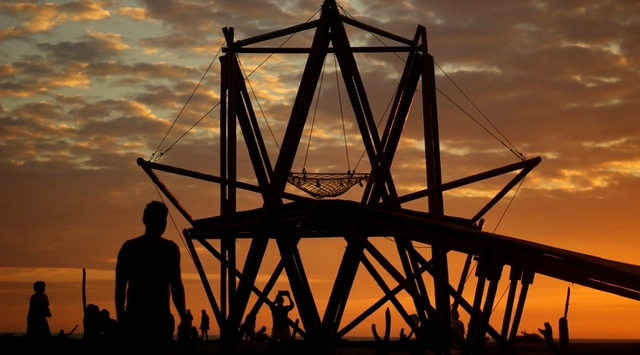

On Sunday, April 1, the 15th edition of the Latin American Social Workshop (TSL) concluded in Peru. This annual workshop brings together students and architects from across the Americas to analyze, reflect, design, and build public facilities over ten days in diverse Latin American contexts.
Known as XV TSL Puno, this edition took place in Chucuito, a Peruvian town situated at an altitude of over 3,800 meters (12,400 feet) on the shores of Lake Titicaca, near the city of Puno—the folklore capital of Peru. There, 250 students divided into three teams worked on landscape, public space, and heritage restoration projects, led by ENSUSITIO + Jhony Chávez, Ruta 4, and Lucio Torres, respectively.
Following the workdays, amidst coca leaves and fried trout, a recurring question arose during our conversations with the workshop participants: how can social architecture move beyond the photograph of children drawing and adults talking in a town hall meeting? Below, we present the reflections of four Latin American practices that participated in the TSL between 2017 and 2018.

Last September, we launched our first open call in Spain for architects to submit their final thesis projects (PFC). After a thorough evaluation of 87 submissions, 10 projects were selected, standing out for addressing pressing contemporary issues, developing deep research analyses, and posing challenges in both urban and rural environments.
The selected proposals seek to both validate and highlight the diverse fields that architects can address and practice within a multidisciplinary framework, countering the bias of certain institutions and academics who still believe that architects only design "boxes."
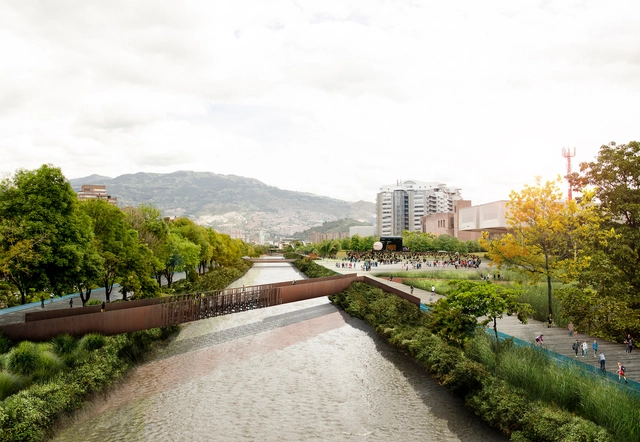
The Parques del Río project in Medellín has become the first Colombian representative among the winners at the 2018 World Architecture Festival (WAF18), currently being held in Amsterdam, Netherlands.
Self-described as the world's largest architectural awards program, the festival announced on its second day that the project designed by Latitud Taller de Arquitectura y Ciudad won the 'Masterplanning' subcategory under the 'Future Projects' section.


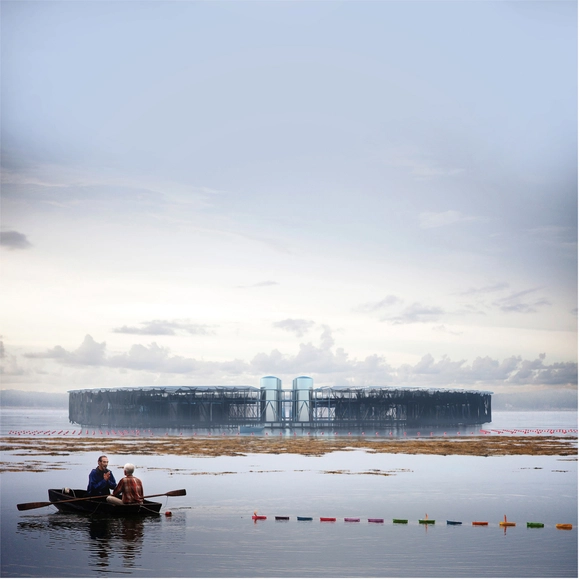
Recent environmental pollution incidents in the Chilean cities of Quintero and Puchuncaví have reignited the debate surrounding the health impacts on residents of so-called sacrifice zones. Last August, the Chilean newspaper La Tercera reported that these cities on Quintero Bay coexist with "15 major energy, chemical, and fuel companies," including a smelter, a natural gas plant, and four thermoelectric power plants.
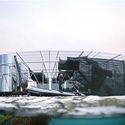
In response, Chilean architect Leonardo Quinteros has developed "Marine Forest" as his thesis project. The proposal features a decontamination platform designed to bioremediate the bay using cultivated brown algae, drawing on research into methods for extracting and absorbing heavy metals to demonstrate the species' potential as a marine bioremediator.
Quinteros—winner of the 2015 CNPP and currently designing the new Providencia Municipal Building in Santiago alongside Tomás Villalón and Nicolás Norero—based his project on a decontamination plan known as FIC Algas. Developed by the Faculty of Ecology at Andrés Bello University (UNAB) in collaboration with the Regional Government of Valparaíso, FIC Algas

Daniel Libeskind will visit Chile this coming December, following an invitation extended by Mauricio Soria, the mayor of Iquique, and approved by the Chilean city's municipal council. However, the decision has drawn coverage from local media due to opposition from council members who voted against the initiative, primarily over the budget: 75 million Chilean pesos (around $110,000), which includes a "city visit, site visit, public lecture, and a preliminary draft or conceptual proposal," as highlighted on Twitter by council member Felipe Arenas, one of the dissenting voices in the municipal vote.
Although the announcement was shared by the mayor's office on Twitter on November 8, efforts to bring Libeskind to the country began exactly a year ago when the architect visited Chile to give a lecture at ENMATERIA's International Architecture and Materials Encounter. During that visit, the American architect met for the first time with Soria and his technical team in Santiago.
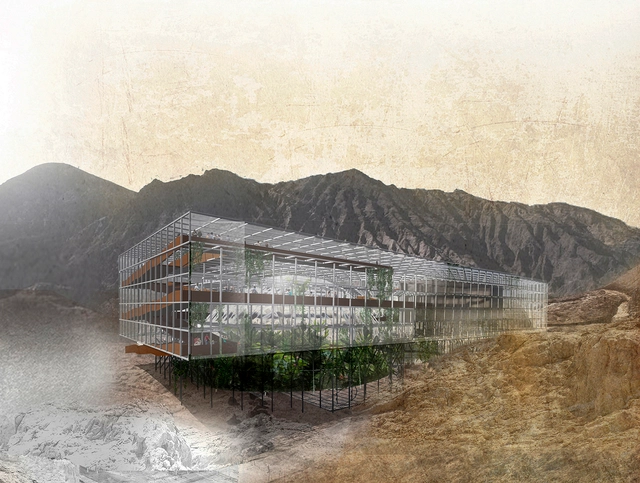
With the proposal 'Mining Tailings Phytoremediation Machine', the Chilean team won first place in the 11th Alacero Steel Design Competition for Architecture Students 2018 in Colombia.
The team, composed of students from Universidad Finis Terrae—Diego Concha, Tomás Aguirre, and Trinidad Hermosilla—presented a project that aims to "recover and reuse mining waste by utilizing plants with high tolerance to minerals to reduce and mitigate the site's environmental risks," as explained by the authors in the project description. The team was advised by professors Andrés Echeverría and Cristián Lecaros.
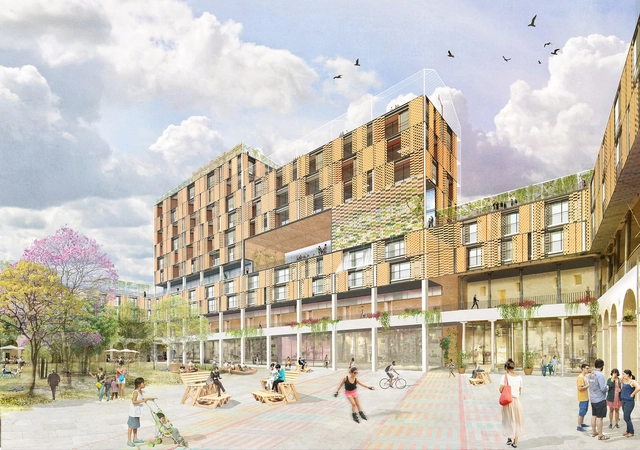
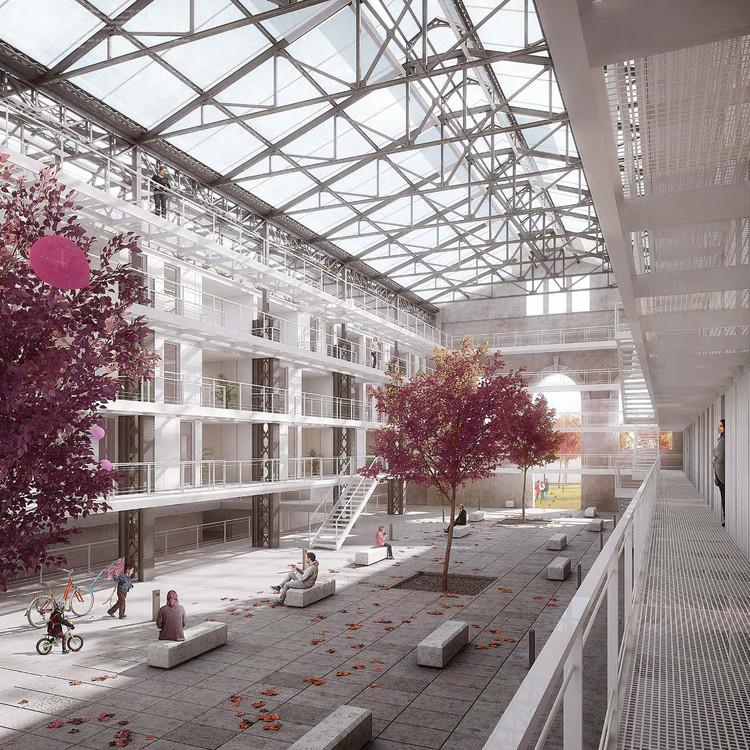
Spanish firm Ecosistema Urbano has presented details of Febres Cordero, one of the first projects in Cuenca, Ecuador, to emerge from the Cuenca RED initiative. This iconic, historic building, which served as a school for decades, is being transformed into a mixed-use development that will serve as a benchmark for economic, environmental, and social sustainability in the city.
Developed under the ICES (Emerging and Sustainable Cities Initiative) program of the Inter-American Development Bank, in collaboration with the Municipality of Cuenca, Cuenca RED is an initiative for which Ecosistema Urbano has proposed programs and activities to establish a new network of reactivated public spaces within the historic center of the city, a UNESCO World Heritage site since 1999.
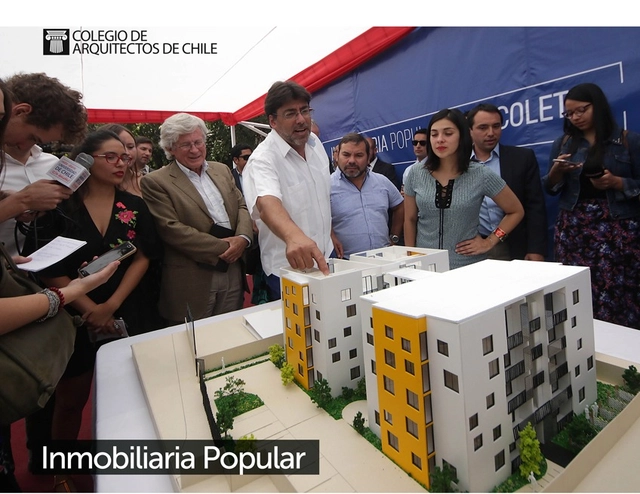
Today, Friday, April 13, starting at 10:00 AM (GMT -3) in Santiago, Chile, the mayor of Recoleta, Daniel Jadue, and 2002 National Architecture Award winner Juan Sabbagh will present the municipal Inmobiliaria Popular (Public Housing) project at the national headquarters of the Architects' Association (Colegio de Arquitectos).
Unveiled in late January of this year, the initiative—unprecedented in Chile—consists of the construction of two five-story buildings with a total of 38 apartments, each measuring 55 square meters, to be rented to vulnerable families in the municipality. Other municipalities in the Chilean capital—Renca, Macul and Las Condes—have already announced they will study replicating the model.

Projects from Uruguay, Argentina, Chile, and Brazil have been selected as winners of the 2018 CICOP Chile Award. This is the fourth national—and second international—edition of the Latin American competition open to graduation projects that develop interventions on buildings, built complexes, or areas of heritage value.
"Acting with sensitivity and technical expertise regarding built heritage helps unite efforts toward conservation and reinforces the contribution that the professional field can make to transmitting heritage values to future generations," explained the organizers of the competition, which received 92 submissions in this edition.
The competition director was Nicolas Iza, while general coordination was led by Marco Antonio Orellana. The jury comprised Arturo López Bachiller and David Avila, representing the firm Luis Vidal + Arquitectos, along with María Inés Arribas, Mabel Briceño, Antonino Pirozzi, and Carolina Vergara, representing CICOP Chile.

As part of the events of the XXVI Colombian Biennial of Architecture and Urbanism, the winning projects and publications have been announced.
Divided into 8 categories, the 283 submitted projects were evaluated by an international jury comprising Iñaqui Carnicero (Spain), Alejandro Beals (Chile), and Fabián Farfán (Bolivia), alongside local architects Germán Fonseca, Julián Rincón, Sara Giraldo, and Diego Aguilera.
[Developing story] The winning projects are:
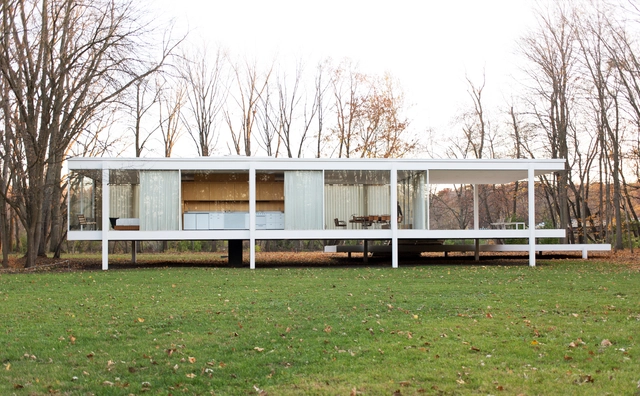
If you are taking your first steps in Revit, or would like to understand its practical integration with BIM, today's tutorial will be of great help. This course was developed by Mexican architect Alan Rodríguez Carrillo on his YouTube channel, where he has published a step-by-step tutorial to model the legendary Farnsworth House, designed by Mies van der Rohe in the 1940s, in Revit.
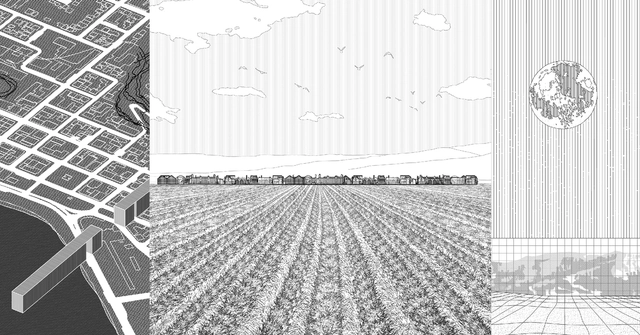
The third edition of the EA USS Workshop, organized by the School of Architecture at Universidad San Sebastián (Chile), featured Belgian architect Kersten Geers, founding partner of OFFICE KGDVS. In addition to participating in a series of discussions with workshop attendees, Geers held a public conversation with Enrique Walker and delivered a keynote lecture presenting his work and architectural reflections.
The 2018 edition brought together 14 teams, 11 of which represented domestic architecture schools, while 3 came from international institutions in Peru, Argentina, and Costa Rica—totaling 96 participants, including students and faculty advisors. To foster the development of projects capable of driving debate, each day of the workshop addressed a distinct theme, beginning with strategies led by Ernesto Silva, Director of the Santiago campus of EA USS, followed by the materialization of the project, led by Albert Tidy, Dean of the USS Faculty of Architecture.
To conclude, on Friday, October 26, an exhibition of the work produced by the teams was held, alongside an engaging conversation between Enrique Walker and Kersten Geers. The event wrapped up with a social gathering to celebrate the meeting of the schools and the high quality of the projects.
.jpg?1523545445 "TSL Canoa 2017: Aula Colectiva Training and Entrepreneurship Center / TACTICO Taller de Arquitectura. Image © Nicolás Valencia")
.jpg?1523546713 "TSL Puno 2018: Hatun Tinkuy / ENSUSITIO + Jhony Chávez. Image © Nicolás Valencia")
.jpg?1523546075 "TSL Canoa 2017: El Atrapasueños / Natura Futura Arquitectura + Ruta 4. Image © Nicolás Valencia")
.jpg?1523548272 "TSL Puno 2018: Taller Cóndor / Ruta 4 Arquitectura. Image © Nicolás Valencia")