Award-winning architect Nicolas Valencia is the former Head of Editorial at ArchDaily, leading a global editorial team ---- @nicolasvalencia.cl | nicolasvalencia.cl | hellonicolasvalencia@gmail.com
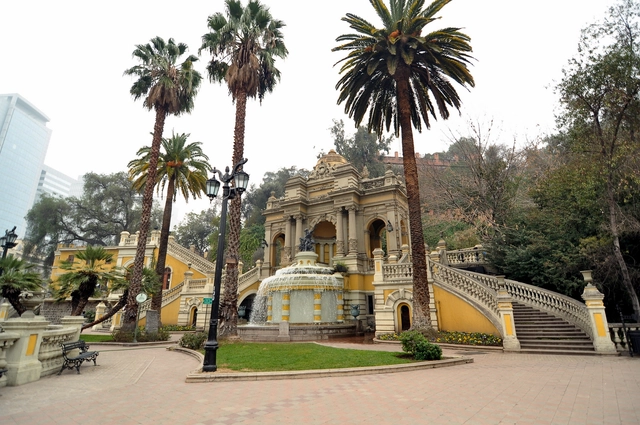
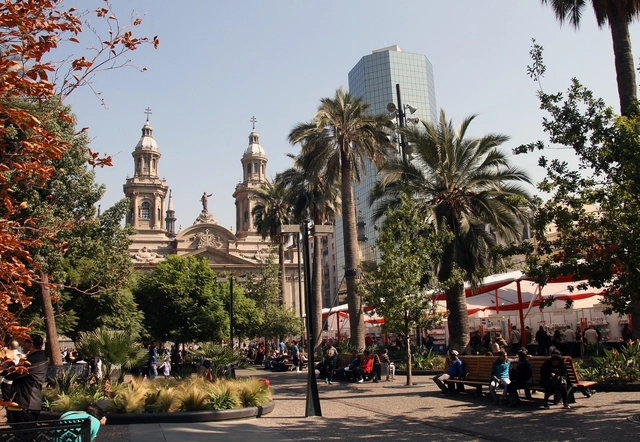
In May 1999, 17 historic buildings in Santiago opened their doors to launch the very first edition of Chile's Cultural Heritage Day. Nearly two decades after that inaugural event, the upcoming edition will span an entire weekend for the first time, taking place on Saturday, May 26, and Sunday, May 27.
The team consisting of Francisca Méndez, Francisca Campos, and Lucero Arce (Universidad Mayor) has been awarded second place in the XXXII CAP Chile Competition. Designed for Punta Arenas, the project—known as María Behety Park—aims to “bring Chile to Punta Arenas,” an idea that seeks to introduce various plant species from across the country to the city as a tourist attraction, according to the authors.
The competition jury praised the project as one “that takes a bold stance through clear and powerful elements to generate wide spans, where the steel pieces shine to create three volumes that emerge like icebergs along the park. And it is precisely this clarity that demands a high level of structural resolution, which is perfectly adjustable.”
Unidad Social / Benjamín Sierra + Mack Riffo. Image Cortesía de Arquitectura Caliente
After evaluating 94 undergraduate student projects from 20 architecture schools across 8 regions of Chile, the jury of the 2018 Arquitectura Caliente Competition has announced the winning projects of its latest edition.
These projects span the entire country and encompass various typologies, ranging from urban planning to student housing, landscape designs, and emergency structural initiatives.
Below, we present the projects honored with regional distinctions:
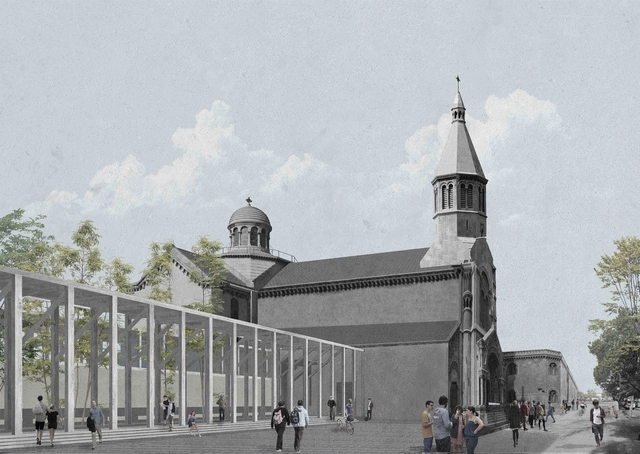
Designed by Camila Chaler, the project Cloister Typology as an Opportunity for Urban Reintegration was selected as one of the ten winners in the Thesis Project category of the 2018 Arquitectura Caliente Competition (CAC 2018), a Chilean awards program organized by Grupo Arquitectura Caliente and funded by the Ministry of Cultures, Arts, and Heritage.
Santiago's urban fabric is home to numerous religious orders. These properties (convents and monasteries) are currently facing obsolescence because they operate under outdated models. This is due to two main factors: their urban incongruity, which isolates them as inward-facing cloisters within the city, and their programmatic obsolescence relative to the scale of the buildings, driven by a decline in religious vocations.
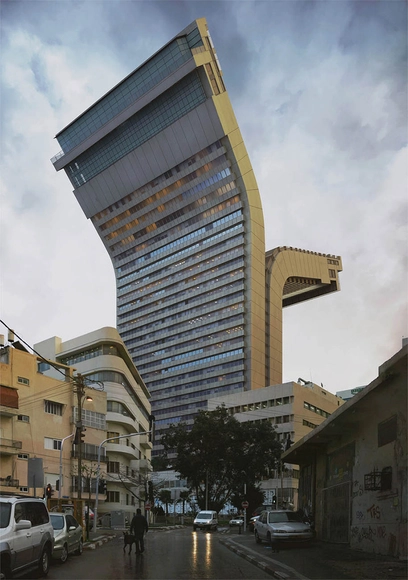
Barcelona photographer Víctor Enrich (b. 1976) has defined himself as a "professional in architectural visualization" since 1998. His ultra-high-quality photomontages trick the eye. Is there really a Guggenheim on the periphery of Bogotá? No, it is the work of Enrich. What about that replica of the Chrysler Building dome in a residential neighborhood? Not that either; it's Enrich.
He is currently working on three simultaneous projects: the fiasco of the 'Castor' case in Spain, a series on the phenomenon of gentrification, and a final series on the political situation in Catalonia—all while venturing into oil painting. "But that is a whole other world," Enrich explains in the following interview.
Looking specifically at Latin America, the list shows some changes compared to the previous year, with a Mexican university returning to the top three. Regarding Brazilian institutions, however, the same four from last year—USP, UFRJ, Unicamp, and UFRGS—remain on the list.
In 2010, humanity marked a new milestone: more than half of the world's population lives in cities. And by all accounts, this process only seems to be intensifying, alongside rising consumption, resource depletion, increased pollution, traffic congestion, water scarcity, and a lack of planning. Is urbanization spiraling out of control?
Drawing on a published study by Daniel Hoornweg and Kevin Pope, British newspaper The Guardian reflects on an extreme scenario: if countries are unable to manage fertility rates and urbanization continues unabated, over the next 35 years, more than 100 cities will each have a population exceeding 5.5 million.
One of the most highly anticipated collateral events of the 16th Venice Architecture Biennale was the *Young Architects in Latin America* (YALA) exhibition, an open call organized by Architecture-Studio through its CA’ASI cultural center to mark its tenth anniversary.
Following editions focused on Chinese, Arab, and African architecture, CA'ASI's fourth open call invited young architects from across Latin America to showcase their built work on a global stage. Out of more than 200 submissions, 60 Latin American practices were selected for the digital catalog and the exhibition presented in Venice. In the digital catalog, the organizers note that "in a region so vast, diverse, and in constant flux, we find common characteristics among the submitted works that bear witness to the efforts of young architects to improve habitat conditions in Latin America."
At the exhibition's opening ceremony on May 25, the organizers announced 15 honorable mentions and 3 winners, including practices from Mexico, Argentina, Chile, Ecuador, and Brazil, among others. Discover them below:
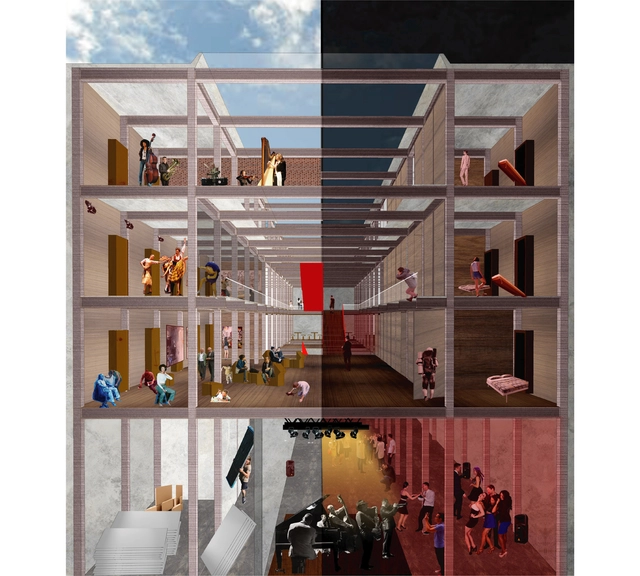
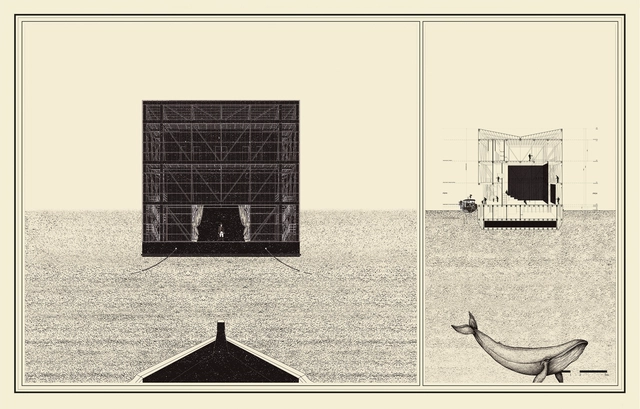
Designed by Esteban Ramírez, the Teatro Navegante project was chosen as one of the 10 winners in the Thesis Projects category of the Concurso Arquitectura Caliente 2018 (CAC 2018), a Chilean competition organized by Grupo Arquitectura Caliente and funded by the Ministry of Cultures, Arts, and Heritage.
Historically, the Chiloé Archipelago has been defined by its own inhabitants as an annex to the mainland due to the physical, social, and cultural isolation existing since the beginning of the last century. Sea and land define the everyday lives of its people. From these environments, they extract the resources for their survival, and their land routes extend through the channels and fjords vital to connecting the islands and their communities. In this isolated and fragmented territory, climatic and geographical conditions make it difficult for nearly 15,000 inhabitants to access educational, health, and cultural infrastructure, which remains concentrated in the region's urban centers kilometers away—an ongoing issue that the State has yet to address.
Across nine episodes, the series Proyecto Habitardelves into the intimacy of homes to explore the reality of housing in Chile. Through the perspective of its protagonists, directors Joaquín Mora and Verónica Wüst aim to spark an urgent conversation on housing-related issues.
"The issue of housing is crucial and will soon take center stage, as our current economic system presents various challenges we must address as a society," Mora comments.
This time, we invite you to watch the final three episodes of the series: childhood, roots, and projection.
Lluís Comerón Graupera, nuevo presidente del CSCAE. Image Cortesía de CSCAE
After winning the elections on November 16, Lluís Comerón Graupera today assumes the presidency of the Higher Council of Colleges of Architects of Spain (CSCAE) for the 2018–2021 term. Founded in 1931, the CSCAE is the organization that unites all regional associations to achieve and defend the general common interest of architecture and its professionals. It also serves as the highest representative body for these associations and the profession before the state administration and international organizations.
According to the CSCAE, Comerón Graupera holds an architecture degree from the Barcelona School of Architecture (ETSAB), is an associate professor at ETSAB, and is a co-director at the Vallès School of Architecture (ETSAV). He also runs his own practice, where he has developed a diverse portfolio for both public administrations and the private sector.
After a week of nominations, more than 25,000 readers selected their favorite projects from nearly 1,000 built works across Latin America and Spain. Today, the finalists for ODA18 have been announced.
Now in its tenth edition, this award has become a true tradition. We invite all our readers to recognize the projects published during 2017 that inspired them and represent the identity of their local contexts in a globalized world, shaping how architecture is practiced in Latin America and Spain within an increasingly diverse and multicultural landscape.
Designed by Ángel Arroyo Aguilar, the Muelle del Cochayuyo project was selected as one of the 10 winners in the Thesis Projects category of the 2018 Concurso Arquitectura Caliente (CAC 2018), a Chilean competition organized by Grupo Arquitectura Caliente and funded by the Ministry of Cultures, Arts, and Heritage.
My intention was never to reinvent the wheel, but rather to bring it to this remote place.
It has been 453 days since I arrived on these shores, where I was initially not welcome, seeking to immerse myself in the traditions and ways of inhabiting unfamiliar territories. I discovered incredible people and landscapes steeped in craft, and I set out to change the constraints under which the local inhabitants lived.
The impact of the Santiago Metro's new lines, recognition for a new metropolitan park in the capital, and the final design for the Barón Pier in Valparaíso. Indeed, a week dedicated to major metropolitan projects is the focus of this edition of La ciudad chilena en la prensa, the ArchDaily column where we cover what is happening in Chile's major cities.
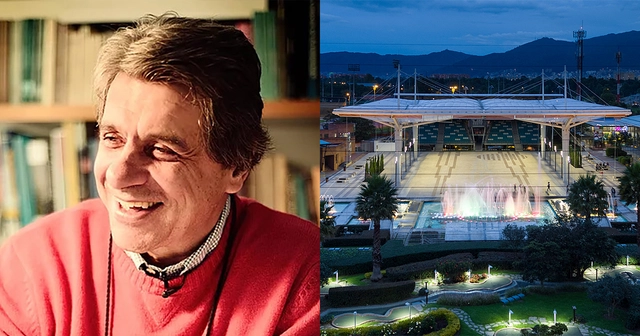
Colombian architect Konrad Brunner passed away this Tuesday, September 25, in Bogotá. Grandson of the historic urban planner Karl Brunner, Konrad was born on November 17, 1950, in the Colombian capital and graduated from the Universidad de los Andes in 1974.
Brunner founded his own architecture firm in 1978, a practice noted for projects such as the Plaza de Jubileo at Compensar, the master plan for the Ciudadela El Recreo (alongside Germán Samper and Gustavo Perry), the Arroyoviejo and El Vigía residential buildings, and the Casa Vélez. Additionally, the architect balanced his private practice with teaching at the Universidad de los Andes starting in the 1980s.
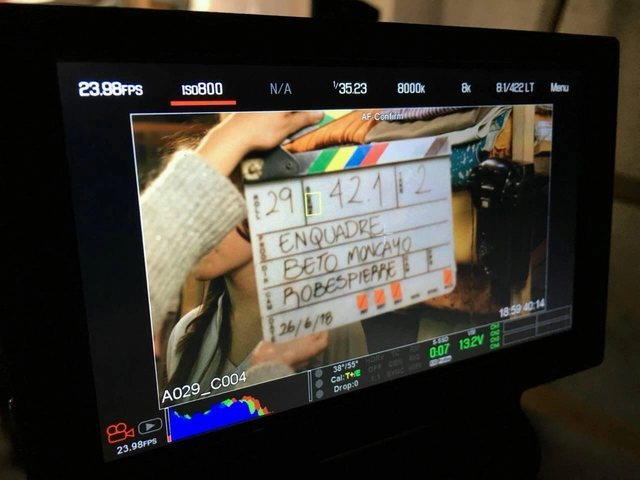
Filming of the movie 'De topos y sapos' by Colombian architect and filmmaker Alberto Moncayo. Image via 'De topos y sapos' Fan Page
What began as an audiovisual production for an architectural project—Vive Bambú—turned into a lifelong passion. This is the story of Colombian architect and professor Alberto Moncayo, who shared details of his latest film project with the newspaper El Espectador.
"Architecture earns me a living, but I live for cinema," comments Moncayo, while working on the filming of "De topos y sapos," inspired by the historic Banco de la República heist of 1977. In this event, two brothers dug a tunnel to the vault of the bank branch in the city of Pasto, stealing 82 million Colombian pesos at the time (equivalent to USD 38.2 million today).
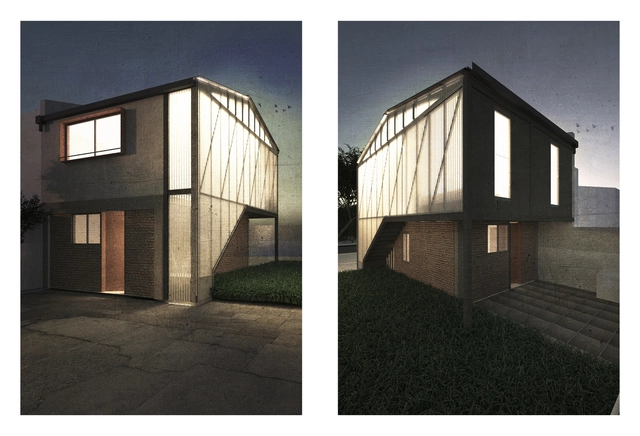
Casa Huechuraba. Image Cortesía de Encargos Comunes
The Chilean firm TALLER25 has launched the first edition of the des_VINCULADOS workshop in Santiago. This project-based academic initiative addresses an emerging theme in Chilean practice: middle-class architecture. To this end, students were assigned a specific design intervention—extension, renovation, or new construction—and a budget estimated by the original clients: five middle-class families living in Santiago's inner ring and periphery.
"Currently, projects built for the vast majority of the country's population tend to be the result of architectural practice treated as a mere commercial service, rather than an opportunity to contribute to the discipline, improve the users' quality of life, or build a more equitable context," explain Fabiola González, Yair Estay, and Jessica Torres, the organizers of the workshop, which is part of the Encargos Comunes academic research project.
In partnership with the Department of Architecture of the Faculty of Architecture and Urbanism at the University of Chile, and with ArchDaily as a media partner, the first edition of the workshop involved 43 students from across Santiago. They developed the following proposals after a series of sessions that included a panel discussion and five thematic sessions: practice, regulations, budget and construction, and market.
In September, we launched the third edition of our open call in Colombia, inviting architects to submit their graduation thesis projects (as final degree projects are known there). In this edition, the call received 94 submissions from more than 10 cities and 22 universities across the country, representing a 34% increase in proposals compared to 2017.
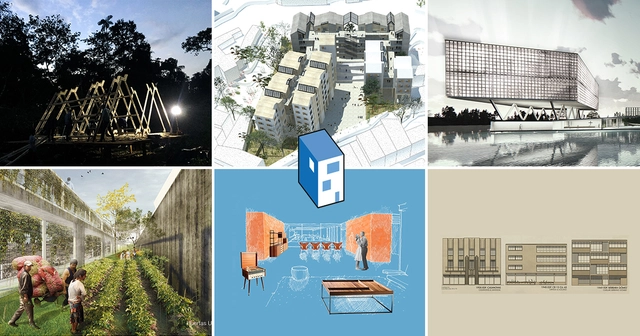
Following a thorough evaluation, six graduation theses were selected as winners by our editorial jury (Fabián Dejtiar, Mónica Arellano, José Tomás Franco and Nicolás Valencia). Built works, historical research, and master plans make up our selection: from a rural residential prototype to a comprehensive study of the Edificio de Renta (rental building), a popular residential format in Bogotá between the 1940s and 1970s.
Additionally, for the first time we included a high-level external jury tasked with selecting the Grand Winner2018. The jury comprised Lina Toro (Madrid), Carlos Cano (OPUS, Medellín), and Jorge Noreña (Ruta 4, Pereira). "While architecture requires rigor, dedication, and communication skills, it also demands strengthening connections with urbanism and landscape, as well as with professions that make transformative ideas viable," Cano commented during the jury's evaluation.